Peiró Concepción, Lorenzo Óscar, Carraro Raffaele, Sánchez-Ferrer Carlos F
Department of Pharmacology, School of Medicine, Universidad Autónoma de MadridMadrid, Spain.
Instituto de Investigación Sanitaria Hospital Universitario de La Paz (IdiPAZ)Madrid, Spain.
Front Pharmacol. 2017 Jun 13;8:363. doi: 10.3389/fphar.2017.00363. eCollection 2017.
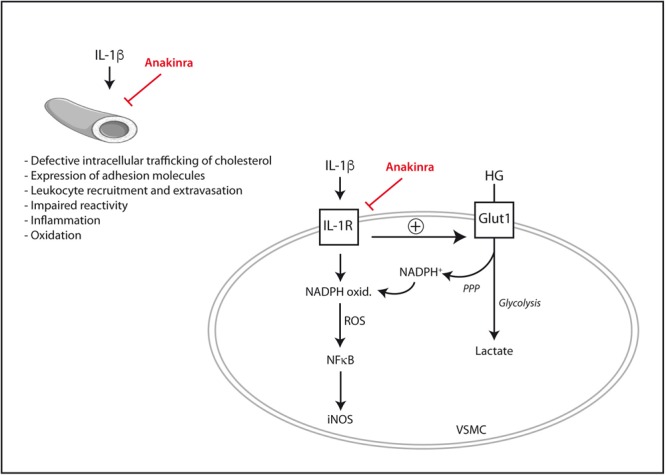
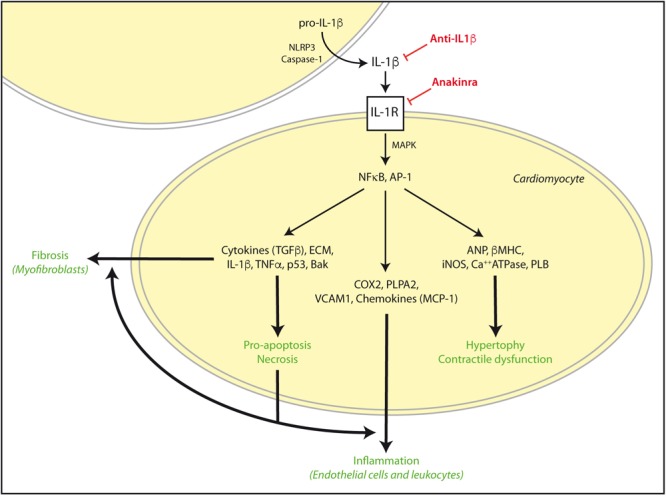
Diabetes mellitus (DM) is a chronic disease that affects nowadays millions of people worldwide. In adults, type 2 diabetes mellitus (T2DM) accounts for the majority of all diagnosed cases of diabetes. The course of the T2DM is characterized by insulin resistance and a progressive loss of β-cell mass. DM is associated with a number of related complications, among which cardiovascular complications and atherosclerosis are the main cause of morbidity and mortality in patients suffering from the disease. DM is acknowledged as a low-grade chronic inflammatory state characterized by the over-secretion of pro-inflammatory cytokines, including interleukin (IL)-1β, which reinforce inflammatory signals thus contributing to the development of complications. In this context, the pharmacological approaches to treat diabetes should not only correct hyperglycaemia, but also attenuate inflammation and prevent the development of metabolic and cardiovascular complications. Over the last years, novel biological drugs have been developed to antagonize the pathophysiological actions of IL-1β. The drugs currently used in clinical practice are anakinra, a recombinant form of the naturally occurring IL-1 receptor antagonist, the soluble decoy receptor rilonacept and the monoclonal antibodies canakinumab and gevokizumab. This review will summarize the main experimental and clinical findings obtained with pharmacological IL-1β inhibitors in the context of the cardiovascular complications of DM, and discuss the perspectives of IL-1β inhibitors as novel therapeutic tools for treating these patients.
糖尿病(DM)是一种慢性疾病,目前影响着全球数百万人。在成年人中,2型糖尿病(T2DM)占所有确诊糖尿病病例的大多数。T2DM的病程以胰岛素抵抗和β细胞量的逐渐丧失为特征。糖尿病与许多相关并发症有关,其中心血管并发症和动脉粥样硬化是该疾病患者发病和死亡的主要原因。糖尿病被认为是一种低度慢性炎症状态,其特征是促炎细胞因子过度分泌,包括白细胞介素(IL)-1β,这些细胞因子会加强炎症信号,从而促进并发症的发展。在这种情况下,治疗糖尿病的药理学方法不仅应纠正高血糖,还应减轻炎症并预防代谢和心血管并发症的发生。在过去几年中,已开发出新型生物药物来拮抗IL-1β的病理生理作用。目前临床实践中使用的药物有阿那白滞素(一种天然存在的IL-1受体拮抗剂的重组形式)、可溶性诱饵受体rilonacept以及单克隆抗体卡那单抗和 gevokizumab。本综述将总结在糖尿病心血管并发症背景下使用药理学IL-1β抑制剂获得的主要实验和临床结果,并讨论IL-1β抑制剂作为治疗这些患者的新型治疗工具的前景。