Maetzig Tobias, Ruschmann Jens, Sanchez Milde Lea, Lai Courteney K, von Krosigk Niklas, Humphries R Keith
Terry Fox Laboratory, British Columbia Cancer Agency, Vancouver, BC V5Z 1L3, Canada.
Department of Medicine, University of British Columbia, Vancouver, BC V5Z 1M9, Canada.
Mol Ther Methods Clin Dev. 2017 Jun 1;6:54-65. doi: 10.1016/j.omtm.2017.05.007. eCollection 2017 Sep 15.
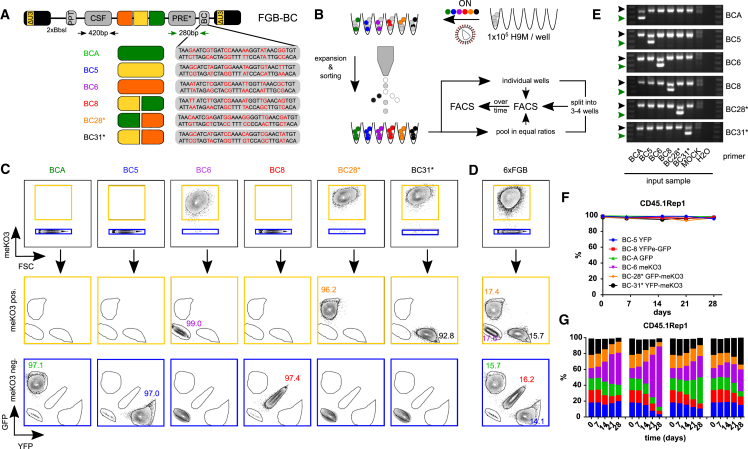
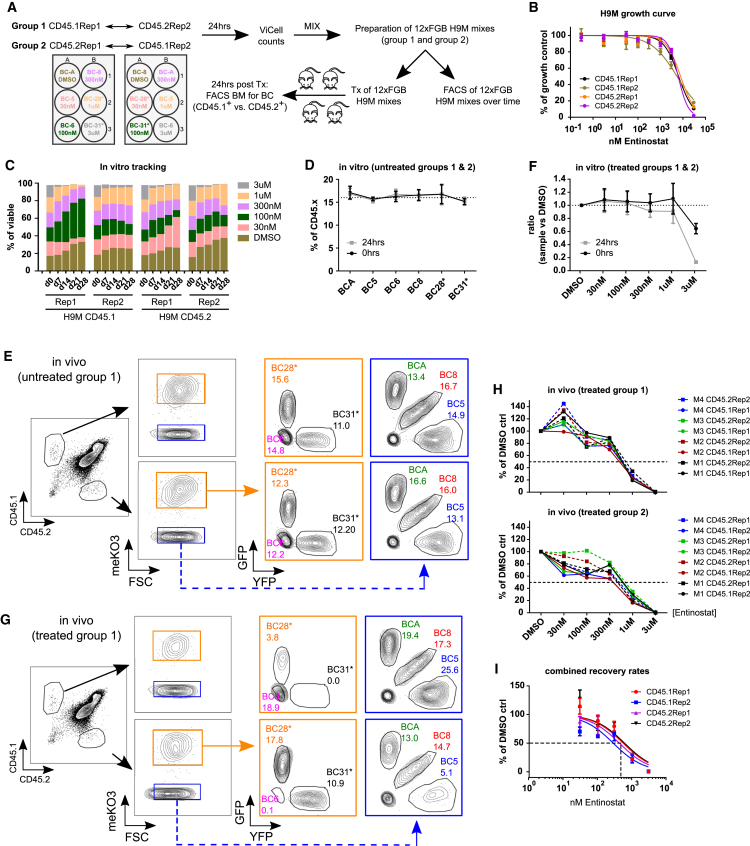
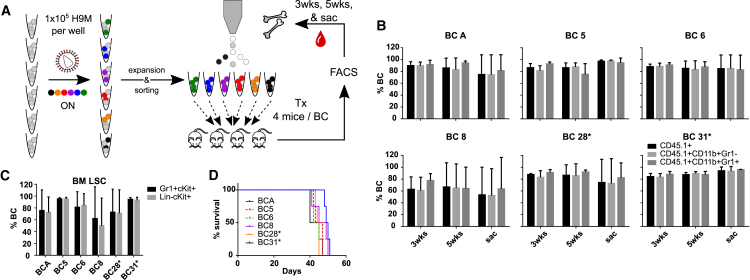
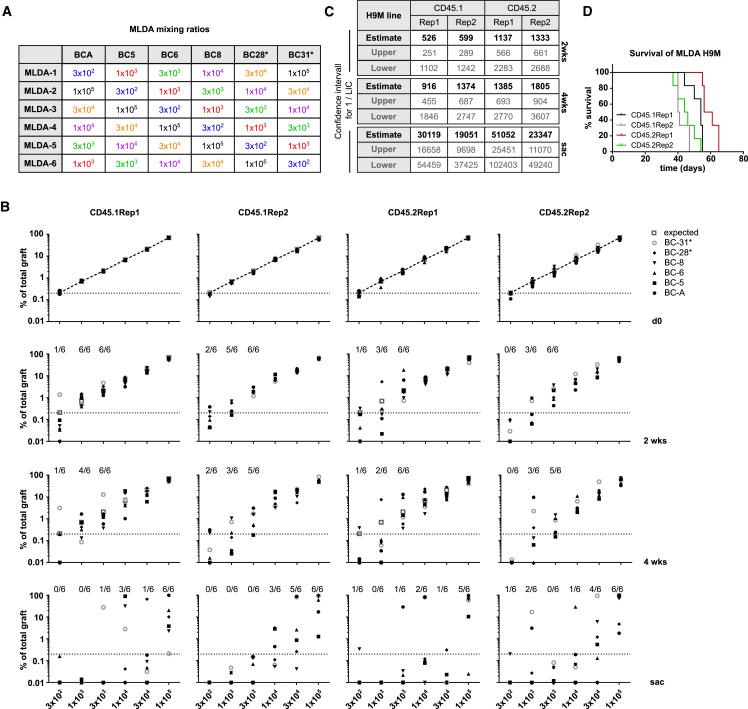
Tracking the behavior of leukemic samples both in vitro and in vivo plays an increasingly large role in efforts to better understand the leukemogenic processes and the effects of potential new therapies. Such work can be accelerated and made more efficient by methodologies enabling the characterization of leukemia samples in multiplex assays. We recently developed three sets of lentiviral fluorescent genetic barcoding (FGB) vectors that create 26, 14, and 6 unique immunophenotyping-compatible color codes from GFP-, yellow fluorescent protein (YFP)-, and monomeric kusabira orange 2 (mKO2)-derived fluorescent proteins. These vectors allow for labeling and tracking of individual color-coded cell populations in mixed samples by real-time flow cytometry. Using the prototypical Hoxa9/Meis1 murine model of acute myeloid leukemia, we describe the application of the 6xFGB vector system for assessing leukemic cell characteristics in multiplex assays. By transplanting color-coded cell mixes, we investigated the competitive growth behavior of individual color-coded populations, determined leukemia-initiating cell frequencies, and assessed the dose-dependent potential of cells exposed to the histone deacetylase inhibitor Entinostat for bone marrow homing. Thus, FGB provides a useful tool for the multiplex characterization of leukemia samples in a wide variety of applications with a concomitant reduction in workload, processing times, and mouse utilization.
在体外和体内追踪白血病样本的行为,对于更好地理解白血病发生过程以及潜在新疗法的效果发挥着越来越重要的作用。通过能够在多重分析中对白血病样本进行表征的方法,可以加快此类工作并提高其效率。我们最近开发了三组慢病毒荧光遗传条形码(FGB)载体,它们利用源自绿色荧光蛋白(GFP)、黄色荧光蛋白(YFP)和单体kusabira橙色2(mKO2)的荧光蛋白创建了26、14和6种独特的与免疫表型兼容的颜色编码。这些载体允许通过实时流式细胞术对混合样本中各个颜色编码的细胞群体进行标记和追踪。使用急性髓系白血病的典型Hoxa9/Meis1小鼠模型,我们描述了6xFGB载体系统在多重分析中评估白血病细胞特征的应用。通过移植颜色编码的细胞混合物,我们研究了各个颜色编码群体的竞争性生长行为,确定了白血病起始细胞频率,并评估了暴露于组蛋白脱乙酰酶抑制剂恩替诺特的细胞归巢至骨髓的剂量依赖性潜力。因此,FGB为白血病样本在各种应用中的多重表征提供了一个有用的工具,同时减少了工作量、处理时间和小鼠使用量。