Cao Guangchao, Wang Qian, Huang Wanjun, Tong Jiyu, Ye Dewei, He Yan, Liu Zonghua, Tang Xin, Cheng Hao, Wen Qiong, Li Dehai, Chau Hau-Tak, Wen Yiming, Zhong Hui, Meng Ziyu, Liu Hui, Wu Zhenzhou, Zhao Liqing, Flavell Richard A, Zhou Hongwei, Xu Aimin, Yang Hengwen, Yin Zhinan
The First Affiliated Hospital, Biomedical Translational Research Institute, Guangdong Province Key Laboratory of Molecular Immunology and Antibody Engineering, Jinan University, Guangzhou, China.
Joint Institute of Metabolic Medicine between State Key Laboratory of Pharmaceutical Biotechnology, The University of Hong Kong and Jinan University, Guangzhou, China.
Cell Discov. 2017 Jun 20;3:17020. doi: 10.1038/celldisc.2017.20. eCollection 2017.
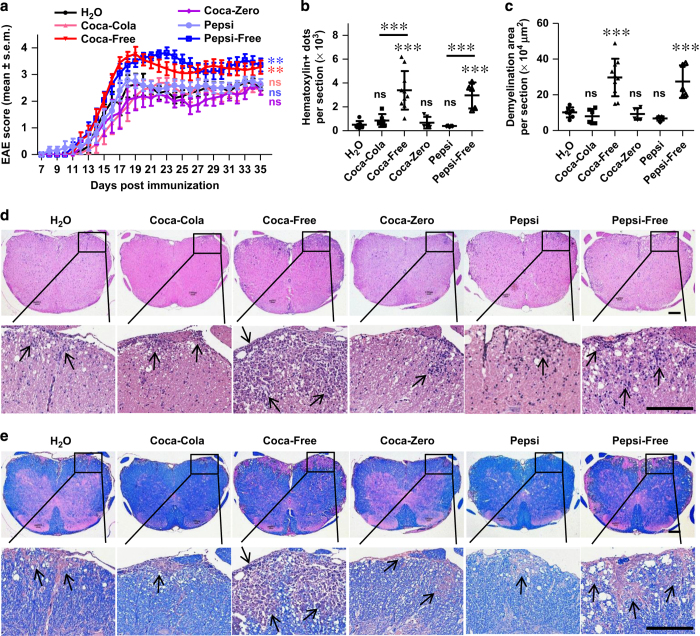
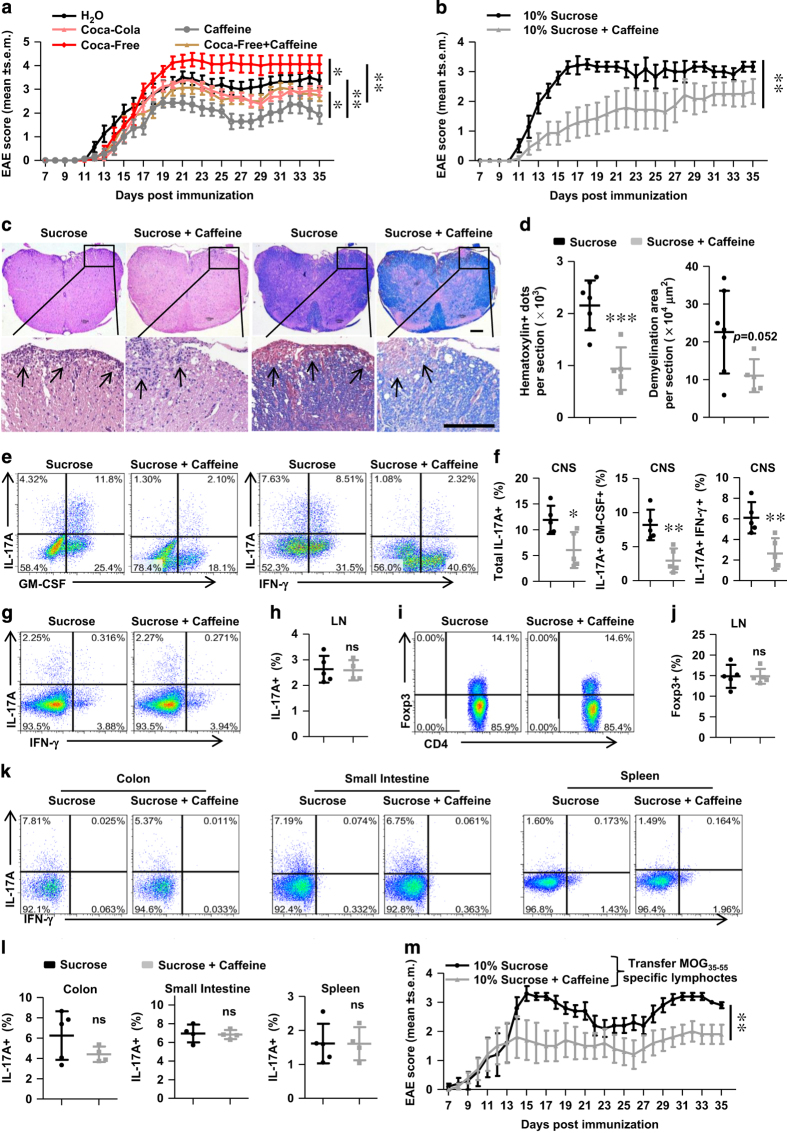
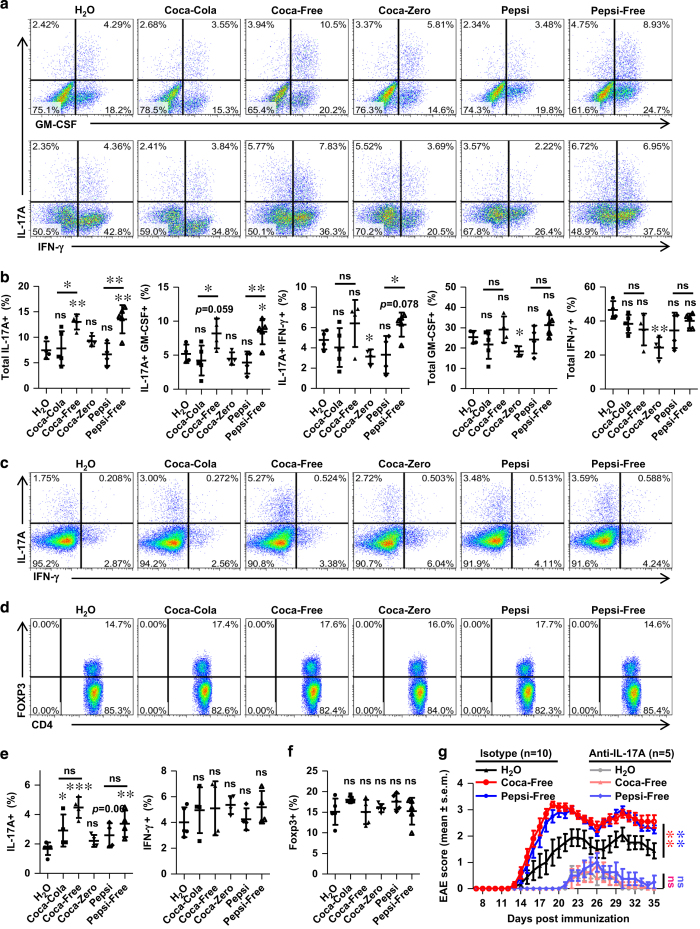
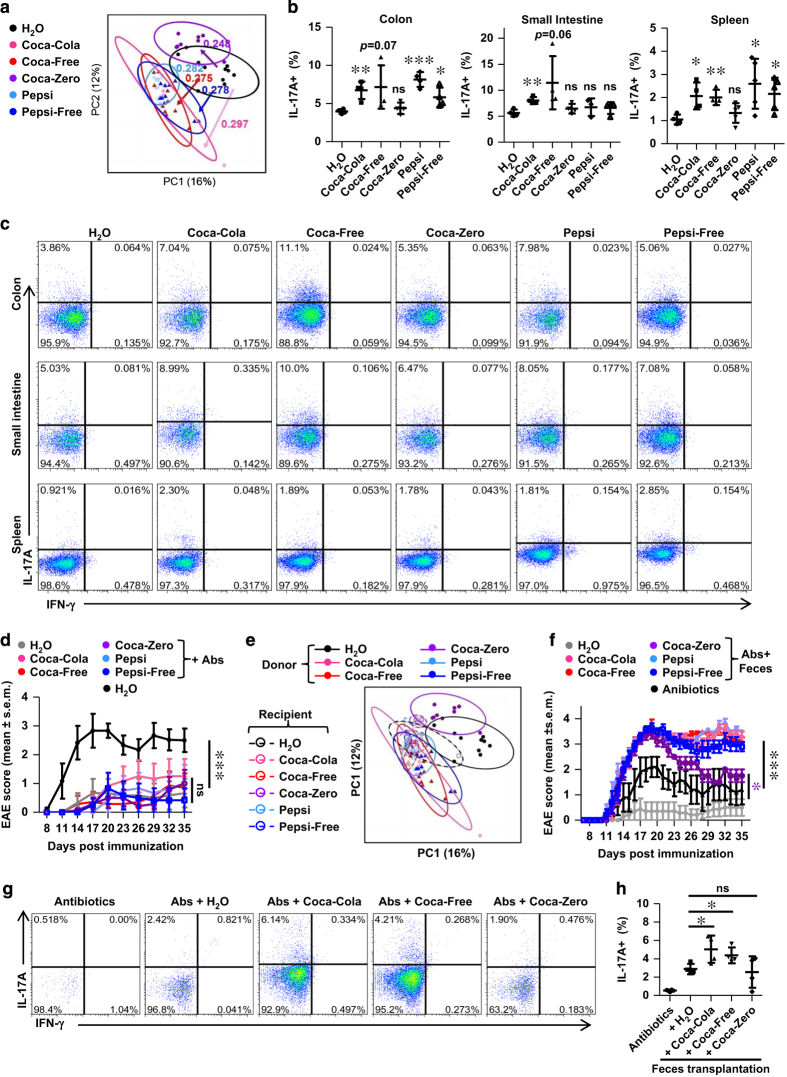
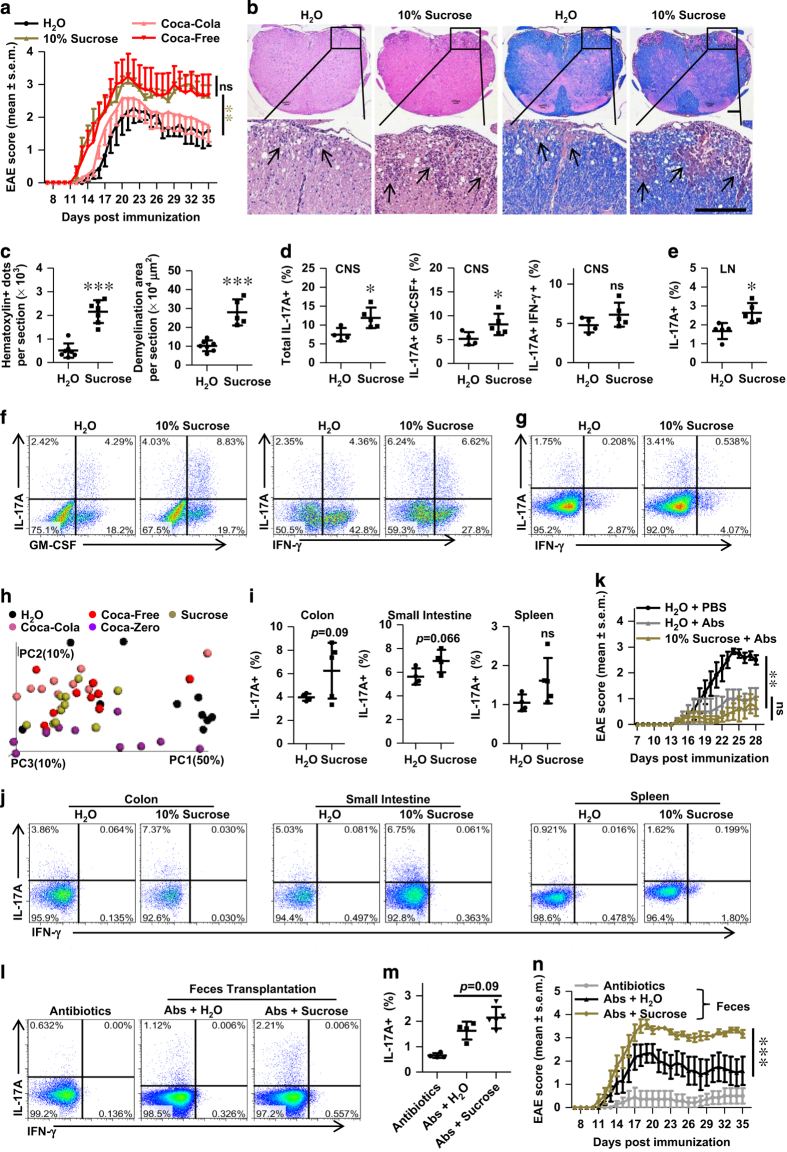
Epidemiological data provide strong evidence of dramatically increasing incidences of many autoimmune diseases in the past few decades, mainly in western and westernized countries. Recent studies clearly revealed that 'Western diet' increases the risk of autoimmune diseases at least partially via disrupting intestinal tight junctions and altering the construction and metabolites of microbiota. However, the role of high sucrose cola beverages (HSCBs), which are one of the main sources of added sugar in the western diet, is barely known. Recently, a population study showed that regular consumption of sugar-sweetened beverages is associated with increased risk of seropositive rheumatoid arthritis in women, which provokes interest in the genuine effects of these beverages on the pathogenesis of autoimmune diseases and the underlying mechanisms. Here we showed that long-term consumption of caffeine-free HSCBs aggravated the pathogenesis of experimental autoimmune encephalomyelitis in mice in a microbiota-dependent manner. Further investigation revealed that HSCBs altered community structure of microbiota and increased Th17 cells. High sucrose consumption had similar detrimental effects while caffeine contamination limited the infiltrated pathogenic immune cells and counteracted these effects. These results uncovered a deleterious role of decaffeinated HSCBs in aggravating the pathogenesis of experimental autoimmune encephalomyelitis in mice.
流行病学数据提供了有力证据,表明在过去几十年中,许多自身免疫性疾病的发病率急剧上升,主要发生在西方国家和西方化国家。最近的研究清楚地表明,“西方饮食”至少部分地通过破坏肠道紧密连接以及改变微生物群的组成和代谢产物来增加自身免疫性疾病的风险。然而,高蔗糖可乐饮料(HSCBs)作为西方饮食中添加糖的主要来源之一,其作用却鲜为人知。最近,一项人群研究表明,经常饮用含糖饮料与女性血清阳性类风湿性关节炎风险增加有关,这引发了人们对这些饮料在自身免疫性疾病发病机制中的真正作用及其潜在机制的兴趣。在此,我们表明长期饮用不含咖啡因的HSCBs会以微生物群依赖的方式加重小鼠实验性自身免疫性脑脊髓炎的发病机制。进一步研究发现,HSCBs改变了微生物群的群落结构并增加了Th17细胞。高蔗糖摄入也有类似的有害影响,而咖啡因污染则限制了浸润的致病性免疫细胞并抵消了这些影响。这些结果揭示了不含咖啡因的HSCBs在加重小鼠实验性自身免疫性脑脊髓炎发病机制中的有害作用。