John Reni, Mudalagiriyappa Srinivasu, Chandrashekar Nagabhushan, Nanjappa Som G
Department of Pathobiology, College of Veterinary Medicine, University of Illinois Urbana-Champaign, Urbana, IL, United States.
Cancer Center at Illinois, University of Illinois at Urbana-Champaign, Urbana, IL, United States.
Front Immunol. 2025 May 16;16:1571221. doi: 10.3389/fimmu.2025.1571221. eCollection 2025.
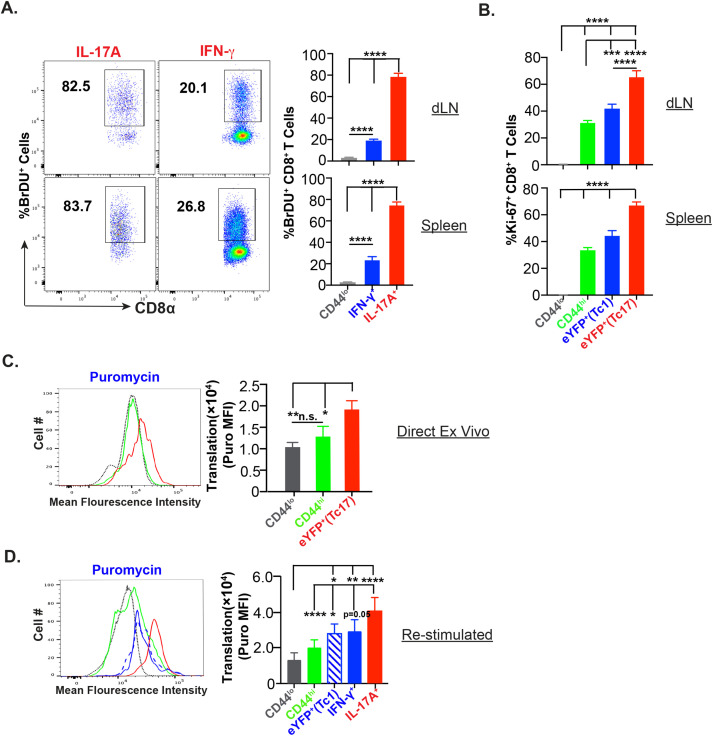
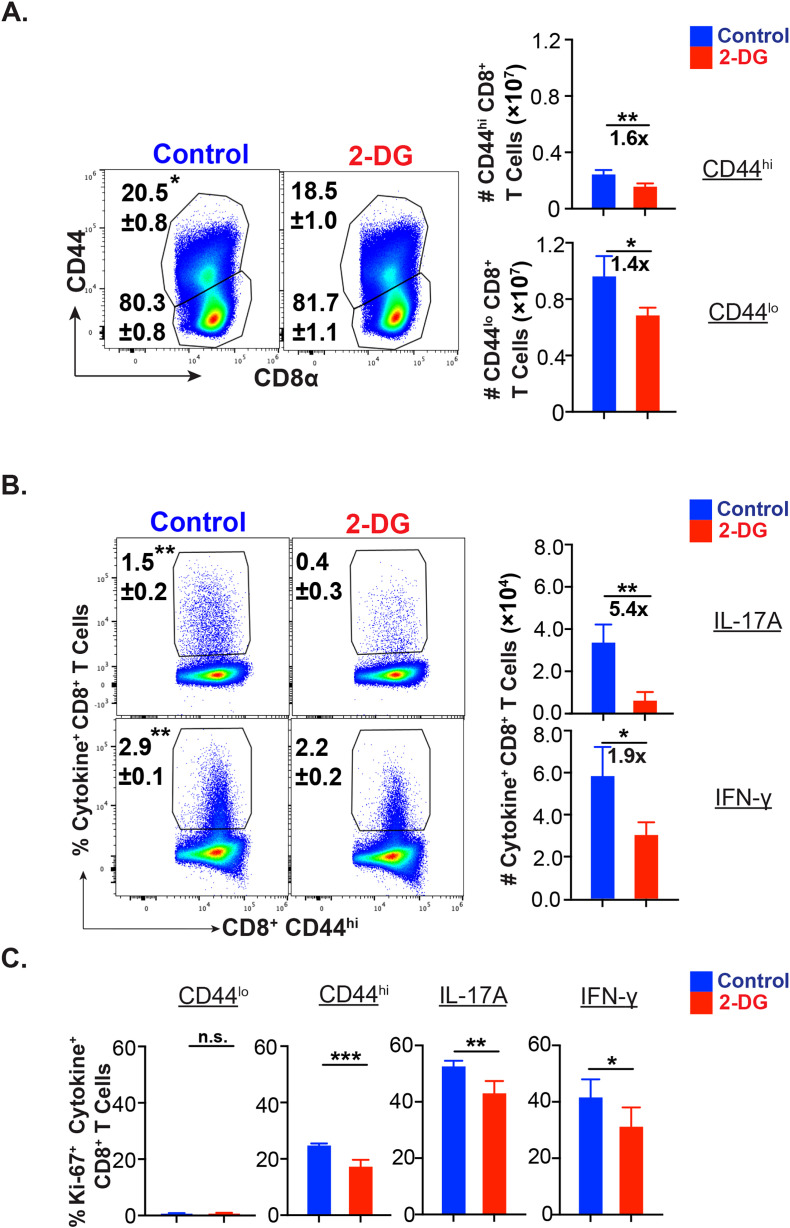
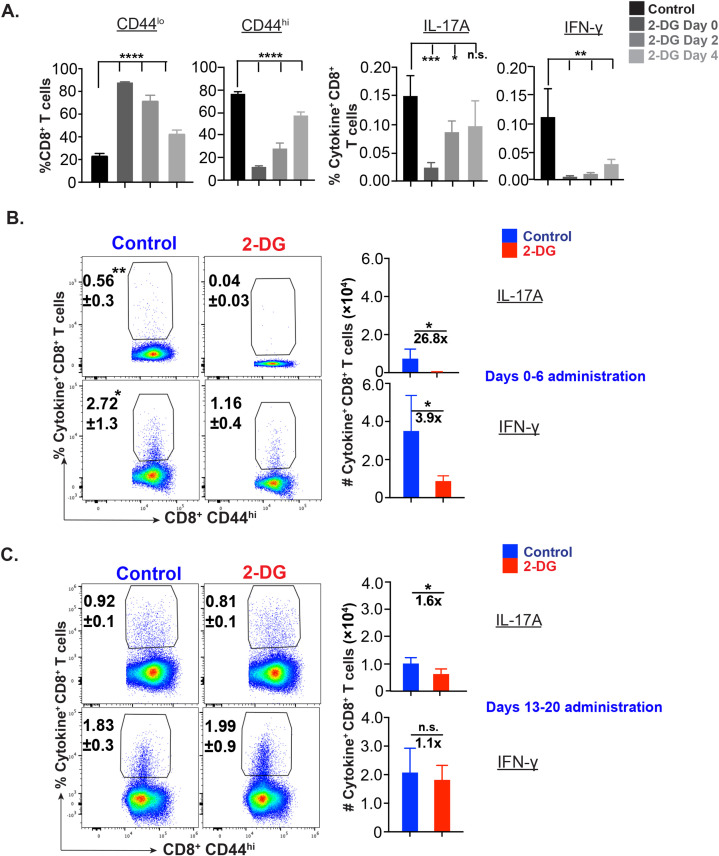
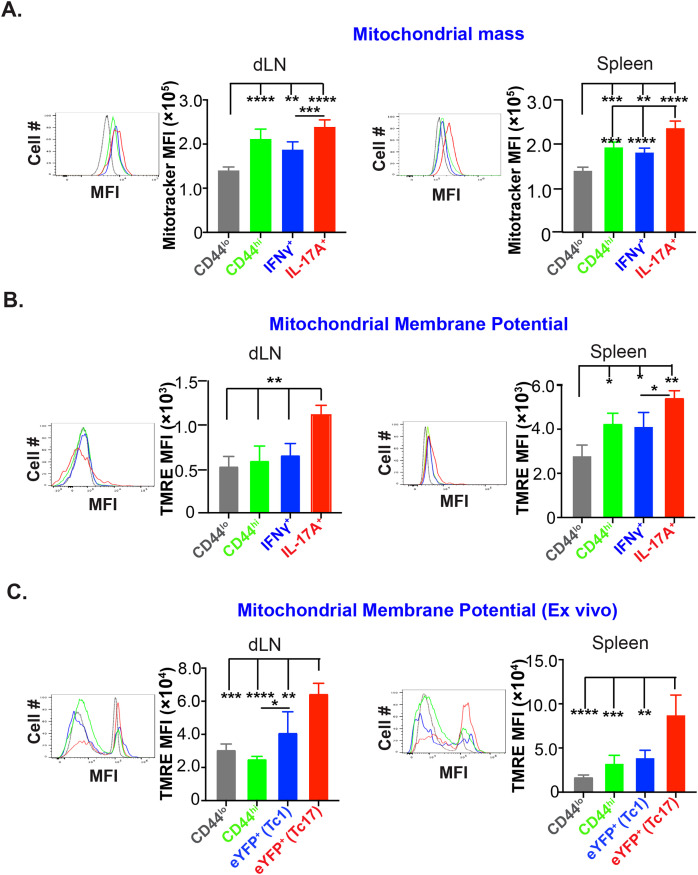
IL-17A-expressing lymphocytes, including Tc17 cells, are instrumental in immunity, immunopathology, and autoimmunity. We have previously shown that experimental attenuated live fungal vaccine-induced Tc17 cells are stable, long-lived without plasticity, and necessary to mediate sterilizing immunity during CD4 T cell deficiency, which poses higher susceptibility to fungal infections. Cell metabolism is integral for T cell homeostasis but the metabolic adaptations of Tc17 cells are poorly defined. In this study, we hypothesized that effector Tc17 cells adopt high energy-yielding metabolic pathways to form stable, long-lived memory cells . Using a mouse model of attenuated fungal vaccination, we found that effector Tc17 cells were metabolically highly active with higher proliferation and protein synthesis than IFNγ CD8 T (Tc1) cells. Glucose was necessary for effector Tc17 cell expansion but with less dependency during the late expansion despite the active metabolism. Contrary to established dogma, we found that the effector Tc17 cells preferentially channeled the glucose to OXPHOS than glycolysis, which was correlated with higher mitochondrial mass and membrane potential. Inhibition of OXPHOS shrunk the Tc17 responses while sparing Tc1 cell responses. Tc17 cells actively relied on OXPHOS throughout the expansion period, resisting adaptation to aerobic glycolysis. Our data showed that the effector Tc17 cells predominantly utilize glucose for metabolism through OXPHOS rather than aerobic glycolysis. Our study has implications in vaccine design to enhance the efficacy and immunotherapeutics to modulate the immunity and autoimmunity.
表达白细胞介素-17A的淋巴细胞,包括Tc17细胞,在免疫、免疫病理学和自身免疫中发挥着重要作用。我们之前已经表明,实验性减毒活真菌疫苗诱导的Tc17细胞是稳定的、长寿的且没有可塑性,并且在CD4 T细胞缺陷期间介导杀菌免疫是必要的,而CD4 T细胞缺陷会使人更容易感染真菌。细胞代谢是T细胞稳态不可或缺的一部分,但Tc17细胞的代谢适应性却知之甚少。在这项研究中,我们假设效应性Tc17细胞采用高能量产生的代谢途径来形成稳定、长寿的记忆细胞。使用减毒真菌疫苗接种的小鼠模型,我们发现效应性Tc17细胞代谢高度活跃,其增殖和蛋白质合成高于IFNγ CD8 T(Tc1)细胞。葡萄糖对于效应性Tc17细胞的扩增是必要的,但尽管代谢活跃,在后期扩增期间依赖性较小。与既定观念相反,我们发现效应性Tc17细胞优先将葡萄糖导向氧化磷酸化而非糖酵解,这与更高的线粒体质量和膜电位相关。抑制氧化磷酸化会缩小Tc17反应,而不影响Tc1细胞反应。在整个扩增期,Tc17细胞积极依赖氧化磷酸化,抵抗向有氧糖酵解的转变。我们的数据表明,效应性Tc17细胞主要通过氧化磷酸化而非有氧糖酵解利用葡萄糖进行代谢。我们的研究对提高疫苗疗效的疫苗设计以及调节免疫和自身免疫的免疫治疗具有启示意义。