Sun Michelle J, Rubin Gary S, Akpek Esen K, Ramulu Pradeep Y
Johns Hopkins School of Public Health, Baltimore, MD, USA.
UCL Institute of Ophthalmology, London, UK.
Transl Vis Sci Technol. 2017 Jun 29;6(3):24. doi: 10.1167/tvst.6.3.24. eCollection 2017 Jun.
We determine if visual field loss from glaucoma and/or measures of dry eye severity are associated with difficulty searching, as judged by slower search times on a text-based search task.
Glaucoma patients with bilateral visual field (VF) loss, patients with clinically significant dry eye, and normally-sighted controls were enrolled from the Wilmer Eye Institute clinics. Subjects searched three Yellow Pages excerpts for a specific phone number, and search time was recorded.
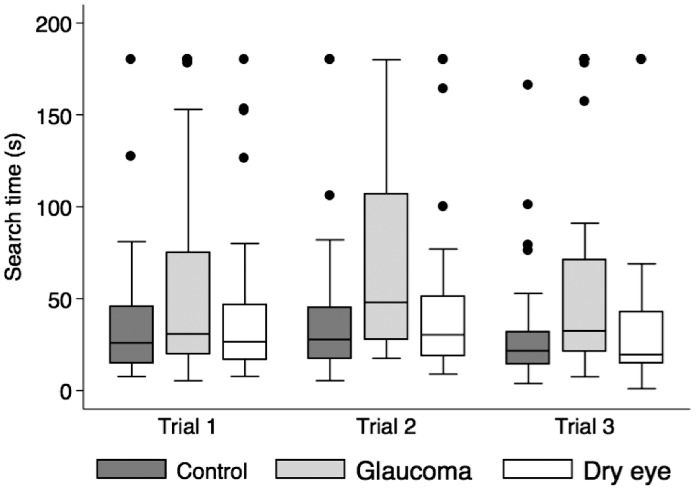
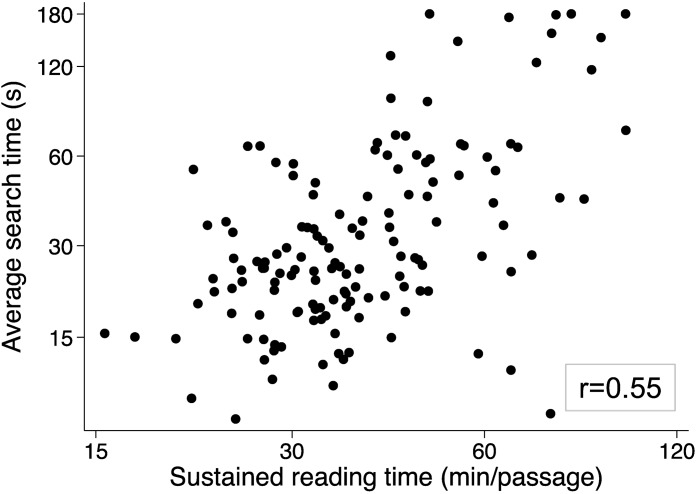
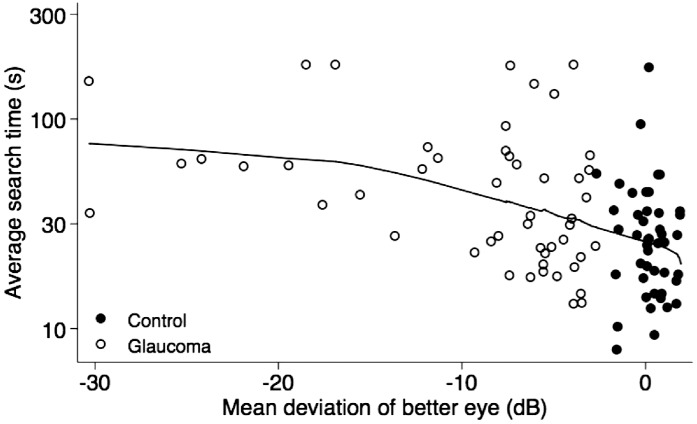
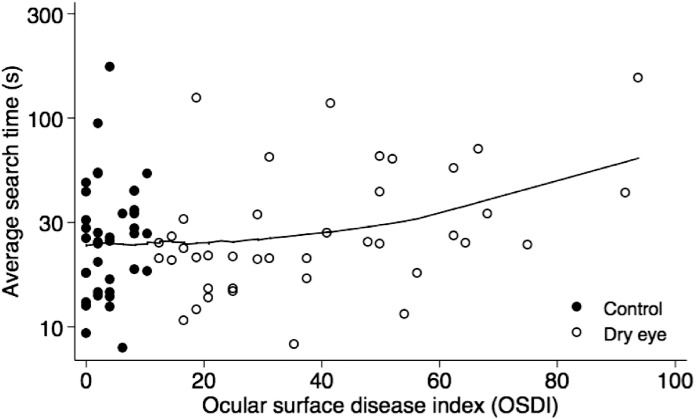
A total of 50 glaucoma subjects, 40 dry eye subjects, and 45 controls completed study procedures. On average, glaucoma patients exhibited 57% longer search times compared to controls (95% confidence interval [CI], 26%-96%, < 0.001), and longer search times were noted among subjects with greater VF loss ( < 0.001), worse contrast sensitivity ( < 0.001), and worse visual acuity ( = 0.026). Dry eye subjects demonstrated similar search times compared to controls, though worse Ocular Surface Disease Index (OSDI) vision-related subscores were associated with longer search times ( < 0.01). Search times showed no association with OSDI symptom subscores ( = 0.20) or objective measures of dry eye ( > 0.08 for Schirmer's testing without anesthesia, corneal fluorescein staining, and tear film breakup time).
Text-based visual search is slower for glaucoma patients with greater levels of VF loss and dry eye patients with greater self-reported visual difficulty, and these difficulties may contribute to decreased quality of life in these groups.
Visual search is impaired in glaucoma and dry eye groups compared to controls, highlighting the need for compensatory strategies and tools to assist individuals in overcoming their deficiencies.
我们通过基于文本的搜索任务中较慢的搜索时间来判断青光眼导致的视野缺损和/或干眼严重程度指标是否与搜索困难相关。
从威尔默眼科研究所诊所招募了双侧视野(VF)缺损的青光眼患者、具有临床显著意义的干眼患者和视力正常的对照者。受试者在三个黄页摘录中搜索一个特定电话号码,并记录搜索时间。
共有50名青光眼受试者、40名干眼受试者和45名对照者完成了研究程序。平均而言,青光眼患者的搜索时间比对照者长57%(95%置信区间[CI],26%-96%,P<0.001),在视野缺损更大(P<0.001)、对比敏感度更差(P<0.001)和视力更差(P=0.026)的受试者中观察到更长的搜索时间。干眼受试者与对照者的搜索时间相似,尽管较差的眼表疾病指数(OSDI)视觉相关子评分与更长的搜索时间相关(P<0.01)。搜索时间与OSDI症状子评分无关(P=0.20),也与干眼的客观指标无关(无麻醉的Schirmer试验、角膜荧光素染色和泪膜破裂时间的P>0.08)。
对于视野缺损程度较高的青光眼患者和自我报告视觉困难较大的干眼患者,基于文本的视觉搜索较慢,这些困难可能导致这些人群生活质量下降。
与对照者相比,青光眼和干眼组的视觉搜索受损,突出了需要补偿策略和工具来帮助个体克服其缺陷。