Yu Haiyang, Wu Zhihai, Wang Shuqin, Wang Yunpeng, Ma Xiaolei
School of Transportation Science and Engineering, Beijing Key Laboratory for Cooperative Vehicle Infrastructure System and Safety Control, Beihang University, Beijing 100191, China.
Passenger Vehicle EE Development Department, China FAW R&D Center, Changchun 130011, China.
Sensors (Basel). 2017 Jun 26;17(7):1501. doi: 10.3390/s17071501.
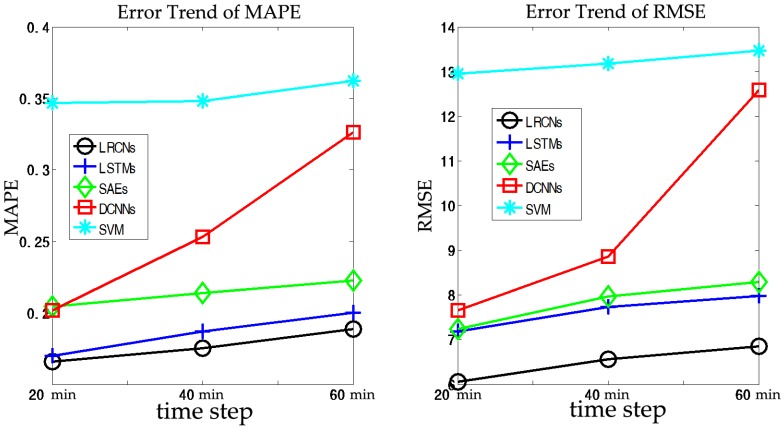
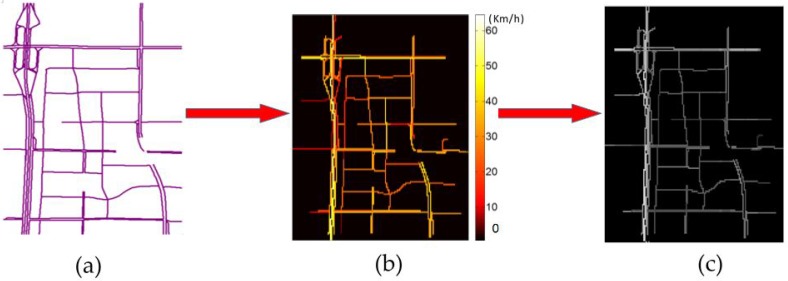
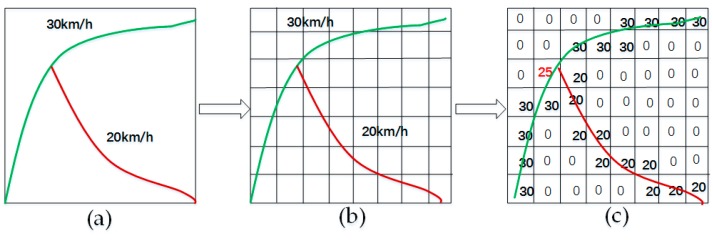
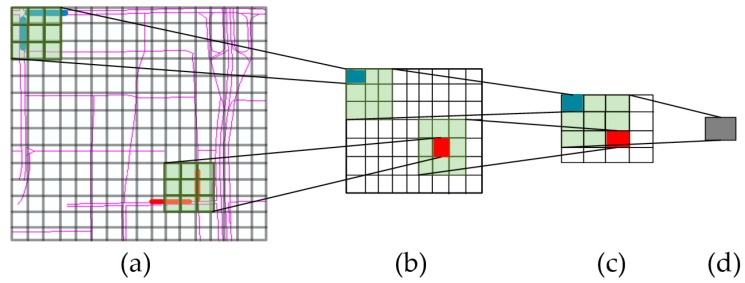
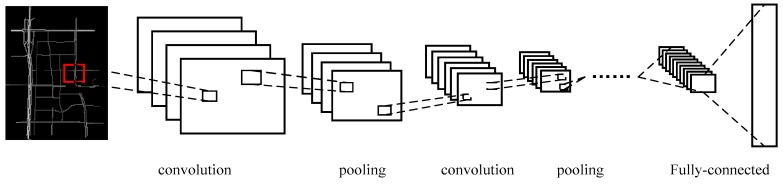
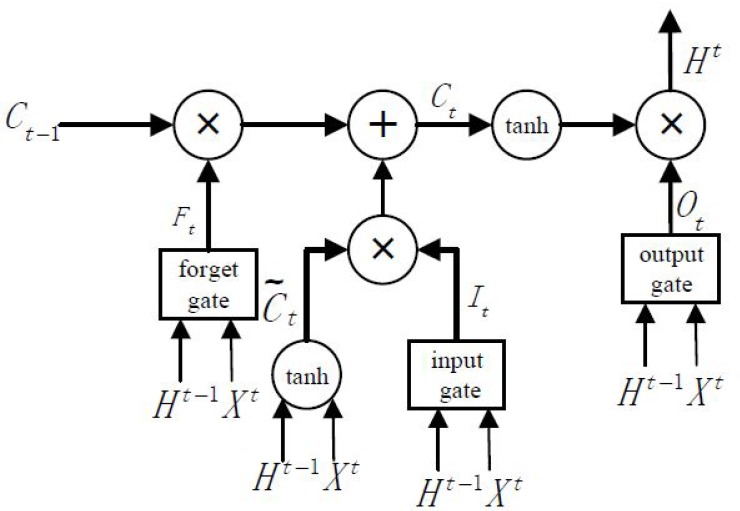
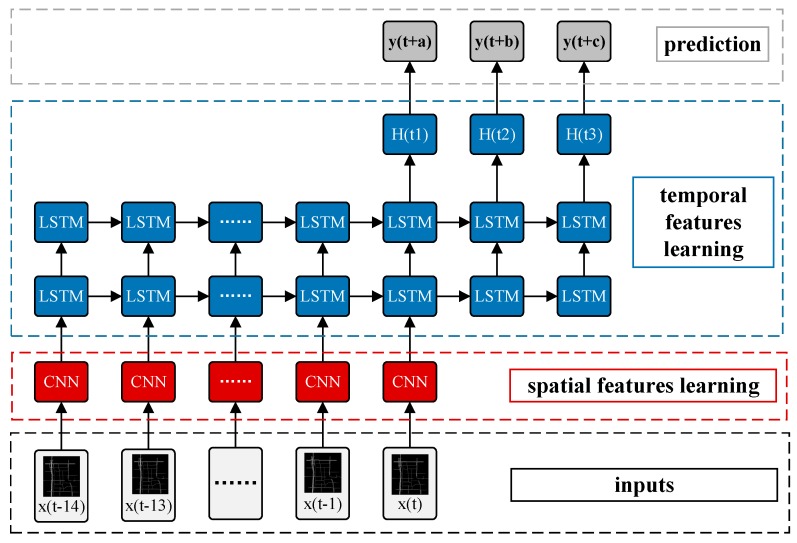
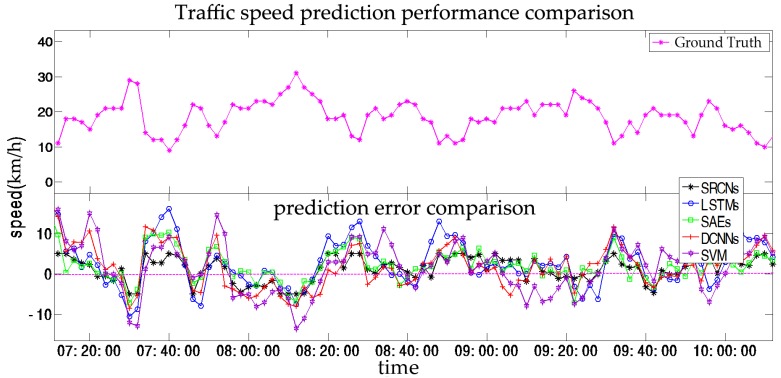
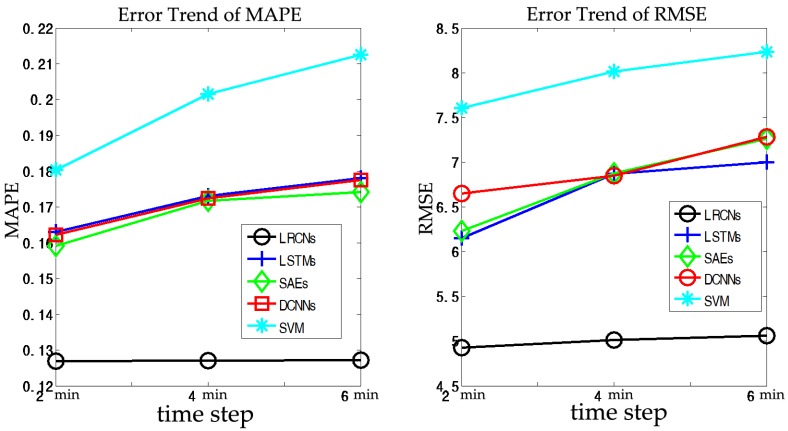
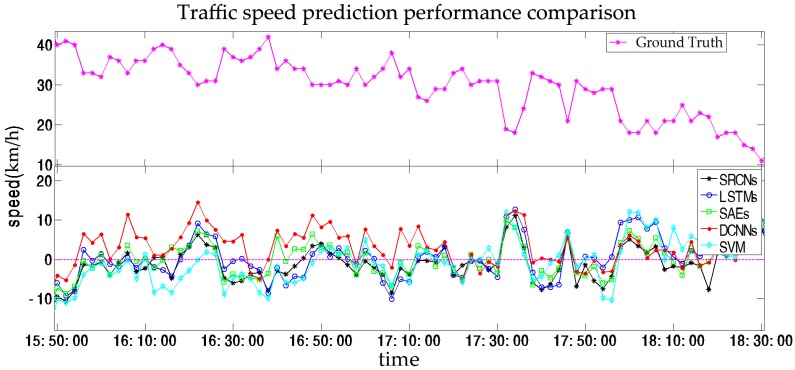
Predicting large-scale transportation network traffic has become an important and challenging topic in recent decades. Inspired by the domain knowledge of motion prediction, in which the future motion of an object can be predicted based on previous scenes, we propose a network grid representation method that can retain the fine-scale structure of a transportation network. Network-wide traffic speeds are converted into a series of static images and input into a novel deep architecture, namely, spatiotemporal recurrent convolutional networks (SRCNs), for traffic forecasting. The proposed SRCNs inherit the advantages of deep convolutional neural networks (DCNNs) and long short-term memory (LSTM) neural networks. The spatial dependencies of network-wide traffic can be captured by DCNNs, and the temporal dynamics can be learned by LSTMs. An experiment on a Beijing transportation network with 278 links demonstrates that SRCNs outperform other deep learning-based algorithms in both short-term and long-term traffic prediction.
近几十年来,预测大规模交通网络流量已成为一个重要且具有挑战性的课题。受运动预测领域知识的启发,在该领域中可以根据先前场景预测物体的未来运动,我们提出了一种网络网格表示方法,该方法可以保留交通网络的精细尺度结构。将全网络交通速度转换为一系列静态图像,并输入到一种新颖的深度架构,即时空循环卷积网络(SRCN)中进行交通流量预测。所提出的SRCN继承了深度卷积神经网络(DCNN)和长短期记忆(LSTM)神经网络的优点。DCNN可以捕捉全网络交通的空间依赖性,LSTM可以学习时间动态性。在一个拥有278条链路的北京交通网络上进行的实验表明,SRCN在短期和长期交通流量预测方面均优于其他基于深度学习的算法。