He Peng, Zhao Peng, Wang Limin, Zhang Yuzhou, Wang Xiaosi, Xiao Hui, Yu Jianing, Xiao Guanghui
Key Laboratory of the Ministry of Education for Medicinal Plant Resources and Natural Pharmaceutical Chemistry, National Engineering Laboratory for Resource Development of Endangered Crude Drugs in the Northwest of China, College of Life Sciences, Shaanxi Normal University, Xi'an, 710119, China.
College of Life Sciences, Shaanxi Normal University, Xi'an, 710119, China.
BMC Genomics. 2017 Jul 3;18(1):507. doi: 10.1186/s12864-017-3901-5.
Cell elongation and expansion are significant contributors to plant growth and morphogenesis, and are often regulated by environmental cues and endogenous hormones. Auxin is one of the most important phytohormones involved in the regulation of plant growth and development and plays key roles in plant cell expansion and elongation. Cotton fiber cells are a model system for studying cell elongation due to their large size. Cotton is also the world's most utilized crop for the production of natural fibers for textile and garment industries, and targeted expression of the IAA biosynthetic gene iaaM increased cotton fiber initiation. Polar auxin transport, mediated by PIN and AUX/LAX proteins, plays a central role in the control of auxin distribution. However, very limited information about PIN-FORMED (PIN) efflux carriers in cotton is known.
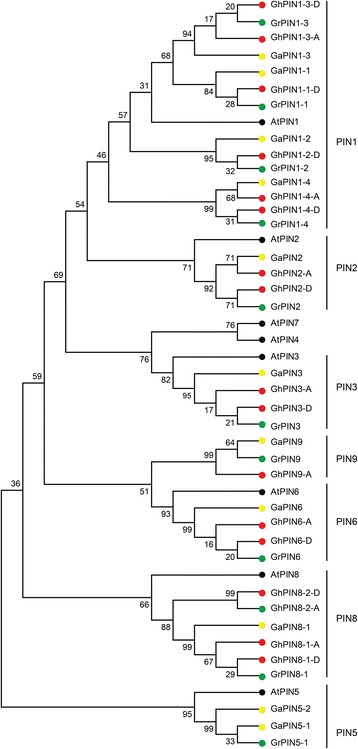
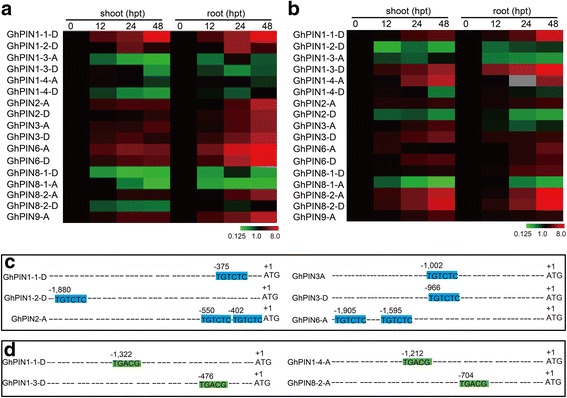
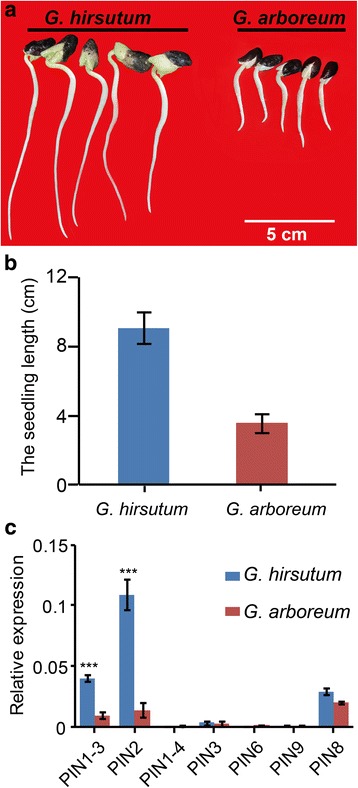
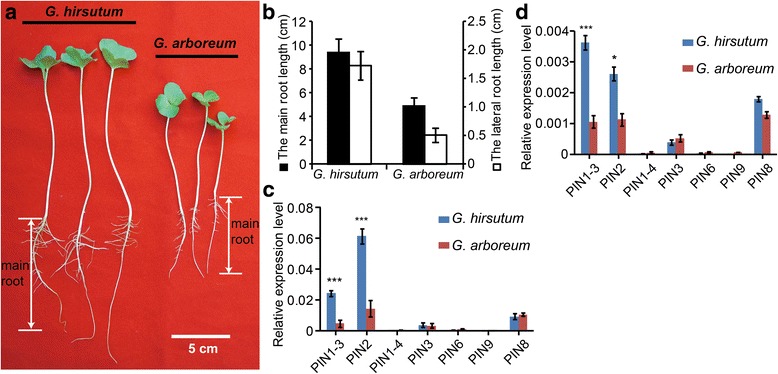
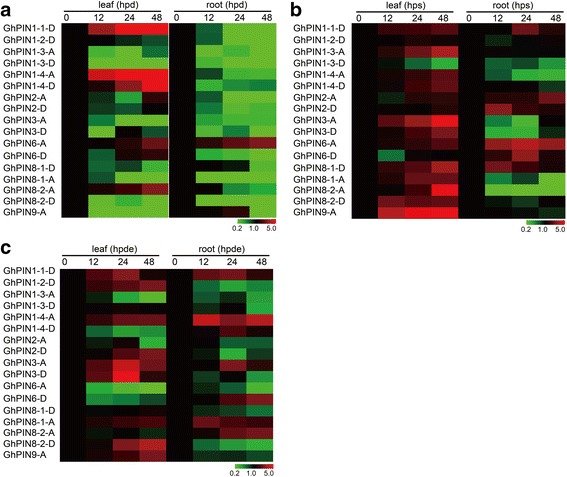
In this study, 17 PIN-FORMED (PIN) efflux carrier family members were identified in the Gossypium hirsutum (G. hirsutum) genome. We found that PIN1-3 and PIN2 genes originated from the At subgenome were highly expressed in roots. Additionally, evaluation of gene expression patterns indicated that PIN genes are differentially induced by various abiotic stresses. Furthermore, we found that the majority of cotton PIN genes contained auxin (AuxREs) and salicylic acid (SA) responsive elements in their promoter regions were significantly up-regulated by exogenous hormone treatment.
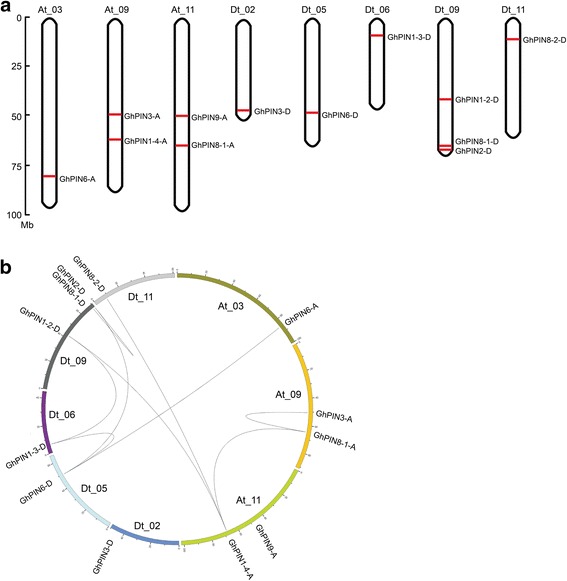
Our results provide a comprehensive analysis of the PIN gene family in G. hirsutum, including phylogenetic relationships, chromosomal locations, and gene expression and gene duplication analyses. This study sheds light on the precise roles of PIN genes in cotton root development and in adaption to stress responses.
细胞伸长和扩张是植物生长和形态发生的重要因素,并且常常受到环境信号和内源激素的调控。生长素是参与植物生长发育调控的最重要植物激素之一,在植物细胞扩张和伸长中起关键作用。棉纤维细胞因其体积大,是研究细胞伸长的一个模型系统。棉花也是世界上用于纺织和制衣工业生产天然纤维的最广泛利用的作物,生长素生物合成基因iaaM的靶向表达增加了棉纤维起始。由PIN和AUX/LAX蛋白介导的极性生长素运输在生长素分布的控制中起核心作用。然而,关于棉花中PIN-FORMED(PIN)输出载体的信息非常有限。
在本研究中,在陆地棉基因组中鉴定出17个PIN-FORMED(PIN)输出载体家族成员。我们发现起源于At亚基因组的PIN1-3和PIN2基因在根中高度表达。此外,基因表达模式评估表明PIN基因受到各种非生物胁迫的差异诱导。此外,我们发现大多数棉花PIN基因在其启动子区域含有生长素(AuxREs)和水杨酸(SA)响应元件,经外源激素处理后显著上调。
我们的结果提供了对陆地棉PIN基因家族的全面分析,包括系统发育关系、染色体定位以及基因表达和基因复制分析。本研究揭示了PIN基因在棉花根系发育和适应胁迫反应中的精确作用。