Lake and Glacier Research Group, Institute of Ecology, University of Innsbruck, 6020, Innsbruck, Austria.
Institute of Botany, University of Innsbruck, 6020, Innsbruck, Austria.
Sci Rep. 2017 Jul 3;7(1):4487. doi: 10.1038/s41598-017-04836-w.
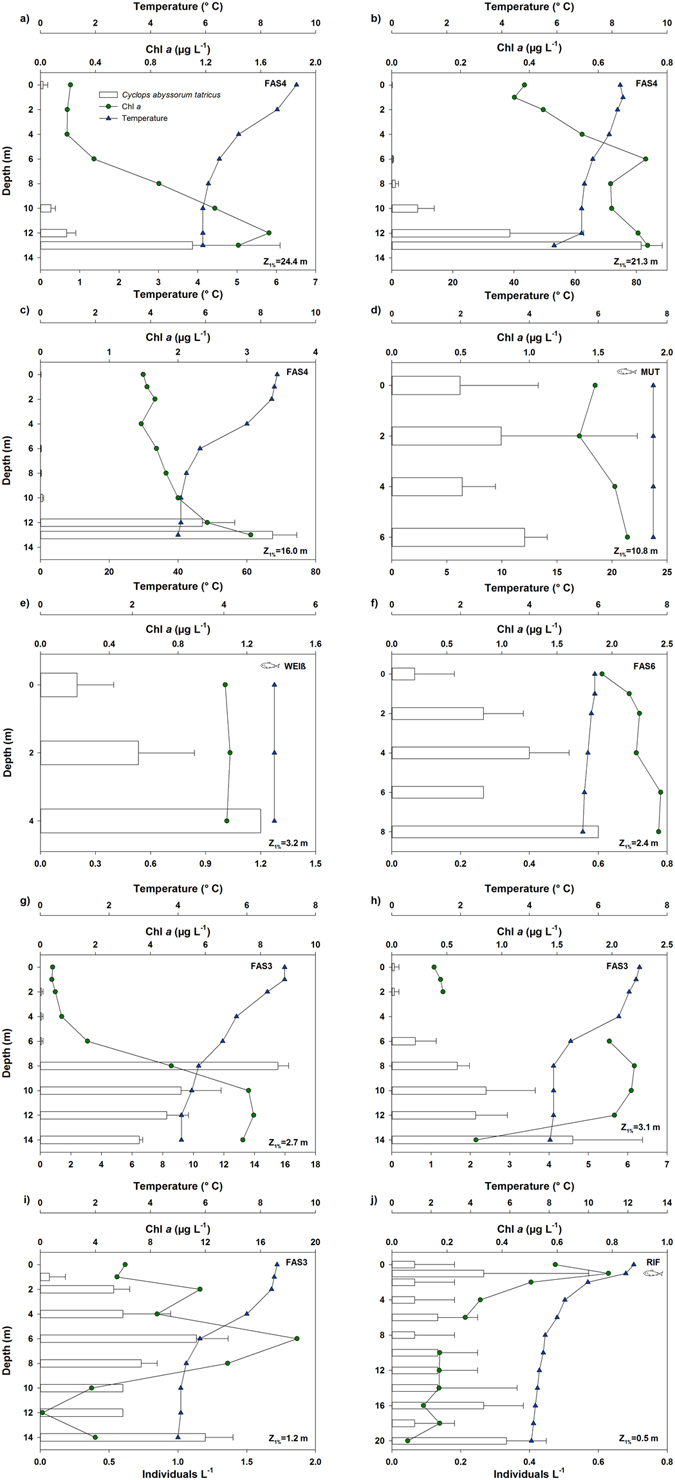
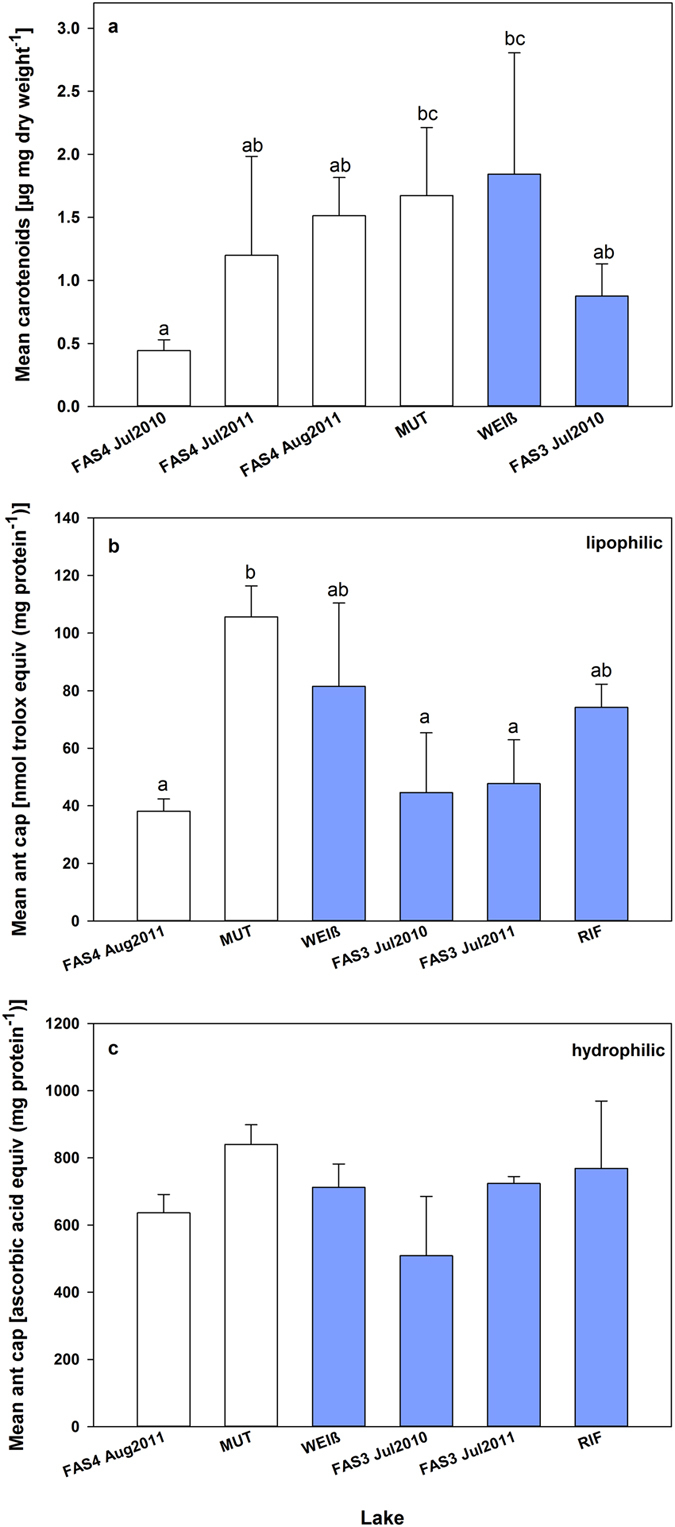
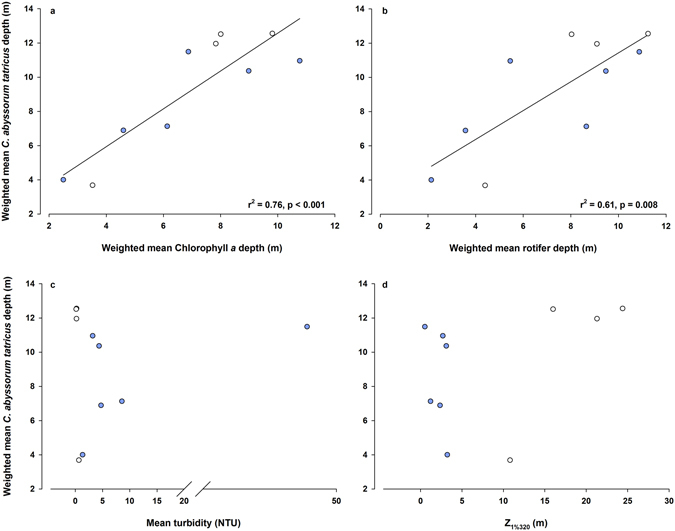
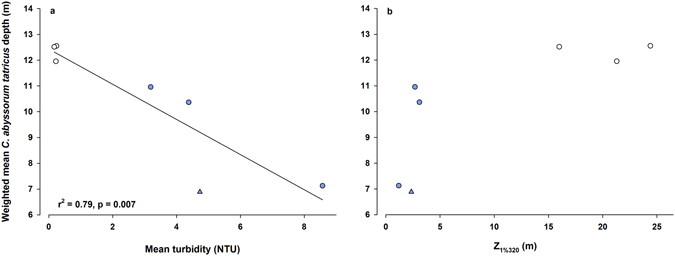
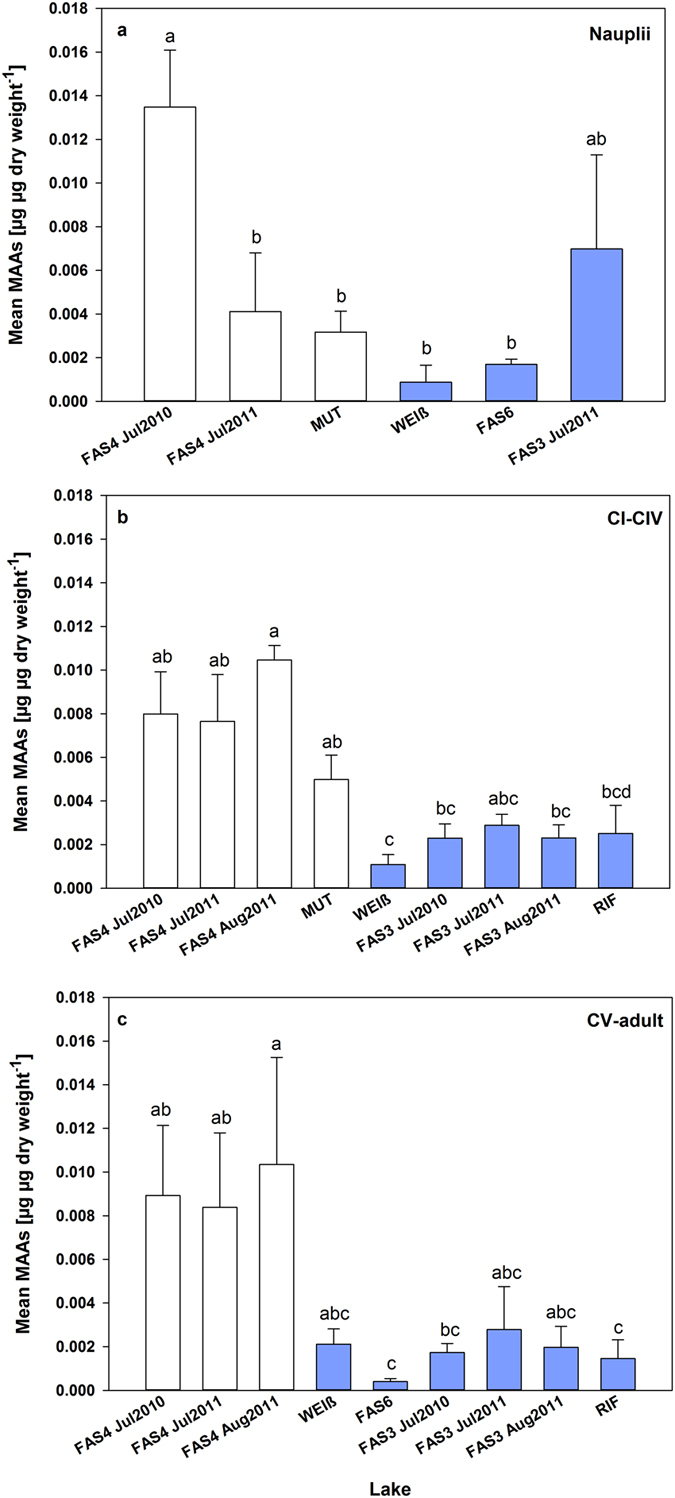
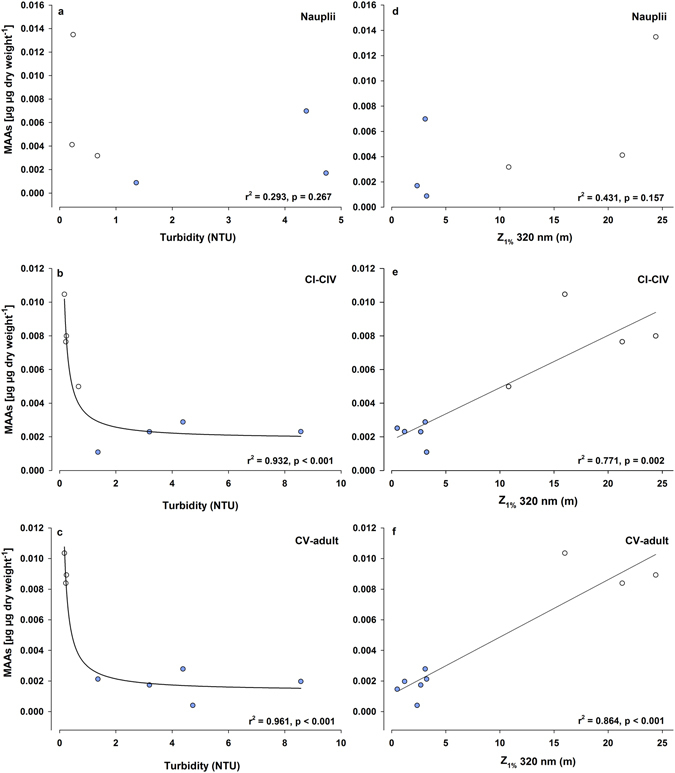
Zooplankton, a group of aquatic animals important as trophic link in the food web, are exposed to high levels of UV radiation (UVR) in clear alpine lakes, while in turbid glacier-fed lakes they are more protected. To study the interplay between behavioral and physiological protection responses in zooplankton from those lakes, we sampled six lakes of different UVR transparency and glacial turbidity. Copepods were absent in the upper water layers of the clearest lake, while in glacier-fed lakes they were more evenly distributed in the water column. Across all lakes, the weighted copepod mean depth was strongly related to food resources (chlorophyll a and rotifers), whereas in the fishless lakes, glacial turbidity largely explained the vertical daytime distribution of these organisms. Up to ~11-times (mean 3.5) higher concentrations of photo-protective compounds (mycosporine-like amino acids, MAAs) were found in the copepods from the clear than from the glacier-fed lakes. In contrast to carotenoid concentrations and antioxidant capacities, MAA levels were strongly related to the lake transparency. Copepods from alpine lakes rely on a combination of behavioral and physiological strategies adapted to the change in environmental conditions taking place when lakes shift from glacially turbid to clear conditions, as glacier retreat proceeds.
浮游动物是水生动物的一个重要群体,作为食物网中的营养链接,它们在清澈的高山湖泊中暴露在高水平的紫外线辐射 (UVR) 下,而在浑浊的冰川补给湖泊中它们受到更多的保护。为了研究来自这些湖泊的浮游动物的行为和生理保护反应之间的相互作用,我们对六个不同紫外线透明度和冰川浊度的湖泊进行了采样。在最清澈的湖泊的上层水域中没有桡足类动物,而在冰川补给的湖泊中,它们在水柱中更均匀地分布。在所有湖泊中,加权桡足类动物平均深度与食物资源(叶绿素 a 和轮虫)密切相关,而在没有鱼类的湖泊中,冰川浊度在很大程度上解释了这些生物的垂直日间分布。在清澈的湖泊中发现的桡足类动物中的光保护化合物(菌氨酸类似物氨基酸,MAAs)浓度比在冰川补给的湖泊中高约 11 倍(平均值为 3.5 倍)。与类胡萝卜素浓度和抗氧化能力相反,MAA 水平与湖泊透明度密切相关。高山湖泊中的桡足类动物依赖于行为和生理策略的组合,以适应湖泊从冰川浑浊到清澈条件变化时的环境条件变化,因为冰川退缩正在进行。