Institute of Pharmacy, Pharmacognosy, University of Innsbruck, Innrain 80-82, Innsbruck, 6020, Austria.
Institute of Biological Sciences, Applied Ecology & Phycology, University of Rostock, Albert-Einstein-Str. 3, Rostock, 18059, Germany.
J Phycol. 2019 Apr;55(2):393-403. doi: 10.1111/jpy.12827. Epub 2019 Jan 31.
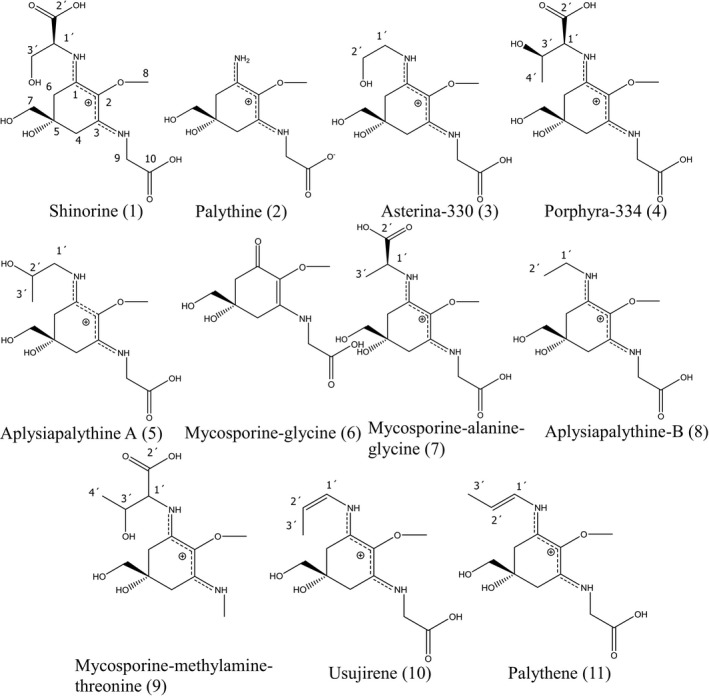
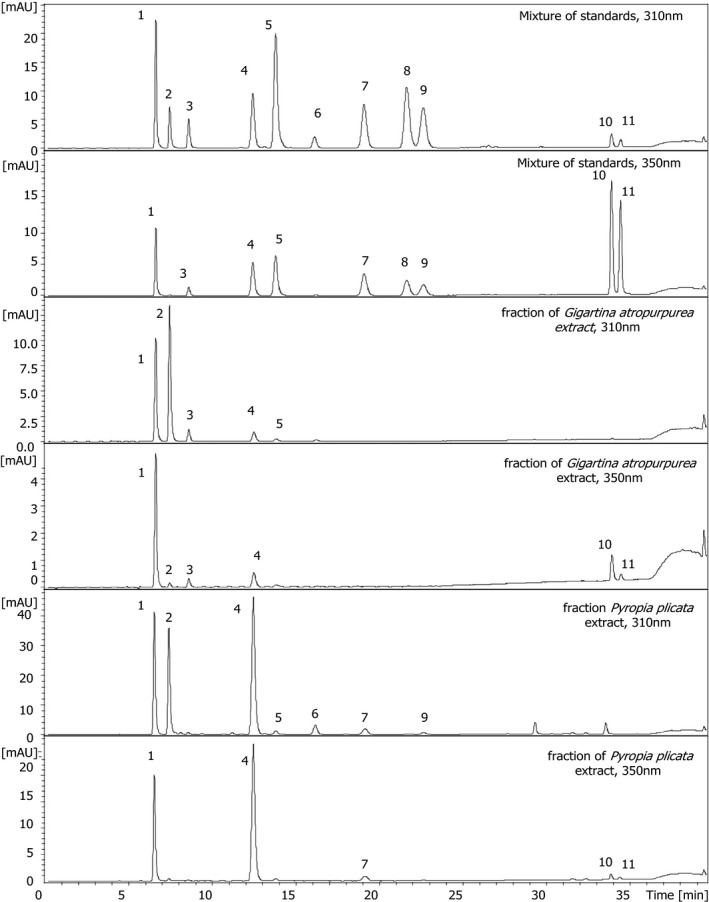
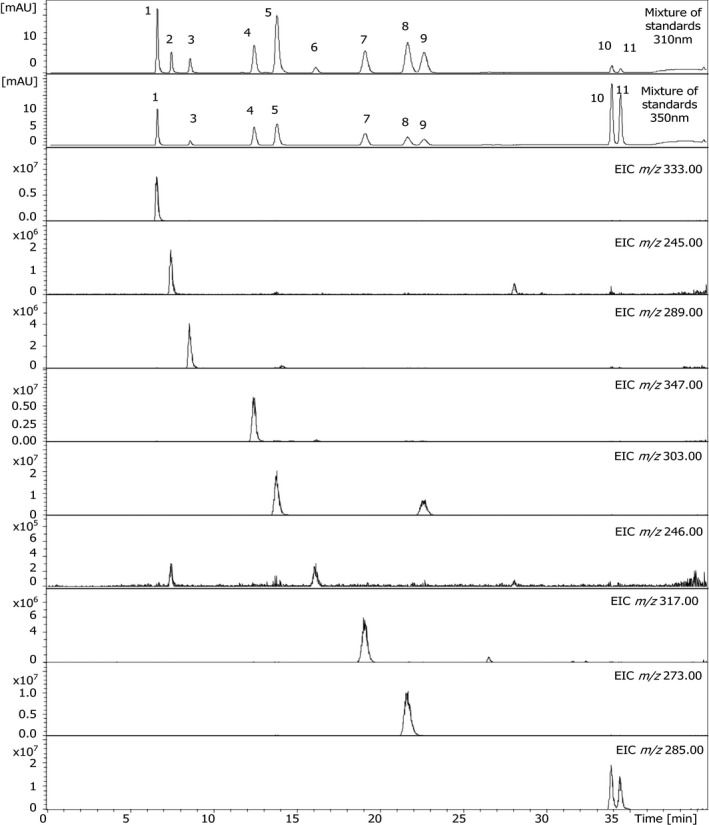
Rhodophyta produce a variety of chemically different mycosporine-like amino acids (MAAs), compounds that are known as some of the strongest ultraviolet (UV) absorbing molecules in nature. Accordingly, they primarily act as photoprotectants against harmful levels of solar ultraviolet radiation in the UV-A and UV-B range. In order to get a deeper understanding of the chemical diversity of MAAs in red algae, pure standards of eleven mycosporine-like amino acids were isolated from three different species (Agarophyton chilense, Pyropia plicata and Champia novae-zelandiae) using various chromatographic methods. Their structures were confirmed by nuclear magnetic resonance and mass spectrometry. Four out of the eleven MAAs are reported for the first time in algae. In addition, a new high-performance liquid chromatography method was developed for the separation of all isolated MAAs and successfully applied for the analysis of twenty-three red algal species of marine origin. All of them contained MAAs, the most abundant compounds were shinorine, palythine, asterina-330 and porphyra-334. For some samples, the direct assignment of MAAs based on their UV spectra was not possible; therefore, the target analytes were enriched by a simple concentration step, followed by liquid chromatography-mass spectrometry analysis of the extracts. This approach enabled a deeper insight into the MAA pattern of red algae, indicating that not only the four dominant ones are synthesized but also many others, which were often described as unknown compounds in previous studies.
红藻产生多种化学性质不同的菌多酚胺类氨基酸(MAAs),这些化合物是自然界中已知的最强紫外线(UV)吸收分子之一。因此,它们主要作为光保护剂,防止紫外线 A 和紫外线 B 范围内有害水平的太阳紫外线辐射。为了更深入地了解红藻中 MAAs 的化学多样性,使用各种色谱方法从三种不同的物种(琼脂藻、条斑紫菜和新西兰囊果藻)中分离出 11 种菌多酚胺类氨基酸的纯标准品。通过核磁共振和质谱法确定了它们的结构。其中四种 MAAs 是首次在藻类中报道的。此外,还开发了一种新的高效液相色谱法,用于分离所有分离出的 MAAs,并成功应用于分析 23 种海洋来源的红藻物种。它们都含有 MAAs,最丰富的化合物是 shinorine、palythine、asterina-330 和 porphyra-334。对于一些样品,基于它们的 UV 光谱直接分配 MAAs 是不可能的;因此,通过简单的浓缩步骤对目标分析物进行富集,然后对提取物进行液相色谱-质谱分析。这种方法使我们更深入地了解了红藻的 MAAs 模式,表明不仅合成了四种主要的 MAAs,还合成了许多其他 MAAs,这在以前的研究中常被描述为未知化合物。