Ding Ruoting, Sun Baihui, Liu Zhongyuan, Yao Xinqiang, Wang Haiming, Shen Xing, Jiang Hui, Chen Jianting
Department of Spine Surgery, Nanfang Hospital, Southern Medical UniversityGuangzhou, China.
Department of Plastic and Aesthetic Surgery, Nanfang Hospital, Southern Medical UniversityGuangzhou, China.
Front Mol Neurosci. 2017 Jun 19;10:195. doi: 10.3389/fnmol.2017.00195. eCollection 2017.
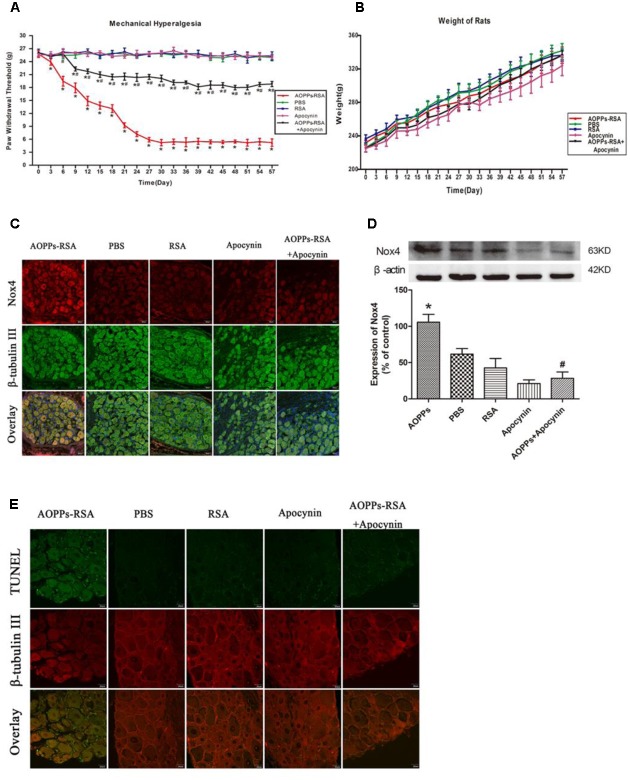
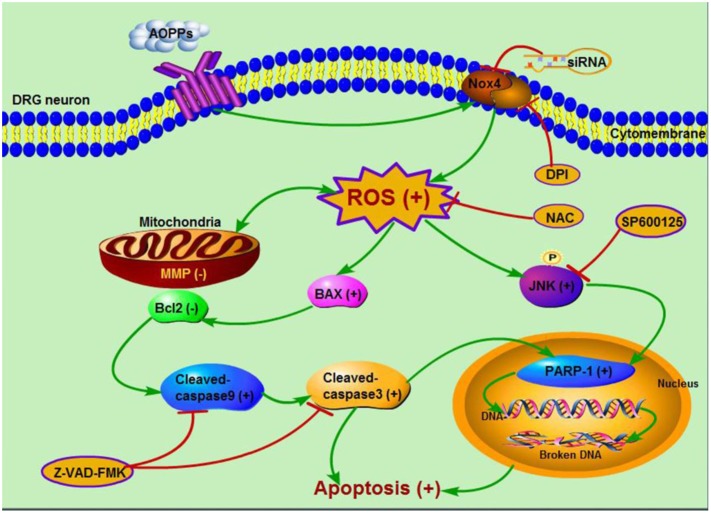
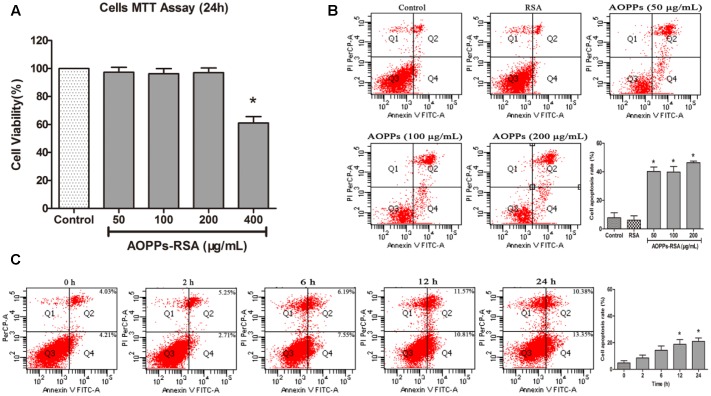
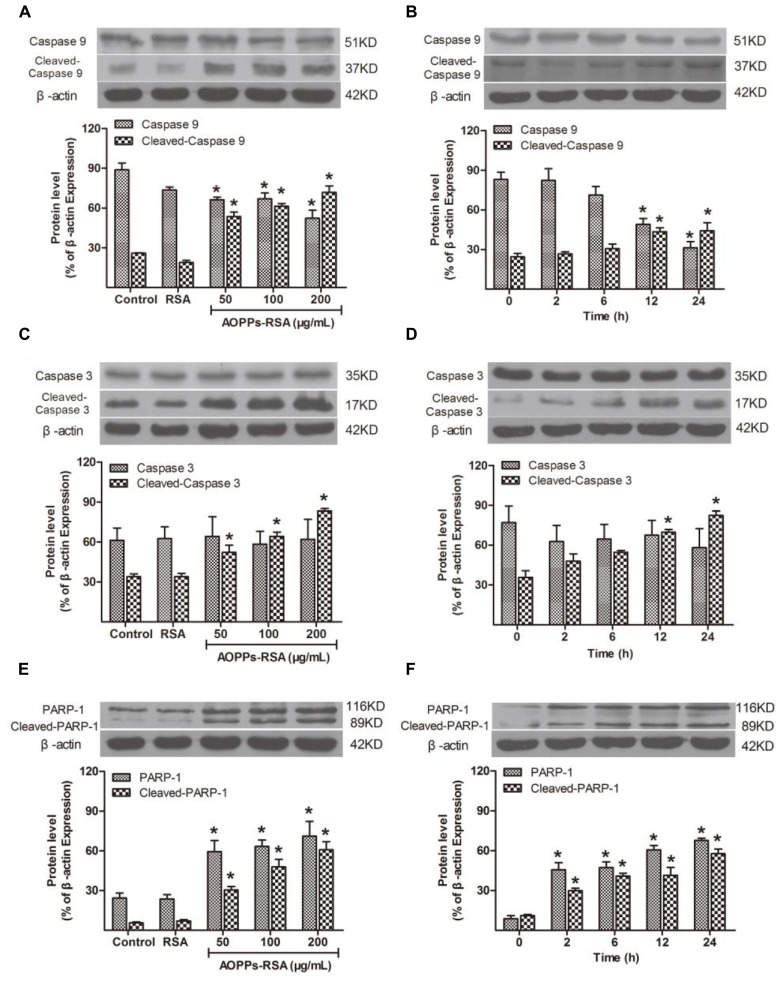
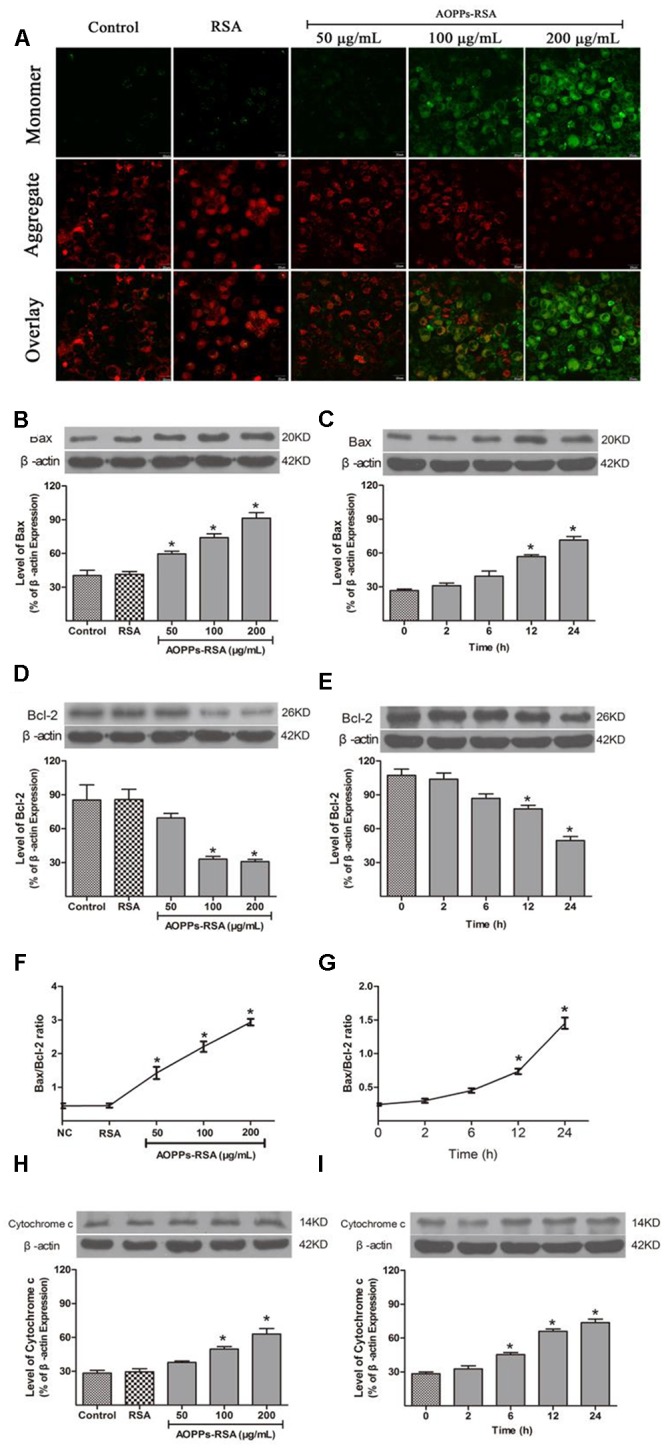
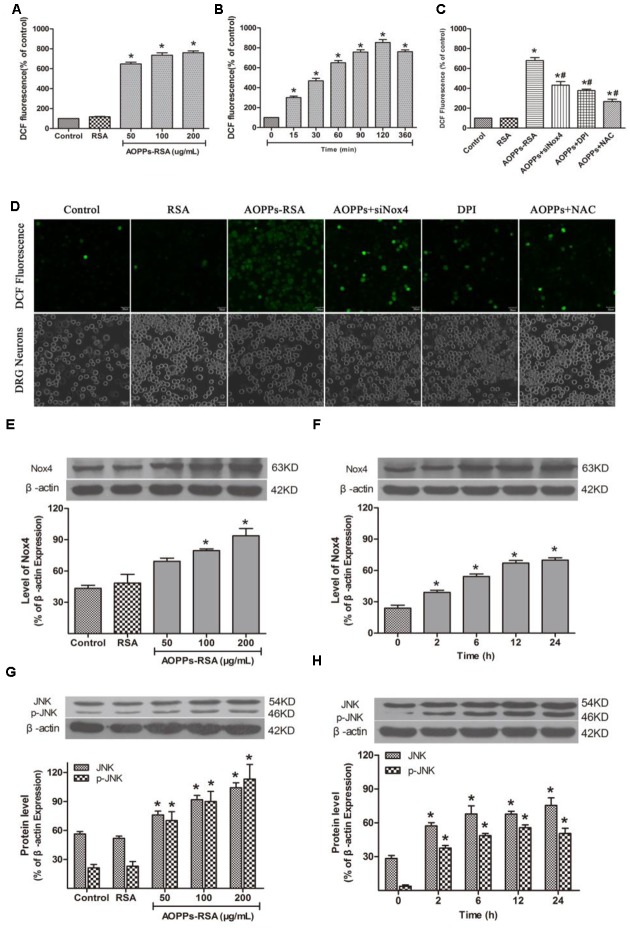
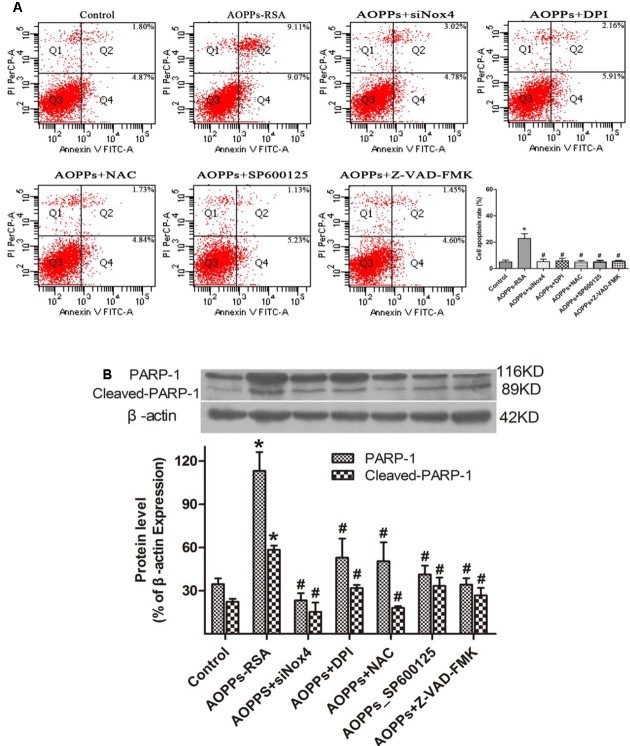
Pain hypersensitivity is the most common category of chronic pain and is difficult to cure. Oxidative stress and certain cells apoptosis, such as dorsal root ganglion (DRG) neurons, play an essential role in the induction and development of pain hypersensitivity. The focus of this study is at a more specific molecular level. We investigated the role of advanced oxidative protein products (AOPPs) in inducing hypersensitivity and the cellular mechanism underlying the proapoptotic effect of AOPPs. Normal rats were injected by AOPPs-Rat serum albumin (AOPPs-RSA) to cause pain hypersensitivity. Primary cultured DRG neurons were treated with increasing concentrations of AOPPs-RSA or for increasing time durations. The MTT, flow cytometry and western blot analyses were performed in the DRG neurons. A loss of mitochondrial membrane potential (MMP) and an increase in intracellular reactive oxygen species (ROS) were observed. We found that AOPPs triggered DRG neurons apoptosis and MMP loss. After AOPPs treatment, intracellular ROS generation increased in a time- and dose-dependent manner, whereas, -acetyl-L-cysteine (NAC), a specific ROS scavenger could inhibit the ROS generation. Proapoptotic proteins, such as Bax, caspase 9/caspase 3, and PARP-1 were activated, whereas anti-apoptotic Bcl-2 protein was down-regulated. AOPPs also increased Nox4 and JNK expression. Taken together, these findings suggest that AOPPs cause pain hypersensitivity in rats, and extracellular AOPPs accumulation triggered Nox4-dependent ROS production, which activated JNK, and induced DRG neurons apoptosis by activating caspase 3 and PARP-1.
疼痛超敏是慢性疼痛最常见的类型,且难以治愈。氧化应激和某些细胞凋亡,如背根神经节(DRG)神经元,在疼痛超敏的诱导和发展中起重要作用。本研究的重点在于更具体的分子水平。我们研究了晚期氧化蛋白产物(AOPPs)在诱导超敏中的作用以及AOPPs促凋亡作用的细胞机制。给正常大鼠注射AOPPs-大鼠血清白蛋白(AOPPs-RSA)以引起疼痛超敏。用浓度递增的AOPPs-RSA或处理时间递增的方式处理原代培养的DRG神经元。对DRG神经元进行MTT、流式细胞术和蛋白质印迹分析。观察到线粒体膜电位(MMP)丧失和细胞内活性氧(ROS)增加。我们发现AOPPs触发DRG神经元凋亡和MMP丧失。AOPPs处理后,细胞内ROS生成呈时间和剂量依赖性增加,而特异性ROS清除剂N-乙酰-L-半胱氨酸(NAC)可抑制ROS生成。促凋亡蛋白,如Bax、半胱天冬酶9/半胱天冬酶3和聚(ADP-核糖)聚合酶-1(PARP-1)被激活,而抗凋亡Bcl-2蛋白下调。AOPPs还增加了Nox4和JNK的表达。综上所述,这些发现表明AOPPs导致大鼠疼痛超敏,细胞外AOPPs积累触发了Nox4依赖性ROS产生,激活了JNK,并通过激活半胱天冬酶3和PARP-1诱导DRG神经元凋亡。