Sandoval Rodrigo, Lazcano Pablo, Ferrari Franco, Pinto-Pardo Nicolás, González-Billault Christian, Utreras Elías
Laboratory of Molecular and Cellular Mechanisms of Pain, Department of Biology, Faculty of Science, Universidad de Chile, Santiago, Chile.
Doctorate in Biomedicine, Universidad de los Andes, Santiago, Chile.
Front Physiol. 2018 Feb 6;9:65. doi: 10.3389/fphys.2018.00065. eCollection 2018.
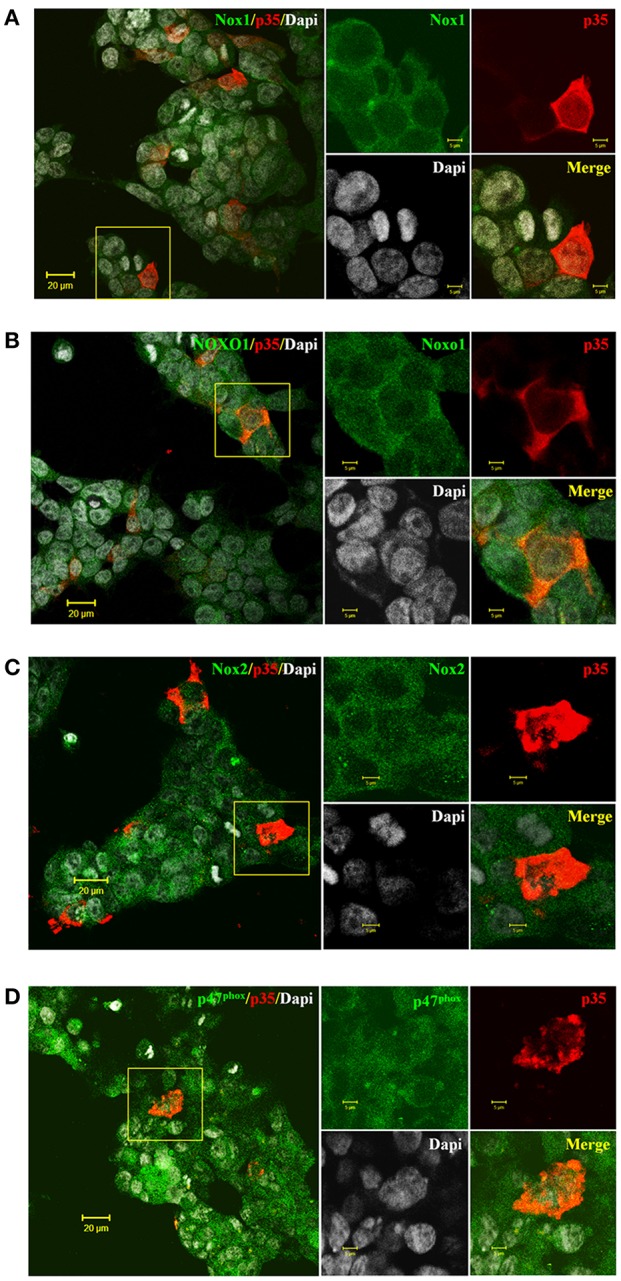
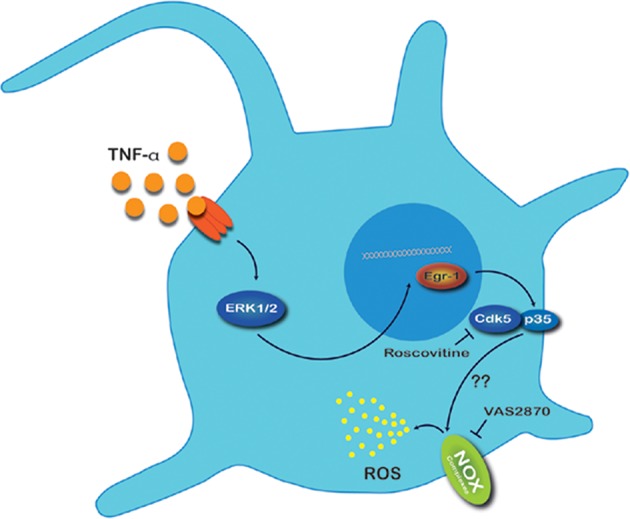
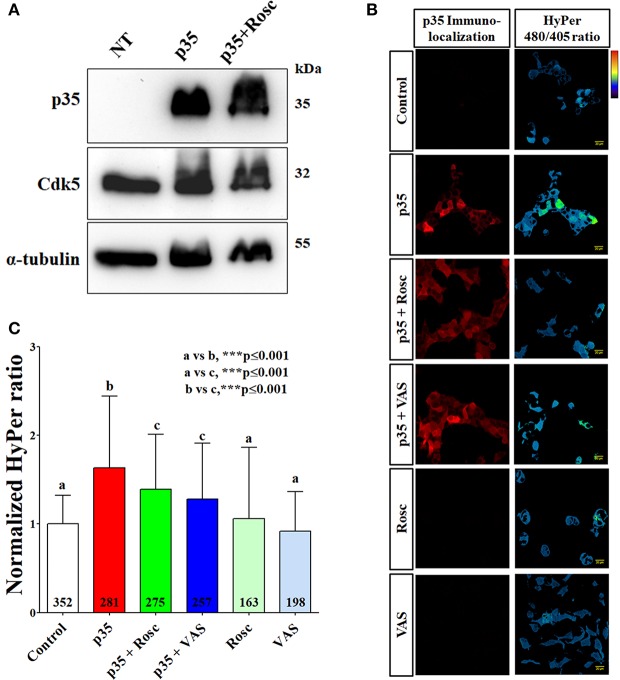
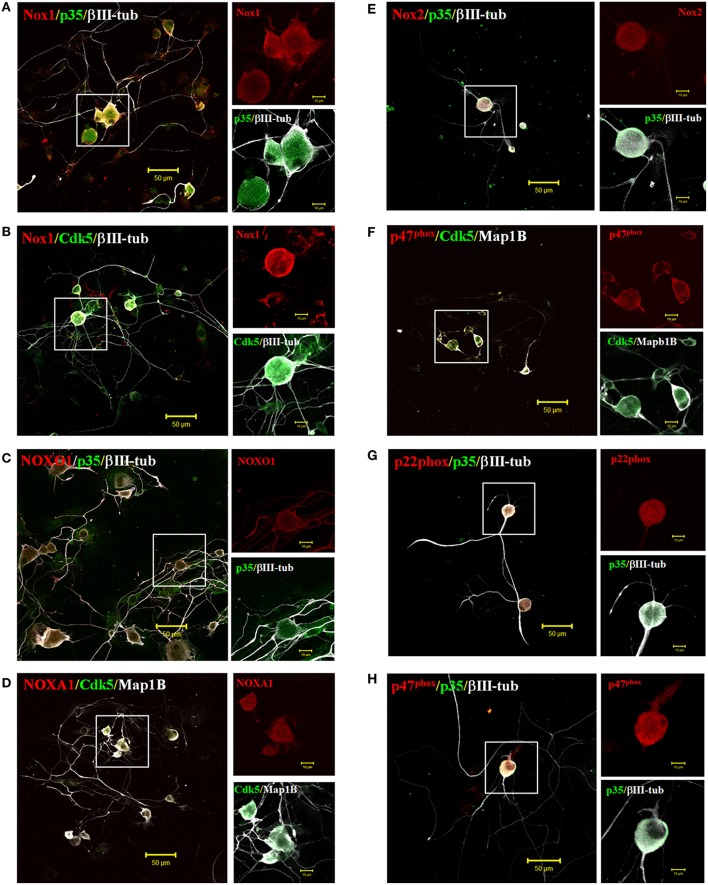
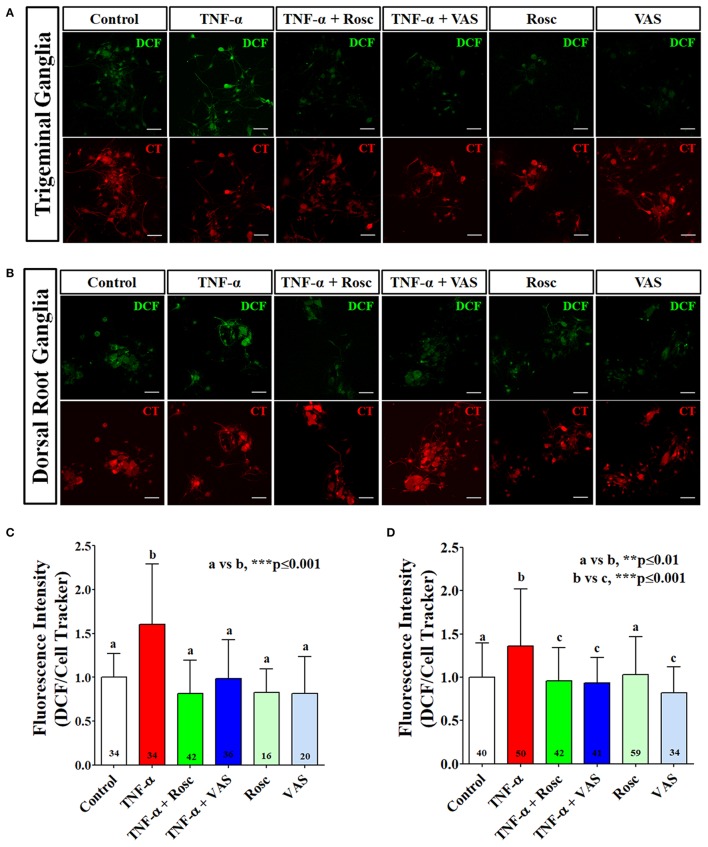
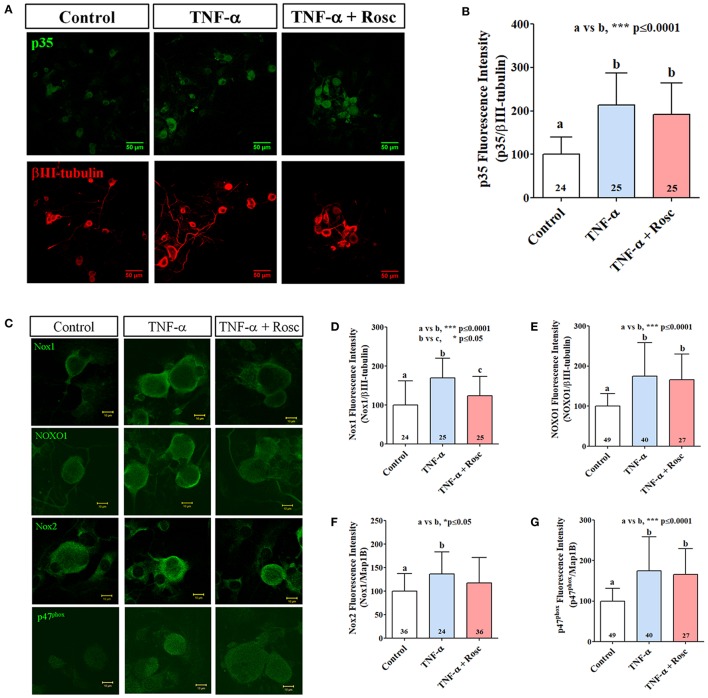
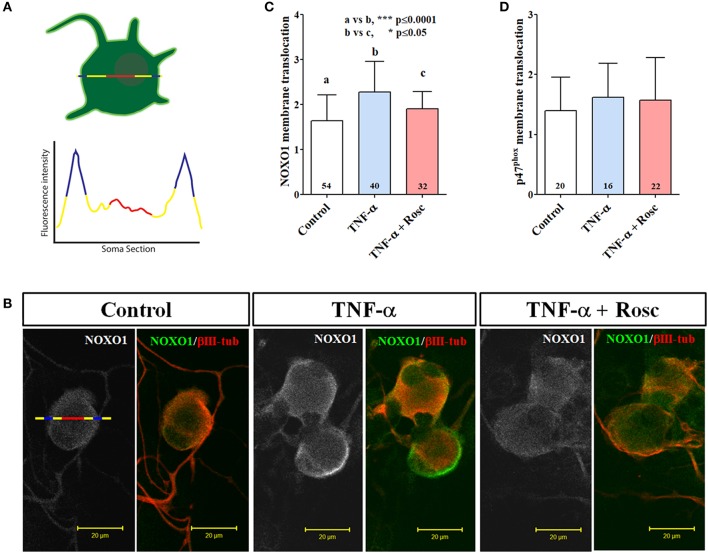
The participation of reactive oxygen species (ROS) generated by NOX1 and NOX2/NADPH oxidase has been documented during inflammatory pain. However, the molecular mechanism involved in their activation is not fully understood. We reported earlier a key role of Cyclin-dependent kinase 5 (Cdk5) during inflammatory pain. In particular, we demonstrated that TNF-α increased p35 expression, a Cdk5 activator, causing Cdk5-mediated TRPV1 phosphorylation followed by an increment in Ca influx in nociceptive neurons and increased pain sensation. Here we evaluated if Cdk5 activation mediated by p35 transfection in HEK293 cells or by TNF-α treatment in primary culture of nociceptive neurons could increase ROS production. By immunofluorescence we detected the expression of catalytic subunit (Nox1 and Nox2) and their cytosolic regulators (NOXO1 and p47) of NOX1 and NOX2/NADPH oxidase complexes, and their co-localization with Cdk5/p35 in HEK293 cells and in nociceptive neurons. By using a hydrogen peroxide sensor, we detected a significant increase of ROS production in p35 transfected HEK293 cells as compared with control cells. This effect was significantly blocked by VAS2870 (NADPH oxidase inhibitor) or by roscovitine (Cdk5 activity inhibitor). Also by using another ROS probe named DCFH-DA, we found a significant increase of ROS production in nociceptive neurons treated with TNF-α and this effect was also blocked by VAS2870 or by roscovitine treatment. Interestingly, TNF-α increased immunodetection of p35 protein and NOX1 and NOX2/NADPH oxidase complexes in primary culture of trigeminal ganglia neurons. Finally, the cytosolic regulator NOXO1 was significantly translocated to plasma membrane after TNF-α treatment and roscovitine blocked this effect. Altogether these results suggest that Cdk5 activation is implicated in the ROS production by NOX1 and NOX2/NADPH oxidase complexes during inflammatory pain.
在炎性疼痛期间,已证实由NOX1和NOX2/NADPH氧化酶产生的活性氧(ROS)参与其中。然而,其激活所涉及的分子机制尚未完全明确。我们之前报道了细胞周期蛋白依赖性激酶5(Cdk5)在炎性疼痛中的关键作用。具体而言,我们证明肿瘤坏死因子-α(TNF-α)可增加Cdk5激活剂p35的表达,导致Cdk5介导的瞬时受体电位香草酸亚型1(TRPV1)磷酸化,随后伤害性神经元中的钙内流增加,疼痛感增强。在此,我们评估了通过在人胚肾293(HEK293)细胞中转染p35或在伤害性神经元原代培养物中用TNF-α处理介导的Cdk5激活是否会增加ROS的产生。通过免疫荧光,我们检测了NOX1和NOX2/NADPH氧化酶复合物的催化亚基(Nox1和Nox2)及其胞质调节因子(NOXO1和p47)的表达,以及它们在HEK293细胞和伤害性神经元中与Cdk5/p35的共定位。通过使用过氧化氢传感器,我们检测到与对照细胞相比,转染p35的HEK293细胞中ROS产生显著增加。VAS2870(NADPH氧化酶抑制剂)或roscovitine(Cdk5活性抑制剂)可显著阻断此效应。同样通过使用另一种名为2′,7′-二氯二氢荧光素二乙酸酯(DCFH-DA)的ROS探针,我们发现用TNF-α处理的伤害性神经元中ROS产生显著增加,并且VAS2870或roscovitine处理也可阻断此效应。有趣的是,TNF-α增加了三叉神经节神经元原代培养物中p35蛋白以及NOX1和NOX2/NADPH氧化酶复合物的免疫检测。最后,TNF-α处理后,胞质调节因子NOXO1显著转位至质膜,而roscovitine可阻断此效应。总之,这些结果表明Cdk5激活在炎性疼痛期间与NOX1和NOX2/NADPH氧化酶复合物产生ROS有关。