Masuelli Laura, Benvenuto Monica, Mattera Rosanna, Di Stefano Enrica, Zago Erika, Taffera Gloria, Tresoldi Ilaria, Giganti Maria Gabriella, Frajese Giovanni Vanni, Berardi Ginevra, Modesti Andrea, Bei Roberto
Department of Experimental Medicine, University of Rome "Sapienza",Rome, Italy.
Department of Clinical Sciences and Translational Medicine, University of Rome "Tor Vergata",Rome, Italy.
Front Pharmacol. 2017 Jun 19;8:373. doi: 10.3389/fphar.2017.00373. eCollection 2017.
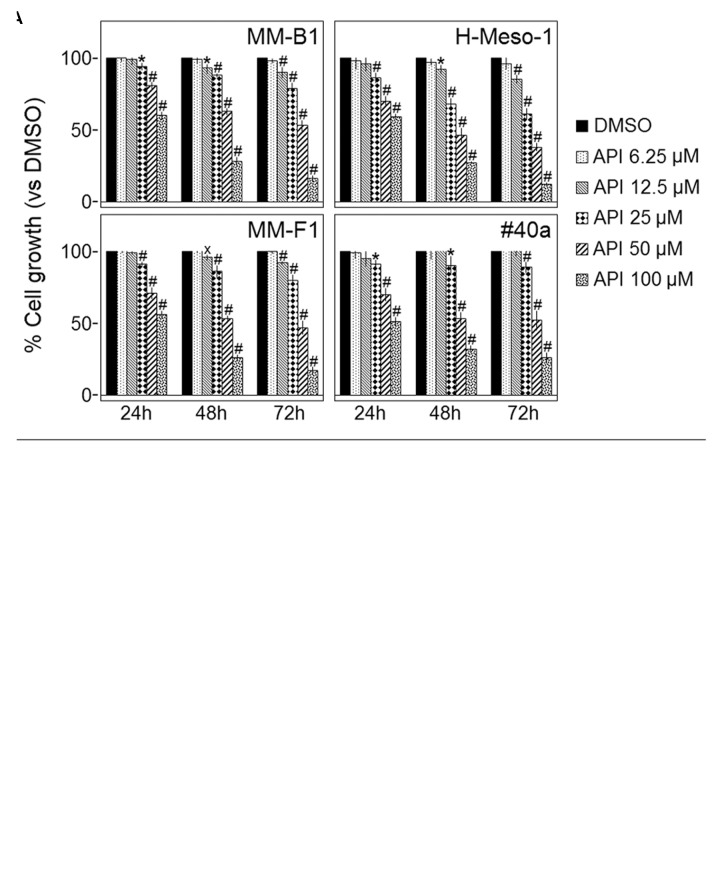
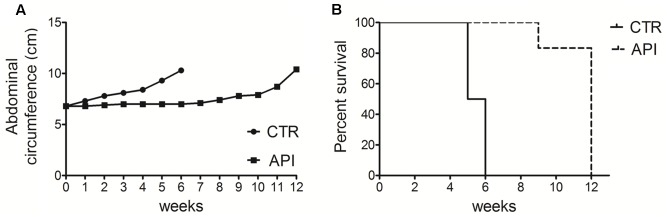
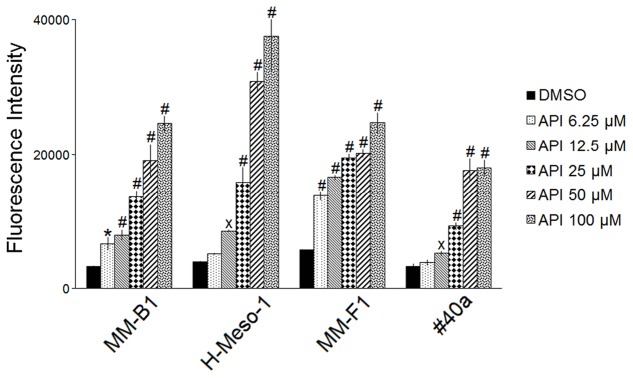
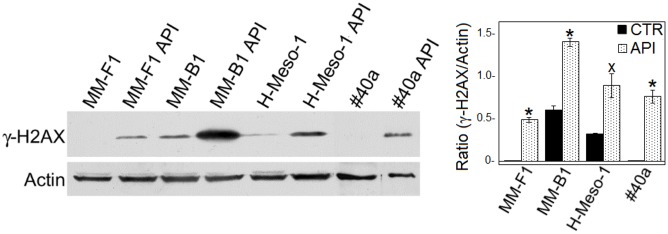
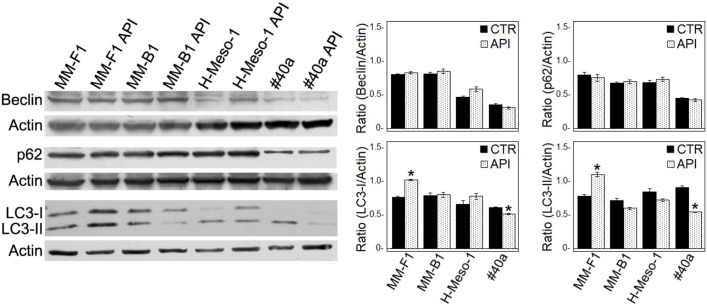
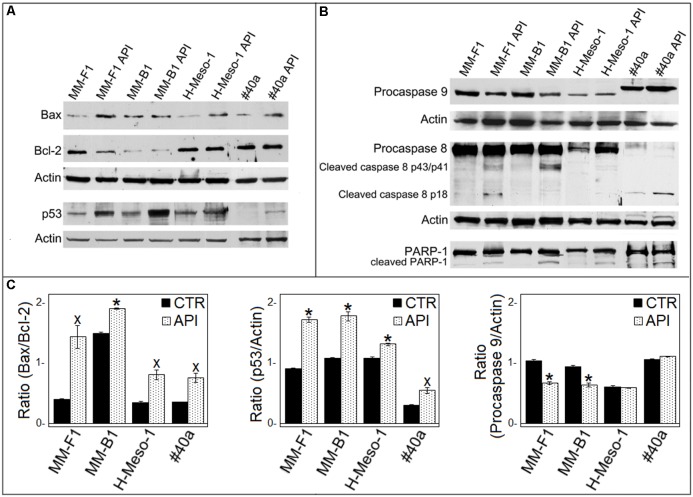
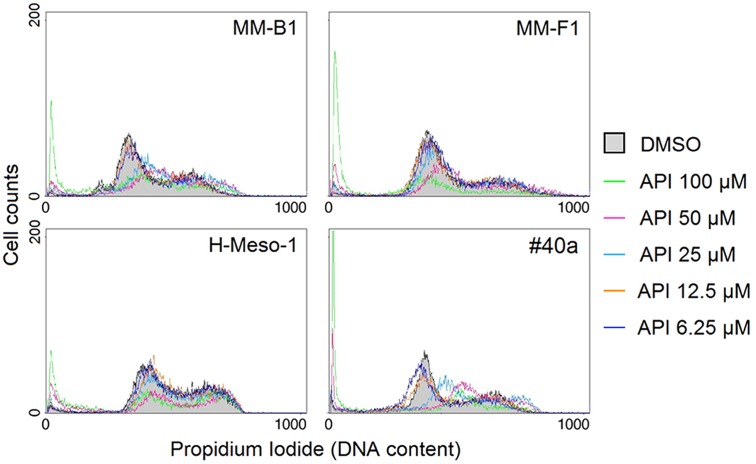
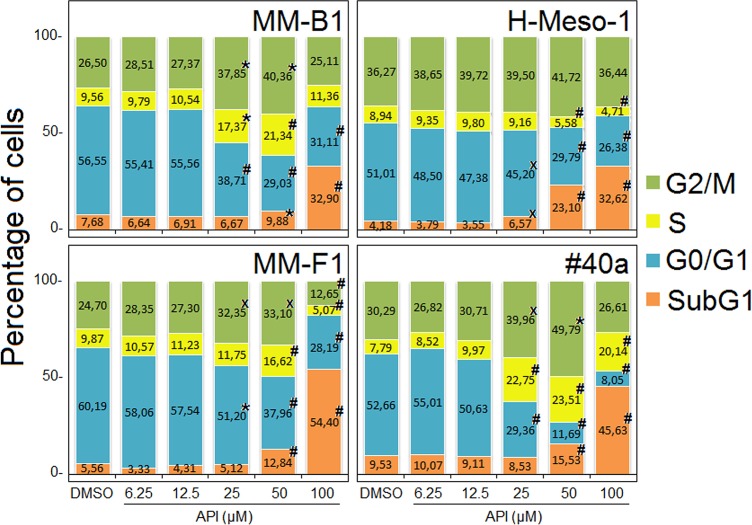
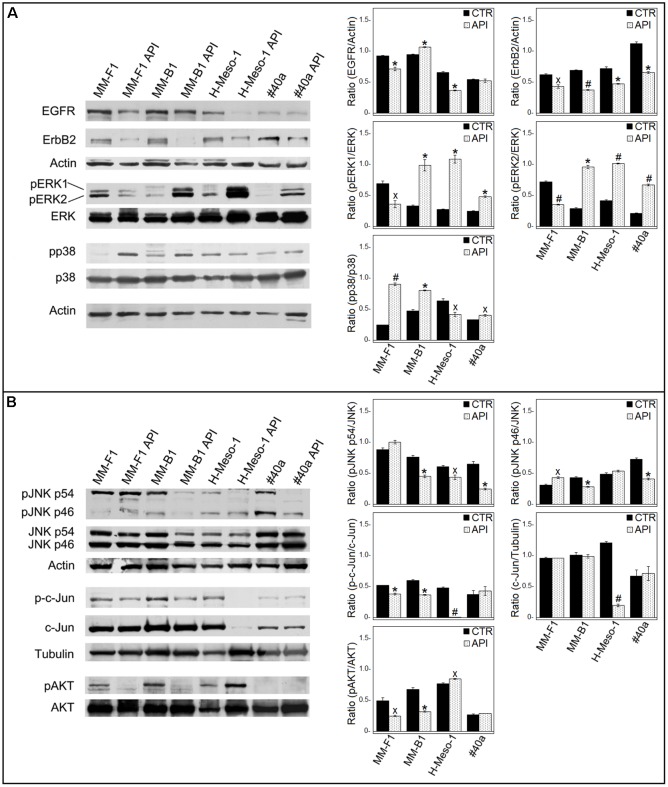
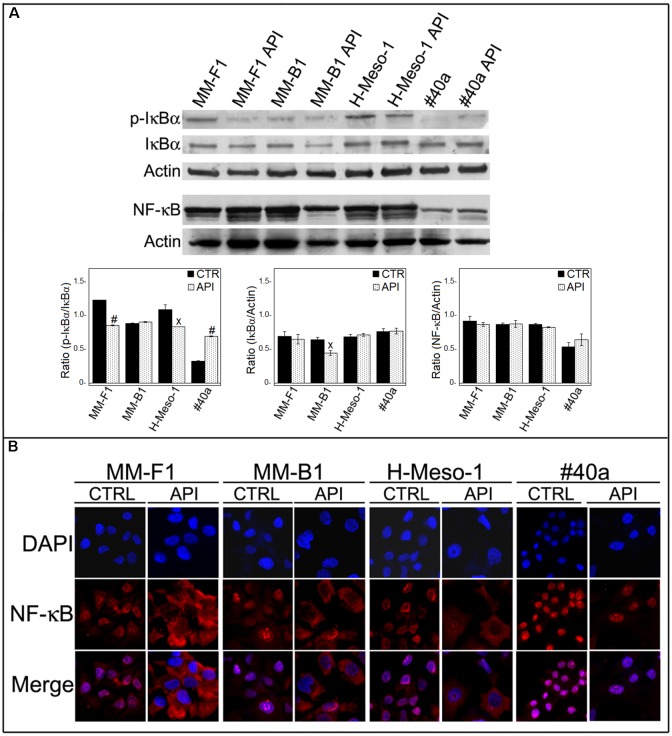
Malignant mesothelioma (MM) is a tumor arising from mesothelium. MM patients' survival is poor. The polyphenol 4',5,7,-trihydroxyflavone Apigenin (API) is a "multifunctional drug". Several studies have demonstrated API anti-tumoral effects. However, little is known on the and anti-tumoral effects of API in MM. Thus, we analyzed the effects of API on cell proliferation, cell cycle regulation, pro-survival signaling pathways, apoptosis, and autophagy of human and mouse MM cells. We evaluated the anti-tumor activities of API in mice transplanted with MM #40a cells forming ascites. API inhibited MM cells survival, increased reactive oxygen species intracellular production and induced DNA damage. API activated apoptosis but not autophagy. API-induced apoptosis was sustained by the increase of Bax/Bcl-2 ratio, increase of p53 expression, activation of both caspase 9 and caspase 8, cleavage of PARP-1, and increase of the percentage of cells in subG1 phase. API treatment affected the phosphorylation of ERK1/2, JNK and p38 MAPKs in a cell-type specific manner, inhibited AKT phosphorylation, decreased c-Jun expression and phosphorylation, and inhibited NF-κB nuclear translocation. Intraperitoneal administration of API increased the median survival of C57BL/6 mice intraperitoneally transplanted with #40a cells and reduced the risk of tumor growth. Our findings may have important implications for the design of MM treatment using API.
恶性间皮瘤(MM)是一种起源于间皮的肿瘤。MM患者的生存率很低。多酚4',5,7-三羟基黄酮芹菜素(API)是一种“多功能药物”。多项研究已证实API具有抗肿瘤作用。然而,关于API在MM中的抗肿瘤作用知之甚少。因此,我们分析了API对人源和鼠源MM细胞的细胞增殖、细胞周期调控、促生存信号通路、凋亡和自噬的影响。我们评估了API对移植有形成腹水的MM #40a细胞的小鼠的抗肿瘤活性。API抑制MM细胞存活,增加细胞内活性氧的产生并诱导DNA损伤。API激活凋亡但不激活自噬。API诱导的凋亡通过Bax/Bcl-2比值增加、p53表达增加、caspase 9和caspase 8的激活、PARP-1的裂解以及亚G1期细胞百分比的增加而持续。API处理以细胞类型特异性方式影响ERK1/2、JNK和p38丝裂原活化蛋白激酶(MAPK)的磷酸化,抑制AKT磷酸化,降低c-Jun表达和磷酸化,并抑制NF-κB核转位。腹腔注射API可提高腹腔移植#40a细胞的C57BL/6小鼠的中位生存期,并降低肿瘤生长风险。我们的发现可能对使用API设计MM治疗方案具有重要意义。