Department of Surgery, University Medical Center Utrecht, Utrecht, The Netherlands.
Department of Radiology and Nuclear Medicine, University Medical Center Utrecht, Utrecht, The Netherlands.
Eur Radiol. 2017 Dec;27(12):4923-4930. doi: 10.1007/s00330-017-4889-6. Epub 2017 Jul 3.
Guidelines on how to adjust activity in patients with a history of liver surgery who are undergoing yttrium-90 radioembolisation (Y-RE) are lacking. The aim was to study the variability in activity prescription in these patients, between centres with extensive experience using resin microspheres Y-RE, and to draw recommendations on activity prescription based on an expert consensus.
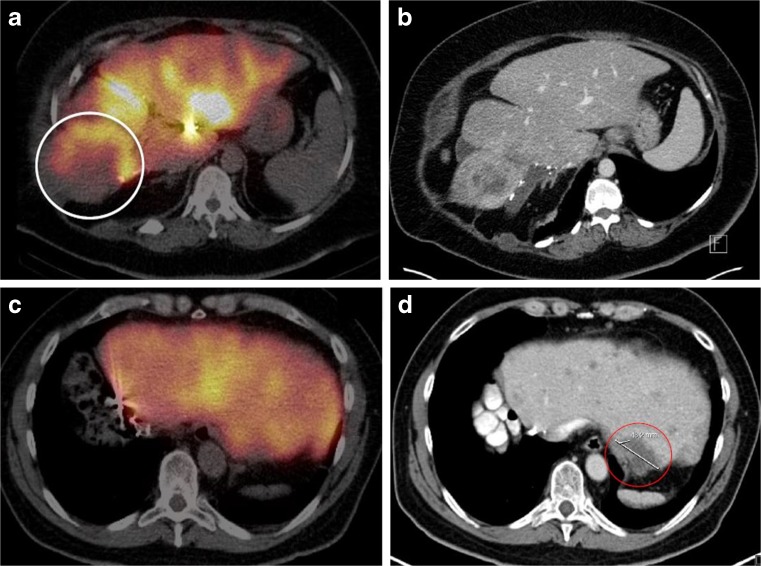
The variability in activity prescription between centres was investigated by a survey of international experts in the field of Y-RE. Six representative post-surgical patients (i.e. comparable activity prescription, different outcome) were selected. Information on patients' disease characteristics and data needed for activity calculation was presented to the expert panel. Reported was the used method for activity prescription and whether, how and why activity reduction was found indicated.
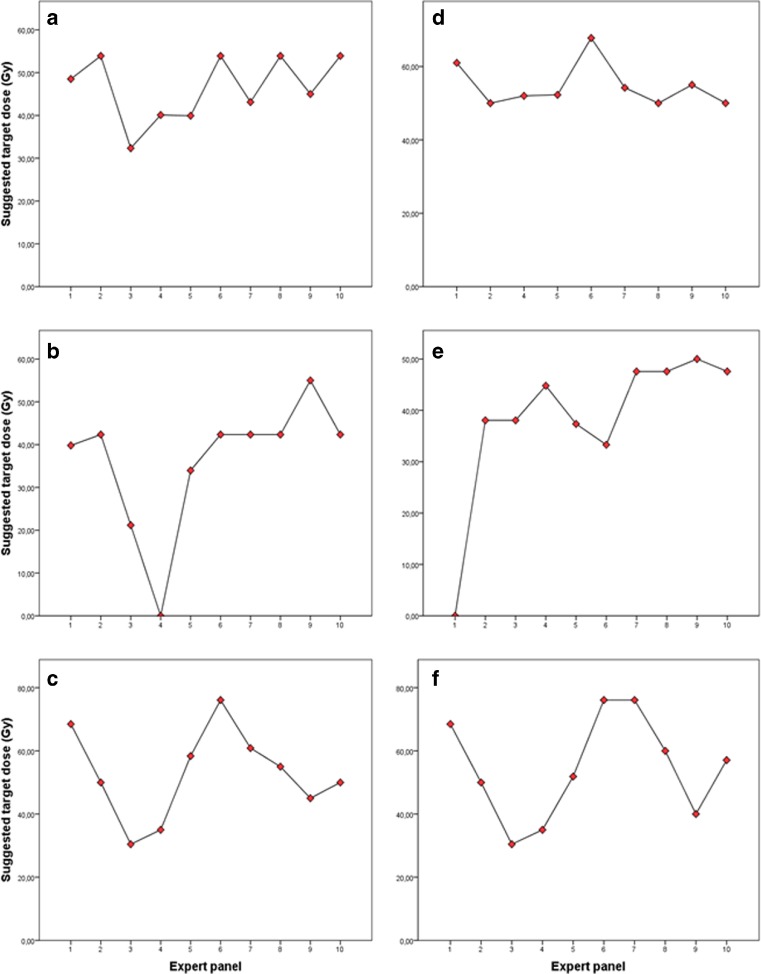
Ten experts took part in the survey. Recommendations on activity reduction were highly variable between the expert panel. The median intra-patient range was 44 Gy (range 18-55 Gy). Reductions in prescribed activity were recommended in 68% of the cases. In consensus, a maximum D of 50 Gy was recommended.
With a current lack of guidelines, large variability in activity prescription in post-surgical patients undergoing Y-RE exists. In consensus, D ≤50 Gy is recommended.
• BSA method does not account for a decreased remnant liver volume after surgery. • In post-surgical patients, a volume-based activity determination method is recommended. • In post-surgical patients, a mean D of ≤ 50Gy should be aimed for.
对于接受钇-90 放射性栓塞治疗(Y-RE)的有肝手术史患者,如何调整活动量的指南尚缺乏。本研究旨在研究在使用树脂微球 Y-RE 方面经验丰富的中心之间,这些患者的活动量处方的差异,并根据专家共识提出活动量处方的建议。
通过对 Y-RE 领域的国际专家进行调查,研究了中心之间的活动量处方差异。选择了 6 名具有代表性的术后患者(即可比较的活动量处方,不同的结果)。向专家小组提供了患者疾病特征和活动计算所需的数据信息。报告了使用的活动量处方方法,以及是否、如何以及为何发现需要减少活动量。
10 名专家参与了调查。专家小组对减少活动量的建议差异很大。患者内的中位数范围为 44Gy(范围 18-55Gy)。建议减少 68%的病例的处方活动量。专家一致推荐最大 D 值为 50Gy。
由于目前缺乏指南,接受 Y-RE 的肝手术后患者的活动量处方存在很大差异。专家一致建议 D 值≤50Gy。
• BSA 方法没有考虑到手术后剩余肝体积的减少。
• 对于肝手术后患者,建议使用基于体积的活动量确定方法。
• 对于肝手术后患者,应将平均 D 值目标设定为 ≤50Gy。