Prisciandaro J J, Tolliver B K, Prescot A P, Brenner H M, Renshaw P F, Brown T R, Anton R F
Department of Psychiatry and Behavioral Sciences, Medical University of South Carolina, Charleston, SC, USA.
Department of Radiology, University of Utah, Salt Lake City, UT, USA.
Transl Psychiatry. 2017 Jul 4;7(7):e1163. doi: 10.1038/tp.2017.141.
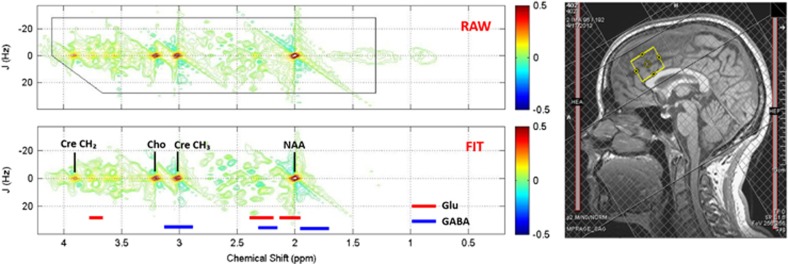
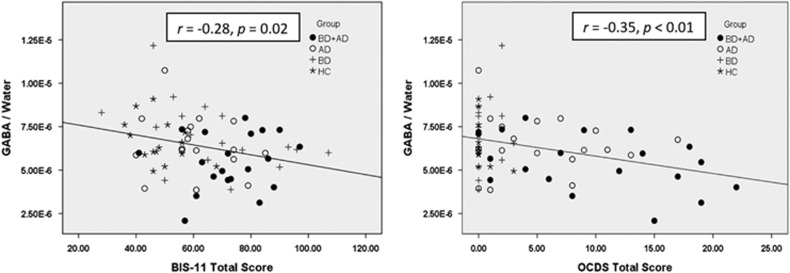
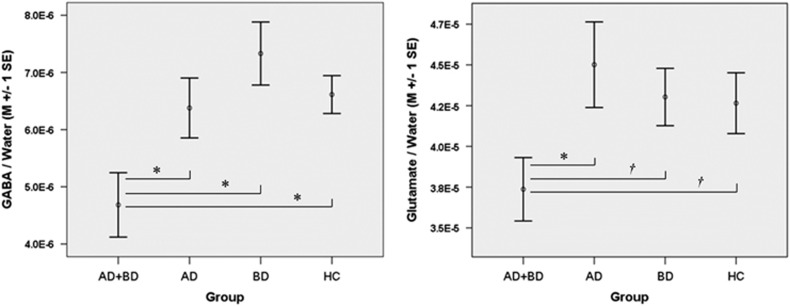
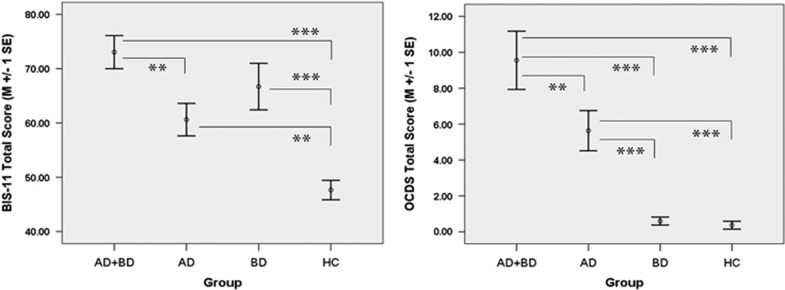
Bipolar disorder (BD) and alcohol dependence (AD) frequently co-occur, and co-occurring BD and AD are associated with devastating public health costs. Minimal neurobiological research exists to guide the development of effective treatments for this treatment-resistant population. We believe the present study represents the first investigation of prefrontal gamma-aminobutyric acid (GABA) and glutamate levels in co-occurring BD and current AD. The participants were 78 individuals who met DSM-IV criteria for BD I/II and current AD (n=20), BD I/II alone (n=19), current AD alone (n=20) or no diagnosis (n=19). The participants completed a baseline diagnostic visit, then returned approximately 4 days later for a two-dimensional J-resolved proton magnetic resonance spectroscopy (H-MRS) acquisition in dorsal anterior cingulate cortex (dACC). All participants were required to demonstrate ⩾1 week of abstinence from alcohol/drugs via serial biomarker testing before H-MRS. A 2 × 2 factorial analysis of variance of cerebrospinal fluid (CSF)-corrected GABA/water concentrations demonstrated a significant BD × AD interaction (F=2.91, P<0.05), signifying uniquely low levels of GABA in BD+AD; this effect doubled when the sample was restricted to individuals who consumed alcohol within 2 weeks of H-MRS. There were no overall effects of BD/AD on CSF-corrected glutamate/water levels. However, the BD × AD interaction, signifying uniquely low levels of glutamate in BD+AD, approached statistical significance (F=3.83, P=0.06) in individuals who consumed alcohol within 2 weeks of H-MRS. The dACC GABA levels were significantly, negatively associated with Barratt Impulsiveness Scale (r=-0.28, P=0.02) and Obsessive Compulsive Drinking Scale (r=-0.35, P<0.01) scores. If replicated, these results may suggest that future treatment studies should preferentially evaluate therapeutics in BD+AD known to increase prefrontal GABA and glutamate levels.
双相情感障碍(BD)与酒精依赖(AD)经常同时出现,且BD与AD共病会带来巨大的公共卫生成本。目前用于指导针对这一难治性人群开发有效治疗方法的神经生物学研究极少。我们认为本研究是首次对BD与当前AD共病患者前额叶γ-氨基丁酸(GABA)和谷氨酸水平进行的调查。参与者为78名符合《精神疾病诊断与统计手册》第四版(DSM-IV)中I型/II型BD及当前AD标准的个体(n = 20)、仅符合BD I/II标准的个体(n = 19)、仅符合当前AD标准的个体(n = 20)或未确诊个体(n = 19)。参与者完成了一次基线诊断访视,然后在大约4天后返回,以便在背侧前扣带回皮质(dACC)进行二维J分辨质子磁共振波谱(H-MRS)采集。所有参与者在进行H-MRS之前都需要通过系列生物标志物检测证明已戒酒/戒毒至少1周。对脑脊液(CSF)校正后的GABA/水浓度进行的2×2析因方差分析显示,BD×AD存在显著交互作用(F = 2.91,P < 0.05),表明BD + AD组中GABA水平独特地降低;当样本仅限于在H-MRS前2周内饮酒的个体时,这种效应增强了一倍。BD/AD对CSF校正后的谷氨酸/水水平没有总体影响。然而,BD×AD交互作用表明BD + AD组中谷氨酸水平独特地降低,在H-MRS前2周内饮酒的个体中接近统计学显著性(F = 3.83,P = 0.06)。dACC中的GABA水平与巴拉特冲动量表(r = -0.28,P = 0.02)和强迫性饮酒量表(r = -0.35,P < 0.01)得分显著负相关。如果这些结果得到重复验证,可能表明未来的治疗研究应优先评估已知可提高前额叶GABA和谷氨酸水平的BD + AD治疗方法。