Chapalain Annelise, Groleau Marie-Christine, Le Guillouzer Servane, Miomandre Aurélie, Vial Ludovic, Milot Sylvain, Déziel Eric
CIRI, Centre International de Recherche en Infectiologie, Equipe Pathogénèse des Légionelles, Inserm, U1111, Université Claude Bernard Lyon 1, CNRS, UMR5308, École Normale Supérieure de Lyon, Université LyonLyon, France.
INRS-Institut Armand-Frappier, LavalQC, Canada.
Front Microbiol. 2017 Jun 20;8:1021. doi: 10.3389/fmicb.2017.01021. eCollection 2017.
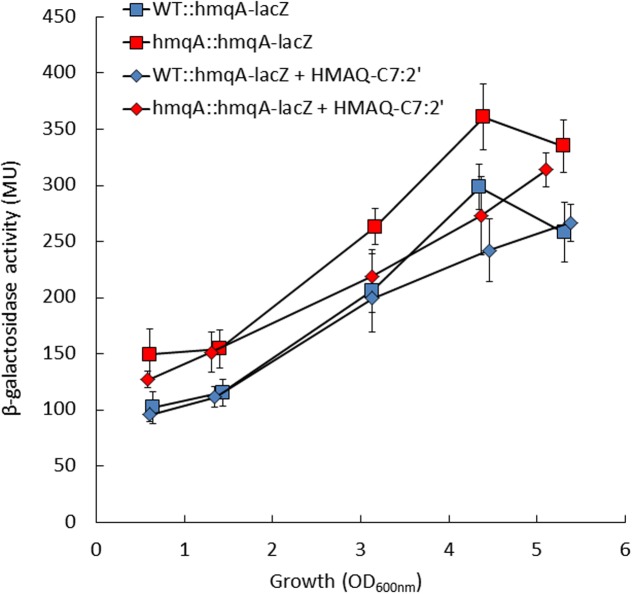
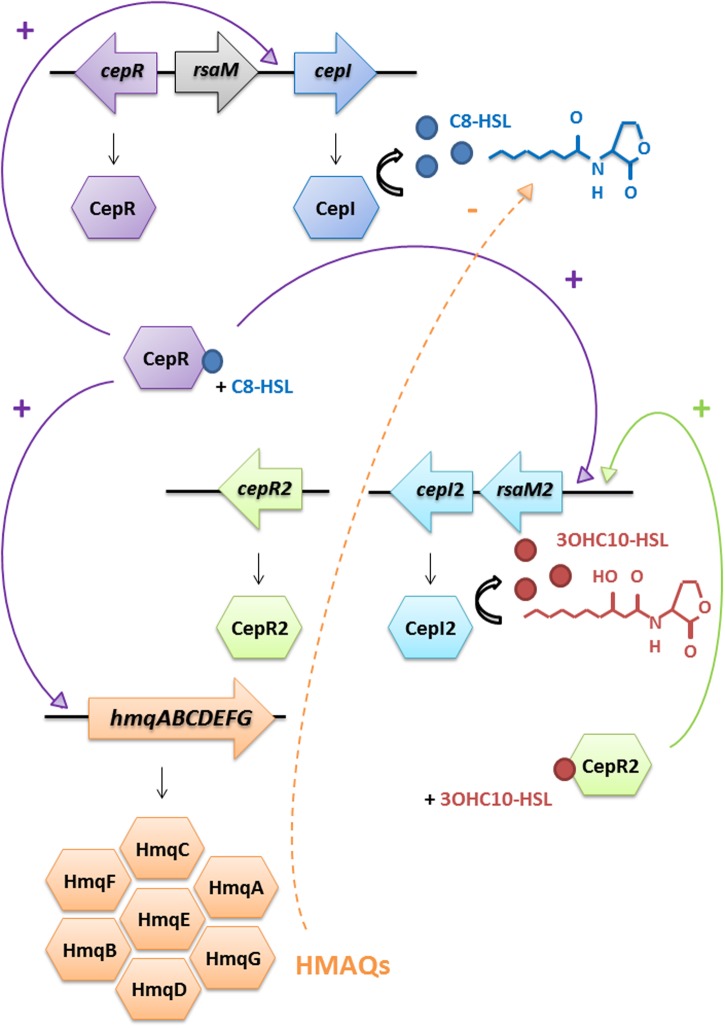
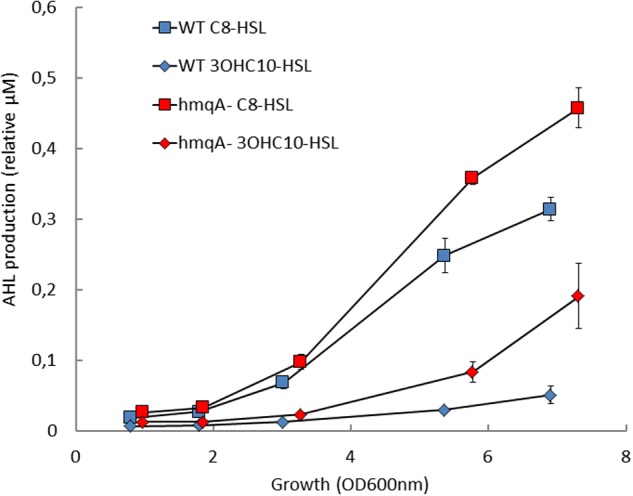
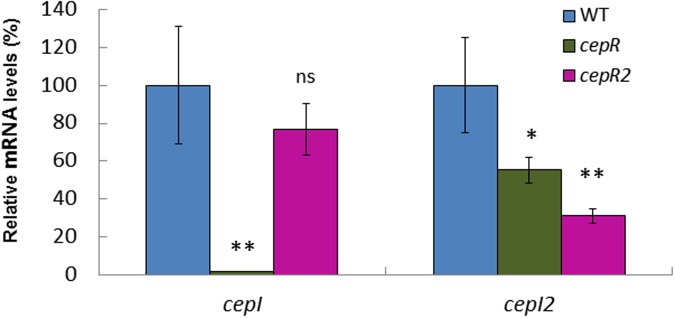
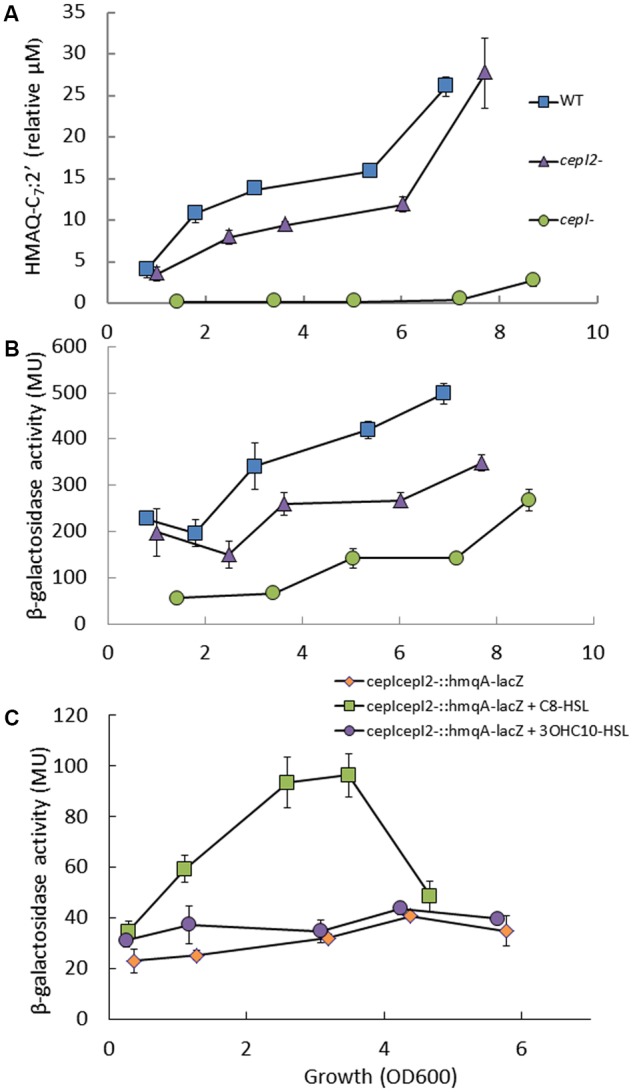
Species from the complex (Bcc) share a canonical LuxI/LuxR quorum sensing (QS) regulation system named CepI/CepR, which mainly relies on the acyl-homoserine lactone (AHL), octanoyl-homoserine lactone (C-HSL) as signaling molecule. is one of the least virulent Bcc species, more often isolated from rhizospheres where it exerts a plant growth-promoting activity. However, clinical strains of display distinct features, such as phase variation and higher virulence properties. Notably, we previously reported that under laboratory conditions, only clinical strains of the species produced 4-hydroxy-3-methyl-2-alkylquinolines (HMAQs) expression of the operon. HMAQs are the methylated counterparts of the 4-hydroxy-2-alkylquinolines (HAQs) produced by the opportunistic human pathogen , in which they globally contribute to the bacterial virulence and survival. We have found that unlike 's HAQs, HMAQs do not induce their own production. However, they indirectly regulate the expression of the operon. In , a strong link between CepI/CepR-based QS and HMAQs is proposed, as we have previously reported an increased production of C-HSL in HMAQ-negative mutants. Here, we report the identification of all AHLs produced by the clinical strain HSJ1, namely C-HSL, C-HSL, C-HSL, 3OHC-HSL, 3OHC-HSL, and 3OHC-HSL. Production of significant levels of hydroxylated AHLs prompted the identification of a second complete LuxI/LuxR-type QS system relying on 3OHC-HSL and 3OHC-HSL, that we have named CepI2/CepR2. The connection between these two QS systems and the operon, responsible for HMAQs biosynthesis, was investigated. The CepI/CepR system strongly induced the operon, while the second system appears moderately involved. On the other hand, a HMAQ-negative mutant overproduces AHLs from both QS systems. Even if HMAQs are not classical QS signals, their effect on AHL-based QS system still gives them a part to play in the QS circuitry in and thus, on regulation of various phenotypes.
洋葱伯克霍尔德菌复合体(Bcc)中的物种共享一种名为CepI/CepR的典型LuxI/LuxR群体感应(QS)调控系统,该系统主要依赖酰基高丝氨酸内酯(AHL)、辛酰高丝氨酸内酯(C8-HSL)作为信号分子。洋葱伯克霍尔德菌是Bcc中毒力最弱的物种之一,更常从根际环境中分离出来,在那里它具有促进植物生长的活性。然而,洋葱伯克霍尔德菌的临床菌株表现出不同的特征,如相变和更高的毒力特性。值得注意的是,我们之前报道过,在实验室条件下,只有洋葱伯克霍尔德菌物种的临床菌株在hmgA操纵子表达时产生4-羟基-3-甲基-2-烷基喹啉(HMAQs)。HMAQs是由机会性人类病原体铜绿假单胞菌产生的4-羟基-2-烷基喹啉(HAQs)的甲基化对应物,在铜绿假单胞菌中,它们对细菌的毒力和生存起着全局性作用。我们发现,与铜绿假单胞菌的HAQs不同,HMAQs不会诱导自身的产生。然而,它们间接调节hmgA操纵子的表达。在洋葱伯克霍尔德菌中,基于CepI/CepR的QS与HMAQs之间存在紧密联系,因为我们之前报道过,在HMAQ阴性突变体中C8-HSL的产量增加。在此,我们报告了临床洋葱伯克霍尔德菌菌株HSJ1产生的所有AHLs的鉴定结果,即C8-HSL、C10-HSL、C12-HSL、3OHC8-HSL、3OHC10-HSL和3OHC12-HSL。大量羟基化AHLs的产生促使我们鉴定出第二个完整的依赖3OHC8-HSL和3OHC10-HSL的LuxI/LuxR型QS系统,我们将其命名为CepI2/CepR2。我们研究了这两个QS系统与负责HMAQs生物合成的hmgA操纵子之间的联系。CepI/CepR系统强烈诱导hmgA操纵子,而第二个系统似乎只是适度参与。另一方面,一个HMAQ阴性突变体从两个QS系统中过量产生AHLs。即使HMAQs不是经典的QS信号,它们对基于AHL的QS系统的影响仍然使它们在洋葱伯克霍尔德菌的QS电路中发挥作用,从而对各种表型的调节产生影响。