Huang Yuan, Wang Jun, Yang Yongping, Fan Chuanzhu, Chen Jiahui
Key Laboratory for Plant Diversity and Biogeography of East Asia, Chinese Academy of SciencesKunming, China.
School of Life Sciences, Yunnan Normal UniversityKunming, China.
Front Plant Sci. 2017 Jun 20;8:1050. doi: 10.3389/fpls.2017.01050. eCollection 2017.
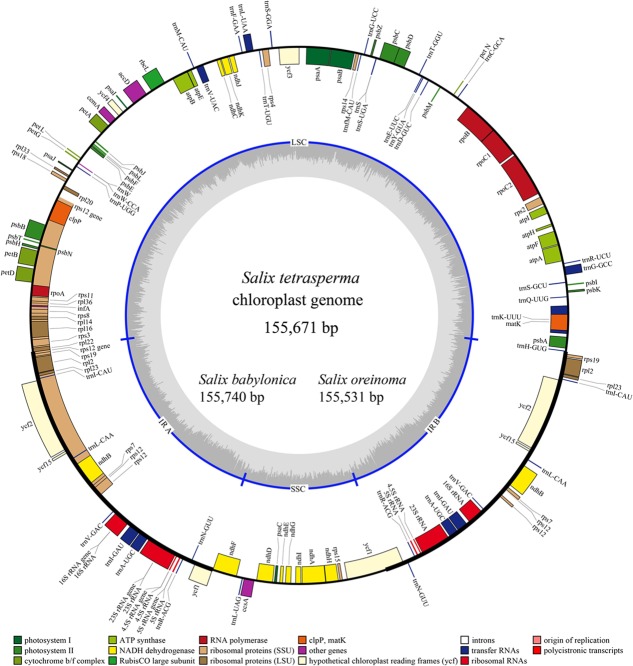
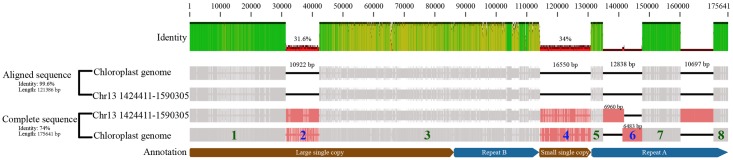
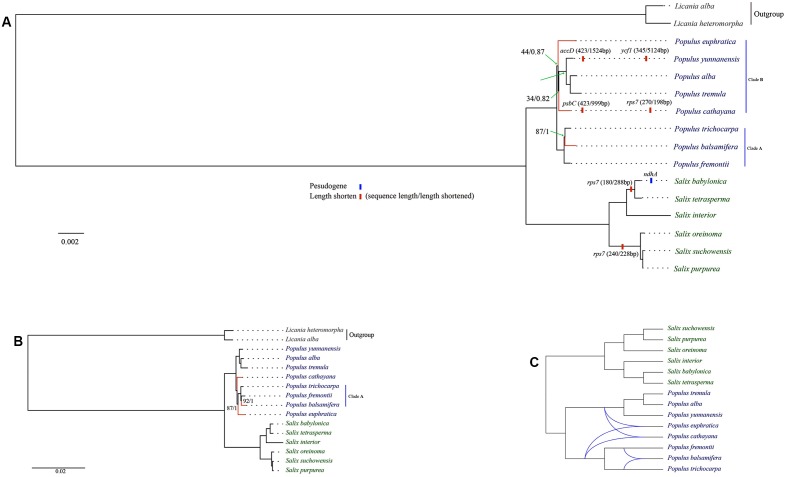
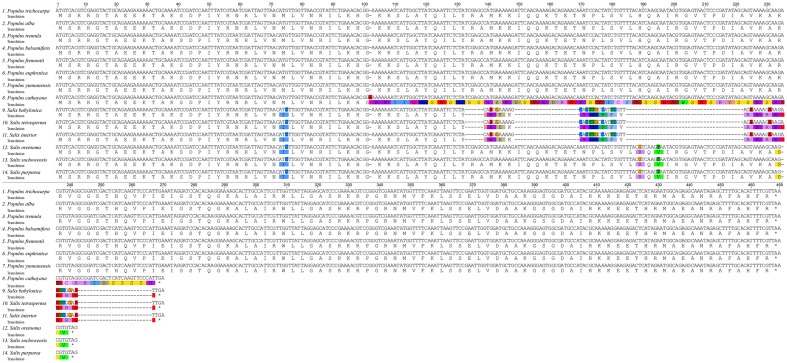
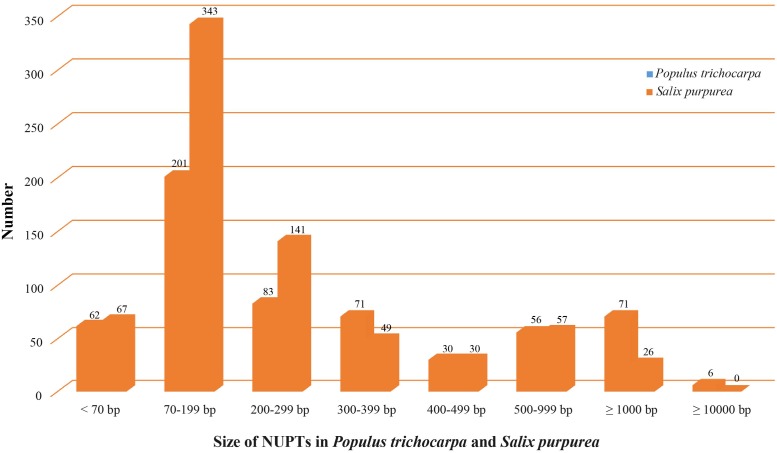
Chloroplast genomes of plants are highly conserved in both gene order and gene content. Analysis of the whole chloroplast genome is known to provide much more informative DNA sites and thus generates high resolution for plant phylogenies. Here, we report the complete chloroplast genomes of three species in family Salicaceae. Phylogeny of Salicaceae inferred from complete chloroplast genomes is generally consistent with previous studies but resolved with higher statistical support. Incongruences of phylogeny, however, are observed in genus , which most likely results from homoplasy. By comparing three chloroplast genomes with the published chloroplast genomes of other Salicaceae species, we demonstrate that the synteny and length of chloroplast genomes in Salicaceae are highly conserved but experienced dynamic evolution among species. We identify seven positively selected chloroplast genes in Salicaceae, which might be related to the adaptive evolution of Salicaceae species. Comparative chloroplast genome analysis within the family also indicates that some chloroplast genes are lost or became pseudogenes, infer that the chloroplast genes horizontally transferred to the nucleus genome. Based on the complete nucleus genome sequences from two Salicaceae species, we remarkably identify that the entire chloroplast genome is indeed transferred and integrated to the nucleus genome in the individual of the reference genome of at least once. This observation, along with presence of the large nuclear plastid DNA (NUPTs) and NUPTs-containing multiple chloroplast genes in their original order in the chloroplast genome, favors the DNA-mediated hypothesis of organelle to nucleus DNA transfer. Overall, the phylogenomic analysis using chloroplast complete genomes clearly elucidates the phylogeny of Salicaceae. The identification of positively selected chloroplast genes and dynamic chloroplast-to-nucleus gene transfers in Salicaceae provide resources to better understand the successful adaptation of Salicaceae species.
植物的叶绿体基因组在基因顺序和基因内容上都高度保守。已知对整个叶绿体基因组的分析能提供更多信息丰富的DNA位点,从而为植物系统发育生成高分辨率结果。在此,我们报告了杨柳科三个物种的完整叶绿体基因组。从完整叶绿体基因组推断出的杨柳科系统发育总体上与先前的研究一致,但得到了更高的统计支持。然而,在 属中观察到系统发育的不一致,这很可能是由同塑性导致的。通过将三个叶绿体基因组与已发表的其他杨柳科物种的叶绿体基因组进行比较,我们证明杨柳科叶绿体基因组的同线性和长度高度保守,但在物种间经历了动态进化。我们在杨柳科中鉴定出七个正选择的叶绿体基因,这可能与杨柳科物种的适应性进化有关。该科内的叶绿体基因组比较分析还表明,一些叶绿体基因丢失或变成了假基因,推断叶绿体基因水平转移到了核基因组中。基于两个杨柳科物种的完整核基因组序列,我们显著地发现,在 参考基因组的个体中,整个叶绿体基因组确实至少有一次转移并整合到了核基因组中。这一观察结果,连同大的核质体DNA(NUPTs)以及叶绿体基因组中按其原始顺序存在的含多个叶绿体基因的NUPTs,支持了细胞器到核DNA转移的DNA介导假说。总体而言,使用叶绿体完整基因组的系统发育基因组学分析清楚地阐明了杨柳科的系统发育。杨柳科中正选择的叶绿体基因的鉴定以及叶绿体到核的动态基因转移为更好地理解杨柳科物种的成功适应性提供了资源。