Mokos Zrinka Bukvić, Jović Anamaria, Grgurević Lovorka, Dumić-Čule Ivo, Kostović Krešimir, Čeović Romana, Marinović Branka
Department of Dermatology and Venereology, University Hospital Centre Zagreb, School of Medicine, University of Zagreb, Zagreb, Croatia.
Laboratory for Mineralized Tissues, School of Medicine, University of Zagreb, Zagreb, Croatia.
Front Med (Lausanne). 2017 Jun 20;4:83. doi: 10.3389/fmed.2017.00083. eCollection 2017.
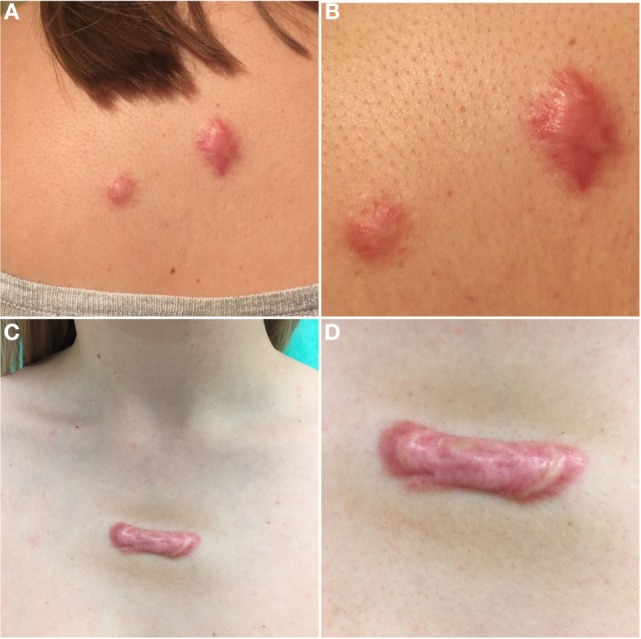
Abnormal scarring and its accompanying esthetic, functional, and psychological sequelae still pose significant challe nges. To date, there is no satisfactory prevention or treatment option for hypertrophic scars (HSs), which is mostly due to not completely comprehending the mechanisms underlying their formation. That is why the apprehension of regular and controlled physiological processes of scar formation is of utmost importance when facing hypertrophic scarring, its pathophysiology, prevention, and therapeutic approach. When treating HSs and choosing the best treatment and prevention modality, physicians can choose from a plethora of therapeutic options and many commercially available products, among which currently there is no efficient option that can successfully overcome impaired skin healing. This article reviews current therapeutic approach and emerging therapeutic strategies for the management of HSs, which should be individualized, based on an evaluation of the scar itself, patients' expectations, and practical, evidence-based guidelines. Clinicians are encouraged to combine various prevention and treatment modalities where combination therapy that includes steroid injections, 5-fluorouracil, and pulsed-dye laser seems to be the most effective. On the other hand, the current therapeutic options are usually empirical and their results are unreliable and unpredictable. Therefore, there is an unmet need for an effective, targeted therapy and prevention, which would be based on an action or a modulation of a particular factor with clarified mechanism of action that has a beneficial effect on wound healing. As the extracellular matrix has a crucial role in cellular and extracellular events that lead to pathological scarring, targeting its components mostly by regulating bone morphogenetic proteins may throw up new therapeutic approach for reduction or prevention of HSs with functionally and cosmetically acceptable outcome.
异常瘢痕形成及其伴随的美学、功能和心理后遗症仍然构成重大挑战。迄今为止,对于增生性瘢痕(HSs)尚无令人满意的预防或治疗方法,这主要是由于尚未完全理解其形成的潜在机制。这就是为什么在面对增生性瘢痕、其病理生理学、预防和治疗方法时,了解瘢痕形成的正常和可控生理过程至关重要。在治疗增生性瘢痕并选择最佳治疗和预防方式时,医生可以从众多治疗选择和许多市售产品中进行选择,目前尚无有效的选择能够成功克服受损的皮肤愈合问题。本文综述了目前用于治疗增生性瘢痕的治疗方法和新兴治疗策略,这些方法应根据瘢痕本身的评估、患者的期望以及实用的循证指南进行个体化。鼓励临床医生结合各种预防和治疗方式,其中包括类固醇注射、5-氟尿嘧啶和脉冲染料激光的联合治疗似乎是最有效的。另一方面,目前的治疗选择通常是经验性的,其结果不可靠且不可预测。因此,迫切需要一种基于对具有明确作用机制且对伤口愈合有有益影响的特定因素的作用或调节的有效、靶向治疗和预防方法。由于细胞外基质在导致病理性瘢痕形成的细胞和细胞外事件中起关键作用,主要通过调节骨形态发生蛋白来靶向其成分可能会为减少或预防增生性瘢痕带来新的治疗方法,并取得功能和美容上可接受的结果。