Department of Surgery and Science, Graduate School of Medicine and Pharmaceutical Sciences, University of Toyama, Toyama City, Toyama 930-0194, Japan.
Int J Oncol. 2017 Sep;51(3):771-780. doi: 10.3892/ijo.2017.4063. Epub 2017 Jul 3.
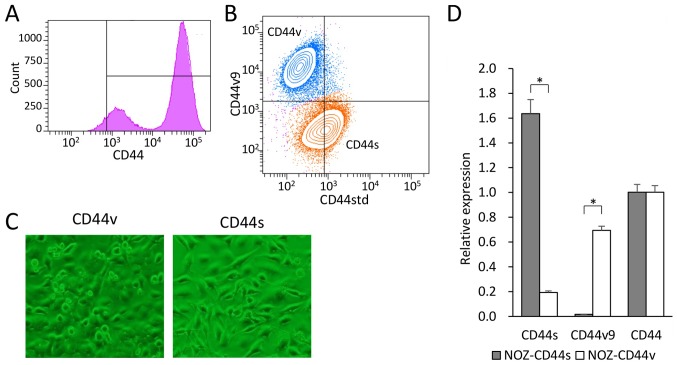
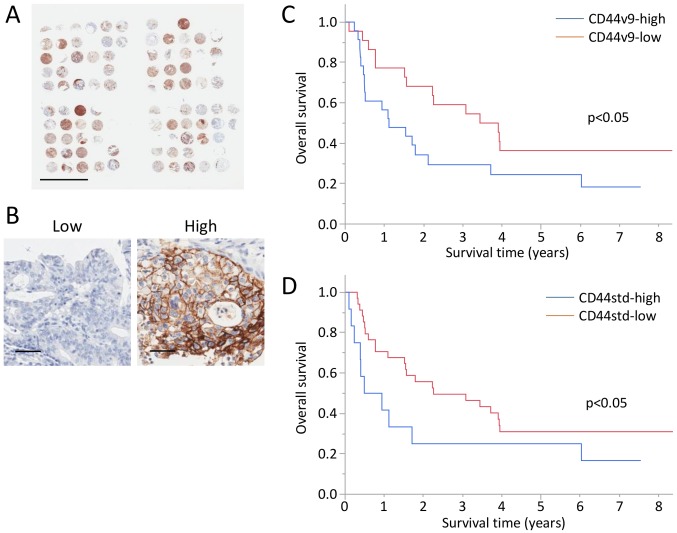
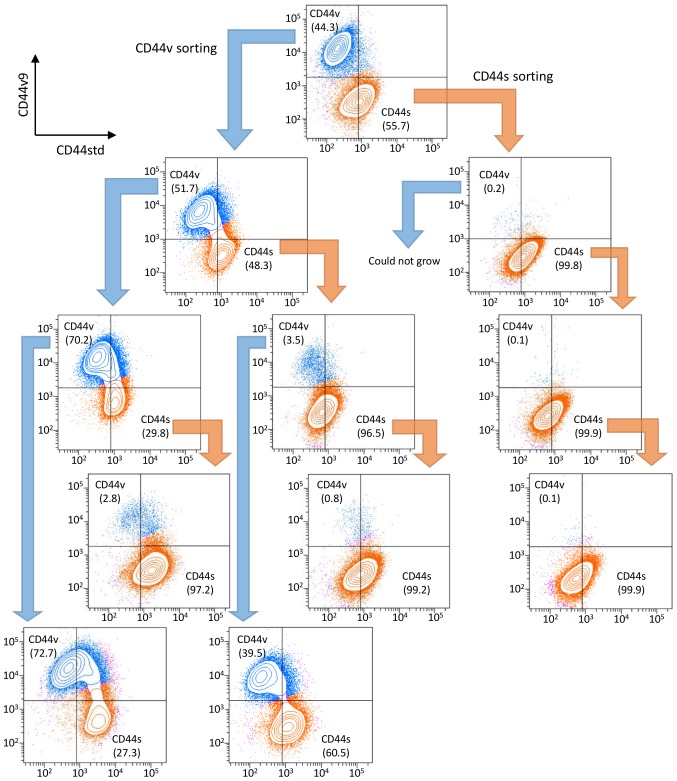
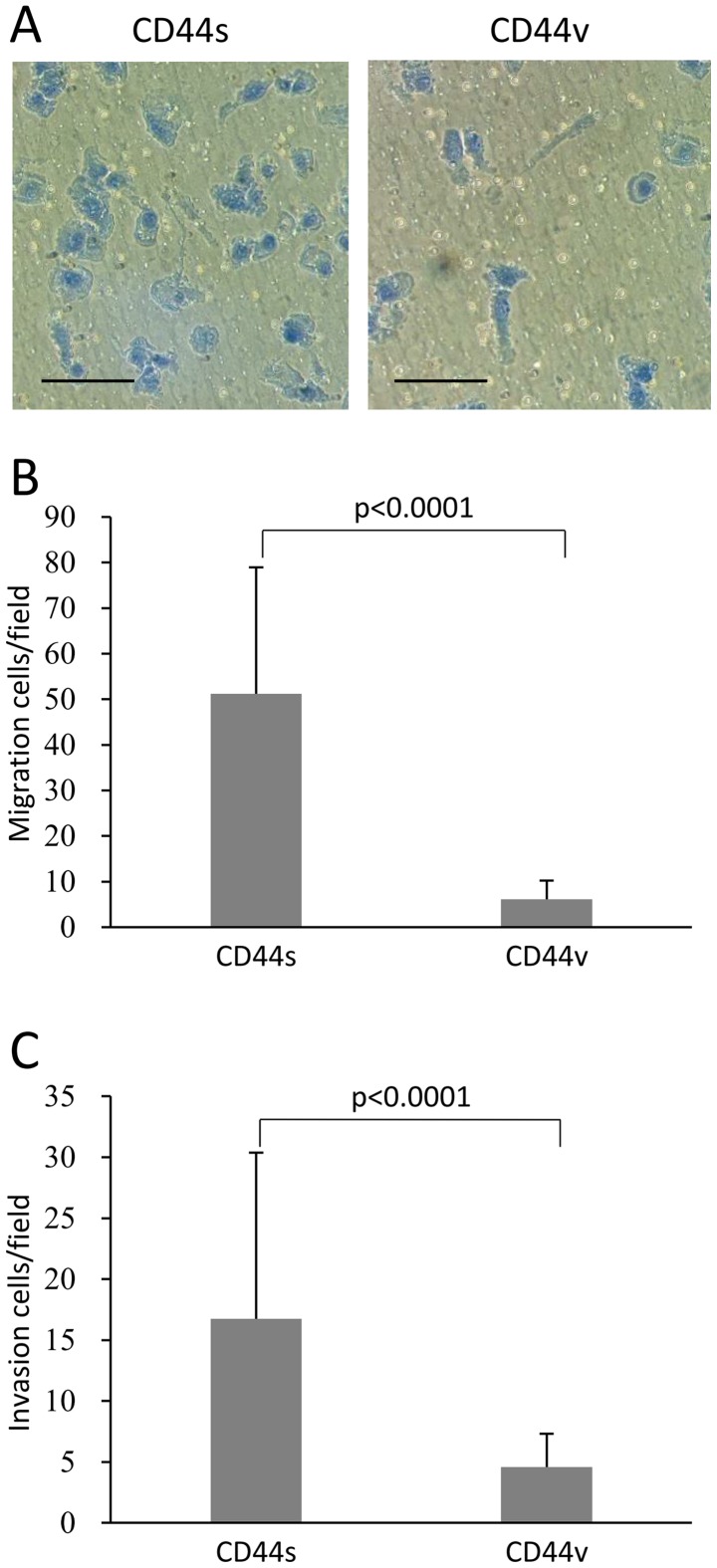
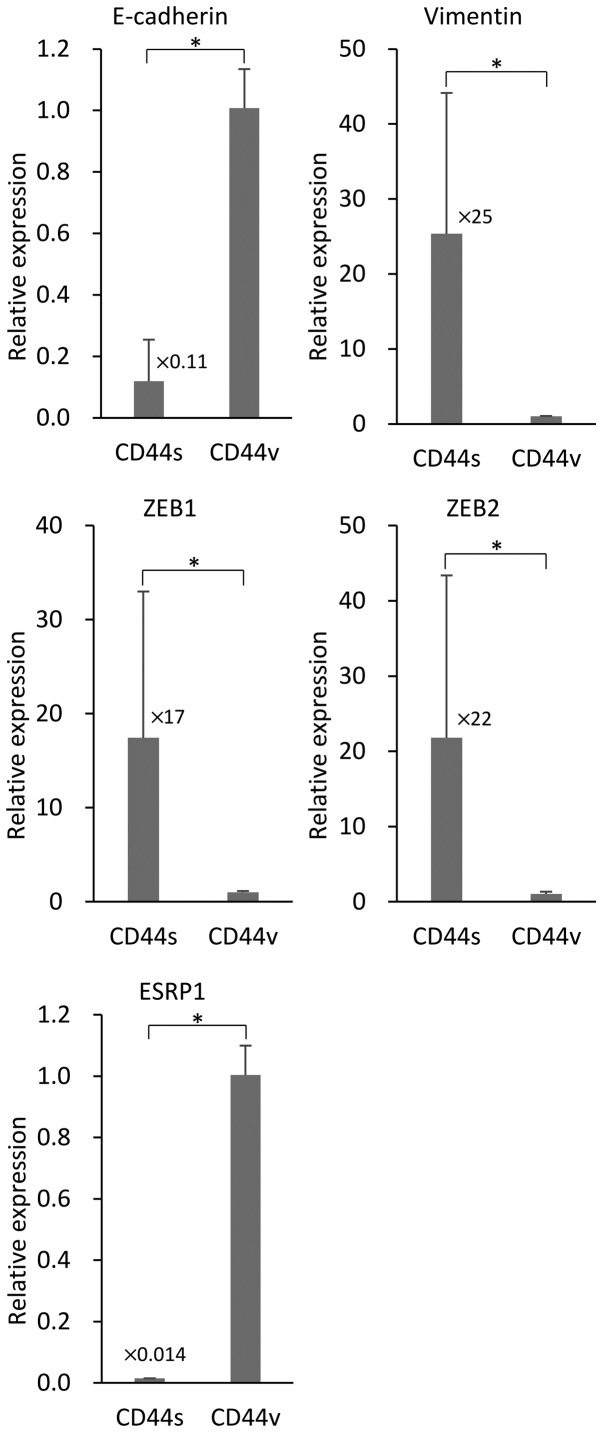
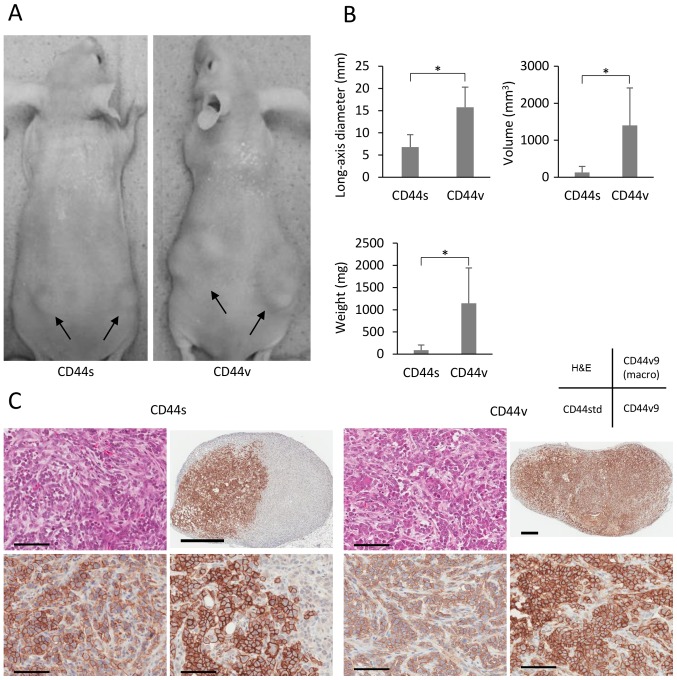
Gallbladder cancer (GBC) is one of the most unfavorable prognostic tumor, and immediate growth and distant metastasis are important factors associated with the poor prognosis of patients with this disease. Standard and variant isoforms of CD44 are associated with tumor growth, metastasis, and epithelial-mesenchymal transition (EMT), although their roles in GBC are unclear. We investigated the relationship between the CD44 isoforms with EMT, chemotaxis, and tumorigenicity. We analyzed CD44 expression in the GBC cell line NOZ and found that it comprises a major population that expressed CD44std+/CD44v9- (CD44s) and the minor population that expressed CD44std-/CD44v9+ (CD44v). CD44s cells exhibited increased chemotaxis and invasiveness compared with CD44v cells in in vitro cell migration and invasion assays. CD44s cells expressed higher and lower levels of mRNAs that encode vimentin and E-cadherin, respectively, compared with those of CD44v cells. CD44s cells expressed high levels of the transcription factors ZEB1 and ZEB2 that mediate EMT, and low levels of a splicing factor ESRP1 that controls the CD44 isoform switch. We performed in vivo mouse xenotransplantation analyses of CD44s and CD44v cells and found that CD44v cells exhibited relatively increased tumorigenicity. Immunohistochemical analysis of tissue microarrays revealed that high levels of CD44v9 and CD44std were associated with poorer prognosis. The expression of CD44std was also associated with poorly differentiated tumors and distant metastasis. In conclusion, CD44s was associated with a mesenchymal phenotype, increased chemotaxis and invasiveness, and decreased tumorigenicity. In contrast, CD44v cells exhibited an epithelial phenotype, decreased chemotaxis, decreased invasiveness, and increased tumorigenicity. These findings suggest that CD44v and CD44s cells play differently important roles in the progression and metastasis of GBC and the isoform switch triggers EMT.
胆囊癌 (GBC) 是预后最差的肿瘤之一,其迅速生长和远处转移是与该疾病患者预后不良相关的重要因素。CD44 的标准和变体异构体与肿瘤生长、转移和上皮-间充质转化 (EMT) 有关,尽管它们在 GBC 中的作用尚不清楚。我们研究了 CD44 异构体与 EMT、趋化性和致瘤性的关系。我们分析了 GBC 细胞系 NOZ 中的 CD44 表达,发现它由表达 CD44std+/CD44v9-(CD44s)的主要群体和表达 CD44std-/CD44v9+(CD44v)的次要群体组成。与 CD44v 细胞相比,CD44s 细胞在体外细胞迁移和侵袭实验中表现出更高的趋化性和侵袭性。与 CD44v 细胞相比,CD44s 细胞表达更高和更低水平的编码波形蛋白和 E-钙黏蛋白的 mRNA。CD44s 细胞表达高水平的转录因子 ZEB1 和 ZEB2,它们介导 EMT,以及低水平的剪接因子 ESRP1,它控制 CD44 异构体的转换。我们对 CD44s 和 CD44v 细胞进行了体内小鼠异种移植分析,发现 CD44v 细胞表现出相对较高的致瘤性。组织微阵列的免疫组织化学分析显示,高水平的 CD44v9 和 CD44std 与较差的预后相关。CD44std 的表达也与分化不良的肿瘤和远处转移相关。总之,CD44s 与间充质表型相关,表现出更高的趋化性和侵袭性,以及更低的致瘤性。相比之下,CD44v 细胞表现出上皮表型,较低的趋化性,较低的侵袭性和更高的致瘤性。这些发现表明,CD44v 和 CD44s 细胞在 GBC 的进展和转移中发挥不同的重要作用,并且异构体转换触发 EMT。