Department of Blood Transfusion, Research Institute of Surgery, Daping Hospital, Third Military Medical University, No. 10 Changjiang Branch Road, Daping District, Chongqing, 400042, China.
Crit Care. 2017 Jul 6;21(1):171. doi: 10.1186/s13054-017-1757-3.
Formyl peptide receptor 2-lipoxin receptor (FPR2/ALX) modulates the anti-inflammatory response and therefore may be a target for treating sepsis. The purpose of this study was to investigate the association between genetic variants of the FPR2/ALX gene and sepsis after severe trauma as well as to further analyze the functions of sepsis-related genetic polymorphisms.
Three tag single-nucleotide polymorphisms (tag SNPs) that captured all common alleles across the FPR2/ALX genomic region were genotyped using pyrosequencing in an initial sample consisting of 275 patients with severe trauma. The rs11666254 polymorphism, which had statistical significance, was genotyped in an additional 371 patients, and logistic regression analysis was performed to determine associations between the FPR2/ALX gene polymorphism and sepsis susceptibility after severe trauma. The messenger RNA (mRNA) and protein levels of FPR2/ALX in the lipopolysaccharide-stimulated white blood cells of trauma patients were determined by performing quantitative polymerase chain reactions and Western blot analysis. Tumor necrosis factor (TNF)-α production was measured by enzyme-linked immunosorbent assay. The effects of the promoter polymorphism rs11666254 on the transcription activity of FPR2/ALX were analyzed using a luciferase reporter assay.
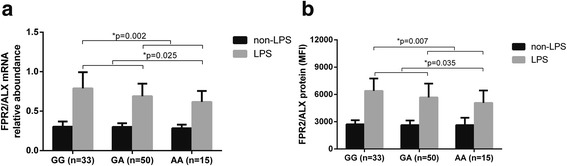
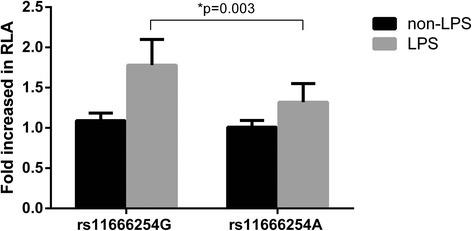
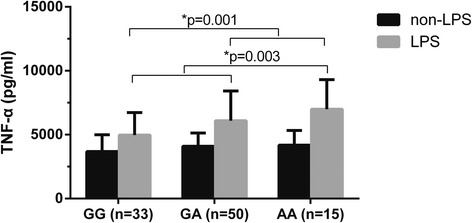
Among the three tag SNPs, only the rs11666254 polymorphism was found to be significantly associated with sepsis in trauma patients, and this association persisted after a pooled analysis of all 646 trauma patients, which showed that patients who carried the A allele of rs11666254 had a significantly higher risk of developing sepsis than individuals who carried the G allele. This SNP was also significantly associated with lower FPR2/ALX mRNA and protein expression as well as higher TNF-α production from the peripheral blood leukocyte response to bacterial lipoprotein stimulation. In addition, the rs11666254 polymorphism could significantly decrease the promoter activity of the FPR2/ALX gene.
The rs11666254 polymorphism in the FPR2/ALX gene is a functional SNP that increases sepsis susceptibility in patients after traumatic injury.
甲酰肽受体 2-脂氧合酶受体(FPR2/ALX)调节抗炎反应,因此可能是治疗脓毒症的靶点。本研究旨在探讨 FPR2/ALX 基因的遗传变异与严重创伤后脓毒症的关系,并进一步分析与脓毒症相关的遗传多态性的功能。
使用焦磷酸测序对初始样本中 275 名严重创伤患者的 FPR2/ALX 基因组区域的所有常见等位基因进行了三个标签单核苷酸多态性(tag SNPs)的基因分型。在另外 371 名患者中对具有统计学意义的 rs11666254 多态性进行了基因分型,并进行了逻辑回归分析,以确定 FPR2/ALX 基因多态性与严重创伤后脓毒症易感性之间的关系。通过定量聚合酶链反应和 Western blot 分析,测定创伤患者脂多糖刺激白细胞中 FPR2/ALX 的信使 RNA(mRNA)和蛋白水平。通过酶联免疫吸附试验测定肿瘤坏死因子(TNF)-α 的产生。使用荧光素酶报告基因检测分析启动子多态性 rs11666254 对 FPR2/ALX 转录活性的影响。
在三个 tag SNPs 中,只有 rs11666254 多态性与创伤患者的脓毒症显著相关,并且在对所有 646 例创伤患者进行的汇总分析中,这种相关性仍然存在,表明携带 rs11666254 的 A 等位基因的患者发生脓毒症的风险显著高于携带 G 等位基因的个体。该 SNP 也与外周血白细胞对细菌脂蛋白刺激的反应中 FPR2/ALX mRNA 和蛋白表达降低以及 TNF-α 产生增加显著相关。此外,rs11666254 多态性可显著降低 FPR2/ALX 基因的启动子活性。
FPR2/ALX 基因中的 rs11666254 多态性是一种功能性 SNP,可增加创伤后患者脓毒症的易感性。