Cancer Research Center of Toulouse (CRCT), UMR1037 Inserm/Université Toulouse III Paul Sabatier, ERL5294 CNRS, Laboratoire d'Excellence Toulouse Cancer (TOUCAN), France.
BGI, Shenzhen, China.
Haematologica. 2017 Oct;102(10):1718-1726. doi: 10.3324/haematol.2017.171645. Epub 2017 Jul 4.
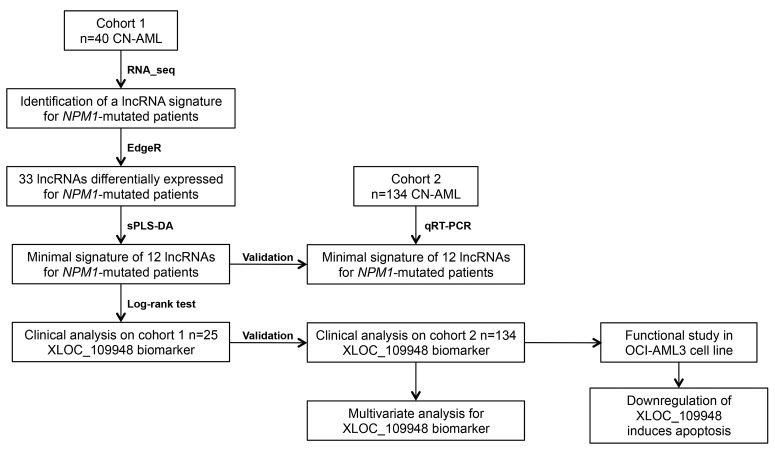
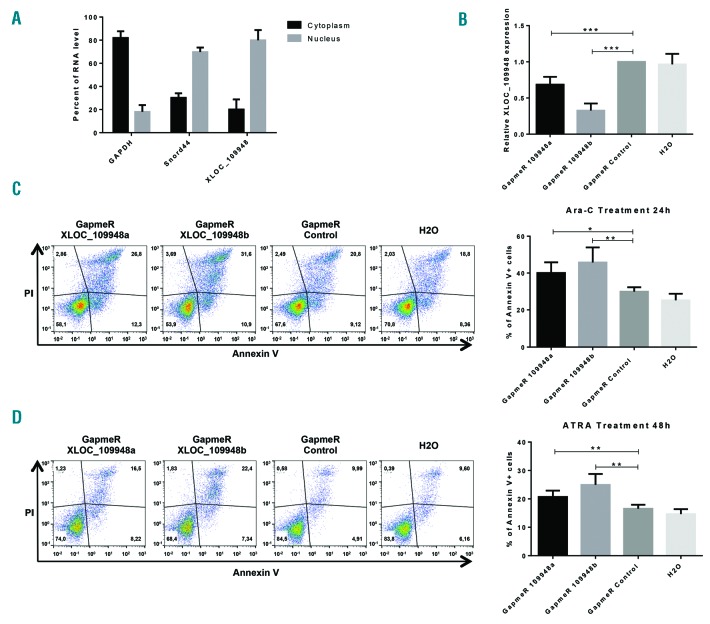
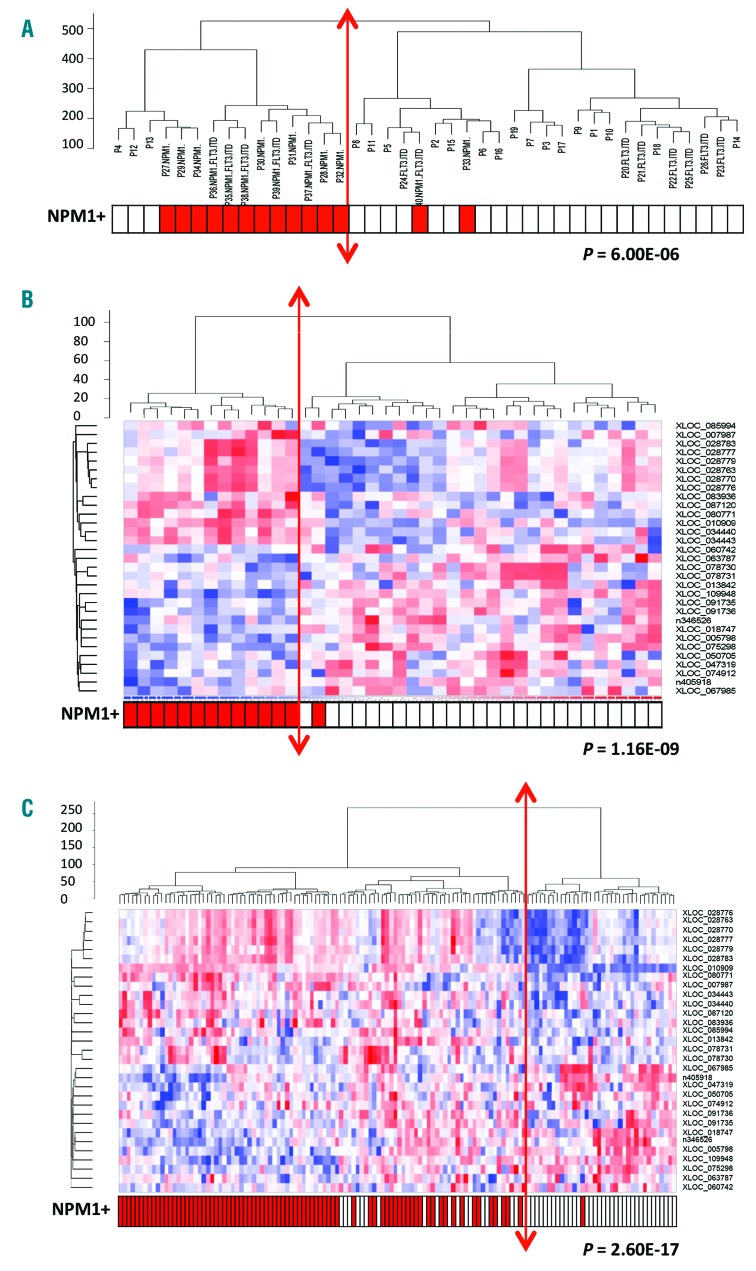
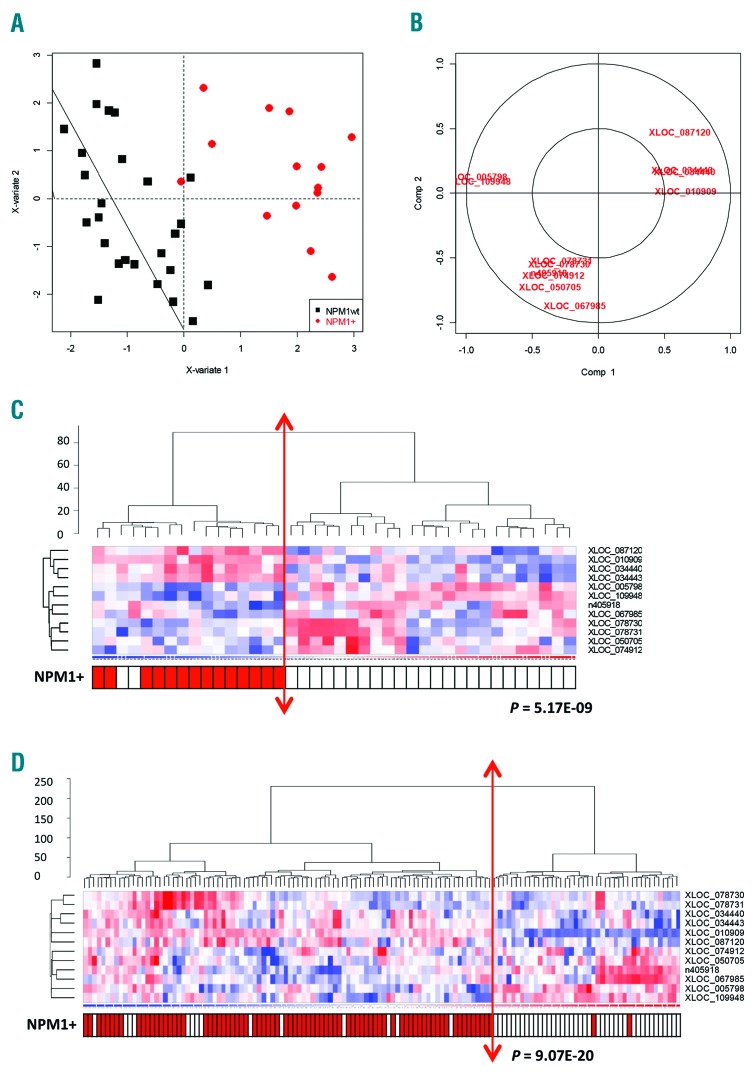
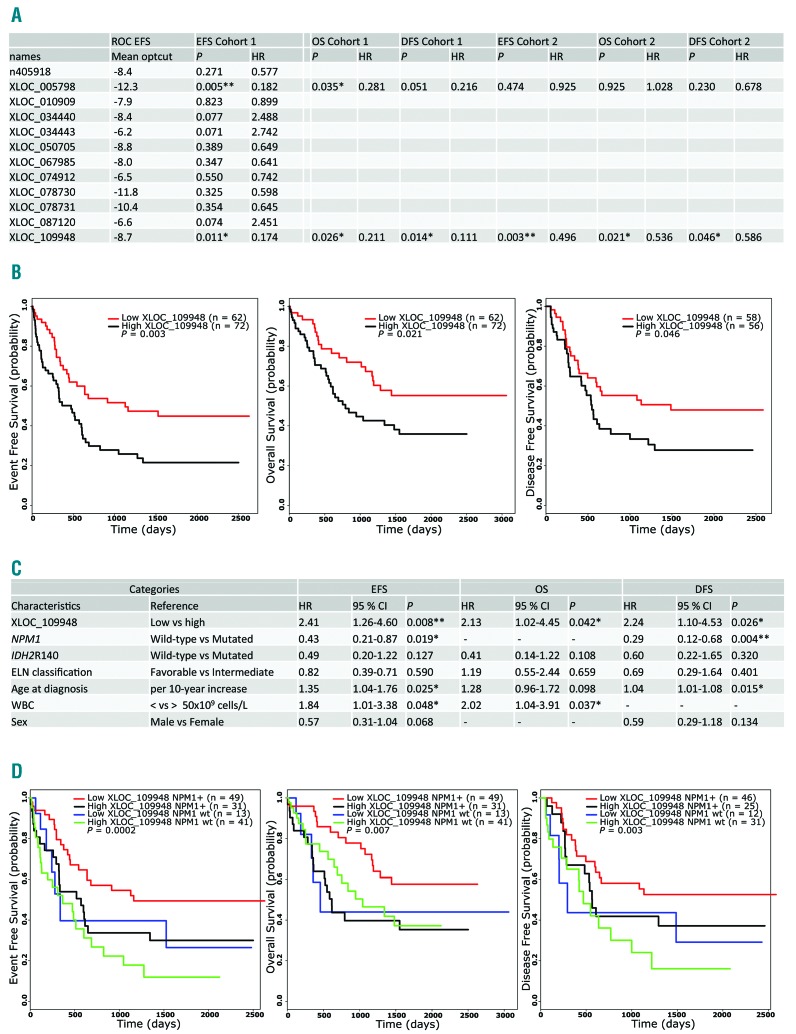
Long non-coding RNAs are defined as transcripts larger than 200 nucleotides but without protein-coding potential. There is growing evidence of the important role of long non-coding RNAs in cancer initiation, development and progression. In this study, we sought to evaluate the long non-coding RNA expression profile of patients with cytogenetically normal acute myeloid leukemia (AML). RNA-sequencing of 40 cytogenetically normal AML patients allowed us to quantify 11,036 long non-coding RNAs. Among these, more than 8000 were previously undescribed long non-coding RNAs. Using unsupervised analysis, we observed a specific long non-coding RNA expression profile dependent on the mutational status of the gene. Statistical analysis allowed us to identify a minimal set of 12 long non-coding RNAs capable of discriminating -mutated from -wild-type patients. These results were validated by qRT-PCR on an independent cohort composed of 134 cytogenetically normal AML patients. Furthermore, we have identified one putative biomarker, the long non-coding RNA XLOC_109948 whose expression pattern predicts clinical outcome. Interestingly, low XLOC_109948 expression indicates a good prognosis especially for -mutated patients. Transient transfection of GapmeR against XLOC_109948 in -mutated OCI-AML3 cell line treated with Ara-C or ATRA enhances apoptosis suggesting XLOC_109948 plays a role in drug sensitivity. This study improves our knowledge of the long non-coding RNA transcriptome in cytogenetically normal AML patients. We observed a distinct long non-coding RNA expression profile in patients with the mutation. The newly identified XLOC_109948 long non-coding RNA emerged as a strong prognostic factor able to better stratify NPM1-mutated patients.
长链非编码 RNA 被定义为长度大于 200 个核苷酸但没有蛋白编码潜能的转录物。越来越多的证据表明长链非编码 RNA 在癌症的发生、发展和进展中起着重要作用。在这项研究中,我们试图评估细胞遗传学正常的急性髓系白血病(AML)患者的长链非编码 RNA 表达谱。对 40 例细胞遗传学正常的 AML 患者进行 RNA 测序,使我们能够定量分析 11036 个长链非编码 RNA。其中,超过 8000 个是以前未描述的长链非编码 RNA。通过无监督分析,我们观察到一个依赖于基因突变状态的特定长链非编码 RNA 表达谱。统计分析使我们能够确定一组 12 个长链非编码 RNA 的最小集合,能够区分突变型和野生型患者。这些结果通过包含 134 例细胞遗传学正常 AML 患者的独立队列的 qRT-PCR 进行了验证。此外,我们还鉴定了一个潜在的生物标志物,长链非编码 RNA XLOC_109948,其表达模式可预测临床结果。有趣的是,低表达的 XLOC_109948 预示着良好的预后,特别是对突变型患者。在经 Ara-C 或 ATRA 处理的突变型 OCI-AML3 细胞系中,用 GapmeR 瞬时转染 XLOC_109948 可增强细胞凋亡,提示 XLOC_109948 在药物敏感性中发挥作用。这项研究提高了我们对细胞遗传学正常 AML 患者长链非编码 RNA 转录组的认识。我们观察到突变型患者的长链非编码 RNA 表达谱明显不同。新鉴定的 XLOC_109948 长链非编码 RNA 作为一个强大的预后因素,能够更好地分层 NPM1 突变型患者。