Pillay Sirika, Zou Wei, Cheng Fang, Puschnik Andreas S, Meyer Nancy L, Ganaie Safder S, Deng Xuefeng, Wosen Jonathan E, Davulcu Omar, Yan Ziying, Engelhardt John F, Brown Kevin E, Chapman Michael S, Qiu Jianming, Carette Jan E
Department of Microbiology and Immunology, Stanford University School of Medicine, Stanford, California, USA.
Department of Microbiology, Molecular Genetics and Immunology, University of Kansas Medical Center, Kansas City, Kansas, USA.
J Virol. 2017 Aug 24;91(18). doi: 10.1128/JVI.00391-17. Print 2017 Sep 15.
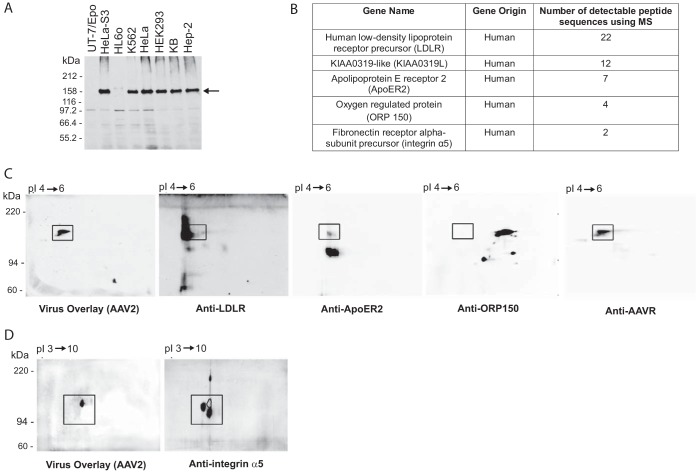
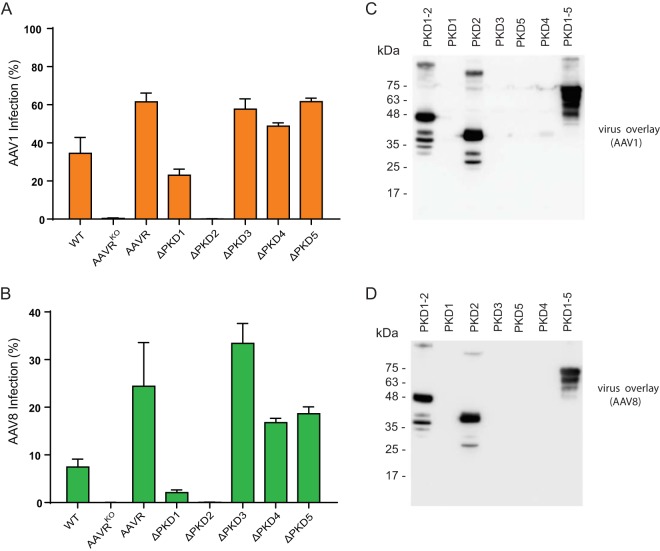
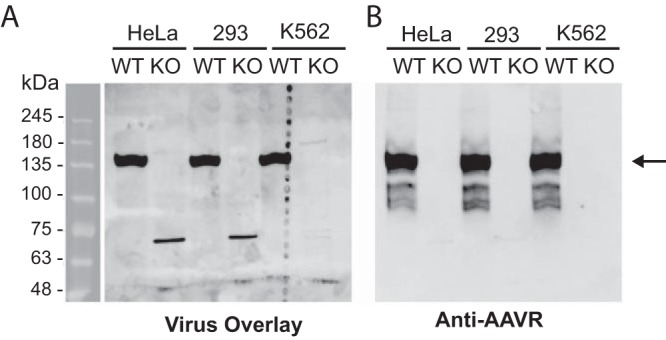
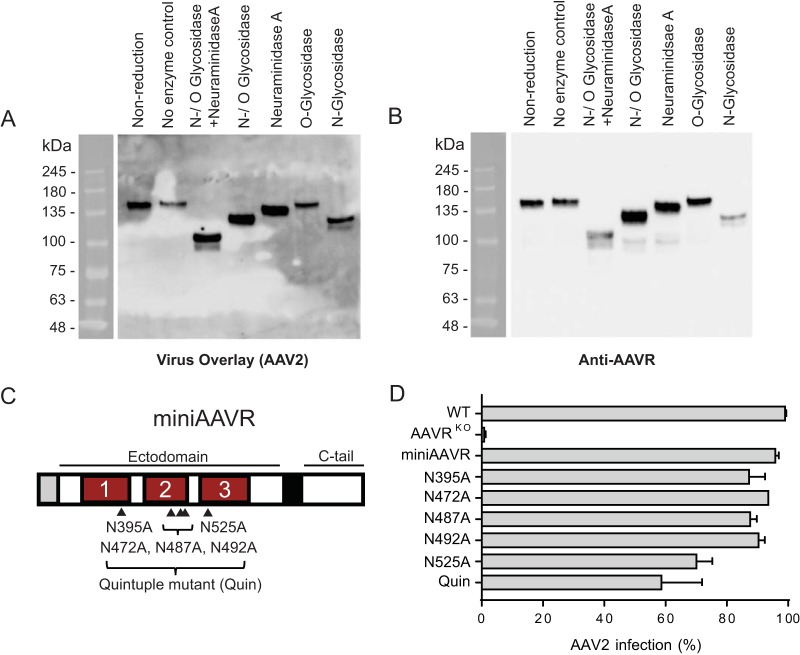
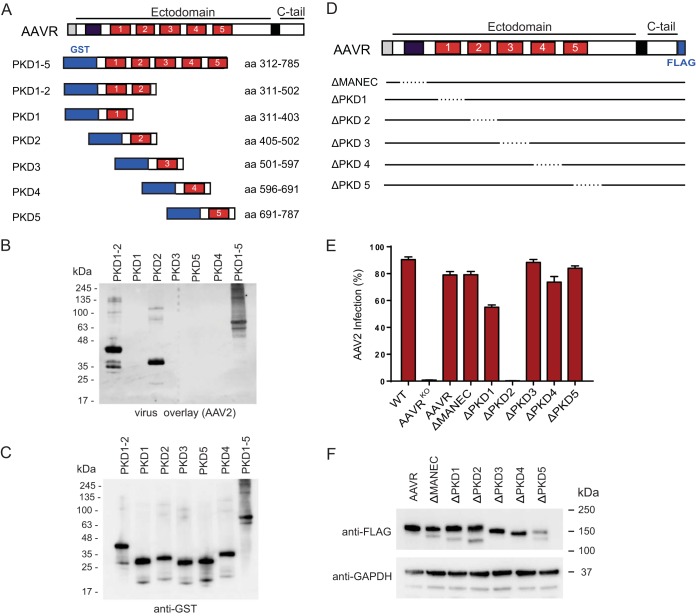
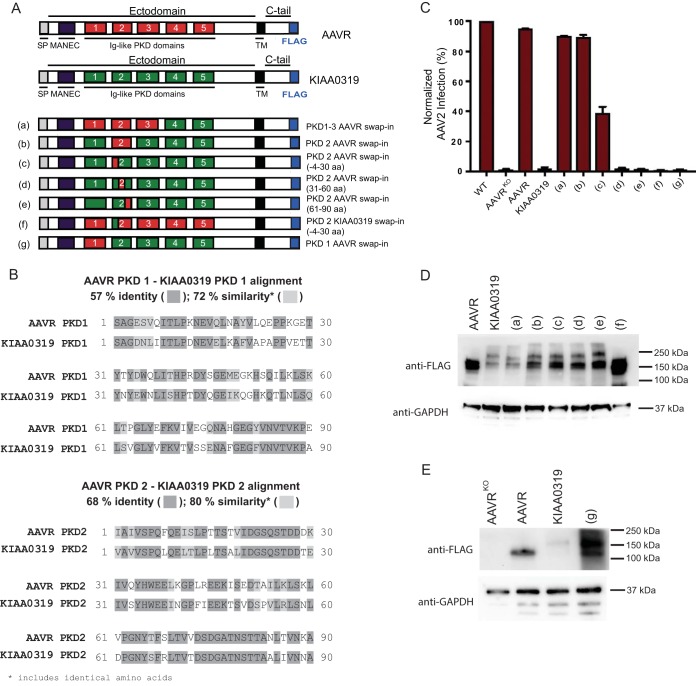
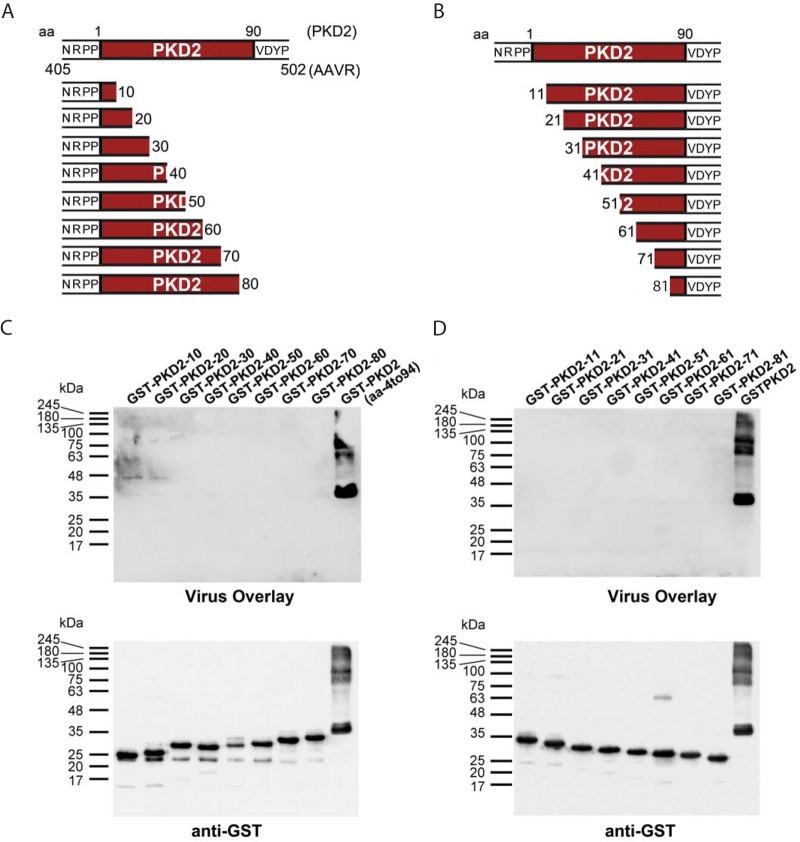
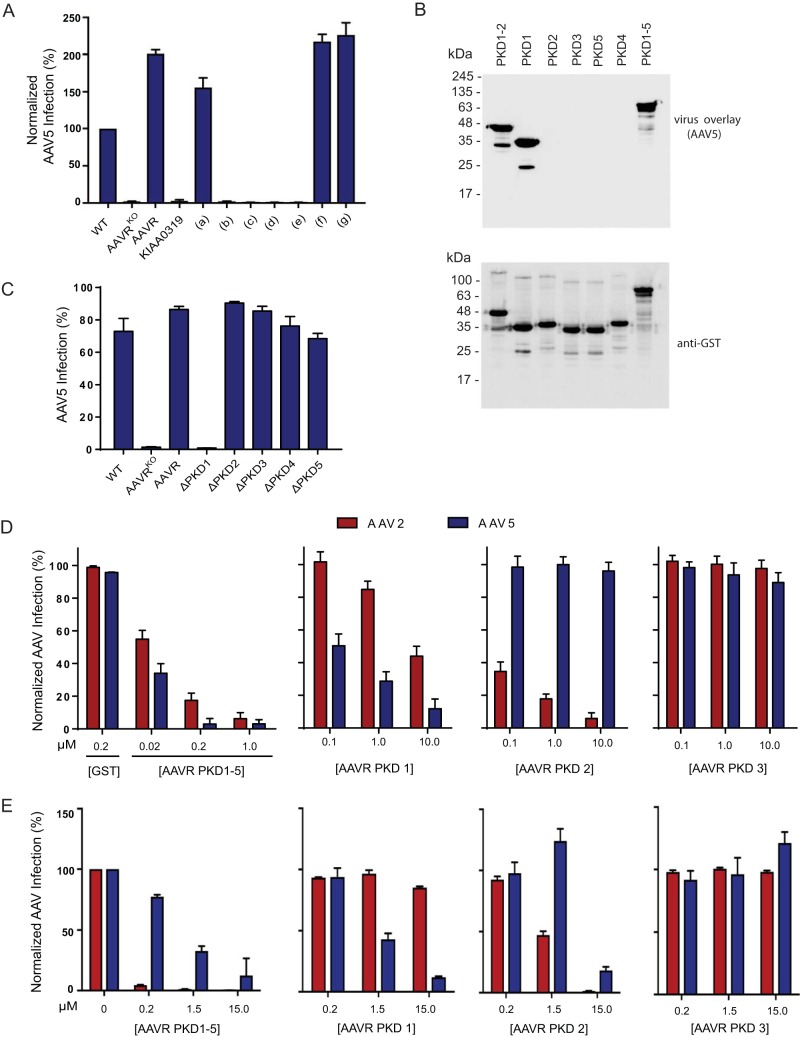
Adeno-associated virus (AAV) entry is determined by its interactions with specific surface glycans and a proteinaceous receptor(s). Adeno-associated virus receptor (AAVR) (also named KIAA0319L) is an essential cellular receptor required for the transduction of vectors derived from multiple AAV serotypes, including the evolutionarily distant serotypes AAV2 and AAV5. Here, we further biochemically characterize the AAV-AAVR interaction and define the domains within the ectodomain of AAVR that facilitate this interaction. By using a virus overlay assay, it was previously shown that the major AAV2 binding protein in membrane preparations of human cells corresponds to a glycoprotein with a molecular mass of 150 kDa. By establishing a purification procedure, performing further protein separation by two-dimensional electrophoresis, and utilizing mass spectrometry, we now show that this glycoprotein is identical to AAVR. While we find that AAVR is an N-linked glycosylated protein, this glycosylation is not a strict requirement for AAV2 binding or functional transduction. Using a combination of genetic complementation with deletion constructs and virus overlay assays with individual domains, we find that AAV2 functionally interacts predominantly with the second Ig-like polycystic kidney disease (PKD) repeat domain (PKD2) present in the ectodomain of AAVR. In contrast, AAV5 interacts primarily through the first, most membrane-distal, PKD domain (PKD1) of AAVR to promote transduction. Furthermore, other AAV serotypes, including AAV1 and -8, require a combination of PKD1 and PKD2 for optimal transduction. These results suggest that despite their shared dependence on AAVR as a critical entry receptor, different AAV serotypes have evolved distinctive interactions with the same receptor. Over the past decade, AAV vectors have emerged as leading gene delivery tools for therapeutic applications and biomedical research. However, fundamental aspects of the AAV life cycle, including how AAV interacts with host cellular factors to facilitate infection, are only partly understood. In particular, AAV receptors contribute significantly to AAV vector transduction efficiency and tropism. The recently identified AAV receptor (AAVR) is a key host receptor for multiple serotypes, including the most studied serotype, AAV2. AAVR binds directly to AAV2 particles and is rate limiting for viral transduction. Defining the AAV-AAVR interface in more detail is important to understand how AAV engages with its cellular receptor and how the receptor facilitates the entry process. Here, we further define AAV-AAVR interactions, genetically and biochemically, and show that different AAV serotypes have discrete interactions with the Ig-like PKD domains of AAVR. These findings reveal an unexpected divergence of AAVR engagement within these parvoviruses.
腺相关病毒(AAV)的进入取决于其与特定表面聚糖和一种或多种蛋白质受体的相互作用。腺相关病毒受体(AAVR)(也称为KIAA0319L)是转导源自多种AAV血清型(包括进化上距离较远的血清型AAV2和AAV5)的载体所必需的细胞受体。在此,我们进一步从生化角度表征AAV与AAVR的相互作用,并确定AAVR胞外域中促进这种相互作用的结构域。通过病毒覆盖试验,先前已表明人类细胞膜制剂中的主要AAV2结合蛋白对应于一种分子量为150 kDa的糖蛋白。通过建立纯化程序,进行二维电泳进一步分离蛋白质,并利用质谱分析,我们现在表明这种糖蛋白与AAVR相同。虽然我们发现AAVR是一种N - 连接糖基化蛋白,但这种糖基化对于AAV2结合或功能转导并非严格必需。通过将基因互补与缺失构建体相结合以及对各个结构域进行病毒覆盖试验,我们发现AAV2主要与AAVR胞外域中存在的第二个免疫球蛋白样多囊肾病(PKD)重复结构域(PKD2)发生功能性相互作用。相比之下,AAV5主要通过AAVR的第一个、最远离膜的PKD结构域(PKD1)相互作用来促进转导。此外,包括AAV1和 - 8在内的其他AAV血清型需要PKD1和PKD2的组合才能实现最佳转导。这些结果表明,尽管它们都依赖AAVR作为关键的进入受体,但不同的AAV血清型与同一受体已进化出独特的相互作用。在过去十年中,AAV载体已成为治疗应用和生物医学研究中领先的基因递送工具。然而,AAV生命周期的基本方面,包括AAV如何与宿主细胞因子相互作用以促进感染,仅得到部分理解。特别是,AAV受体对AAV载体转导效率和靶向性有显著贡献。最近鉴定出的AAV受体(AAVR)是多种血清型(包括研究最多的血清型AAV2)的关键宿主受体。AAVR直接结合AAV2颗粒,并且是病毒转导的限速因素。更详细地定义AAV - AAVR界面对于理解AAV如何与细胞受体结合以及受体如何促进进入过程很重要。在此,我们通过遗传和生化方法进一步定义AAV - AAVR相互作用,并表明不同的AAV血清型与AAVR的免疫球蛋白样PKD结构域有离散的相互作用。这些发现揭示了这些细小病毒中AAVR参与方式的意外差异。