Jang Tae Young, Jung Ah-Yeoun, Kyung Tae-Suk, Kim Dae-Young, Hwang Jun-Ha, Kim Young Hyo
Department of Otorhinolaryngology, Head and Neck Surgery, Inha University College of Medicine, Incheon, Republic of Korea.
Cent Eur J Immunol. 2017;42(1):24-29. doi: 10.5114/ceji.2017.67315. Epub 2017 May 8.
We aimed to evaluate the anti-allergic effect of luteolin treatment in mice with allergic asthma and rhinitis.
Thirty-two BALB/c mice (n = 8 for each group) were used. Mice in group A (nonallergic group) were exposed to saline, while those in Group B (allergic group) were exposed to ovalbumin (OVA) intraperitoneal (i.p.) injection and intranasal (i.n.) challenge. Null treatment group (Group C) received sterile saline (150 μl) i.p. injection, 30 minutes before each i.n. challenge. Finally, the treatment group (Group D) received luteolin (0.1 mg/kg) by i.p. injection, 30 minutes before each i.n. challenge. We evaluated the number of inflammatory cells including eosinophils, neutrophils and lymphocytes in bronchoalveolar lavage (BAL) fluid, the titers of IL-4, IL-5 and IL-13 in lung homogenate, and we also evaluated histopathologic findings, including infiltration of inflammatory cells into the pulmonary parenchyma and nasal mucosa.
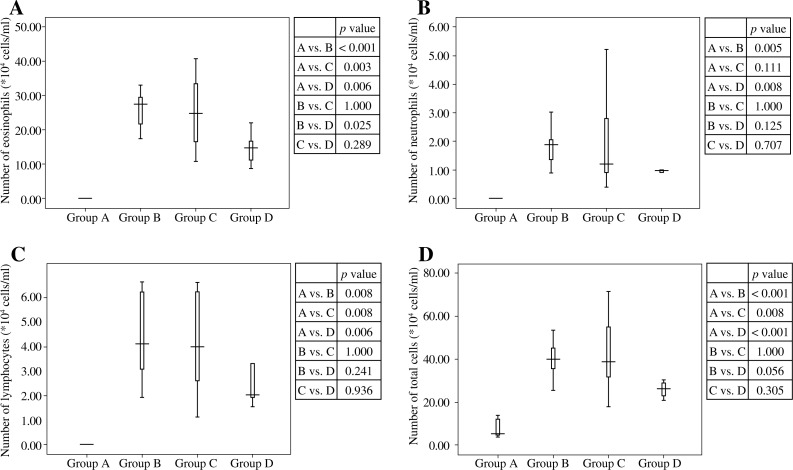
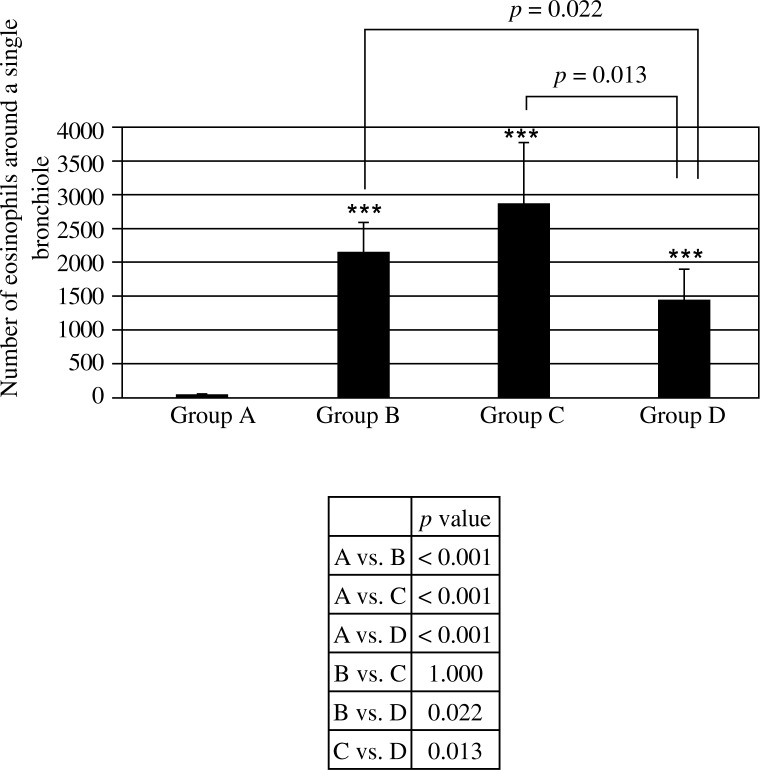
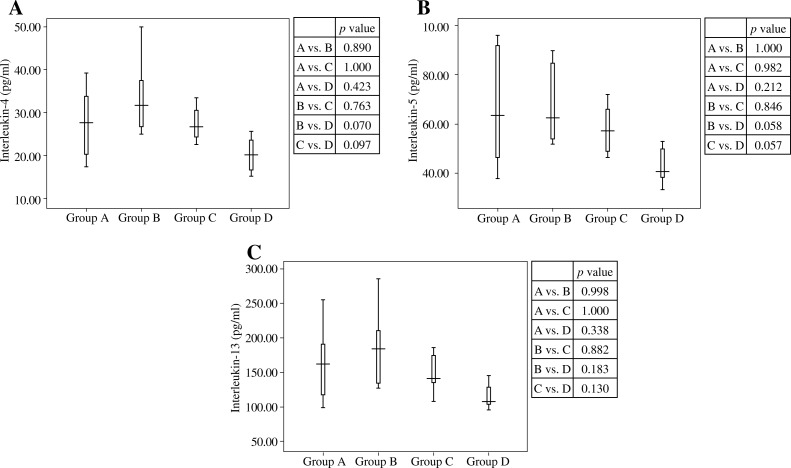
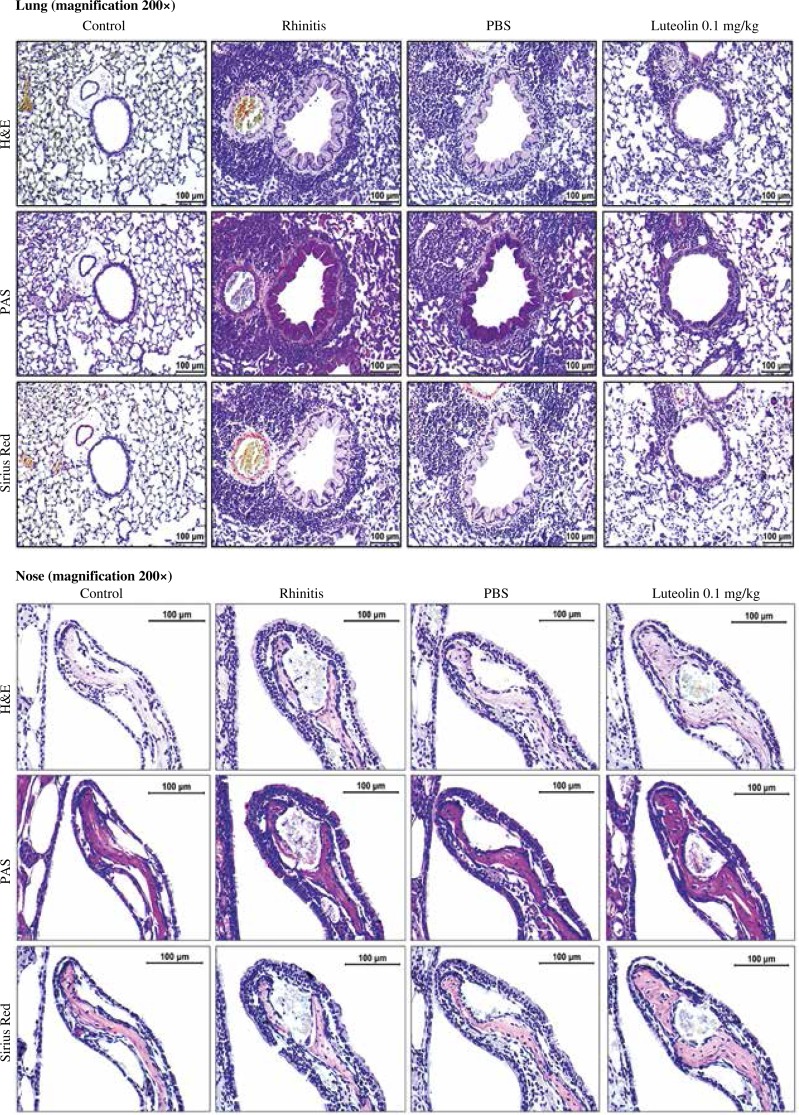
After the OVA challenge, the number of eosinophils, neutrophils and lymphocytes in BAL fluid was significantly increased in group B, compared to group A (p < 0.001). Mice in group C had no significant difference (p > 0.05). On the other hand, group D showed a significant decrease in all inflammatory cells compared to group B (p < 0.05). Also, group D showed a significant decrease in IL-4, IL-5 and IL-13 in their lung homogenate compared to groups B and C (p < 0.05). Group D also showed a significant decrease in inflammatory cell infiltration after luteolin treatment (p < 0.05).
Luteolin had an anti-allergic effect in a murine model of allergic asthma and rhinitis.
我们旨在评估木犀草素治疗对过敏性哮喘和鼻炎小鼠的抗过敏作用。
使用32只BALB/c小鼠(每组n = 8只)。A组(非过敏组)小鼠暴露于生理盐水,而B组(过敏组)小鼠接受卵清蛋白(OVA)腹腔注射和鼻内激发。空白治疗组(C组)在每次鼻内激发前30分钟腹腔注射无菌生理盐水(150 μl)。最后,治疗组(D组)在每次鼻内激发前30分钟腹腔注射木犀草素(0.1 mg/kg)。我们评估了支气管肺泡灌洗(BAL)液中包括嗜酸性粒细胞、中性粒细胞和淋巴细胞在内的炎症细胞数量、肺匀浆中IL-4、IL-5和IL-13的滴度,并且还评估了组织病理学结果,包括炎症细胞浸润到肺实质和鼻黏膜中。
OVA激发后,与A组相比,B组BAL液中的嗜酸性粒细胞、中性粒细胞和淋巴细胞数量显著增加(p < 0.001)。C组小鼠无显著差异(p > 0.05)。另一方面,与B组相比,D组所有炎症细胞均显著减少(p < 0.05)。此外,与B组和C组相比,D组肺匀浆中IL-4、IL-5和IL-13显著降低(p < 0.05)。木犀草素治疗后,D组炎症细胞浸润也显著减少(p < 0.05)。
木犀草素在过敏性哮喘和鼻炎小鼠模型中具有抗过敏作用。