Pan Minglin, Han Ying, Si Rui, Guo Rui, Desai Ankit, Makino Ayako
Department of Medicine, University of Illinois at Chicago, Chicago, IL, USA.
Department of Endocrinology, The Second Affiliated Hospital of Nanjing Medical University, Nanjing, China.
Pulm Circ. 2017 Feb 1;7(1):175-185. doi: 10.1086/690206. eCollection 2017 Mar.
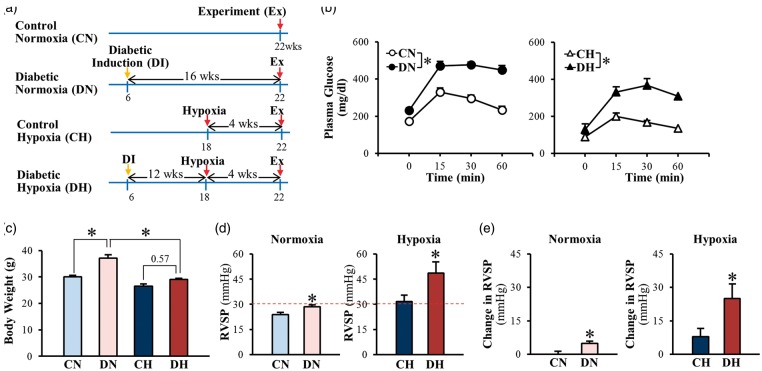
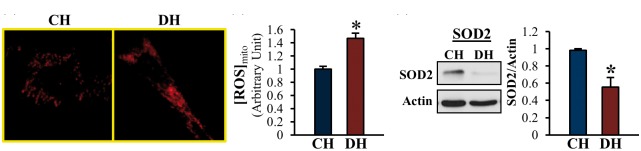
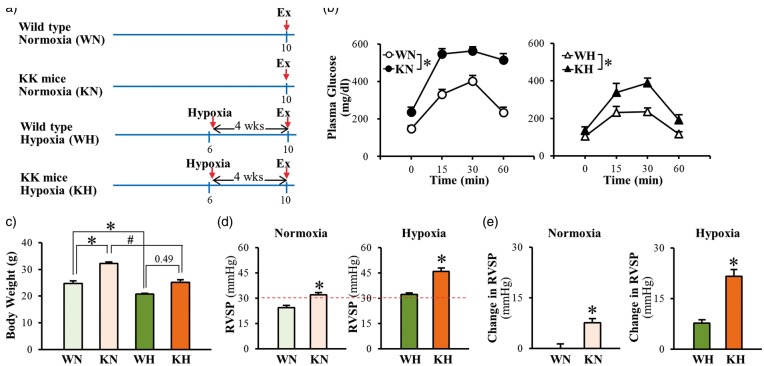
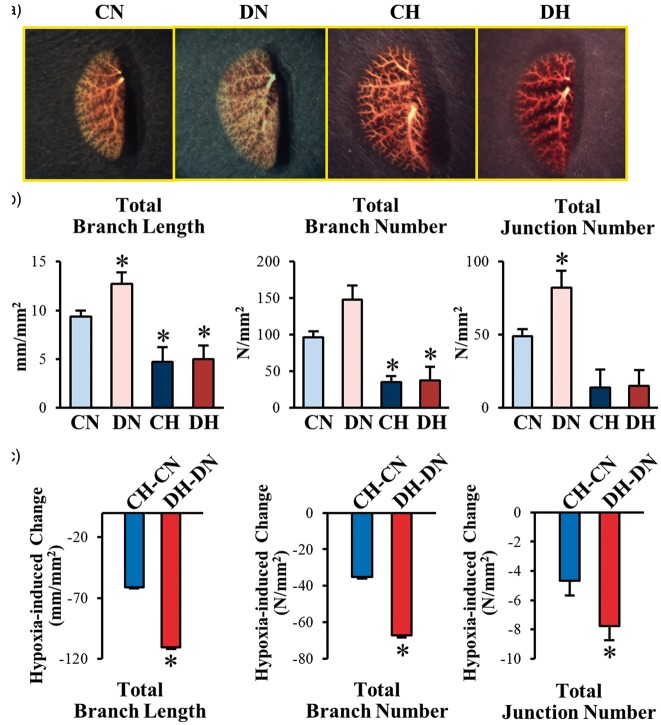
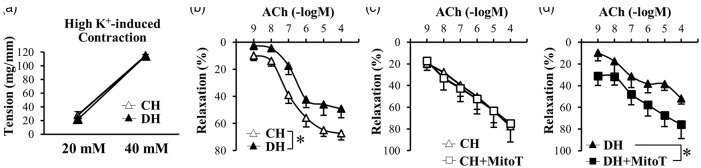
Hypoxia-induced pulmonary hypertension (HPH) is a progressive disease that is mainly caused by chronic exposure to high altitude, chronic obstructive lung disease, and obstructive sleep apnea. The increased pulmonary vascular resistance and increased pulmonary arterial pressure result in increased right ventricular afterload, leading to right heart failure and increased morbidity. There are several clinical reports suggesting a link between PH and diabetes, insulin resistance, or obesity; however, it is unclear whether HPH is associated with diabetes as a progressive complication in diabetes. The major goal of this study is to examine the effect of diabetic "preconditioning" or priming effect on the progression of HPH and define the molecular mechanisms that explain the link between diabetes and HPH. Our data show that HPH is significantly enhanced in diabetic mice, while endothelium-dependent relaxation in pulmonary arteries is significantly attenuated in chronically hypoxic diabetic mice (DH). In addition, we demonstrate that mouse pulmonary endothelial cells (MPECs) isolated from DH mice exhibit a significant increase in mitochondrial reactive oxygen species (ROS) concentration and decreased SOD2 protein expression. Finally, scavenging mitochondrial ROS by mitoTempol restores endothelium-dependent relaxation in pulmonary arteries that is attenuated in DH mice. These data suggest that excessive mitochondrial ROS production in diabetic MPECs leads to the development of severe HPH in diabetic mice exposed to hypoxia.
缺氧诱导的肺动脉高压(HPH)是一种进行性疾病,主要由长期暴露于高海拔、慢性阻塞性肺疾病和阻塞性睡眠呼吸暂停引起。肺血管阻力增加和肺动脉压力升高导致右心室后负荷增加,进而导致右心衰竭和发病率增加。有几份临床报告表明肺动脉高压(PH)与糖尿病、胰岛素抵抗或肥胖之间存在联系;然而,尚不清楚HPH是否作为糖尿病的一种进行性并发症与糖尿病相关。本研究的主要目的是研究糖尿病“预处理”或启动效应对HPH进展的影响,并确定解释糖尿病与HPH之间联系的分子机制。我们的数据表明,糖尿病小鼠的HPH显著增强,而慢性缺氧糖尿病小鼠(DH)的肺动脉内皮依赖性舒张功能显著减弱。此外,我们证明从DH小鼠分离的小鼠肺内皮细胞(MPEC)线粒体活性氧(ROS)浓度显著增加,SOD2蛋白表达降低。最后,用线粒体靶向抗氧化剂mitoTempol清除线粒体ROS可恢复DH小鼠中减弱的肺动脉内皮依赖性舒张功能。这些数据表明,糖尿病MPEC中过量的线粒体ROS产生导致暴露于缺氧环境的糖尿病小鼠发生严重的HPH。