Hoseini Sayed Shahabuddin, Dobrenkov Konstantin, Pankov Dmitry, Xu Xiaoliang L, Cheung Nai-Kong V
Department of Pediatrics, Memorial Sloan Kettering Cancer Center, New York, NY, USA.
Department of Surgery, Memorial Sloan Kettering Cancer Center, New York, NY, USA.
Oncoimmunology. 2017 Apr 28;6(6):e1320625. doi: 10.1080/2162402X.2017.1320625. eCollection 2017.
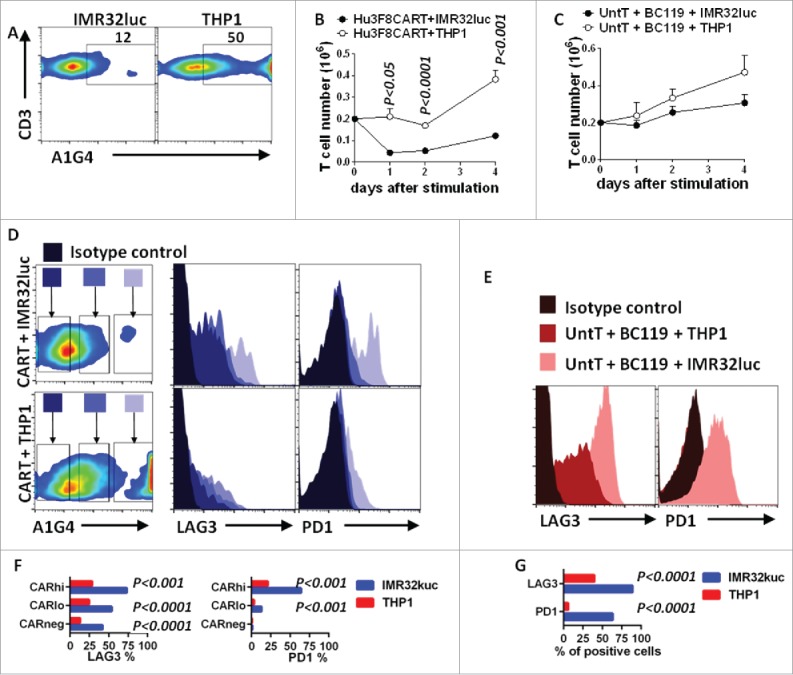
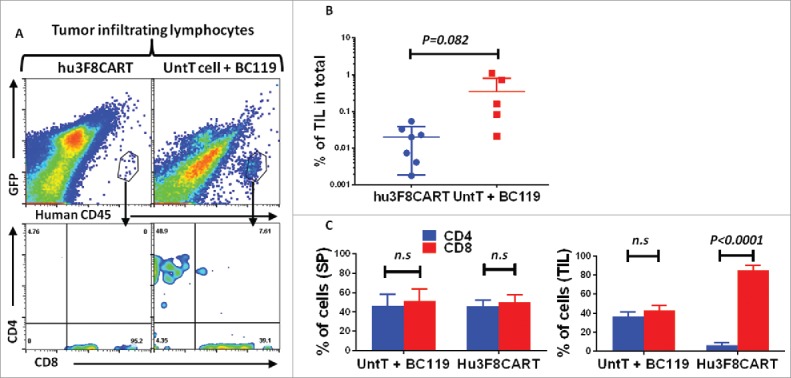
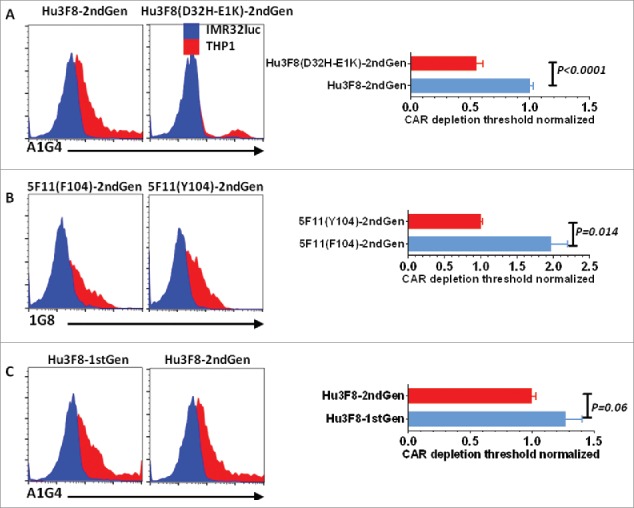
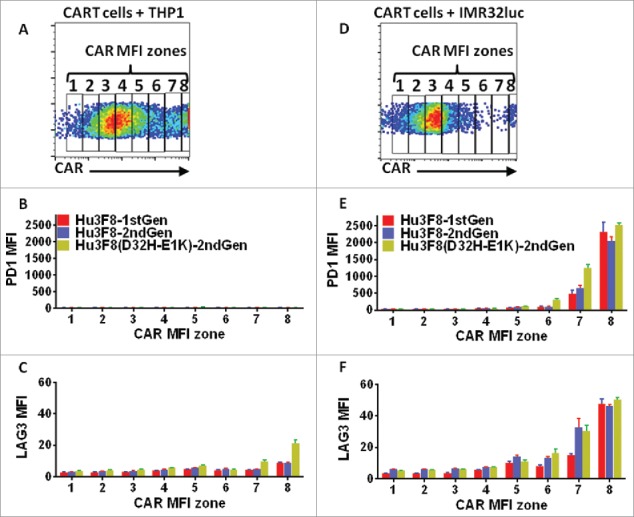
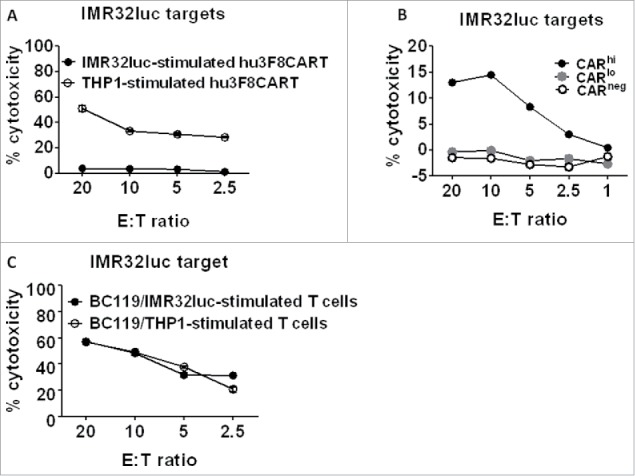
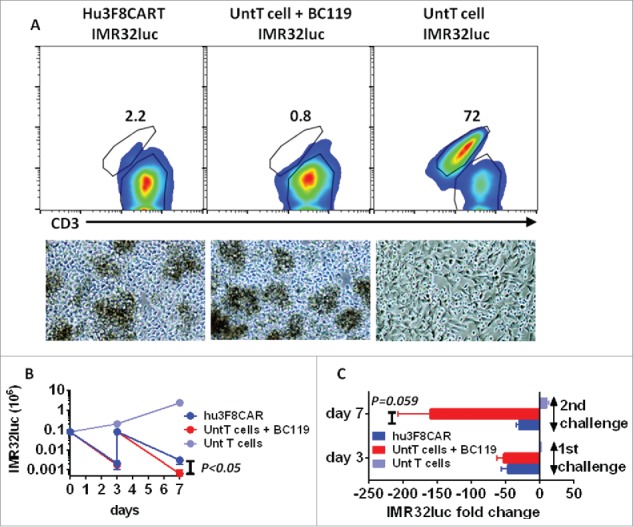
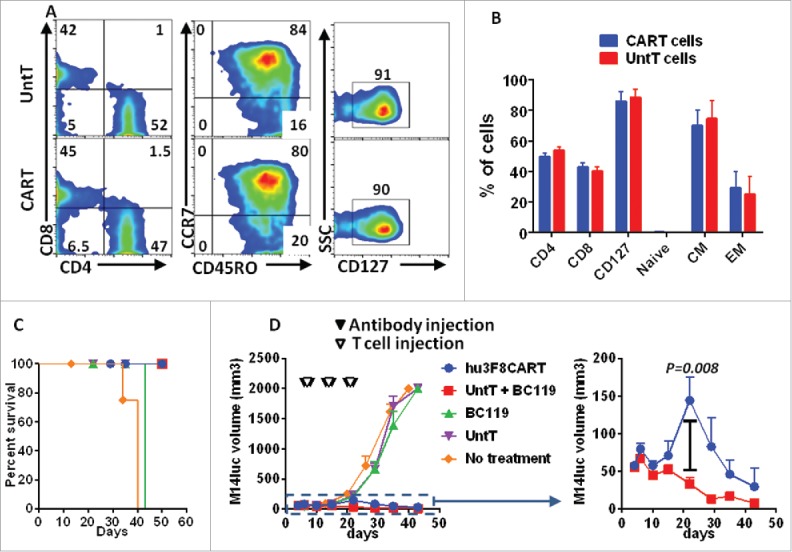
Chimeric antigen receptors (CAR) and bispecific antibodies (BsAb) are two powerful immunotherapy approaches for retargeting lymphocytes toward cancer cells. Despite their success in lymphoblastic leukemia, solid tumors have been more recalcitrant. Identifying therapeutic barriers facing CAR-modified (CART) or BsAb-redirected T (BsAb-T) cells should facilitate their clinical translation to solid tumors. Novel lentiviral vectors containing low-affinity or high-affinity 4-1BB second-generation anti-GD2 (disialoganglioside) CARs were built to achieve efficient T cell transduction. The humanized anti-GD2 × CD3 BsAb using the IgG-scFv platform was described previously. CART and BsAb-engaged T cells were tested for viability, proliferation, and activation/exhaustion marker expression, and cytotoxicity against GD2(+) tumor cells. The antitumor effect of CAR-grafted and BsAb-T cells was compared in a human melanoma xenograft model. The majority of high CAR density T cells were depleted upon exposure to GD2(+) target cells while the BsAb-T cells survived. The cytotoxicity of the surviving CART cells was inferior to that of the BsAb-T cells. Using low-affinity CARs, inclusion of the 4-1BB co-stimulatory domain or exclusion of a co-stimulatory domain, or blocking PD1 did not prevent CART cell depletion. Both CART cells and BsAb-T cells penetrated established subcutaneous human melanoma xenografts; while both induced tumor regression, BsAb was more efficient. The fate of T cells activated by BsAb differs substantially from that by CAR, translating into a more robust antitumor effect both and .
嵌合抗原受体(CAR)和双特异性抗体(BsAb)是两种强大的免疫疗法,可将淋巴细胞重新靶向癌细胞。尽管它们在淋巴细胞白血病中取得了成功,但实体瘤却更难治疗。识别CAR修饰的(CART)或BsAb重定向的T(BsAb-T)细胞面临的治疗障碍,应有助于它们向实体瘤的临床转化。构建了含有低亲和力或高亲和力4-1BB第二代抗GD2(二唾液酸神经节苷脂)CAR的新型慢病毒载体,以实现有效的T细胞转导。先前已描述了使用IgG-scFv平台的人源化抗GD2×CD3 BsAb。测试了CART和BsAb结合的T细胞的活力、增殖、激活/耗竭标志物表达以及对GD2(+)肿瘤细胞的细胞毒性。在人黑色素瘤异种移植模型中比较了CAR移植的细胞和BsAb-T细胞的抗肿瘤作用。大多数高CAR密度的T细胞在暴露于GD2(+)靶细胞后被耗尽,而BsAb-T细胞存活下来。存活的CART细胞的细胞毒性低于BsAb-T细胞。使用低亲和力CAR时,包含4-1BB共刺激域或排除共刺激域,或阻断PD1均不能阻止CART细胞的耗竭。CART细胞和BsAb-T细胞都穿透了已建立的皮下人黑色素瘤异种移植物;虽然两者都诱导了肿瘤消退,但BsAb更有效。由BsAb激活的T细胞的命运与由CAR激活的T细胞的命运有很大不同,这转化为在 和 方面更强大的抗肿瘤作用。