Long Adrienne H, Haso Waleed M, Shern Jack F, Wanhainen Kelsey M, Murgai Meera, Ingaramo Maria, Smith Jillian P, Walker Alec J, Kohler M Eric, Venkateshwara Vikas R, Kaplan Rosandra N, Patterson George H, Fry Terry J, Orentas Rimas J, Mackall Crystal L
1] Pediatric Oncology Branch, Center for Cancer Research, National Cancer Institute, National Institutes of Health, Bethesda, Maryland, USA. [2] Department of Microbiology and Immunology, Feinberg School of Medicine, Northwestern University, Chicago, Illinois, USA.
Pediatric Oncology Branch, Center for Cancer Research, National Cancer Institute, National Institutes of Health, Bethesda, Maryland, USA.
Nat Med. 2015 Jun;21(6):581-90. doi: 10.1038/nm.3838. Epub 2015 May 4.
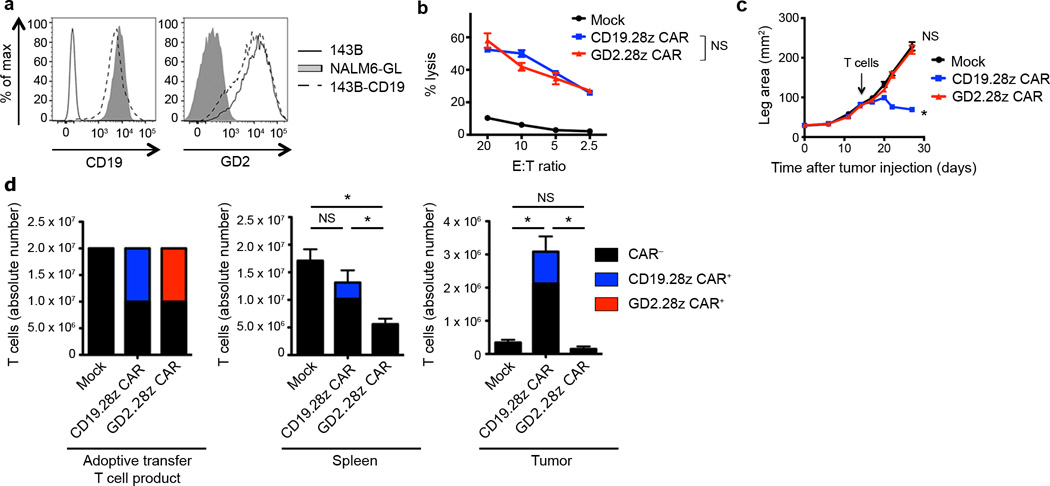
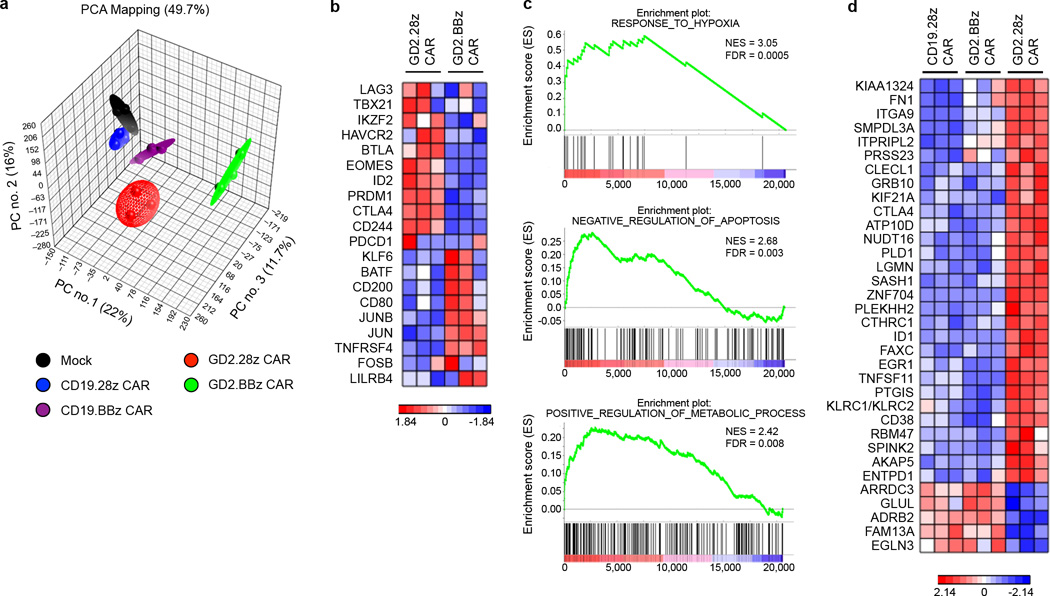
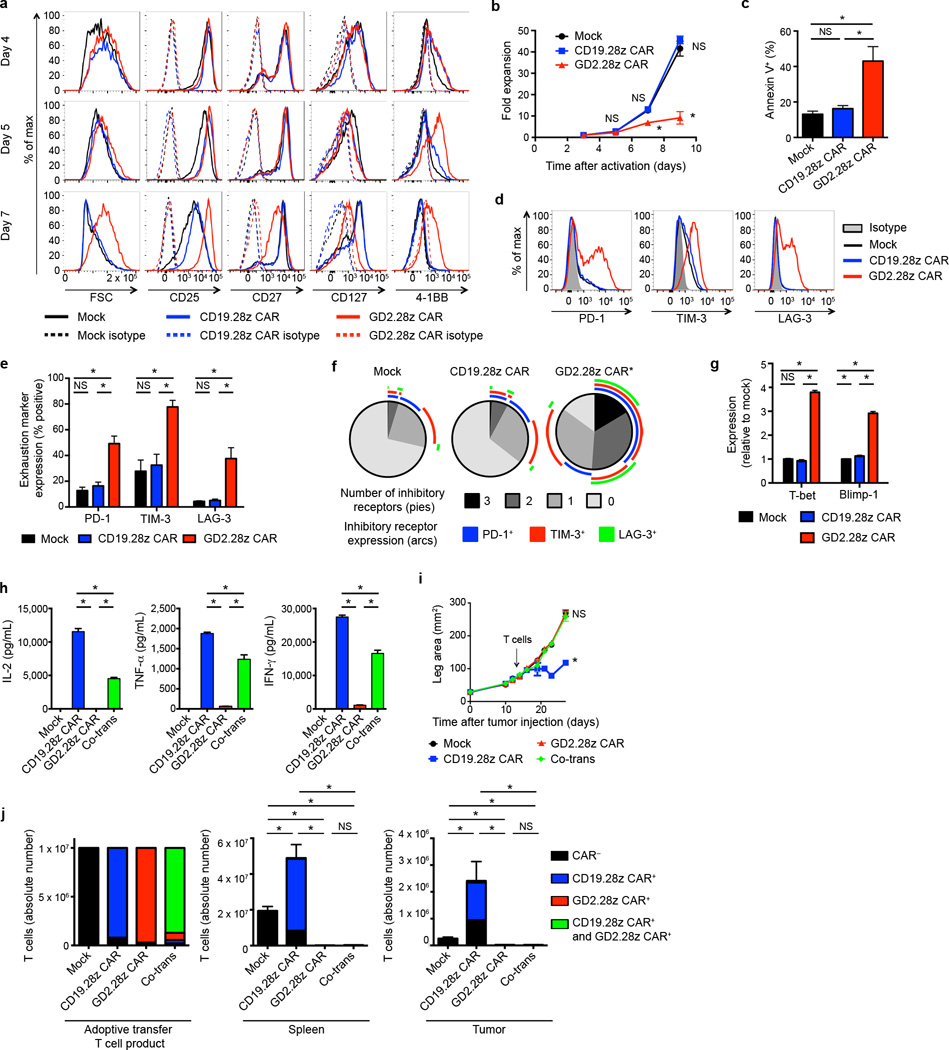
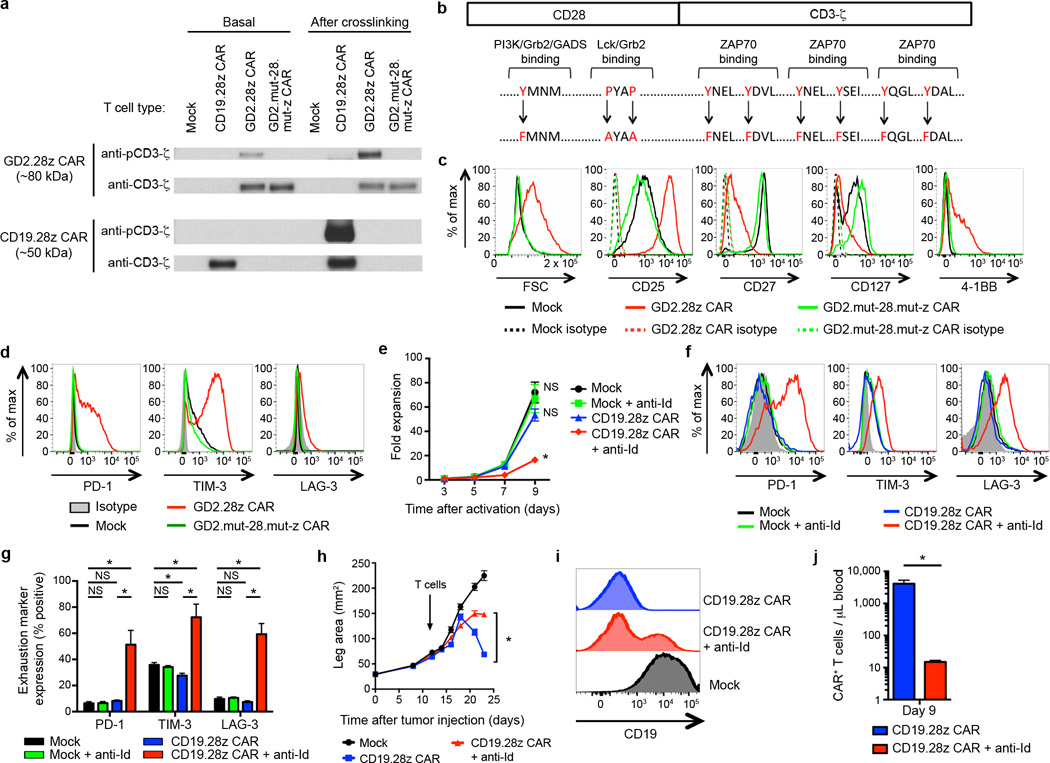
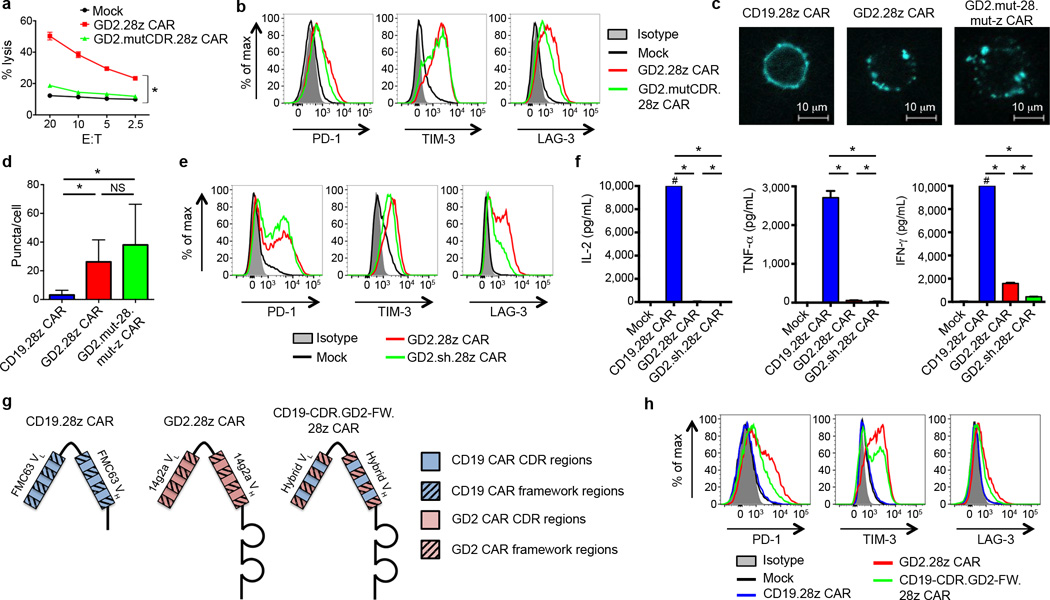
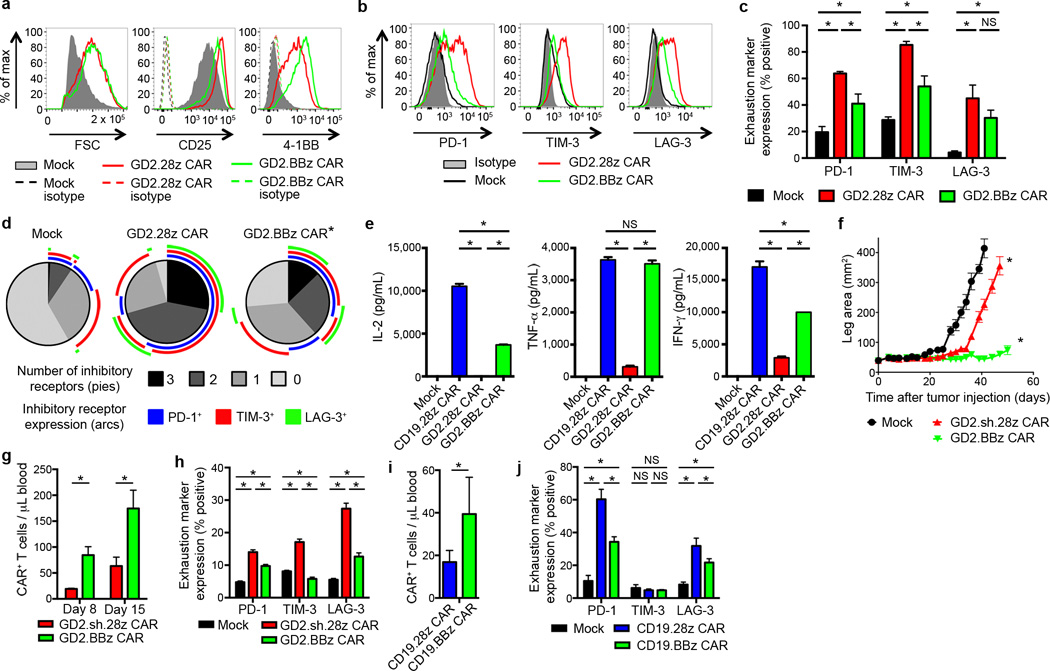
Chimeric antigen receptors (CARs) targeting CD19 have mediated dramatic antitumor responses in hematologic malignancies, but tumor regression has rarely occurred using CARs targeting other antigens. It remains unknown whether the impressive effects of CD19 CARs relate to greater susceptibility of hematologic malignancies to CAR therapies, or superior functionality of the CD19 CAR itself. We show that tonic CAR CD3-ζ phosphorylation, triggered by antigen-independent clustering of CAR single-chain variable fragments, can induce early exhaustion of CAR T cells that limits antitumor efficacy. Such activation is present to varying degrees in all CARs studied, except the highly effective CD19 CAR. We further determine that CD28 costimulation augments, whereas 4-1BB costimulation reduces, exhaustion induced by persistent CAR signaling. Our results provide biological explanations for the antitumor effects of CD19 CARs and for the observations that CD19 CAR T cells incorporating the 4-1BB costimulatory domain are more persistent than those incorporating CD28 in clinical trials.
靶向CD19的嵌合抗原受体(CAR)已在血液系统恶性肿瘤中介导了显著的抗肿瘤反应,但使用靶向其他抗原的CAR很少出现肿瘤消退。目前尚不清楚CD19 CAR的显著效果是与血液系统恶性肿瘤对CAR疗法的更高敏感性有关,还是与CD19 CAR本身的优越功能有关。我们发现,由CAR单链可变片段的抗原非依赖性聚集触发的持续性CAR CD3-ζ磷酸化可诱导CAR T细胞早期耗竭,从而限制抗肿瘤疗效。除了高效的CD19 CAR外,这种激活在所有研究的CAR中都有不同程度的存在。我们进一步确定,CD28共刺激增强而4-1BB共刺激减少由持续性CAR信号诱导的耗竭。我们的结果为CD19 CAR的抗肿瘤作用以及在临床试验中包含4-1BB共刺激结构域的CD19 CAR T细胞比包含CD28的细胞更持久的观察结果提供了生物学解释。