Putnam Christopher D, Kolodner Richard D
Ludwig Institute for Cancer Research, University of California School of Medicine, San Diego, La Jolla, California 92093-0669.
Departments of Medicine, University of California School of Medicine, San Diego, La Jolla, California 92093-0669.
Genetics. 2017 Jul;206(3):1187-1225. doi: 10.1534/genetics.112.145805.
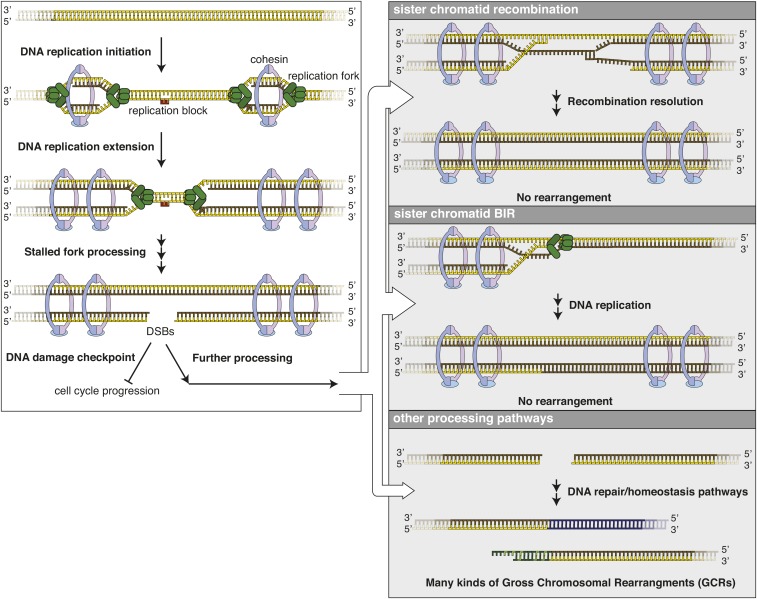
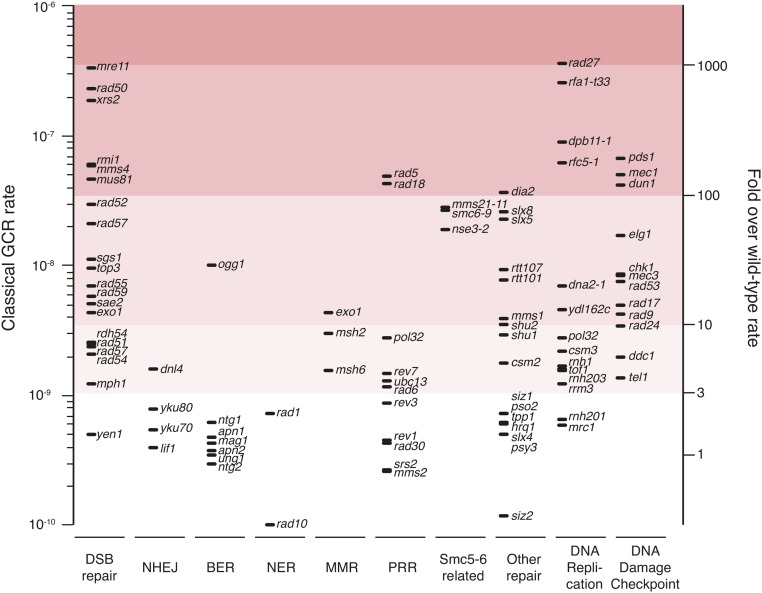
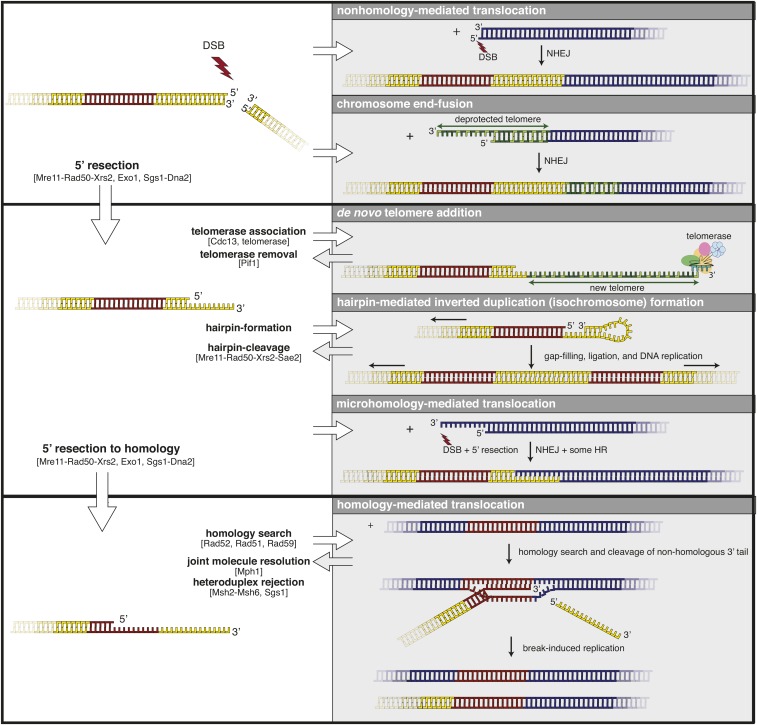
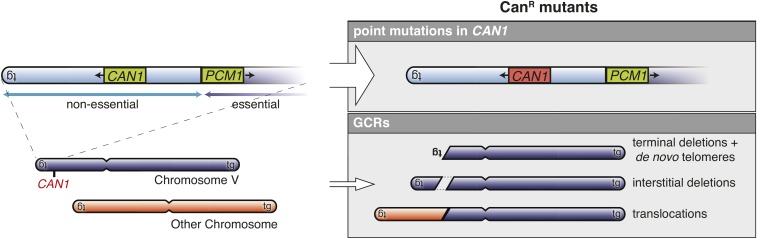
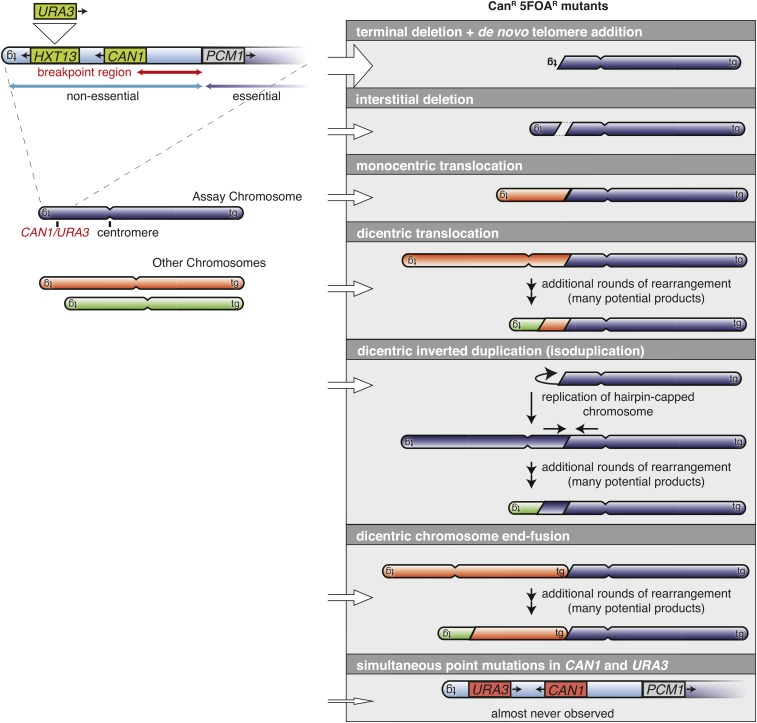
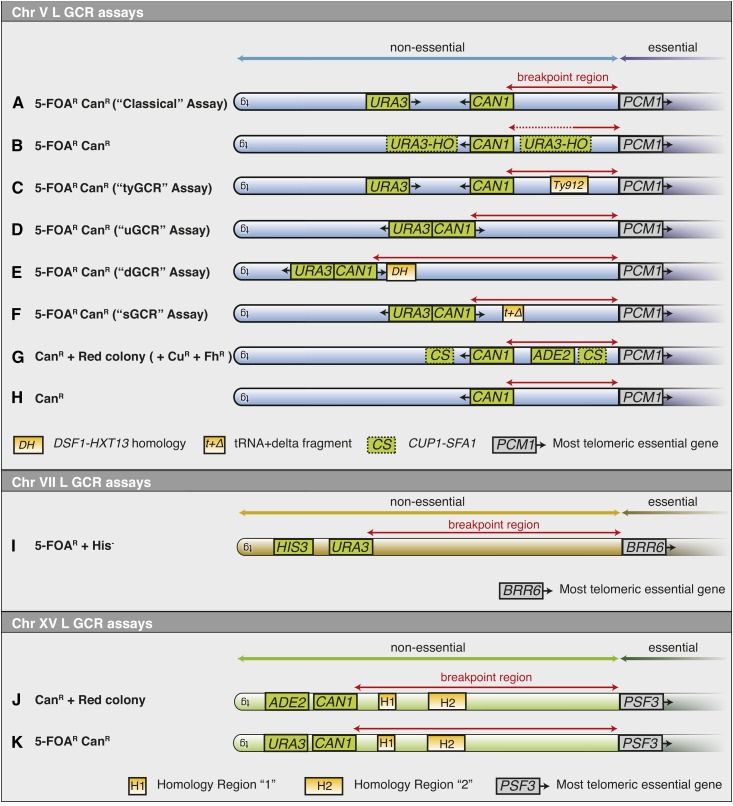
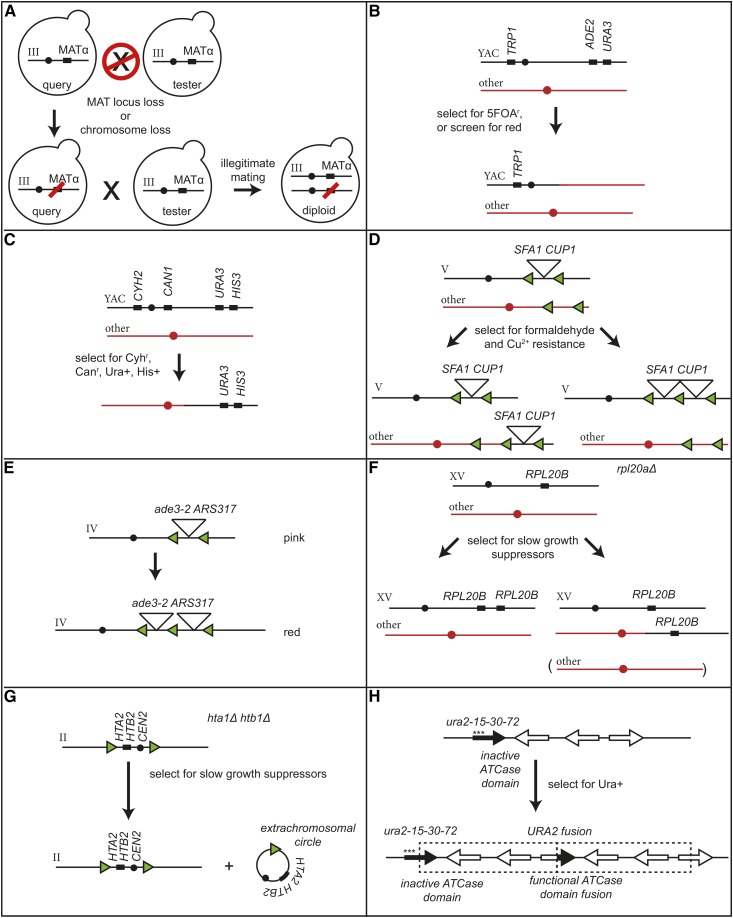
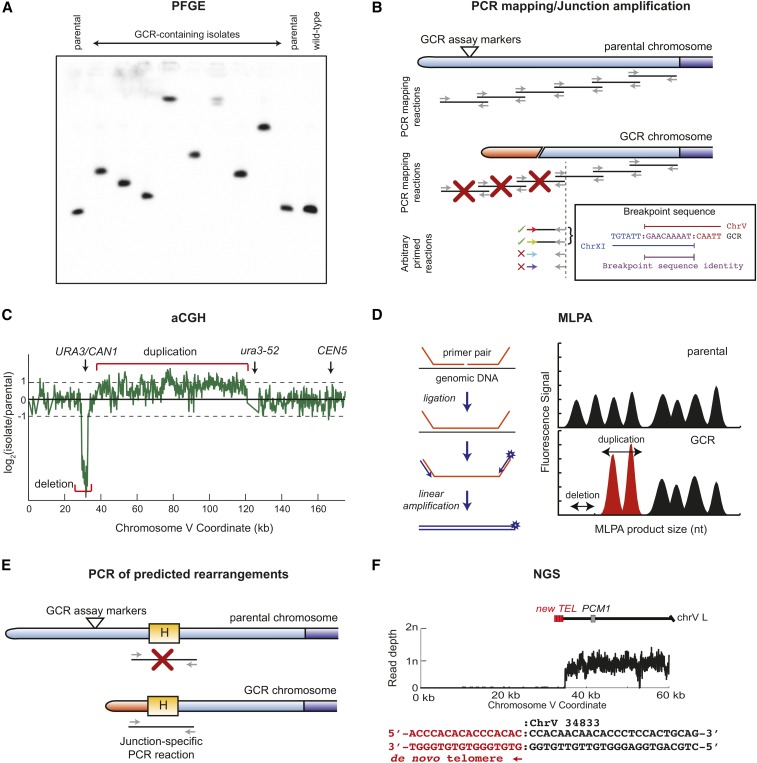
Genome rearrangements result in mutations that underlie many human diseases, and ongoing genome instability likely contributes to the development of many cancers. The tools for studying genome instability in mammalian cells are limited, whereas model organisms such as are more amenable to these studies. Here, we discuss the many genetic assays developed to measure the rate of occurrence of Gross Chromosomal Rearrangements (called GCRs) in These genetic assays have been used to identify many types of GCRs, including translocations, interstitial deletions, and broken chromosomes healed by telomere addition, and have identified genes that act in the suppression and formation of GCRs. Insights from these studies have contributed to the understanding of pathways and mechanisms that suppress genome instability and how these pathways cooperate with each other. Integrated models for the formation and suppression of GCRs are discussed.
基因组重排会导致许多人类疾病潜在的突变,而持续的基因组不稳定性可能促成许多癌症的发生。研究哺乳动物细胞基因组不稳定性的工具有限,而诸如[未提及的模型生物]等模式生物更适合此类研究。在这里,我们讨论了为测量[未提及的生物]中染色体大片段重排(称为GCRs)的发生率而开发的多种遗传检测方法。这些遗传检测方法已被用于鉴定多种类型的GCRs,包括易位、中间缺失以及通过端粒添加修复的断裂染色体,并已鉴定出在GCRs的抑制和形成过程中起作用的基因。这些研究的见解有助于理解抑制基因组不稳定性的途径和机制,以及这些途径如何相互协作。文中还讨论了GCRs形成和抑制的综合模型。