Yoo Woo Hyun, Cho Min-Jung, Chun Peter, Kim Kwang Hun, Lee Je Sang, Shin Yong Beom
Department of Pediatrics, Biomedical Research Institute, Pusan National University Hospital, Busan, Korea.
Department of Rehabilitation Medicine, Biomedical Research Institute, Pusan National University Hospital, Busan, Korea.
Korean J Pediatr. 2017 Jun;60(6):196-201. doi: 10.3345/kjp.2017.60.6.196. Epub 2017 Jun 22.
Myocardial dysfunction and dysrhythmias are inevitable consequences of Duchenne muscular dystrophy. We aimed to evaluate specific trends of electrocardiographic changes that reflect the progress of cardiomyopathy in patients with Duchenne muscular dystrophy.
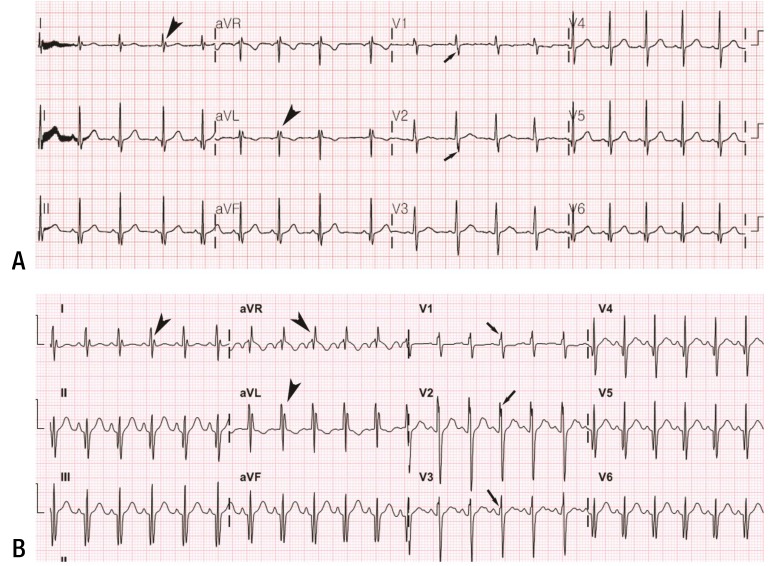
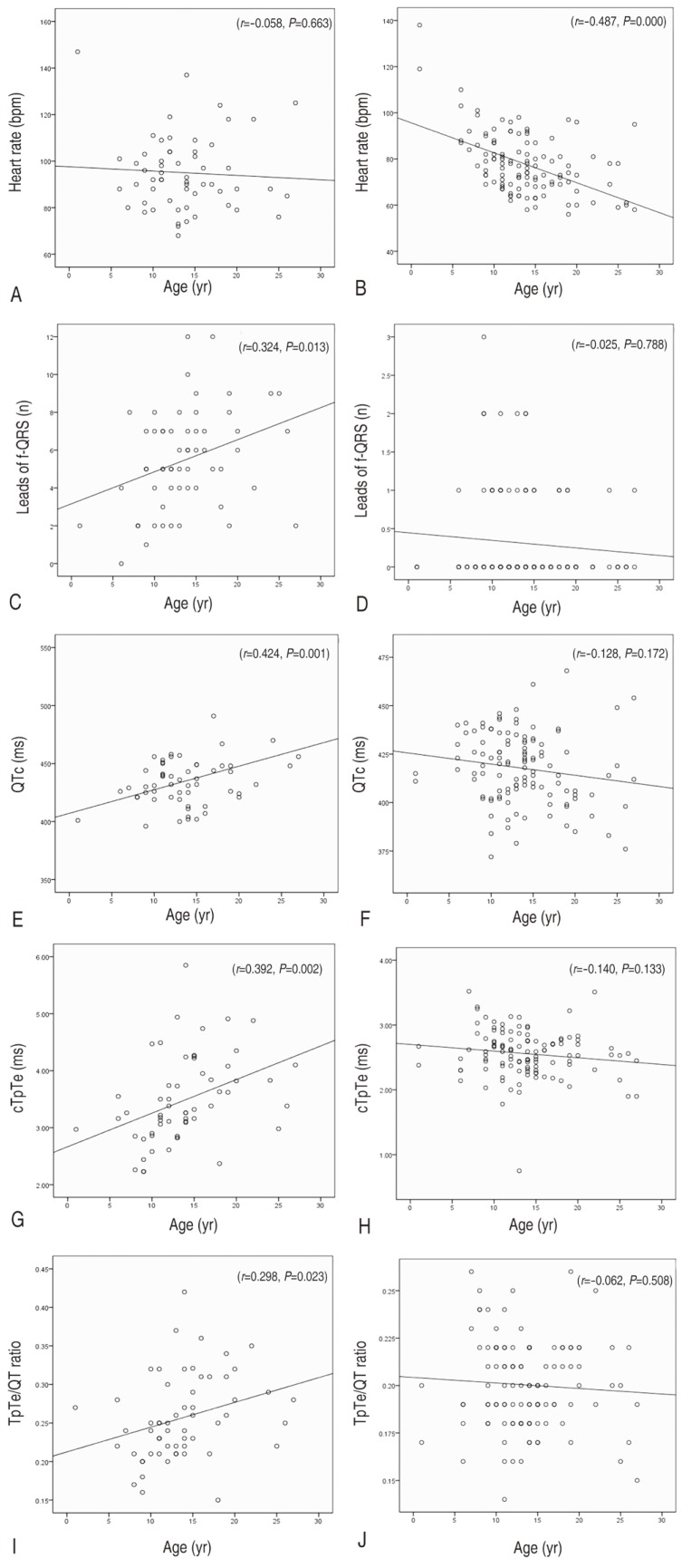
Fifty electrocardiograms (ECGs) of 30 patients (ages 1 to 27 years) who had not been prescribed medications for heart failure treatment at the time of examination were retrospectively analyzed and compared with 116 ECGs of age-matched healthy 116 controls. Heart rate, leads with fragmented QRS (fQRS), corrected QT, Tpeak-to-Tend, and Tpeak-to-Tend/QT were analyzed.
The patients with Duchenne muscular dystrophy failed to show a normal age-related decline in heart rate but showed an increasing trend in the prevalence of fQRS, corrected QT, corrected Tpeak-to-Tend, and Tpeak-to-Tend/QT over time. In the ≤10-year-old patient group, a significant difference was found only in the prevalence of fQRS between the patients and the controls. The prevalence of fQRS, heart rate, Tpeak-to-Tend/QT, and corrected Tpeak-to-Tend demonstrated significant differences between the patients and the controls in the middle age group (11 to 15 years old). All the indexes were statistically significantly different in the ≥16-year-old patient group.
The prevalence of lead with fQRS representing regional wall motion abnormalities was higher in the young patients than in the young healthy controls, and this might be one of the first signs of myocardial change in the patients. Markers of depolarization and repolarization abnormalities were gradually prominent in the patients aged >10 years. Further studies are needed to confirm these findings.
心肌功能障碍和心律失常是杜氏肌营养不良症不可避免的后果。我们旨在评估反映杜氏肌营养不良症患者心肌病进展的心电图变化的特定趋势。
回顾性分析30例患者(年龄1至27岁)在检查时未接受心力衰竭治疗药物的50份心电图(ECG),并与116例年龄匹配的健康对照者的116份ECG进行比较。分析心率、伴有碎裂QRS波(fQRS)的导联、校正QT间期、T峰至T末间期以及T峰至T末间期/QT间期。
杜氏肌营养不良症患者未表现出与年龄相关的正常心率下降,但随着时间的推移,fQRS、校正QT间期、校正T峰至T末间期以及T峰至T末间期/QT间期的患病率呈上升趋势。在≤10岁的患者组中,仅在患者与对照者之间的fQRS患病率上发现显著差异。在中年组(11至15岁)中,患者与对照者之间的fQRS患病率、心率、T峰至T末间期/QT间期以及校正T峰至T末间期存在显著差异。在≥16岁的患者组中,所有指标均有统计学显著差异。
代表局部室壁运动异常的伴有fQRS波的导联患病率在年轻患者中高于年轻健康对照者,这可能是患者心肌改变的首批迹象之一。去极化和复极化异常标志物在年龄>10岁的患者中逐渐突出。需要进一步研究来证实这些发现。