Linløkken Arne N, Haugen Thrond O, Kent Matthew P, Lien Sigbjørn
Faculty of Education and Natural Sciences Inland Norway University of Applied Sciences Hamar Norway.
Faculty of Environmental Sciences and Natural Resource Management Norwegian University of Life Sciences Ås Norway.
Ecol Evol. 2017 May 30;7(13):4963-4972. doi: 10.1002/ece3.3070. eCollection 2017 Jul.
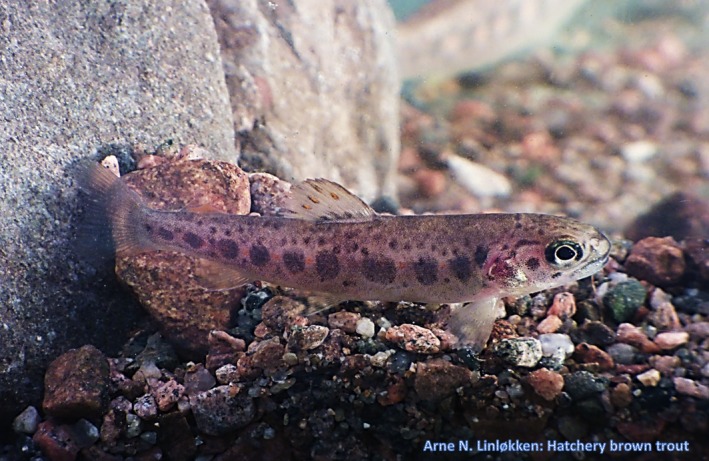
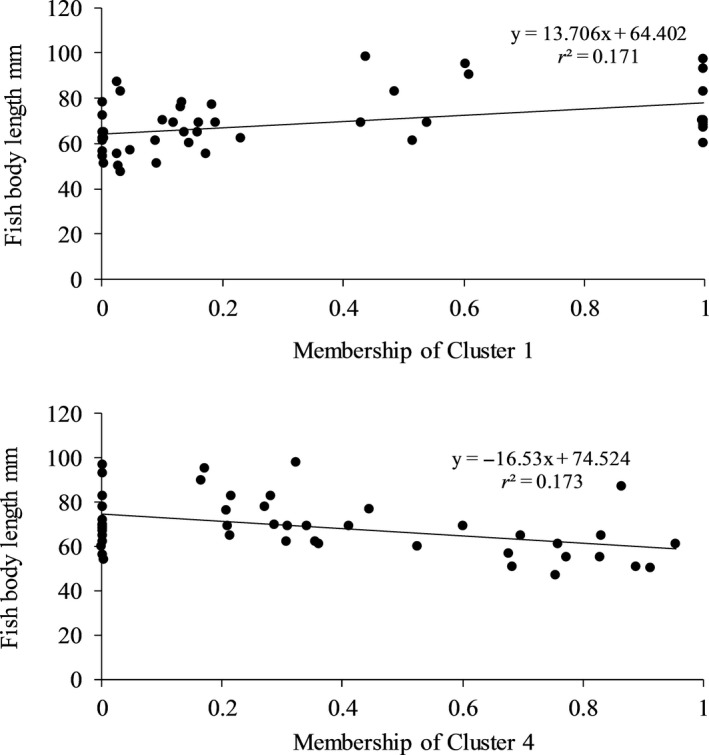
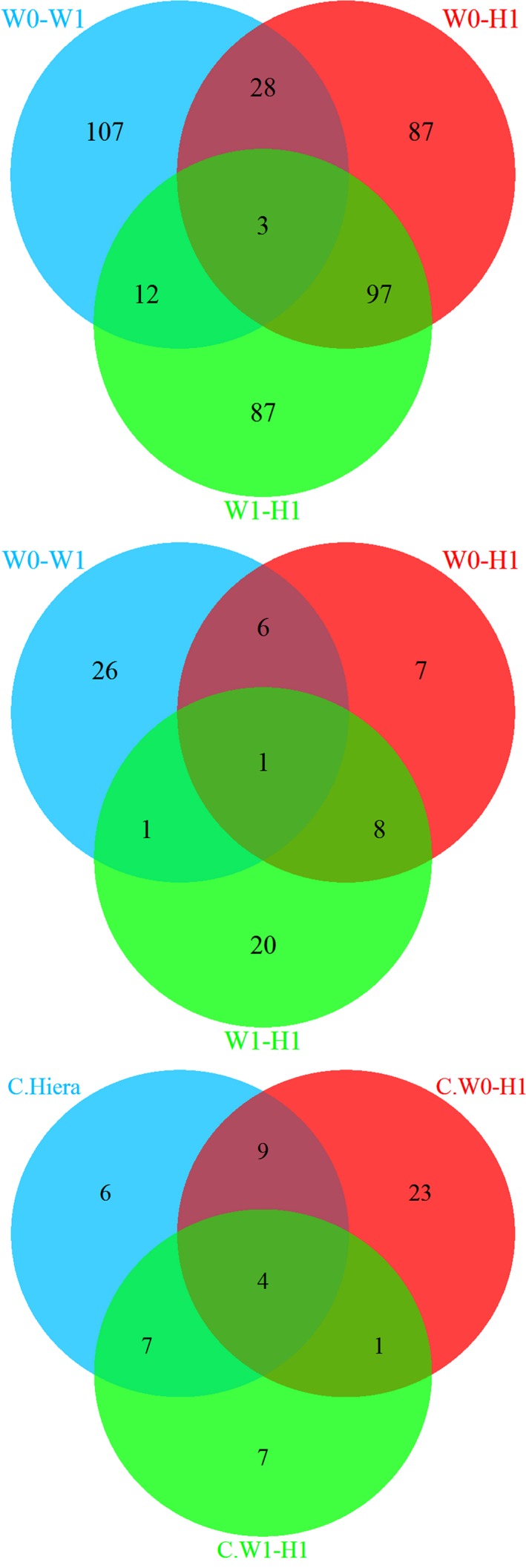
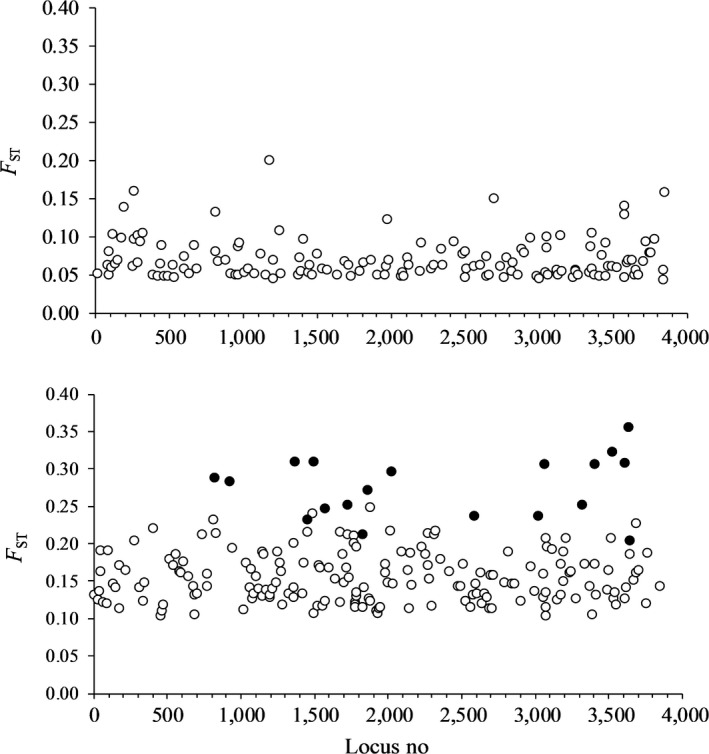
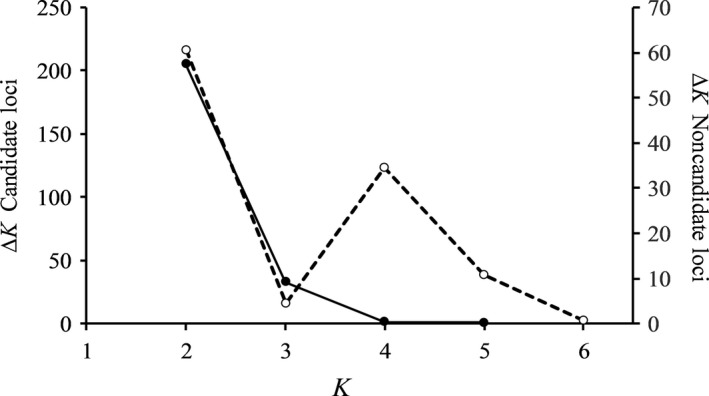
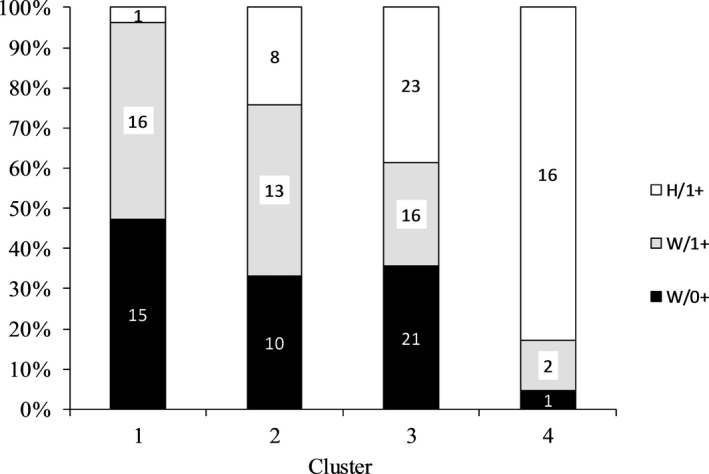
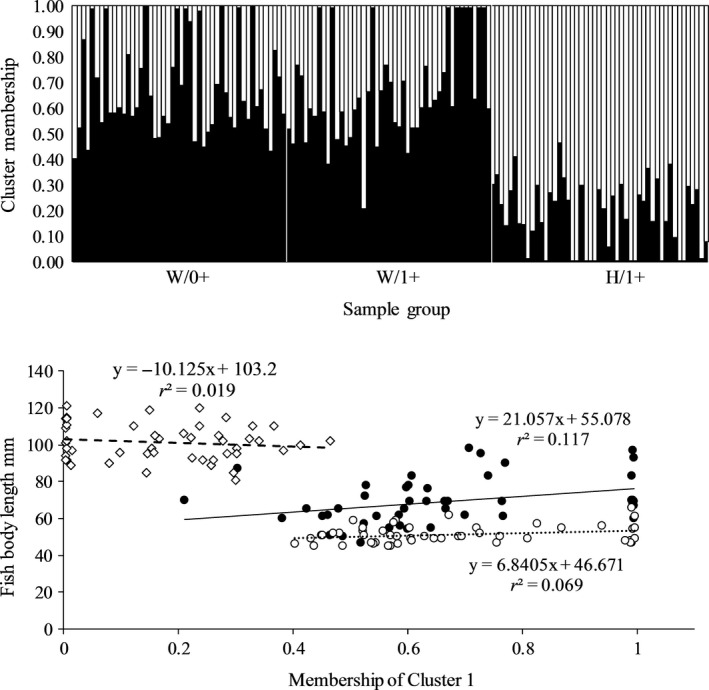
To study effects from natural selection acting on brown trout in a natural stream habitat compared with a hatchery environment, 3,781 single nucleotide polymorphism (SNP) markers were analyzed in three closely related groups of brown trout ( L.). Autumn (W/0+, =48) and consecutive spring (W/1+, =47) samples of brown trout individuals belonging to the same cohort and stream were retrieved using electrofishing. A third group (H/1+, =48) comprised hatchery-reared individuals, bred from a mixture of wild parents of the strain of the two former groups and from a neighboring stream. Pairwise analysis of outliers and analysis under a hierarchical model by means of ARLEQUIN software detected 421 (10.8%) candidates of selection, before multitest correction. BAYESCAN software detected 10 candidate loci, all of which were included among the ARLEQUIN candidate loci. Body length was significantly different across genotypes at 10 candidate loci in the W/0+, at 34 candidate loci in the W/1+ and at 21 candidate loci in the H/1+ group. The W/1+ sample was tested for genotype-specific body length at all loci, and significant differences were found in 10.6% of all loci, and of these, 14.2% had higher frequency of the largest genotype in the W/1+ sample than in W/0+. The corresponding proportion among the candidate loci of W/1+ was 22.7% with genotype-specific body length, and 88.2% of these had increased frequency of the largest genotype from W/0+ to W/1+, indicating a linkage between these loci and traits affecting growth and survival under this stream's environmental conditions. Bayesian structuring of all loci, and of the noncandidate loci suggested two (=2), alternatively four clusters (=4). This differed from the candidate SNPs, which suggested only two clusters. In both cases, the hatchery fish dominated one cluster, and body length of W/1+ fish was positively correlated with membership of one cluster both from the =2 and the =4 structure. Our analysis demonstrates profound genetic differentiation that can be linked to differential selection on a fitness-related trait (individual growth) in brown trout living under natural vs. hatchery conditions. Candidate SNP loci linked to genes affecting individual growth were identified and provide important inputs into future mapping of the genetic basis of brown trout body size selection.
为了研究自然选择对自然溪流栖息地与孵化场环境中的褐鳟的影响,对三组亲缘关系密切的褐鳟(L.)分析了3781个单核苷酸多态性(SNP)标记。使用电捕鱼法采集了属于同一群体和溪流的褐鳟个体的秋季样本(W/0+,n = 48)和连续春季样本(W/1+,n = 47)。第三组(H/1+,n = 48)由孵化场养殖的个体组成,这些个体由前两组和相邻溪流的野生亲本混合培育而成。在进行多重检验校正之前,通过ARLEQUIN软件对离群值进行成对分析并在层次模型下进行分析,检测到421个(10.8%)选择候选位点。BAYESCAN软件检测到10个候选位点,所有这些位点都包含在ARLEQUIN候选位点中。在W/0+组的10个候选位点、W/1+组的34个候选位点和H/1+组的21个候选位点上,不同基因型的体长存在显著差异。对W/1+样本的所有位点进行了基因型特异性体长测试,在所有位点中,10.6%发现存在显著差异,其中14.2%在W/1+样本中最大基因型的频率高于W/0+。W/1+候选位点中,基因型特异性体长的相应比例为22.7%,其中88.2%从W/0+到W/1+最大基因型的频率增加,表明这些位点与在该溪流环境条件下影响生长和存活的性状之间存在连锁关系。对所有位点以及非候选位点进行贝叶斯结构分析,结果表明有两个(K = 2)或四个聚类(K = 4)。这与候选SNP不同,候选SNP仅表明有两个聚类。在这两种情况下,孵化场的鱼都主导一个聚类,并且W/1+鱼的体长与来自K = 2和K = 4结构的一个聚类的隶属度呈正相关。我们的分析表明,在自然条件与孵化场条件下生活的褐鳟中,存在与适应性相关性状(个体生长)的差异选择相关的深刻遗传分化。鉴定出了与影响个体生长的基因相关的候选SNP位点,为未来褐鳟体型选择的遗传基础图谱绘制提供了重要信息。