Kroon Eugène D M B, Phanuphak Nittaya, Shattock Andrew J, Fletcher James L K, Pinyakorn Suteeraporn, Chomchey Nitiya, Akapirat Siriwat, de Souza Mark S, Robb Merlin L, Kim Jerome H, van Griensven Frits, Ananworanich Jintanat, Wilson David P
Thai Red Cross AIDS Research Centre, Bangkok, Thailand.
SEARCH, Bangkok, Thailand.
J Int AIDS Soc. 2017 Jun 28;20(1):21708. doi: 10.7448/IAS.20.1.21708.
Antiretroviral treatment (ART) reduces HIV transmission. Despite increased ART coverage, incidence remains high among men who have sex with men (MSM) in many places. Acute HIV infection (AHI) is characterized by high viral replication and increased infectiousness. We estimated the feasible reduction in transmission by targeting MSM with AHI for early ART.
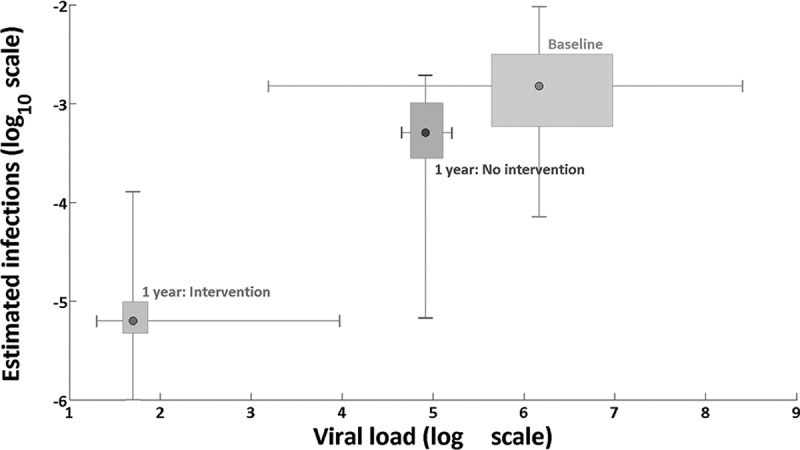
We recruited a cohort of 88 MSM with AHI in Bangkok, Thailand, who initiated ART immediately. A risk calculator based on viral load and reported behaviour, calibrated to Thai epidemiological data, was applied to estimate the number of onwards transmissions. This was compared with the expected number without early interventions.
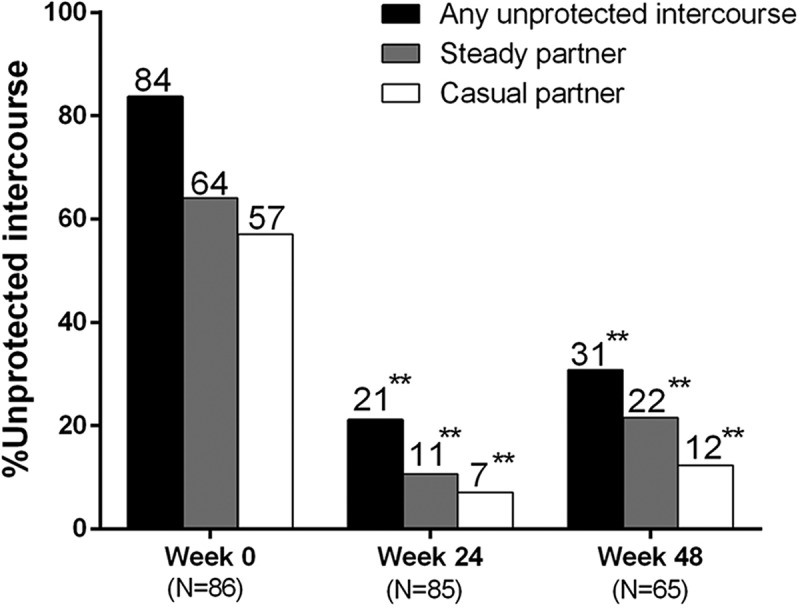
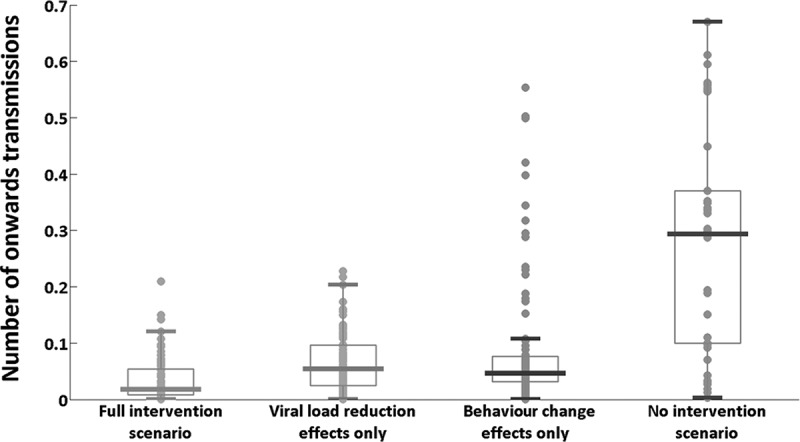
Forty of the MSM were in 4th-generation AHI stages 1 and 2 (4thG stage 1, HIV nucleic acid testing (NAT)+/4thG immunoassay (IA)-/3rdG IA-; 4thG stage 2, NAT+/4thG IA+/3rdG IA-) while 48 tested positive on third-generation IA but had negative or indeterminate western blot (4thG stage 3). Mean plasma HIV RNA was 5.62 log copies/ml. Any condomless sex in the four months preceding the study was reported by 83.7%, but decreased to 21.2% by 24 weeks on ART. After ART, 48/88 (54.6%) attained HIV RNA <50 copies/ml by week 8, increasing to 78/87 (89.7%), and 64/66 (97%) at weeks 24 and 48, respectively. The estimated number of onwards transmissions in the first year of infection would have been 27.3 (95% credible interval: 21.7-35.3) with no intervention, 8.3 (6.4-11.2) with post-diagnosis behaviour change only, 5.9 (4.4-7.9) with viral load reduction only and 3.1 (2.4-4.3) with both. The latter was associated with an 88.7% (83.8-91.1%) reduction in transmission.
Disproportionate HIV transmission occurs during AHI. Diagnosis of AHI with early ART initiation can substantially reduce onwards transmission.
抗逆转录病毒治疗(ART)可减少艾滋病毒传播。尽管ART覆盖率有所提高,但在许多地方,男男性行为者(MSM)中的发病率仍然很高。急性艾滋病毒感染(AHI)的特征是病毒复制率高且传染性增强。我们估计,通过针对AHI的MSM进行早期ART治疗,可切实减少传播。
我们在泰国曼谷招募了88名患有AHI的MSM队列,他们立即开始接受ART治疗。应用一个基于病毒载量和报告行为的风险计算器,并根据泰国流行病学数据进行校准,以估计后续传播的数量。将其与无早期干预时的预期数量进行比较。
40名MSM处于第四代AHI 1期和2期(第四代1期,艾滋病毒核酸检测(NAT)+/第四代免疫测定(IA)-/第三代IA-;第四代2期,NAT+/第四代IA+/第三代IA-),而48名在第三代IA检测呈阳性,但western印迹法呈阴性或不确定(第四代3期)。血浆艾滋病毒RNA平均为5.62 log拷贝/毫升。83.7%的人报告在研究前四个月有过无保护性行为,但在接受ART治疗24周后降至21.2%。接受ART治疗后,48/88(54.6%)的人在第8周时艾滋病毒RNA <50拷贝/毫升,在第24周和48周时分别增至78/87(89.7%)和64/66(97%)。在无干预的情况下,感染第一年的后续传播估计数量为27.3(95%可信区间:21.7-35.3),仅改变诊断后行为为8.3(6.4-11.2),仅降低病毒载量为5.9(4.4-7.9),两者同时进行为3.1(2.4-4.3)。后者与传播减少88.7%(83.8-91.1%)相关。
在AHI期间发生了不成比例的艾滋病毒传播。早期启动ART诊断AHI可大幅减少后续传播。