Althoff Tim, Sosič Rok, Hicks Jennifer L, King Abby C, Delp Scott L, Leskovec Jure
Computer Science Department, Stanford University, Stanford, California, USA.
Department of Bioengineering, Stanford University, Stanford, California, USA.
Nature. 2017 Jul 20;547(7663):336-339. doi: 10.1038/nature23018. Epub 2017 Jul 10.
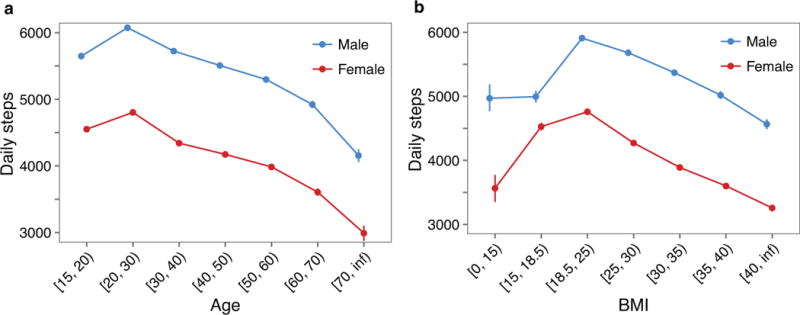
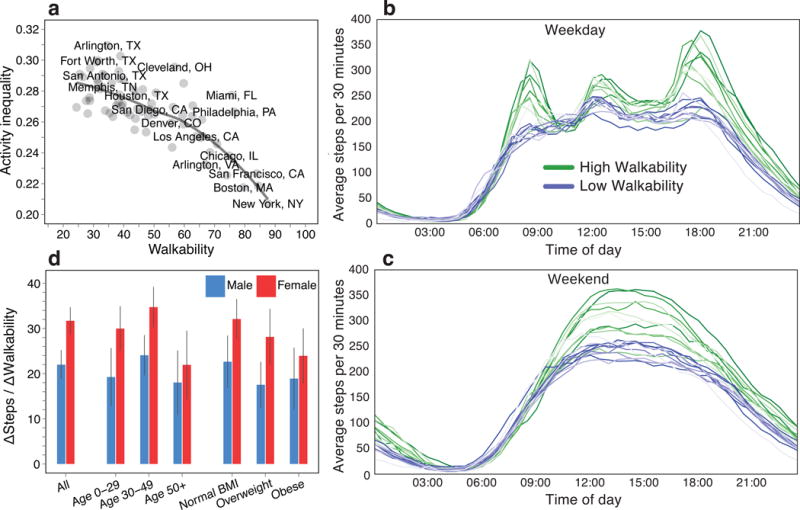
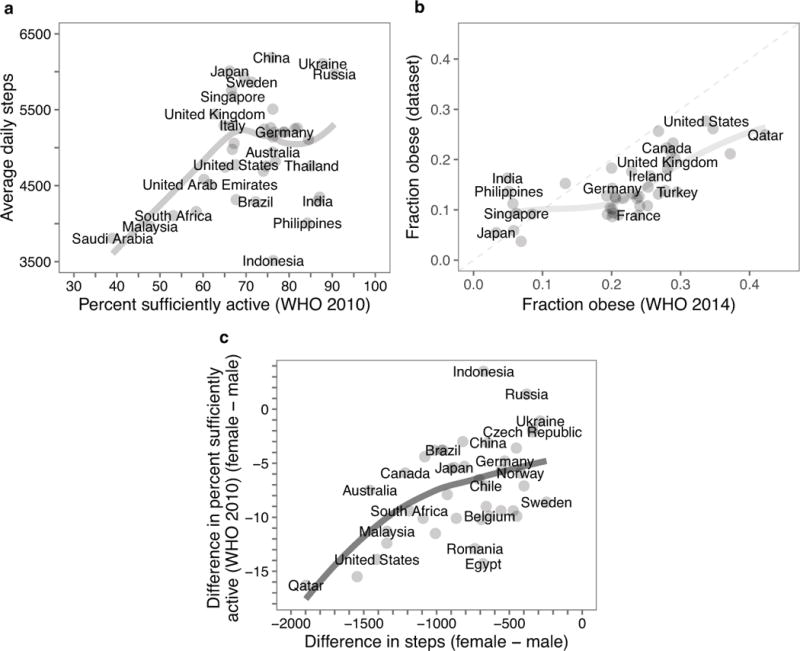
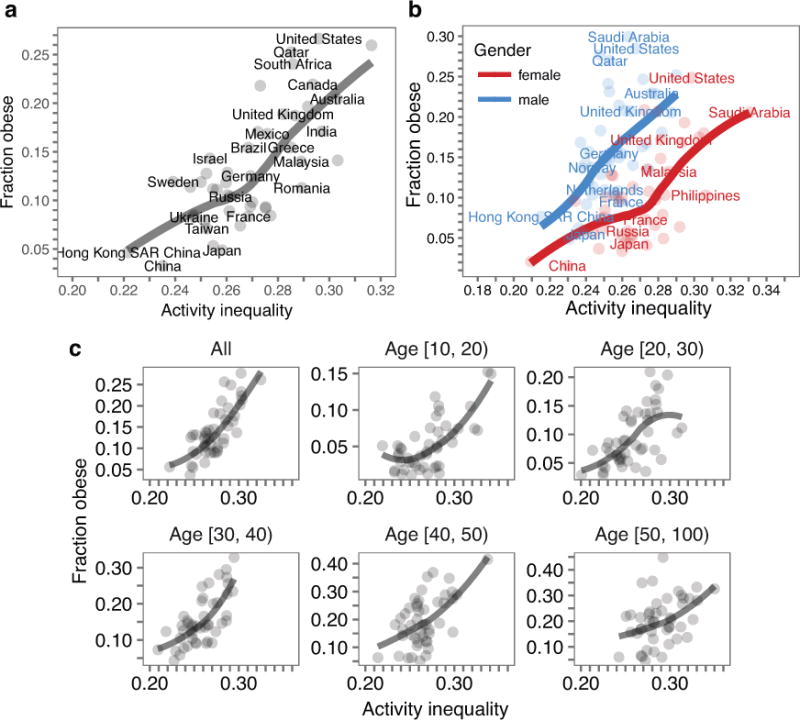
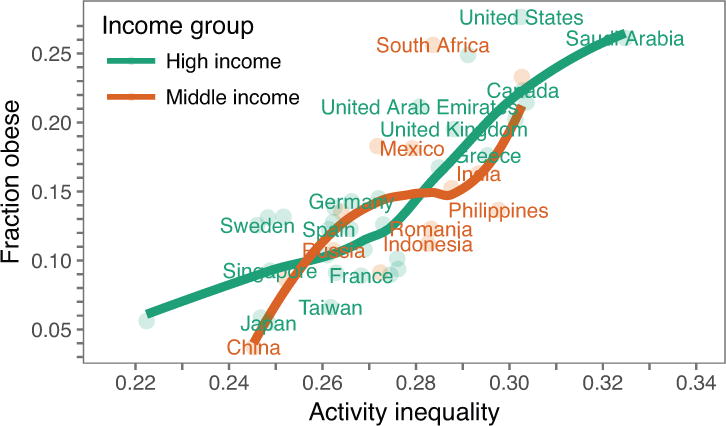
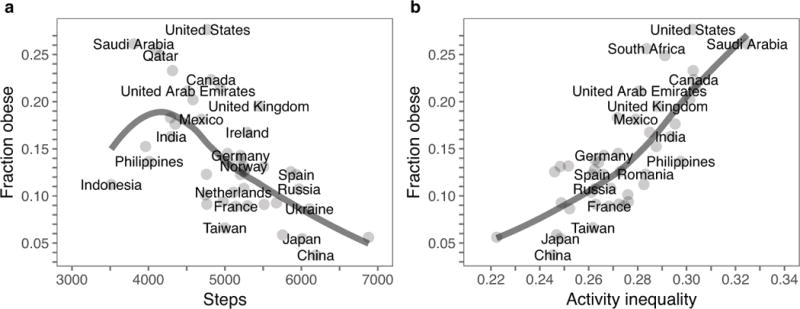
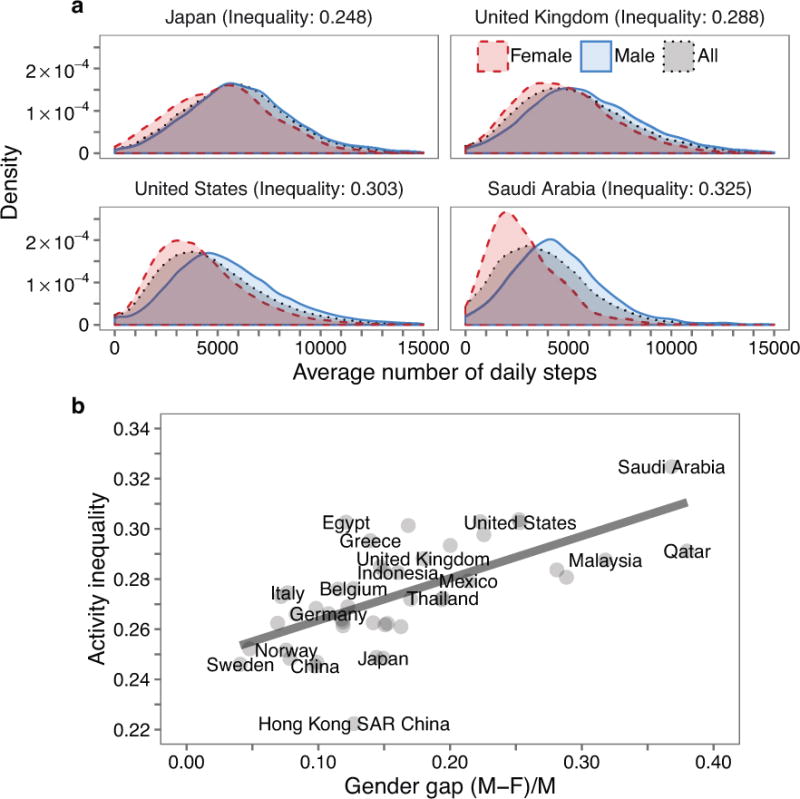
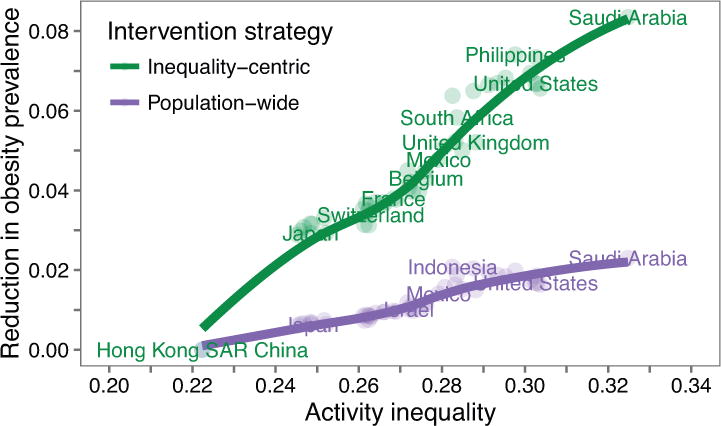
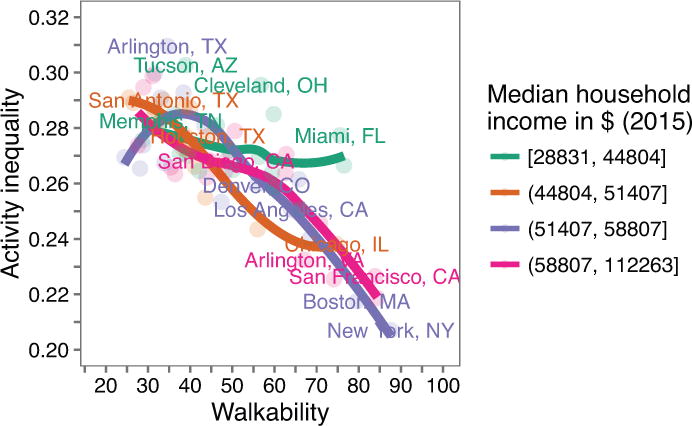
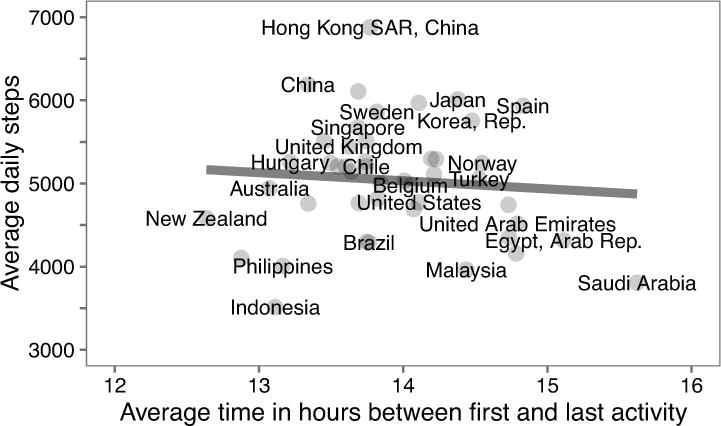
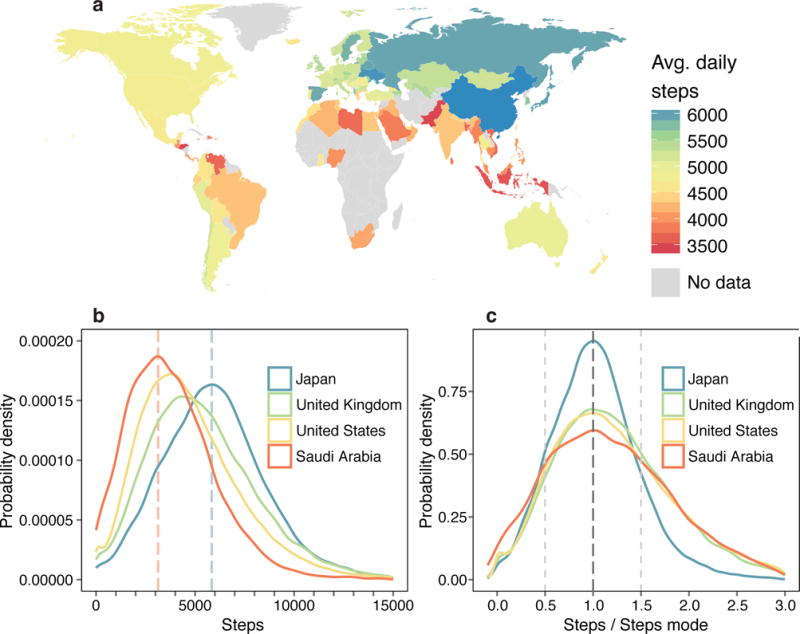
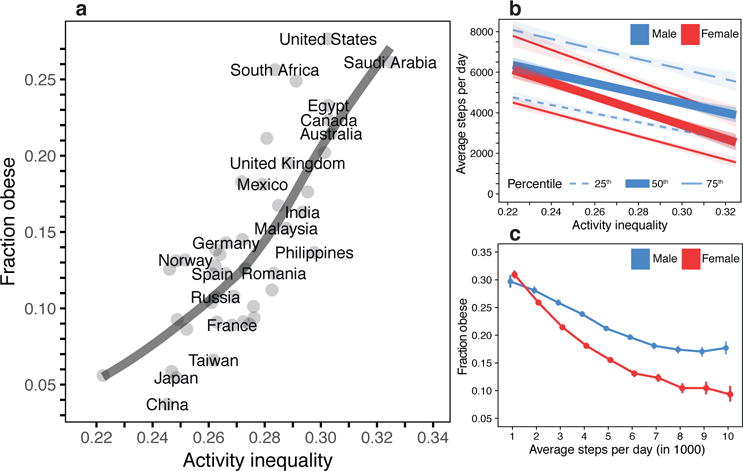
To be able to curb the global pandemic of physical inactivity and the associated 5.3 million deaths per year, we need to understand the basic principles that govern physical activity. However, there is a lack of large-scale measurements of physical activity patterns across free-living populations worldwide. Here we leverage the wide usage of smartphones with built-in accelerometry to measure physical activity at the global scale. We study a dataset consisting of 68 million days of physical activity for 717,527 people, giving us a window into activity in 111 countries across the globe. We find inequality in how activity is distributed within countries and that this inequality is a better predictor of obesity prevalence in the population than average activity volume. Reduced activity in females contributes to a large portion of the observed activity inequality. Aspects of the built environment, such as the walkability of a city, are associated with a smaller gender gap in activity and lower activity inequality. In more walkable cities, activity is greater throughout the day and throughout the week, across age, gender, and body mass index (BMI) groups, with the greatest increases in activity found for females. Our findings have implications for global public health policy and urban planning and highlight the role of activity inequality and the built environment in improving physical activity and health.
为了能够遏制全球范围内缺乏身体活动的流行趋势以及每年与之相关的530万人死亡的情况,我们需要了解支配身体活动的基本原则。然而,目前缺乏对全球自由生活人群身体活动模式的大规模测量。在此,我们利用广泛使用的内置加速度计的智能手机在全球范围内测量身体活动。我们研究了一个数据集,其中包含717,527人的6800万天的身体活动数据,这使我们得以了解全球111个国家的活动情况。我们发现各国国内活动分布存在不平等现象,而且这种不平等比平均活动量更能预测人群中的肥胖患病率。女性活动量减少是观察到的活动不平等现象的很大一部分原因。城市的步行便利性等建成环境因素与活动中的较小性别差距以及较低的活动不平等相关。在步行便利性更高的城市,无论年龄、性别和体重指数(BMI)组别,全天和全周的活动量都更大,其中女性的活动量增加最为显著。我们的研究结果对全球公共卫生政策和城市规划具有启示意义,并突出了活动不平等和建成环境在改善身体活动与健康方面的作用。