Lee Ji-Sun, Ahn Changhwan, Kang Hee Young, Jeung Eui-Bae
Laboratory of Veterinary Biochemistry and Molecular Biology, Veterinary Medical Center and College of Veterinary Medicine, Chungbuk National University, Cheongju, Chungbuk 28644, Republic of Korea.
Oncol Lett. 2017 Jul;14(1):103-110. doi: 10.3892/ol.2017.6165. Epub 2017 May 12.
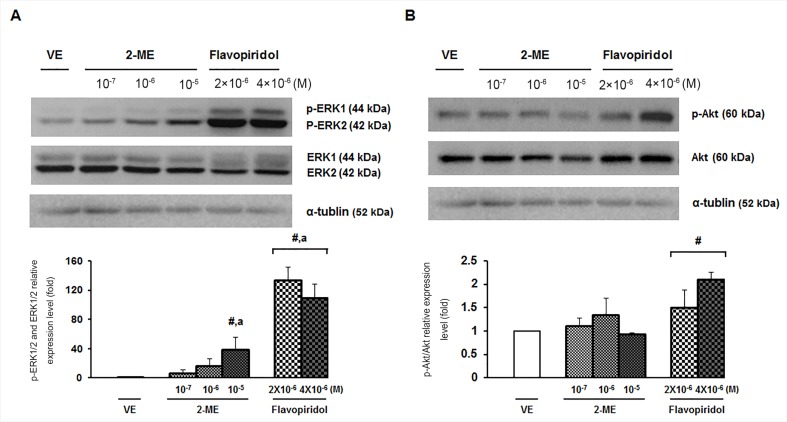
An endogenous metabolite of 17β-estradiol, 2-methoxyestradiol (2-ME), has affinity for estrogen receptors. This compound was reported to be a promising antitumor drug due to its anti-proliferative effects on a wide range of tumor cell types. Numerous previous studies have been performed to evaluate the cytotoxic effects of 2-ME on tumor cell lines in following the induction of G/M cell cycle arrest and subsequent apoptosis. Uterine leiomyosarcoma (ULMS) is a relatively rare malignant smooth muscle cell tumor that develops in the uterus muscle layer. The aim of the present study was to examine the anti-proliferative effects of 2-ME on SK-LMS-1 human leiomyosarcoma cells. An MTT assay, terminal deoxynucleotidyltransferase-mediated dUTP nick-end labeling assay, immunocytochemistry and western blotting were performed. A high concentration (10 M) of 2-ME was identified to have an anti-proliferative effect on SK-LMS-1 cells. Additionally, expression of the apoptosis markers was upregulated in the presence of 10 M 2-ME, according to western blot analysis. Furthermore, the expression level of an autophagic marker, light chain 3, was increased by 2-ME treatment in a dose-dependent manner. This was associated with cell death induced by the upregulation of phosphorylated extracellular-signal-regulated kinase 1/2 signaling pathway. The results of the present study demonstrated that 2-ME, which is used as a therapeutic agent for treating solid tumors, exhibits apoptotic and anti-proliferative effects depending on the dose. Therefore, 2-ME may be a potential therapeutic reagent for human ULMS, but the appropriate dose of this compound should be carefully selected.
17β-雌二醇的一种内源性代谢物2-甲氧基雌二醇(2-ME)对雌激素受体具有亲和力。据报道,该化合物因其对多种肿瘤细胞类型的抗增殖作用而有望成为一种抗肿瘤药物。先前已经进行了大量研究,以评估2-ME对肿瘤细胞系的细胞毒性作用,以及其诱导G/M期细胞周期停滞和随后的细胞凋亡情况。子宫平滑肌肉瘤(ULMS)是一种相对罕见的恶性平滑肌细胞肿瘤,发生于子宫肌层。本研究的目的是检测2-ME对SK-LMS-1人平滑肌肉瘤细胞的抗增殖作用。进行了MTT法、末端脱氧核苷酸转移酶介导的dUTP缺口末端标记法、免疫细胞化学和蛋白质印迹分析。结果发现,高浓度(10μM)的2-ME对SK-LMS-1细胞具有抗增殖作用。此外,根据蛋白质印迹分析,在存在10μM 2-ME的情况下,凋亡标志物的表达上调。此外,自噬标志物轻链3的表达水平在2-ME处理后呈剂量依赖性增加。这与磷酸化细胞外信号调节激酶1/2信号通路上调诱导的细胞死亡有关。本研究结果表明,用作实体瘤治疗药物的2-ME根据剂量表现出凋亡和抗增殖作用。因此,2-ME可能是治疗人类ULMS的潜在治疗试剂,但应仔细选择该化合物的合适剂量。