Liu Yueyang, Wang Chengyu, Shan Xiaodong, Wu Jian, Liu Huanhai, Liu Haibin, Zhang Jiping, Xu Weihua, Sha Zhirong, He Jin, Fan Jingping
Department of Otolaryngology-Head and Neck Surgery, Changzheng Hospital, Second Military Medical University, Shanghai 200003, P.R. China.
Department of Otolaryngology-Head and Neck Surgery, Gongli Hospital, Shanghai 200135, P.R. China.
Oncol Lett. 2017 Jul;14(1):525-532. doi: 10.3892/ol.2017.6198. Epub 2017 May 17.
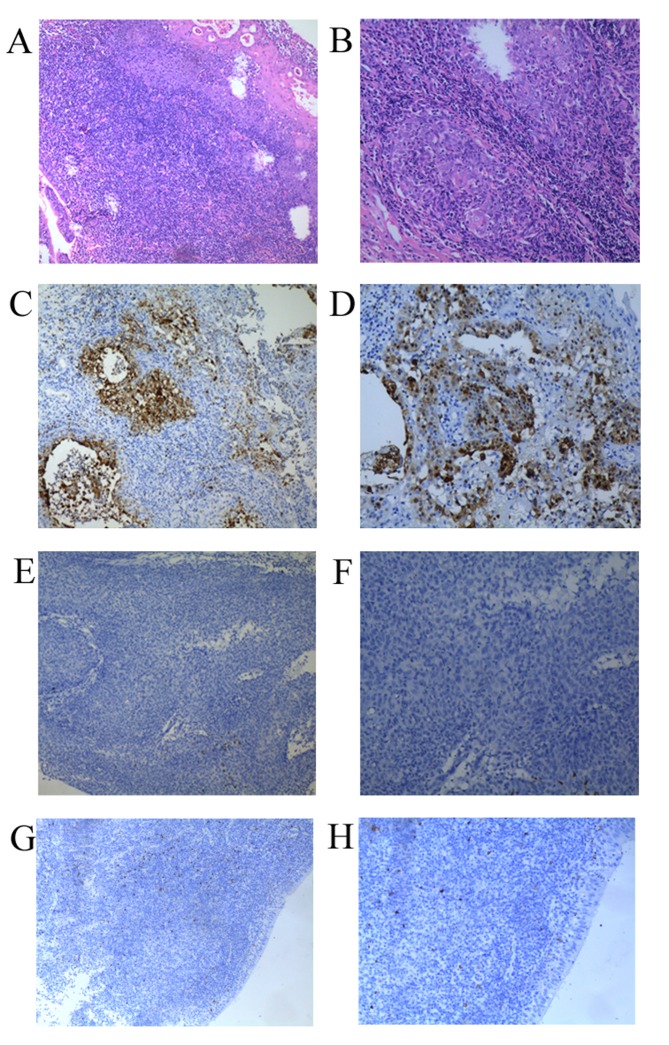
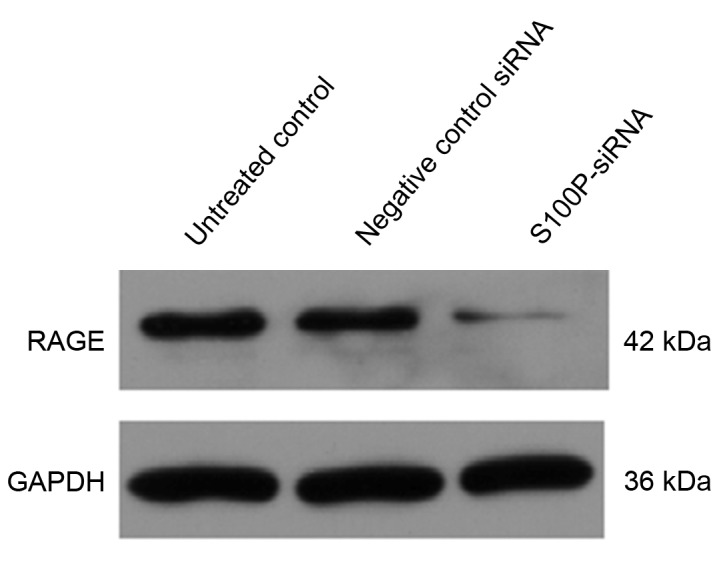
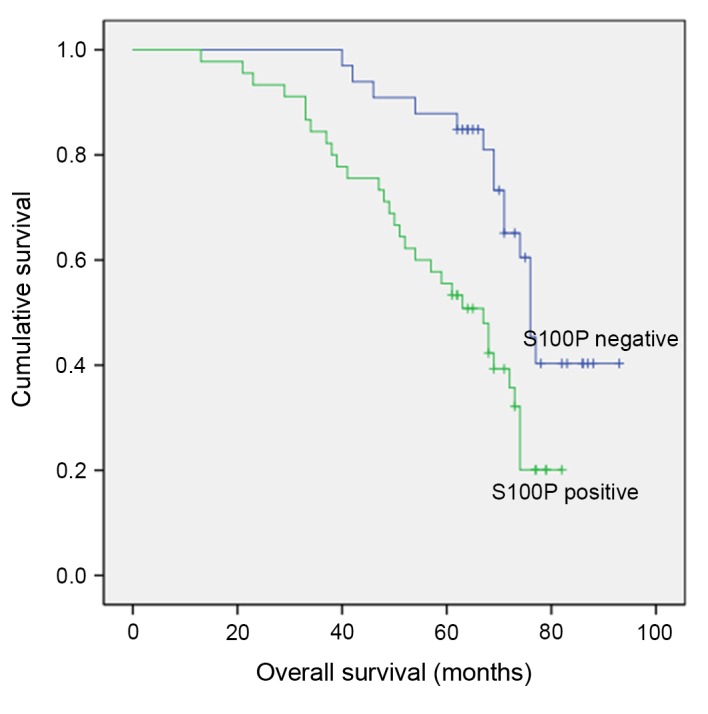
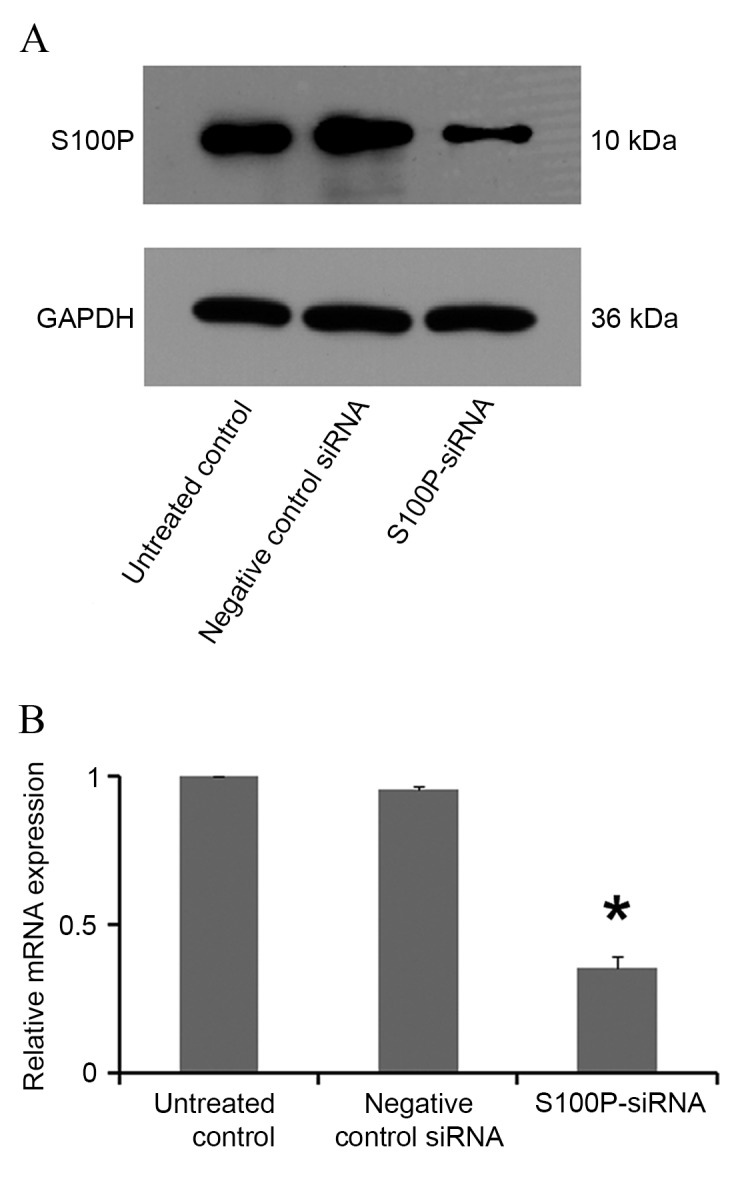
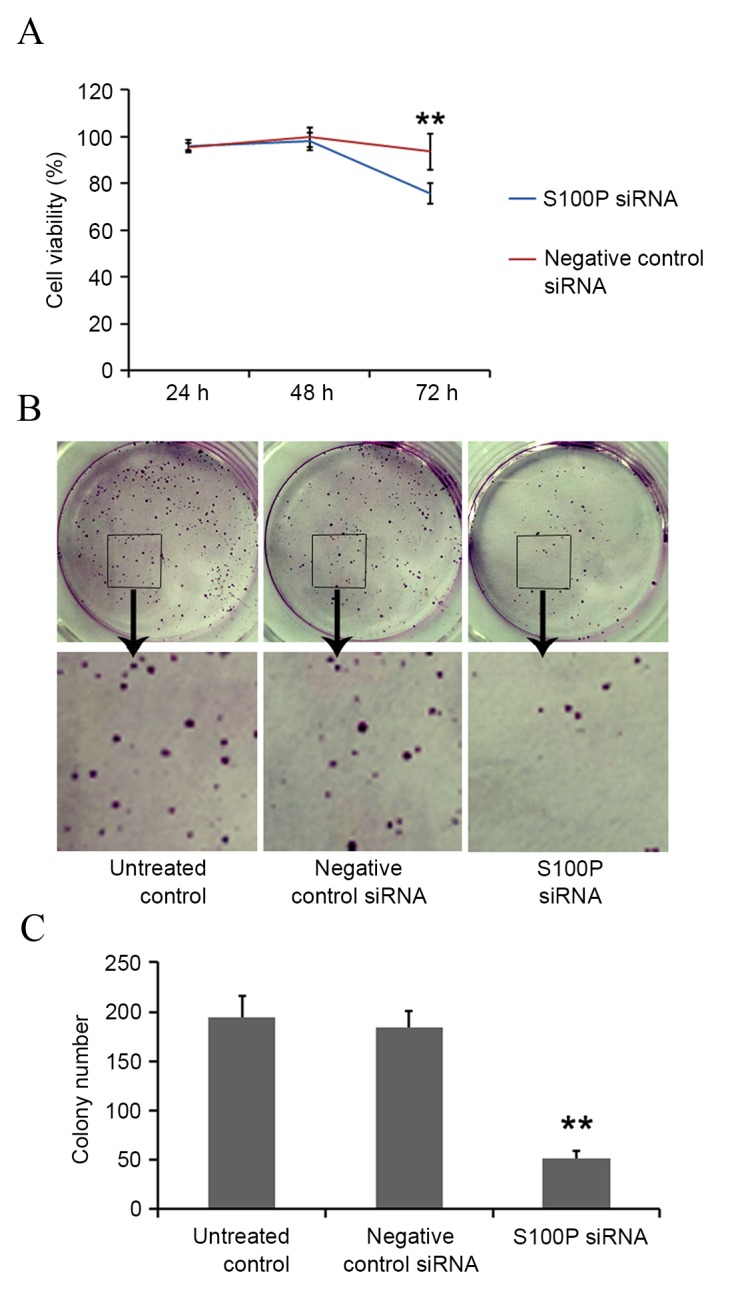
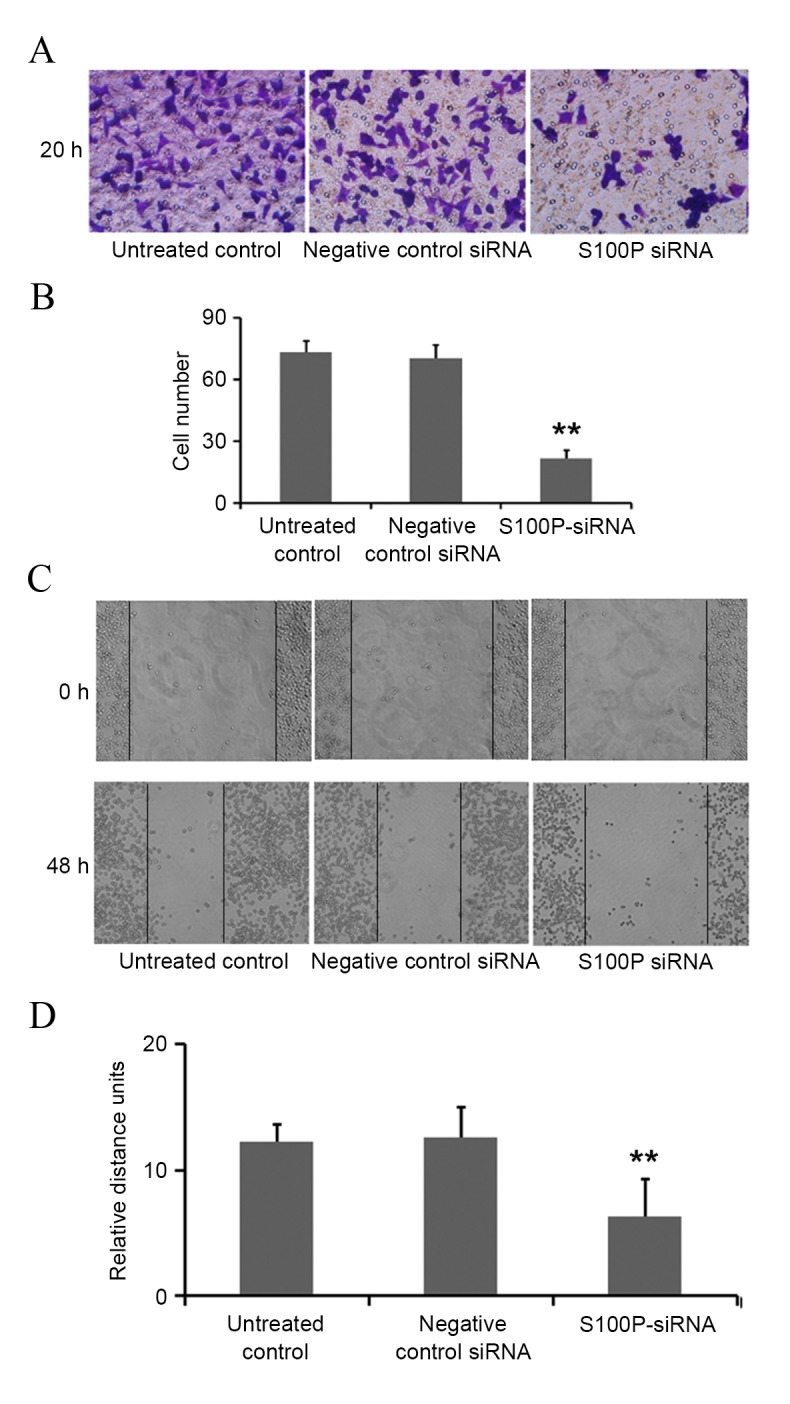
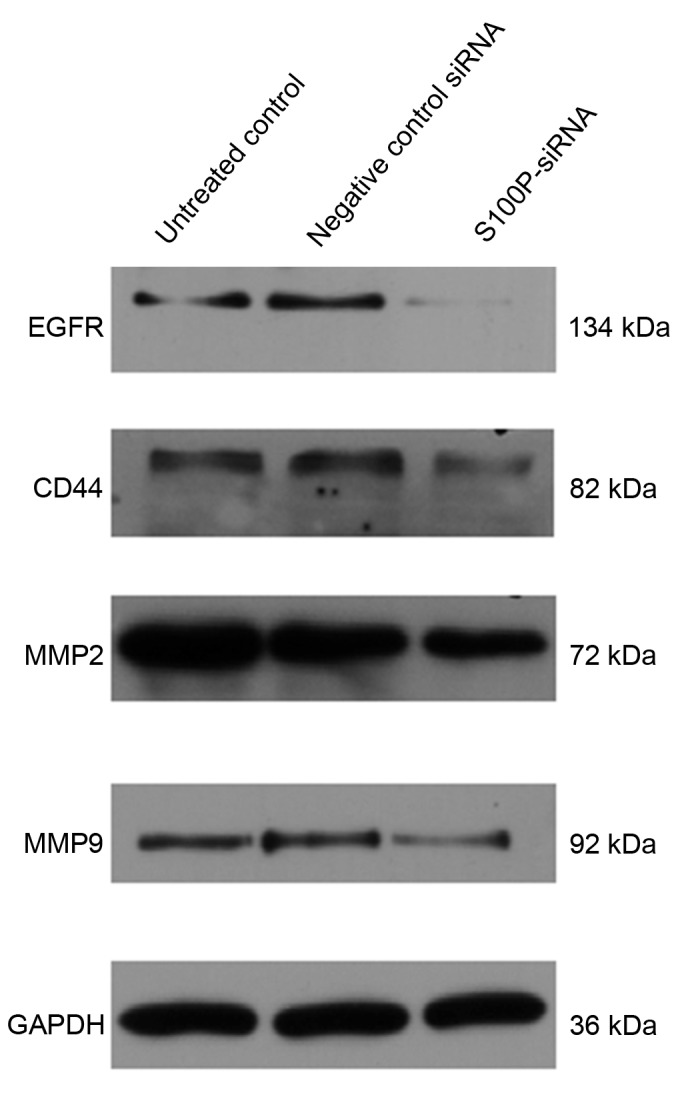
In the present study, the function of S100 calcium binding protein P (S100P) in the C666-1 nasopharyngeal carcinoma (NPC) cell line was examined. The levels of S100P protein in NPC tissues were analyzed using immunohistochemistry, and small interfering RNA silenced S100P expression in C666-1 cells. Subsequently, cell proliferation, colony formation, migration and wound-healing assays were performed in order to assess whether the knockdown of S100P was able to influence the biological behavior of C666-1 cells. The expression levels of the receptor for advanced glycation end products (RAGE) were analyzed using a western blot following the inhibition of S100P. The immunohistochemistry results revealed that S100P was elevated in expression in 45/78 (57.7%) of patients with NPC, as compared with 5/30 (16.7%) of patients with benign inflammation. The S100P protein levels correlated with the rates of proliferation and migration in C666-1 cells. Additionally, reduced S100P expression levels altered a series of intracellular events, including the downregulation of epidermal growth factor receptor, cluster of differentiation (CD) 44, matrix metalloproteinase (MMP) 2 and MMP9 protein expression. In addition, RAGE expression was downregulated in the S100P silenced C666-1 cells, as detected by western blot analysis. These data suggest that S100P is important during the development and progression of nasopharyngeal cancer. Therefore, S100P may provide a novel treatment target for NPC.
在本研究中,检测了S100钙结合蛋白P(S100P)在C666 - 1鼻咽癌细胞系中的功能。采用免疫组织化学方法分析鼻咽癌(NPC)组织中S100P蛋白水平,并利用小干扰RNA沉默C666 - 1细胞中S100P的表达。随后,进行细胞增殖、集落形成、迁移和伤口愈合试验,以评估S100P的敲低是否能够影响C666 - 1细胞的生物学行为。在抑制S100P后,通过蛋白质印迹法分析晚期糖基化终末产物受体(RAGE)的表达水平。免疫组织化学结果显示,与5/30(16.7%)的良性炎症患者相比,45/78(57.7%)的NPC患者中S100P表达升高。S100P蛋白水平与C666 - 1细胞的增殖和迁移率相关。此外,S100P表达水平降低改变了一系列细胞内事件,包括表皮生长因子受体、分化簇(CD)44、基质金属蛋白酶(MMP)2和MMP9蛋白表达的下调。另外,通过蛋白质印迹分析检测到,在S100P沉默的C666 - 1细胞中RAGE表达下调。这些数据表明,S100P在鼻咽癌的发生和发展过程中起重要作用。因此,S100P可能为NPC提供一个新的治疗靶点。