Reid Steven E, Kay Emily J, Neilson Lisa J, Henze Anne-Theres, Serneels Jens, McGhee Ewan J, Dhayade Sandeep, Nixon Colin, Mackey John Bg, Santi Alice, Swaminathan Karthic, Athineos Dimitris, Papalazarou Vasileios, Patella Francesca, Román-Fernández Álvaro, ElMaghloob Yasmin, Hernandez-Fernaud Juan Ramon, Adams Ralf H, Ismail Shehab, Bryant David M, Salmeron-Sanchez Manuel, Machesky Laura M, Carlin Leo M, Blyth Karen, Mazzone Massimiliano, Zanivan Sara
Cancer Research UK Beatson Institute, Glasgow, UK.
Lab of Tumor Inflammation and Angiogenesis, Center for Cancer Biology, VIB, Leuven, Belgium.
EMBO J. 2017 Aug 15;36(16):2373-2389. doi: 10.15252/embj.201694912. Epub 2017 Jul 10.
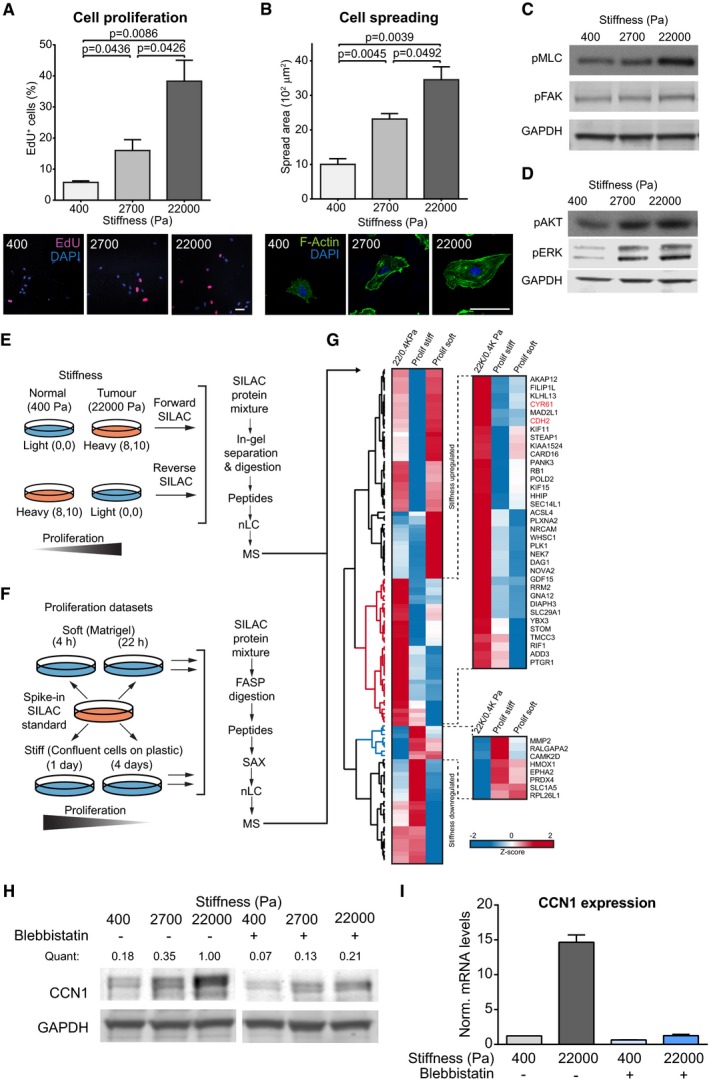
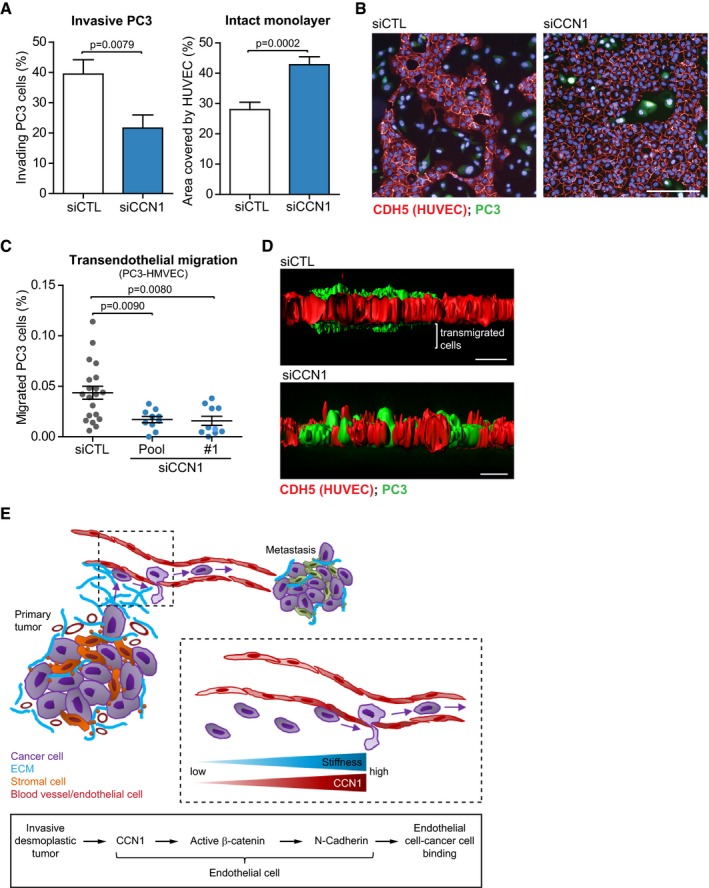
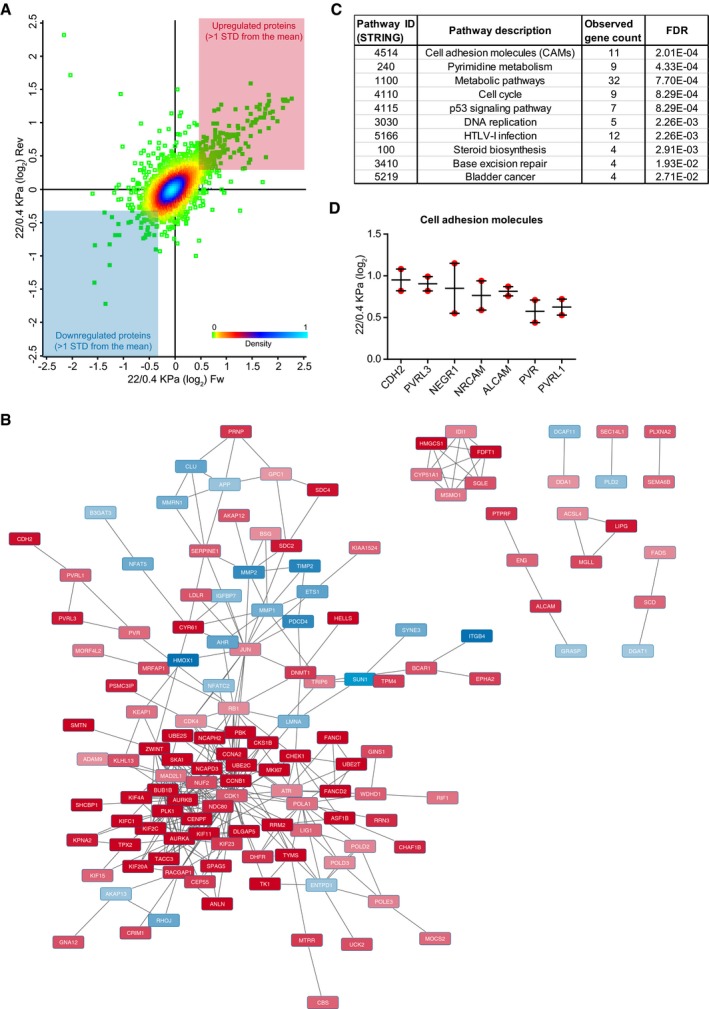
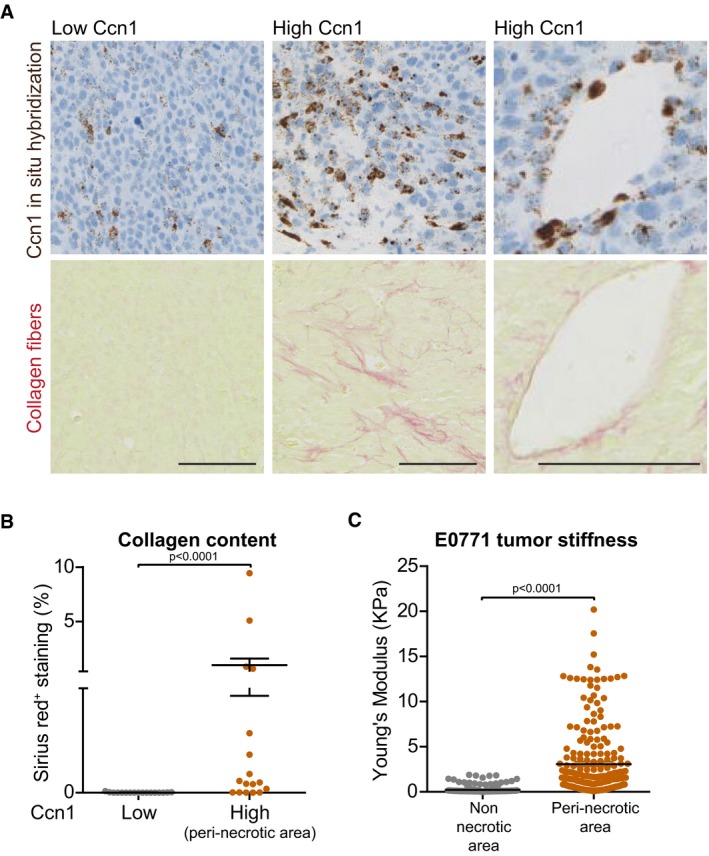
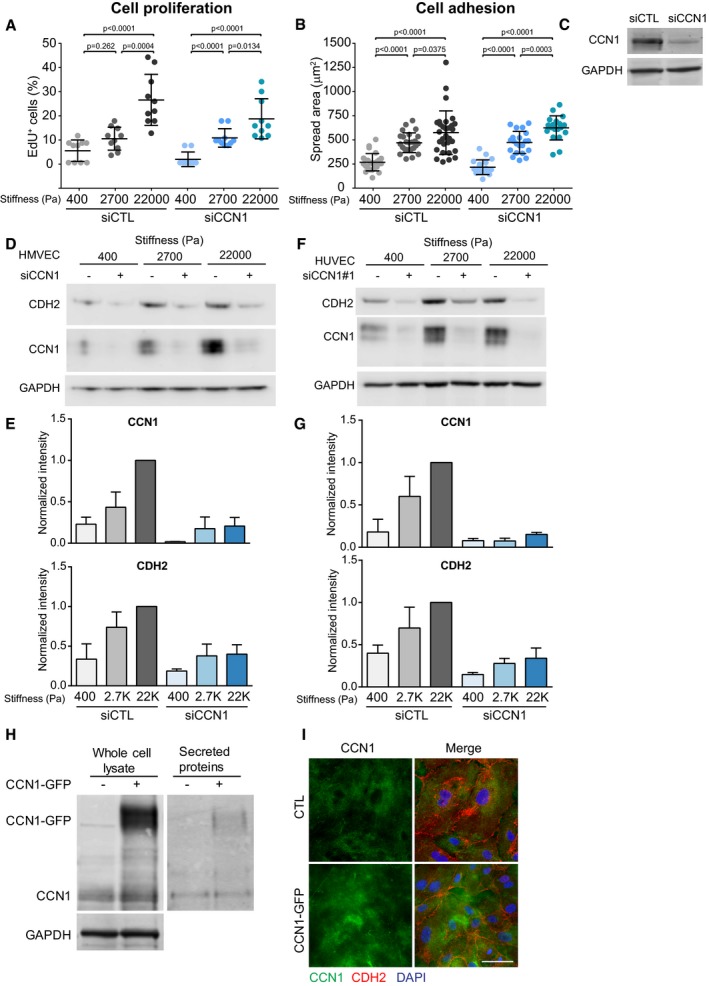
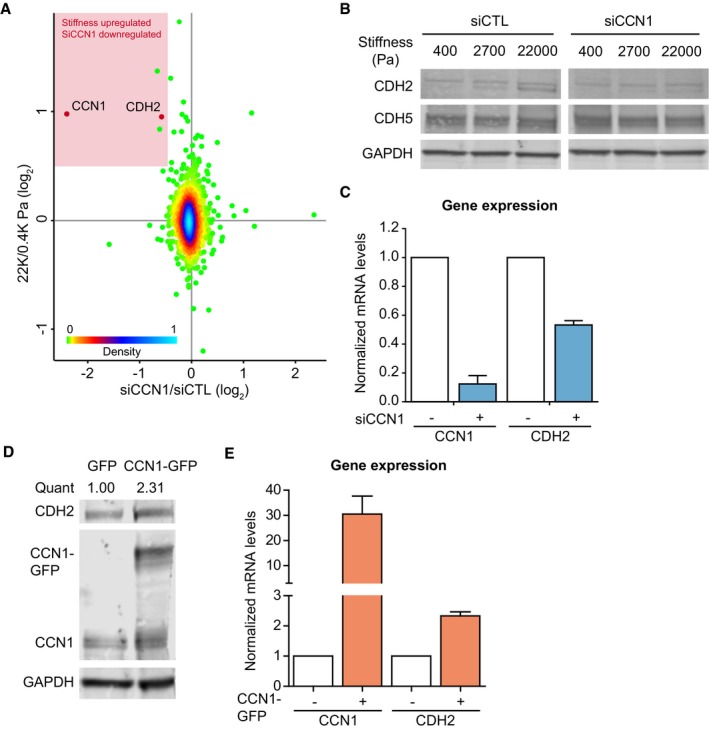
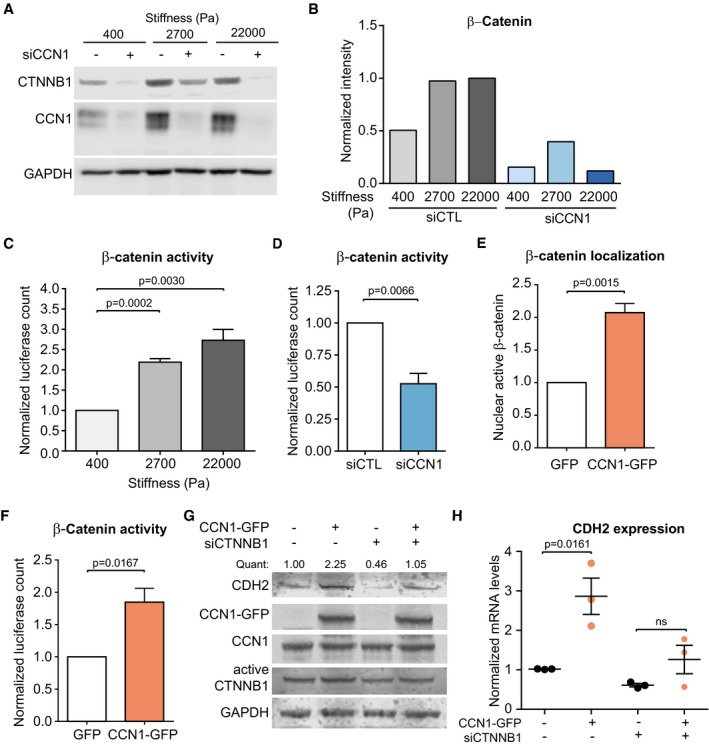
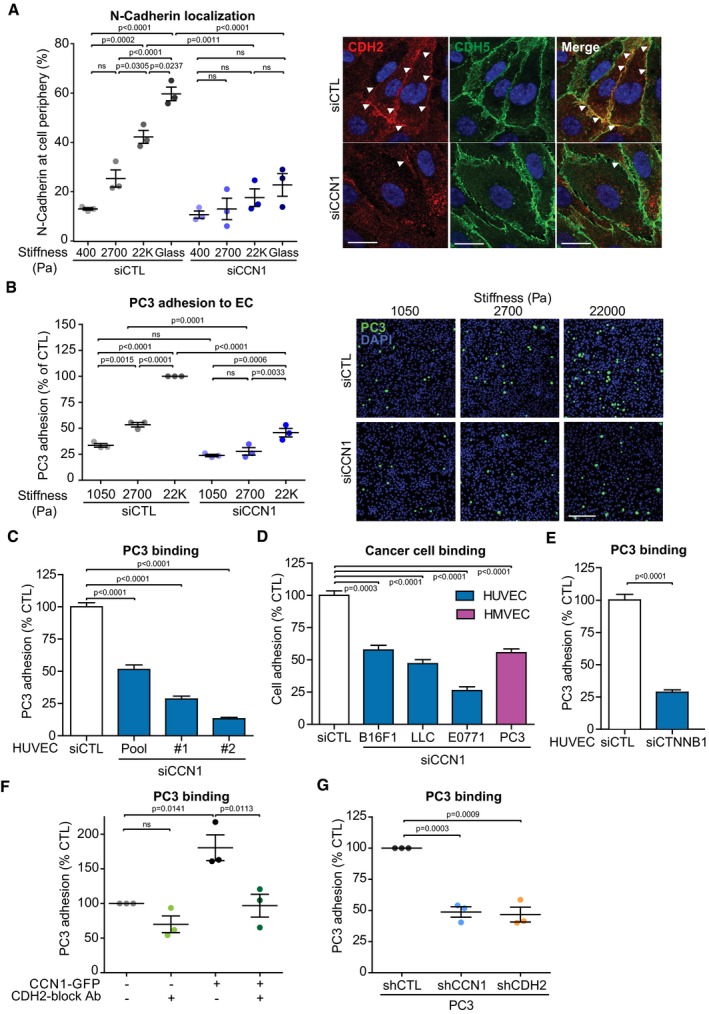
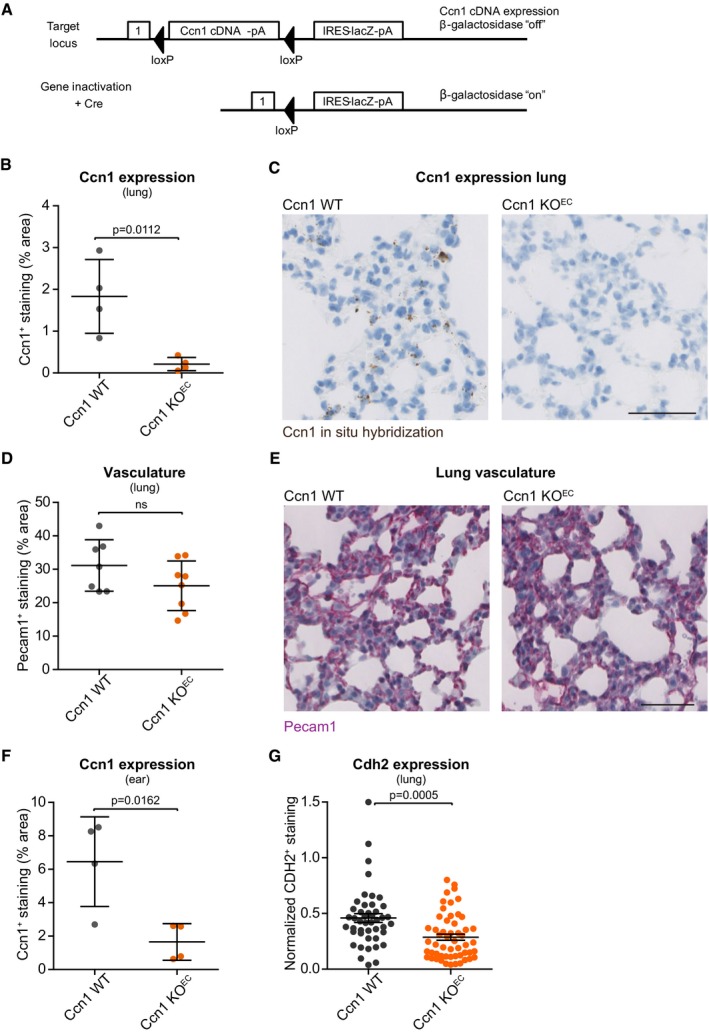
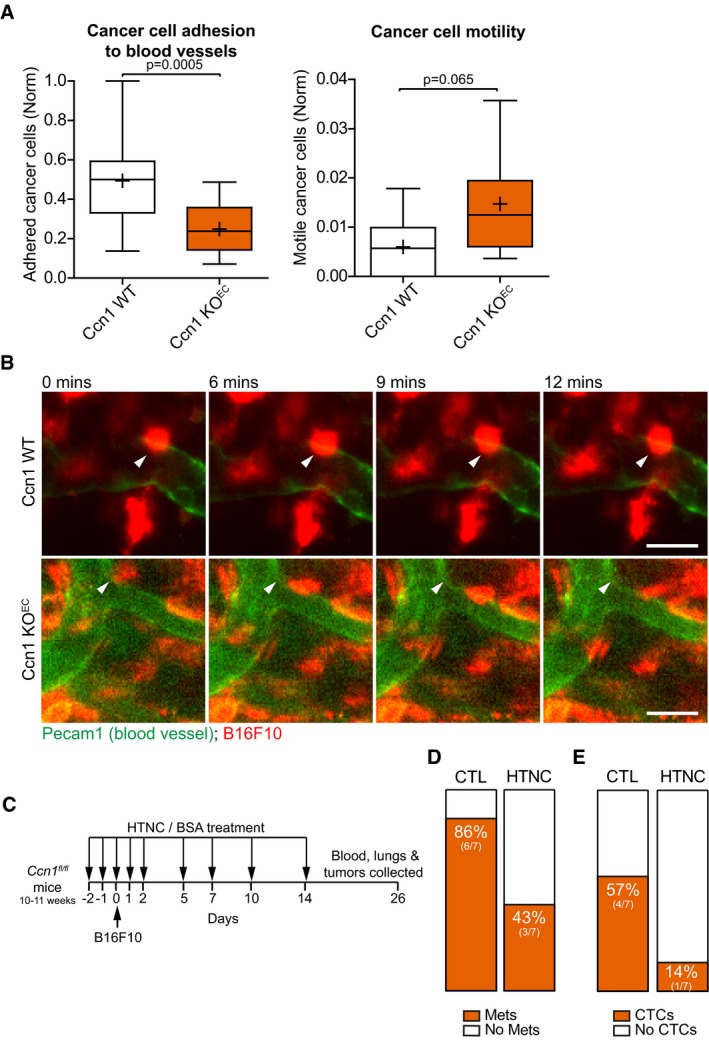
Tumor progression alters the composition and physical properties of the extracellular matrix. Particularly, increased matrix stiffness has profound effects on tumor growth and metastasis. While endothelial cells are key players in cancer progression, the influence of tumor stiffness on the endothelium and the impact on metastasis is unknown. Through quantitative mass spectrometry, we find that the matricellular protein CCN1/CYR61 is highly regulated by stiffness in endothelial cells. We show that stiffness-induced CCN1 activates β-catenin nuclear translocation and signaling and that this contributes to upregulate N-cadherin levels on the surface of the endothelium, This facilitates N-cadherin-dependent cancer cell-endothelium interaction. Using intravital imaging, we show that knockout of in endothelial cells inhibits melanoma cancer cell binding to the blood vessels, a critical step in cancer cell transit through the vasculature to metastasize. Targeting stiffness-induced changes in the vasculature, such as CCN1, is therefore a potential yet unappreciated mechanism to impair metastasis.
肿瘤进展会改变细胞外基质的组成和物理特性。特别是,基质硬度增加对肿瘤生长和转移具有深远影响。虽然内皮细胞是癌症进展的关键因素,但肿瘤硬度对内皮的影响以及对转移的影响尚不清楚。通过定量质谱分析,我们发现基质细胞蛋白CCN1/CYR61在内皮细胞中受硬度高度调控。我们表明,硬度诱导的CCN1激活β-连环蛋白核转位和信号传导,这有助于上调内皮表面N-钙黏蛋白水平,促进N-钙黏蛋白依赖性癌细胞与内皮细胞的相互作用。利用活体成像,我们表明内皮细胞中CCN1基因敲除会抑制黑色素瘤癌细胞与血管的结合,这是癌细胞通过脉管系统转移的关键步骤。因此,针对血管系统中硬度诱导的变化,如CCN1,是一种潜在但尚未被认识的抑制转移的机制。