Instituto de Biología Molecular y Celular de Plantas (IBMCP), Consejo Superior de Investigaciones Científicas-Universidad Politécnica de Valencia, Valencia, Spain.
Institute of Plant Protection, Chinese Academy of Agricultural Sciences, Beijing, China.
Sci Rep. 2017 Jul 10;7(1):5004. doi: 10.1038/s41598-017-05335-8.
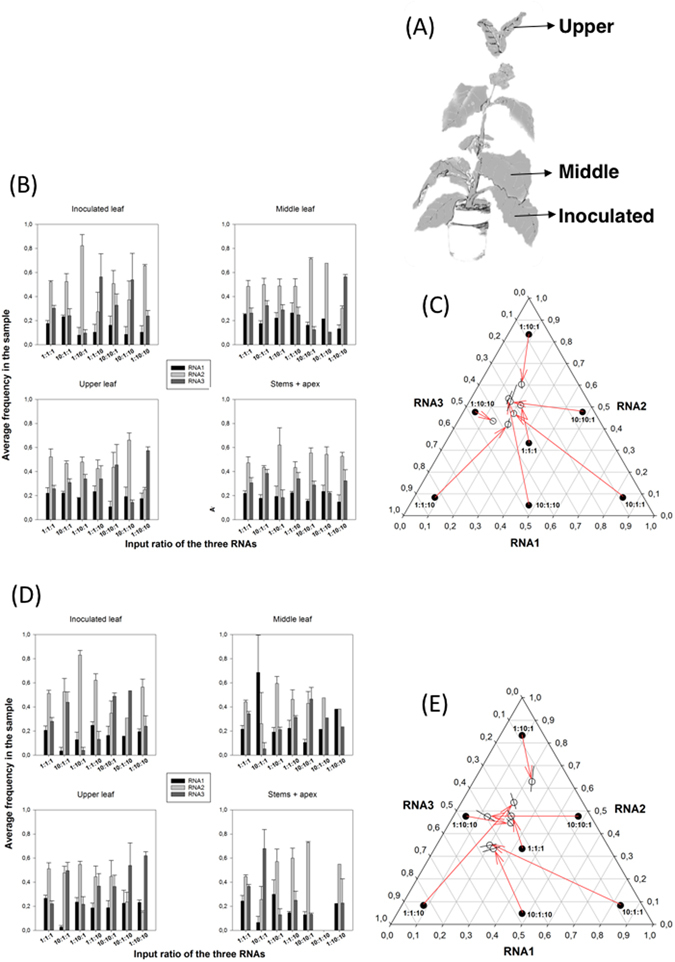
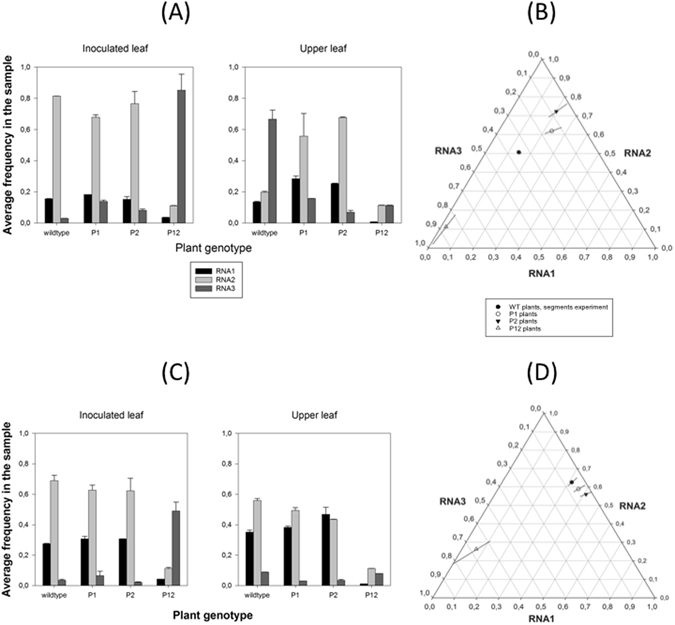
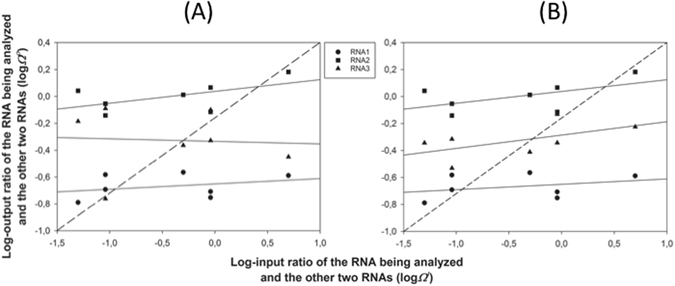
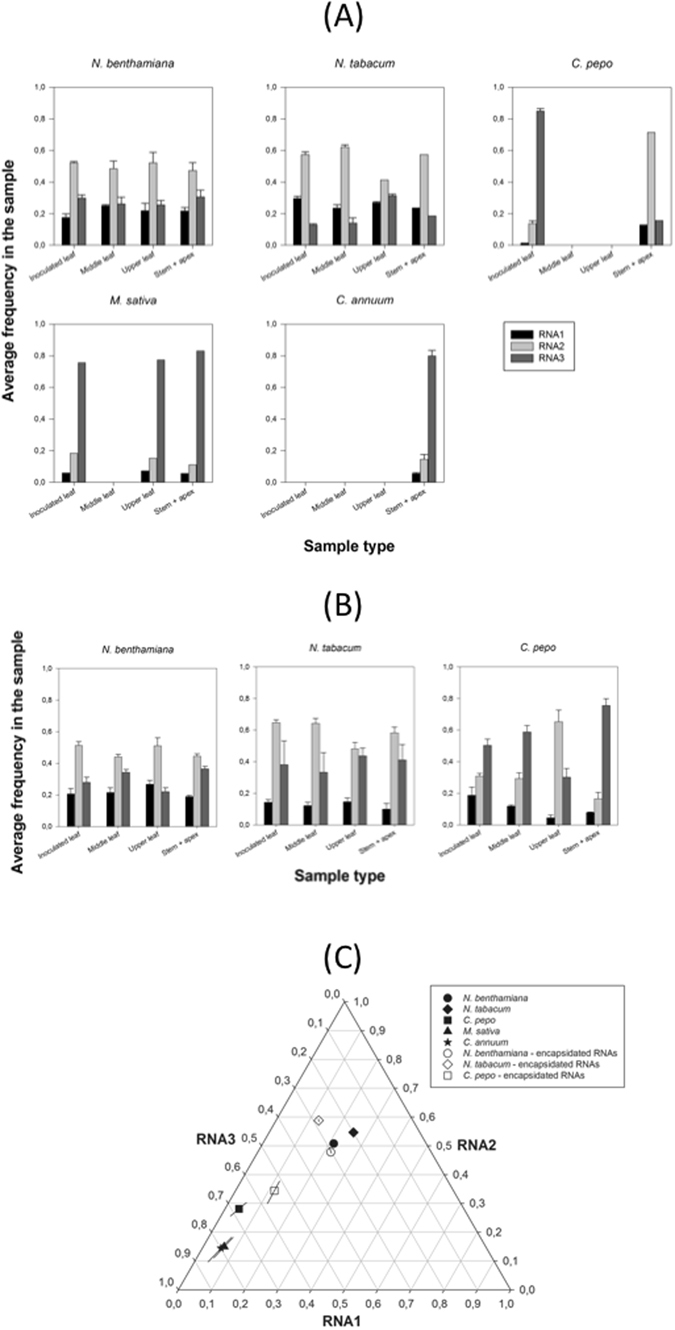
The existence of multipartite viruses is an intriguing mystery in evolutionary virology. Several hypotheses suggest benefits that should outweigh the costs of a reduced transmission efficiency and of segregation of coadapted genes associated with encapsidating each segment into a different particle. Advantages range from increasing genome size despite high mutation rates, faster replication, more efficient selection resulting from reassortment during mixed infections, better regulation of gene expression, or enhanced virion stability and cell-to-cell movement. However, support for these hypotheses is scarce. Here we report experiments testing whether an evolutionary stable equilibrium exists for the three genomic RNAs of Alfalfa mosaic virus (AMV). Starting infections with different segment combinations, we found that the relative abundance of each segment evolves towards a constant ratio. Population genetic analyses show that the segment ratio at this equilibrium is determined by frequency-dependent selection. Replication of RNAs 1 and 2 was coupled and collaborative, whereas the replication of RNA 3 interfered with the replication of the other two. We found that the equilibrium solution is slightly different for the total amounts of RNA produced and encapsidated, suggesting that competition exists between all RNAs during encapsidation. Finally, we found that the observed equilibrium appears to be host-species dependent.
多组分病毒的存在是进化病毒学中一个有趣的谜。有几种假说表明,与将每个片段包装到不同颗粒中相关的共适应基因的隔离以及传播效率降低所带来的成本相比,应该存在收益。这些优势包括在高突变率的情况下增加基因组大小、更快的复制、混合感染过程中重组导致的更有效的选择、基因表达的更好调控,或者增强病毒粒子的稳定性和细胞间运动。然而,这些假说的证据很少。在这里,我们报告了测试三叶草花叶病毒(Alfalfa mosaic virus,AMV)三个基因组 RNA 是否存在进化稳定均衡的实验。从不同的片段组合开始感染,我们发现每个片段的相对丰度朝着一个恒定的比例进化。群体遗传分析表明,该平衡处的片段比例由频率依赖选择决定。RNA1 和 RNA2 的复制是偶联和协作的,而 RNA3 的复制则干扰了其他两个 RNA 的复制。我们发现,在总 RNA 产生和包装方面,平衡解略有不同,这表明在包装过程中所有 RNA 之间存在竞争。最后,我们发现观察到的平衡似乎取决于宿主物种。