Paaso Ulla, Keski-Saari Sarita, Keinänen Markku, Karvinen Heini, Silfver Tarja, Rousi Matti, Mikola Juha
Department of Environmental Sciences, University of HelsinkiLahti, Finland.
Department of Environmental and Biological Sciences, University of Eastern FinlandJoensuu, Finland.
Front Plant Sci. 2017 Jun 26;8:1074. doi: 10.3389/fpls.2017.01074. eCollection 2017.
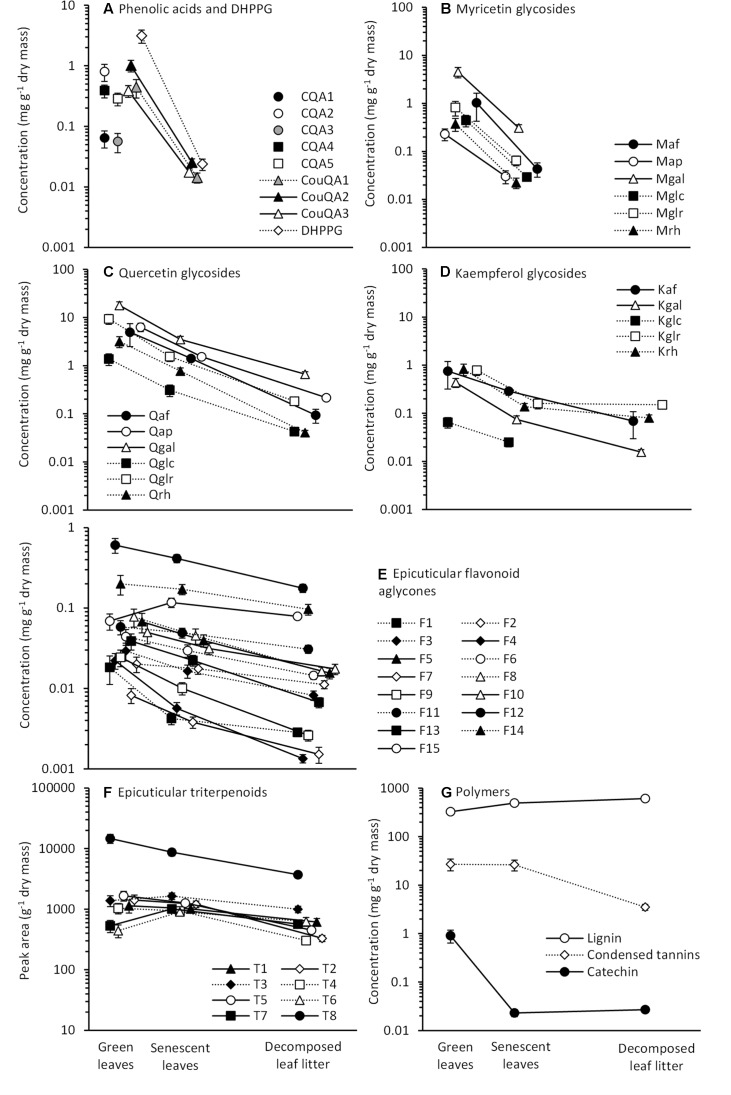
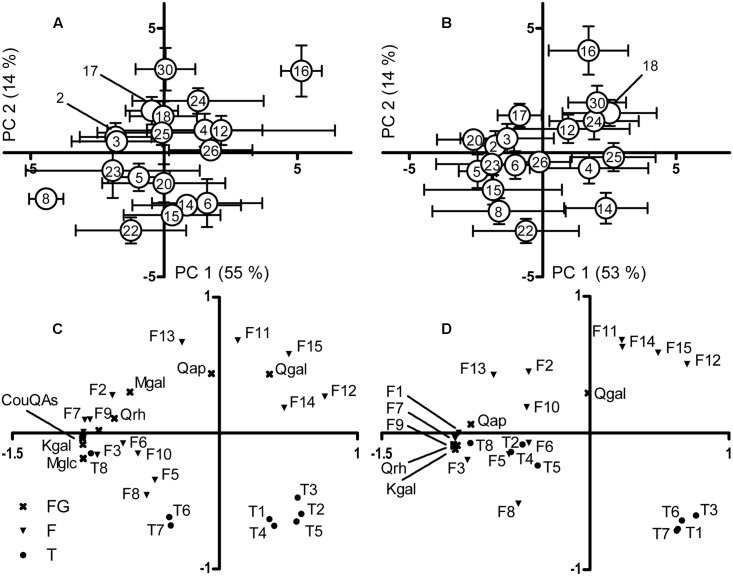
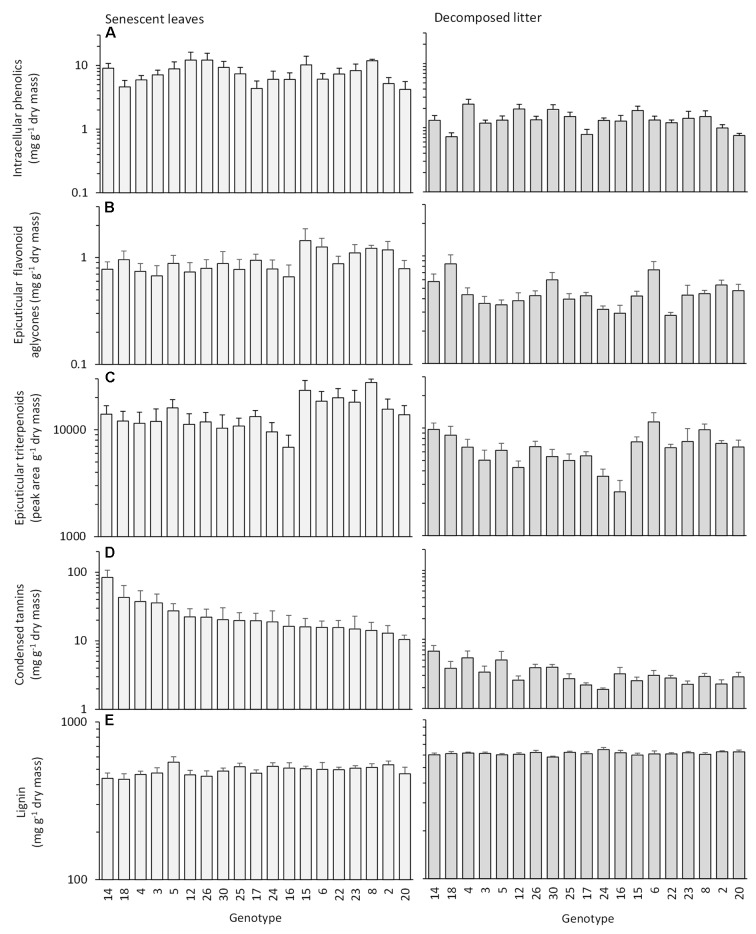
Abundant secondary metabolites, such as condensed tannins, and their interpopulation genotypic variation can remain through plant leaf senescence and affect litter decomposition. Whether the intrapopulation genotypic variation of a more diverse assortment of secondary metabolites equally persists through leaf senescence and litter decomposition is not well understood. We analyzed concentrations of intracellular phenolics, epicuticular flavonoid aglycones, epicuticular triterpenoids, condensed tannins, and lignin in green leaves, senescent leaves and partly decomposed litter of silver birch, . Broad-sense heritability () and coefficient of genotypic variation () were estimated for metabolites in senescent leaves and litter using 19 genotypes selected from a population in southern Finland. We found that most of the secondary metabolites remained through senescence and decomposition and that their persistence was related to their chemical properties. Intrapopulation and for intracellular phenolics, epicuticular flavonoid aglycones and condensed tannins were high and remarkably, increased from senescent leaves to decomposed litter. The rank of genotypes in metabolite concentrations was persistent through litter decomposition. Lignin was an exception, however, with a diminishing genotypic variation during decomposition, and the concentrations of lignin and condensed tannins had a negative genotypic correlation in the senescent leaves. Our results show that secondary metabolites and their intrapopulation genotypic variation can for the most part remain through leaf senescence and early decomposition, which is a prerequisite for initial litter quality to predict variation in litter decomposition rates. Persistent genotypic variation also opens an avenue for selection to impact litter decomposition in populations through acting on their green foliage secondary chemistry. The negative genotypic correlations and diminishing heritability of lignin concentrations may, however, counteract this process.
丰富的次生代谢产物,如缩合单宁,及其种群间的基因型变异可在植物叶片衰老过程中留存,并影响凋落物分解。然而,对于种类更多样的次生代谢产物的种群内基因型变异是否同样能在叶片衰老和凋落物分解过程中持续存在,我们还了解得不够充分。我们分析了白桦绿叶、衰老叶片和部分分解的凋落物中细胞内酚类物质、表皮类黄酮苷元、表皮三萜类化合物、缩合单宁和木质素的浓度。我们从芬兰南部一个种群中选取了19个基因型,估算了衰老叶片和凋落物中代谢产物的广义遗传力()和基因型变异系数()。我们发现,大多数次生代谢产物在衰老和分解过程中留存了下来,其留存与它们的化学性质有关。细胞内酚类物质、表皮类黄酮苷元和缩合单宁的种群内和在衰老叶片到分解凋落物的过程中都很高,且显著增加。代谢产物浓度的基因型排名在凋落物分解过程中保持不变。然而,木质素是个例外,其在分解过程中的基因型变异逐渐减小,并且在衰老叶片中木质素和缩合单宁的浓度呈负基因型相关。我们的结果表明,次生代谢产物及其种群内基因型变异在很大程度上可以在叶片衰老和早期分解过程中留存下来,这是初始凋落物质量预测凋落物分解速率变异的一个前提条件。持续的基因型变异也为选择通过作用于绿色叶片的次生化学性质来影响种群中的凋落物分解开辟了一条途径。然而,木质素浓度的负基因型相关性和遗传力的降低可能会抵消这一过程。