Nordholm Johan, Petitou Jeanne, Östbye Henrik, da Silva Diogo V, Dou Dan, Wang Hao, Daniels Robert
Department of Biochemistry and Biophysics, Stockholm University, Stockholm, Sweden.
J Cell Biol. 2017 Aug 7;216(8):2283-2293. doi: 10.1083/jcb.201702102. Epub 2017 Jul 10.
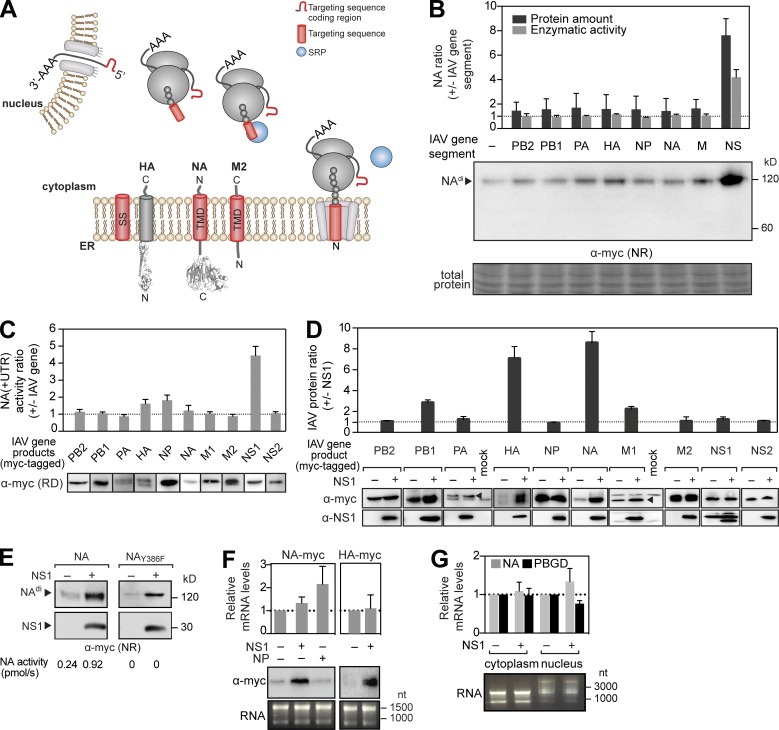
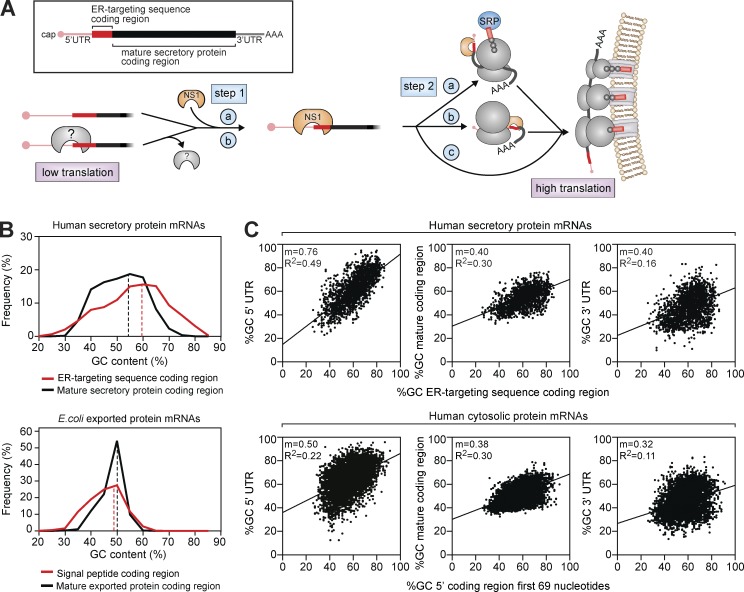
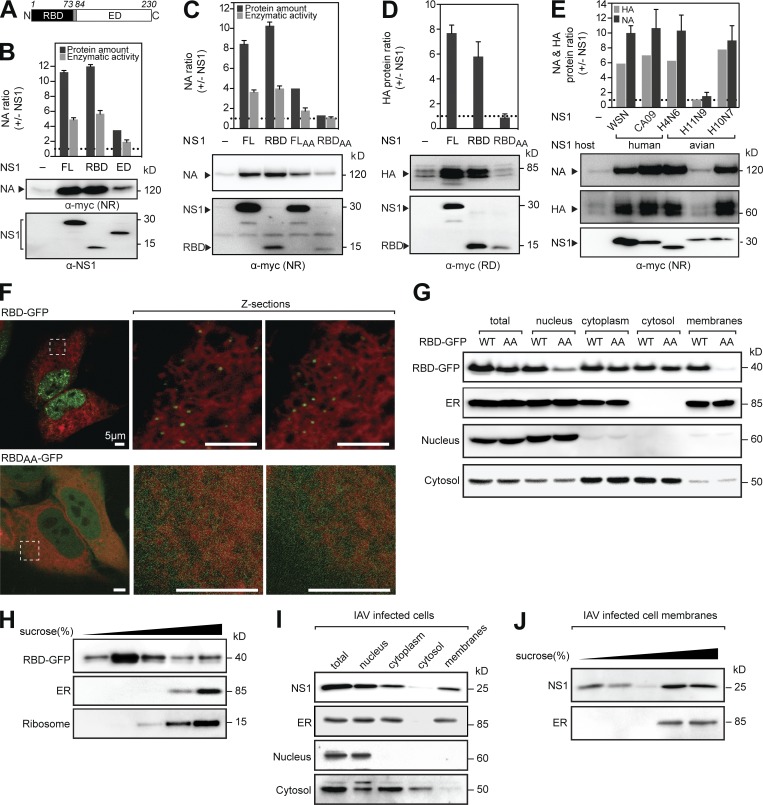
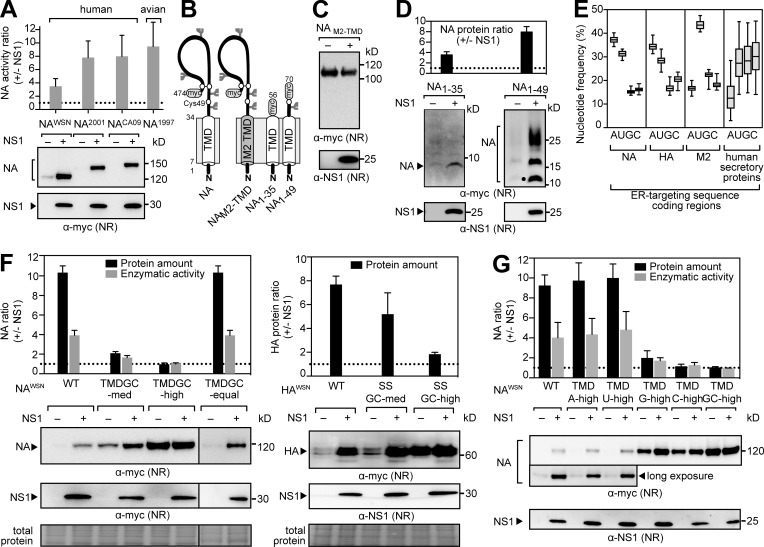
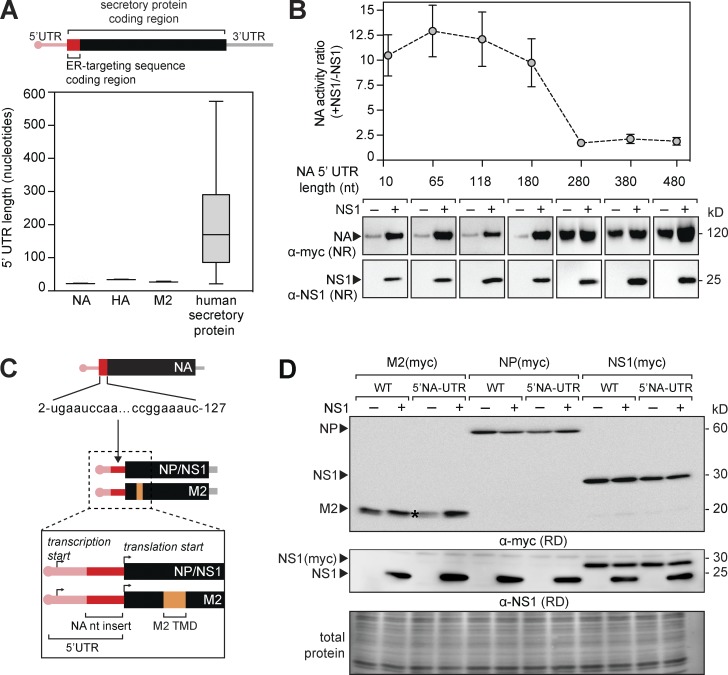
A primary function of 5' regions in many secretory protein mRNAs is to encode an endoplasmic reticulum (ER) targeting sequence. In this study, we show how the regions coding for the ER-targeting sequences of the influenza glycoproteins NA and HA also function as translational regulatory elements that are controlled by the viral RNA-binding protein (RBP) NS1. The translational increase depends on the nucleotide composition and 5' positioning of the ER-targeting sequence coding regions and is facilitated by the RNA-binding domain of NS1, which can associate with ER membranes. Inserting the ER-targeting sequence coding region of NA into different 5' UTRs confirmed that NS1 can promote the translation of secretory protein mRNAs based on the nucleotides within this region rather than the resulting amino acids. By analyzing human protein mRNA sequences, we found evidence that this mechanism of using 5' coding regions and particular RBPs to achieve gene-specific regulation may extend to human-secreted proteins.
许多分泌蛋白mRNA中5'区域的一个主要功能是编码内质网(ER)靶向序列。在本研究中,我们展示了流感糖蛋白NA和HA的ER靶向序列编码区域如何作为翻译调控元件发挥作用,这些元件受病毒RNA结合蛋白(RBP)NS1的控制。翻译增加取决于ER靶向序列编码区域的核苷酸组成和5'位置,并由NS1的RNA结合结构域促进,该结构域可与ER膜结合。将NA的ER靶向序列编码区域插入不同的5'UTR证实,NS1可基于该区域内的核苷酸而非所产生的氨基酸来促进分泌蛋白mRNA的翻译。通过分析人类蛋白质mRNA序列,我们发现证据表明,这种利用5'编码区域和特定RBP来实现基因特异性调控的机制可能延伸至人类分泌蛋白。