De Luna-Preitschopf Andrea, Zwickl Hannes, Nehrer Stefan, Hengstschläger Markus, Mikula Mario
Center for Regenerative Medicine and Orthopedics, Danube University Krems, 3500 Krems, Austria.
Department of Internal Medicine 2, University Hospital Krems, Karl Landsteiner University of Health Sciences, 3500 Krems, Austria.
Int J Mol Sci. 2017 Jul 11;18(7):1494. doi: 10.3390/ijms18071494.
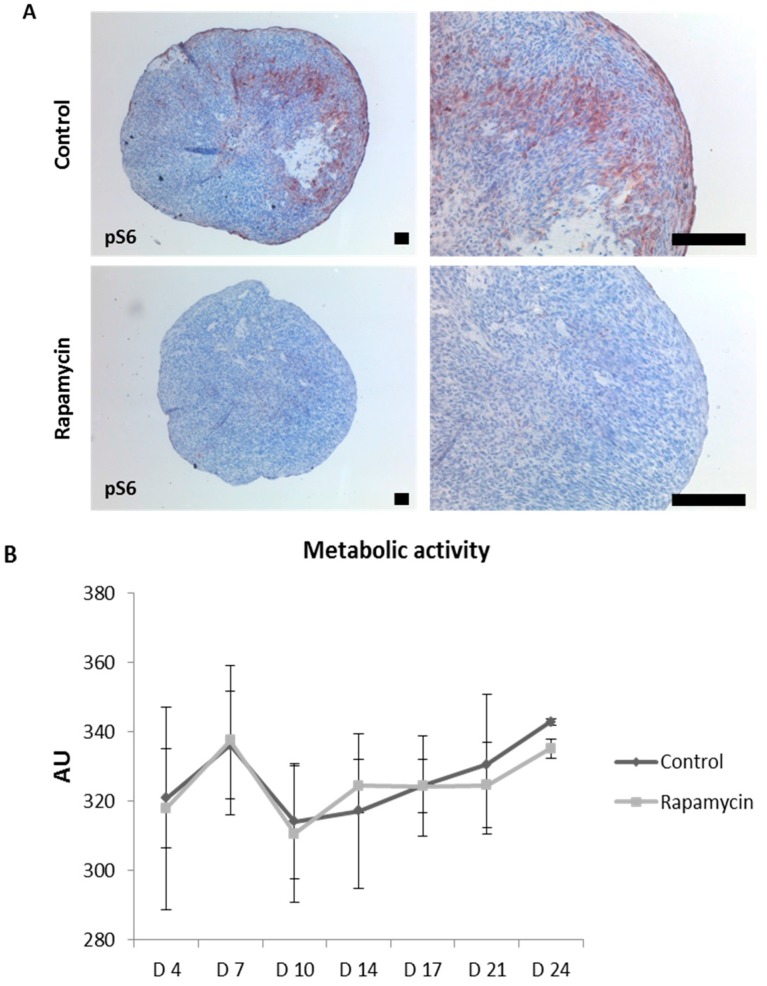
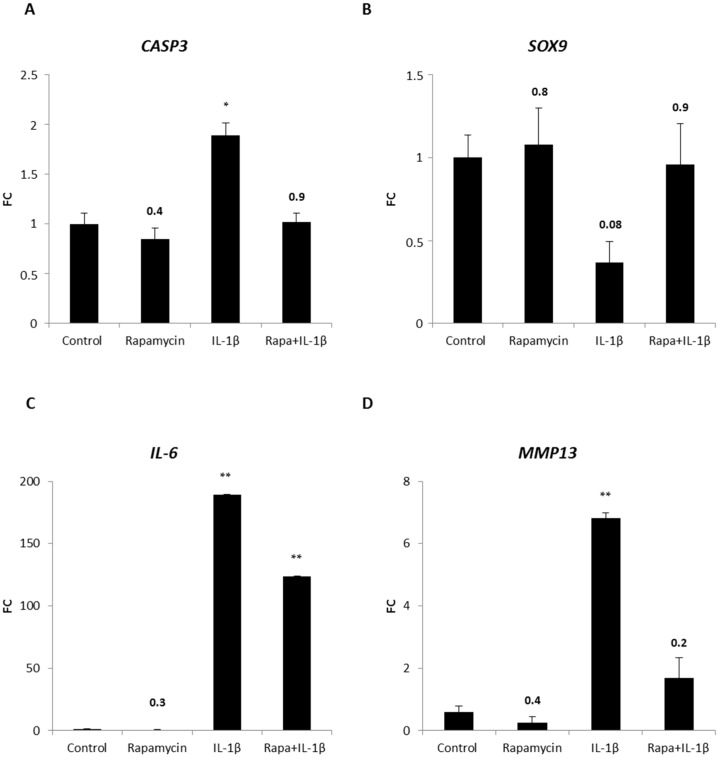
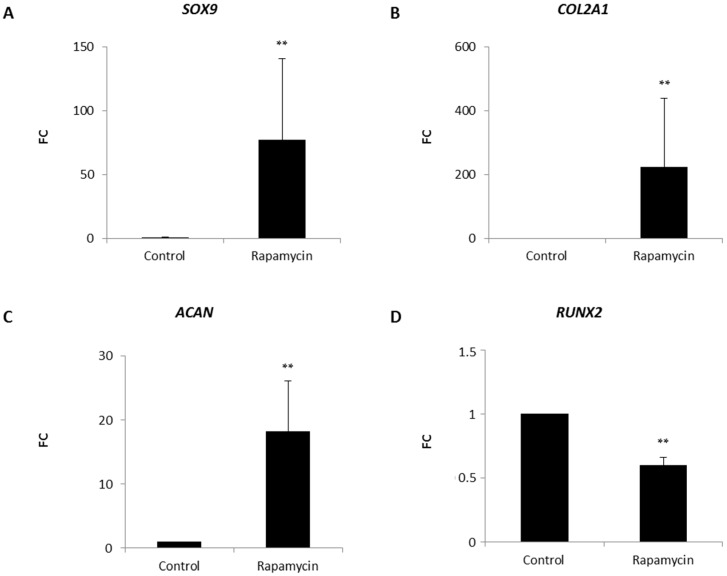
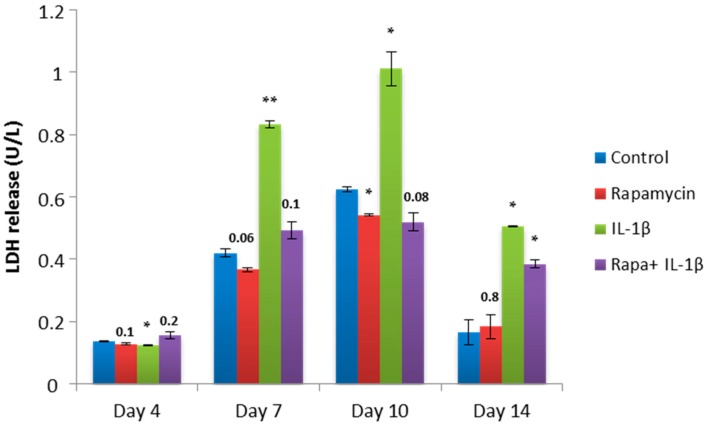
Osteoarthritis (OA) is hallmarked by a progressive degradation of articular cartilage. Besides risk factors including trauma, obesity or genetic predisposition, inflammation has a major impact on the development of this chronic disease. During the course of inflammation, cytokines such as tumor necrosis factor-alpha(TNF-α) and interleukin (IL)-1β are secreted by activated chondrocytes as well as synovial cells and stimulate the production of other inflammatory cytokines and matrix degrading enzymes. The mTORC1 inhibitor rapamycin is a clinical approved immunosuppressant and several studies also verified its chondroprotective effects in OA. However, the effect of blocking the mechanistic target of rapamycin complex (mTORC)1 on the inflammatory status within OA is not well studied. Therefore, we aimed to investigate if inhibition of mTORC1 by rapamycin can preserve and sustain chondrocytes in an inflammatory environment. Patient-derived chondrocytes were cultured in media supplemented with or without the mTORC1 inhibitor rapamycin. To establish an inflammatory environment, either TNF-α or IL-1β was added to the media (=OA-model). The chondroprotective and anti-inflammatory effects of rapamycin were evaluated using sulfated glycosaminoglycan (sGAG) release assay, Caspase 3/7 activity assay, lactate dehydrogenase (LDH) assay and quantitative real time polymerase chain reaction (PCR). Blocking mTORC1 by rapamycin reduced the release and therefore degradation of sGAGs, which are components of the extracellular matrix secreted by chondrocytes. Furthermore, blocking mTORC1 in OA chondrocytes resulted in an enhanced expression of the main chondrogenic markers. Rapamycin was able to protect chondrocytes from cell death in an OA-model shown by reduced Caspase 3/7 activity and diminished LDH release. Furthermore, inhibition of mTORC1 preserved the chondrogenic phenotype of OA chondrocytes, but also reduced inflammatory processes within the OA-model. This study highlights that blocking mTORC1 is a new and promising approach for treating OA. Low side effects make rapamycin an attractive implementation to existing therapeutic strategies. We showed that rapamycin's chondroprotective property might be due to an interference with IL-1β triggered inflammatory processes.
骨关节炎(OA)的特征是关节软骨进行性退化。除了创伤、肥胖或遗传易感性等风险因素外,炎症对这种慢性疾病的发展有重大影响。在炎症过程中,肿瘤坏死因子-α(TNF-α)和白细胞介素(IL)-1β等细胞因子由活化的软骨细胞以及滑膜细胞分泌,并刺激其他炎症细胞因子和基质降解酶的产生。mTORC1抑制剂雷帕霉素是一种临床批准的免疫抑制剂,多项研究也证实了其在OA中的软骨保护作用。然而,阻断雷帕霉素复合物(mTORC)1的机制靶点对OA炎症状态的影响尚未得到充分研究。因此,我们旨在研究雷帕霉素抑制mTORC1是否能在炎症环境中保护和维持软骨细胞。将患者来源的软骨细胞在添加或不添加mTORC1抑制剂雷帕霉素的培养基中培养。为了建立炎症环境,向培养基中添加TNF-α或IL-1β(=OA模型)。使用硫酸化糖胺聚糖(sGAG)释放试验、半胱天冬酶3/7活性试验、乳酸脱氢酶(LDH)试验和定量实时聚合酶链反应(PCR)评估雷帕霉素的软骨保护和抗炎作用。雷帕霉素阻断mTORC1可减少sGAGs的释放,从而减少其降解,sGAGs是软骨细胞分泌的细胞外基质的组成部分。此外,阻断OA软骨细胞中的mTORC1会导致主要软骨生成标志物的表达增强。在OA模型中,雷帕霉素能够保护软骨细胞免于细胞死亡,表现为半胱天冬酶3/7活性降低和LDH释放减少。此外,抑制mTORC1不仅保留了OA软骨细胞的软骨生成表型,还减少了OA模型中的炎症过程。这项研究强调,阻断mTORC1是一种治疗OA的新的有前景的方法。低副作用使雷帕霉素成为现有治疗策略中一个有吸引力的选择。我们表明,雷帕霉素的软骨保护特性可能是由于其干扰了IL-1β触发的炎症过程。