Stauch-White Kristie, Srinivasan Varun N, Camilla Kuo-Dahab W, Park Chul, Butler Caitlyn S
Department of Civil and Environmental Engineering, University of Massachusetts, Amherst, 01003, USA.
AMB Express. 2017 Dec;7(1):146. doi: 10.1186/s13568-017-0444-8. Epub 2017 Jul 10.
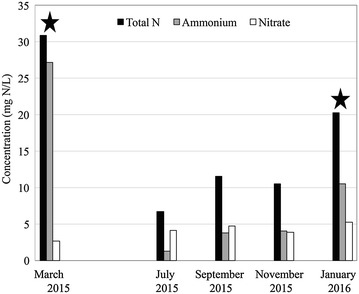
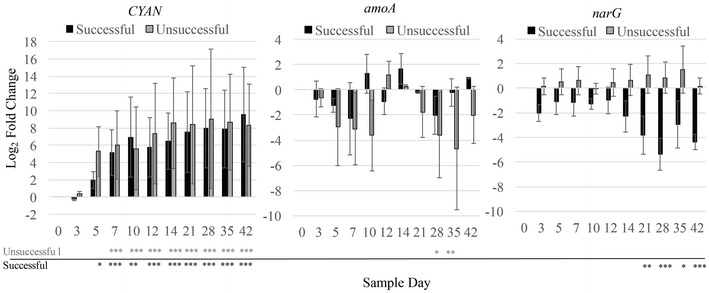
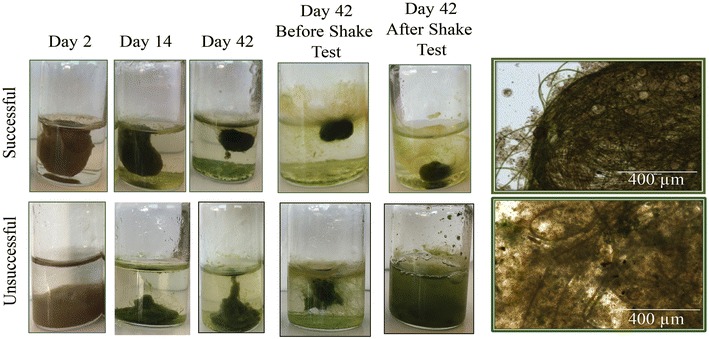
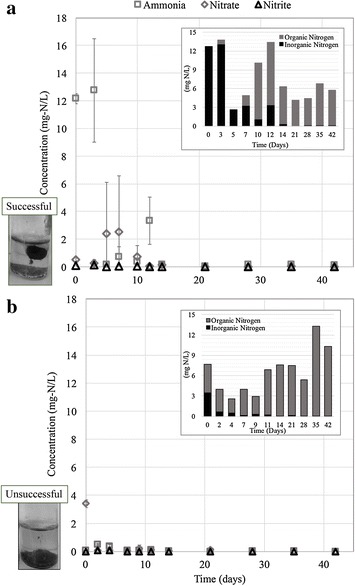
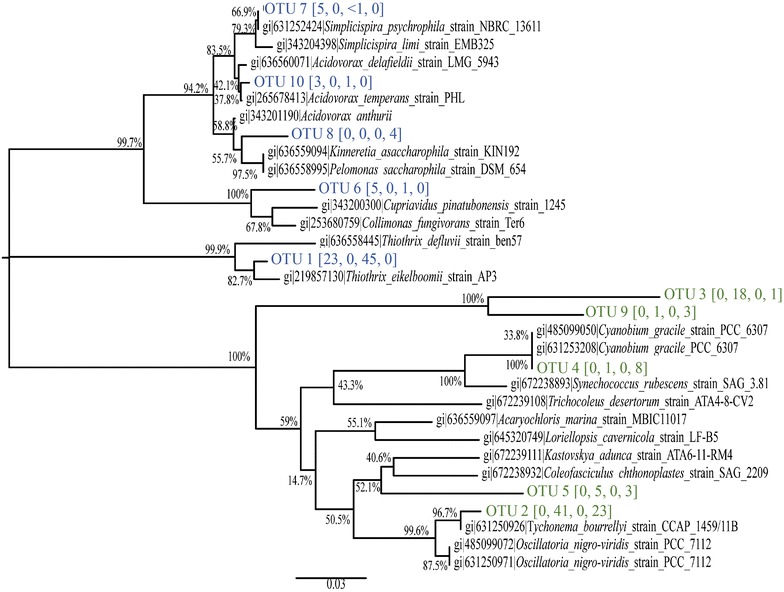
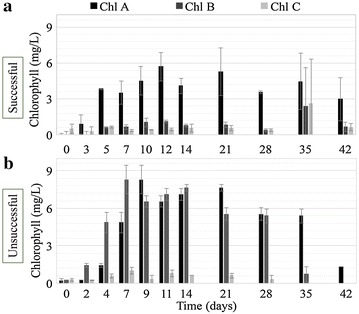
Recently, the use of phototrophs for wastewater treatment has been revisited because of new approaches to separate them from effluent streams. One manifestation uses oxygenic photogranules (OPGs) which are dense, easily-settleable granular biofilms of cyanobacteria, which surrounding populations of heterotrophs, autotrophs, and microalgae. OPGs can remove COD and nitrogenous compounds without external aeration. To better grow and maintain biomass in the proposed wastewater process, this study seeks to understand the factors that contribute to successful granulation. Availability of initial inorganic nitrogen, particularly ammonium, was associated with successful cultivation of OPGs. In the first days of granulation, a decrease in ammonium coupled with an increase in a cyanobacterial-specific 16S rRNA gene, may suggest that ammonium was assimilated in cyanobacteria offering a competitive environment for growth. Though both successful and unsuccessful OPG formation demonstrated a shift from non-phototrophic bacterial dominated communities on day 0 to cyanobacterial dominated communities on day 42, the successful community had a greater relative abundance (46%) of OTUs associated with genera Oscillatoria and Geitlernema than the unsuccessful community (27%), supporting that filamentous cyanobacteria are essential for successful OPG formation. A greater concentration of chlorophyll b in the unsuccessful OPG formation suggested a greater abundance of algal species. This study offers indicators of granulation success, notably availability of inorganic nitrogen and chlorophyll a and b concentrations for monitoring the health and growth of biomass for a potential OPG process.
最近,由于有了将光合生物与废水流分离的新方法,光合生物在废水处理中的应用再次受到关注。一种表现形式是利用产氧光合颗粒(OPGs),它是蓝细菌形成的致密、易于沉降的颗粒状生物膜,周围有异养菌、自养菌和微藻群体。OPGs无需外部曝气就能去除化学需氧量(COD)和含氮化合物。为了在所提出的废水处理工艺中更好地培育和维持生物量,本研究旨在了解有助于成功造粒的因素。初始无机氮,特别是铵的可用性与OPGs的成功培养有关。在造粒的最初几天,铵的减少与蓝细菌特异性16S rRNA基因的增加相结合,可能表明铵被蓝细菌同化,为生长提供了竞争环境。尽管成功和不成功的OPG形成都显示出从第0天非光合细菌主导的群落转变为第42天蓝细菌主导的群落,但成功的群落中与颤藻属和集球藻属相关的操作分类单元(OTUs)的相对丰度(46%)高于不成功的群落(27%),这支持丝状蓝细菌是OPG成功形成所必需的。在不成功的OPG形成中叶绿素b浓度更高,这表明藻类物种更为丰富。本研究提供了造粒成功的指标,特别是无机氮的可用性以及叶绿素a和b的浓度,用于监测潜在OPG工艺中生物量的健康状况和生长情况。