Zhang Rui, Ma Min, Dong Gang, Yao Rong-Rong, Li Jing-Huan, Zheng Qiong-Dan, Dong Yin-Ying, Ma Hui, Gao Dong-Mei, Cui Jie-Feng, Ren Zheng-Gang, Chen Rong-Xin
Key Laboratory of Carcinogenesis and Cancer Invasion, Ministry of Education, Liver Cancer Institute, Zhongshan Hospital, Fudan University, Shanghai, China.
Cancer Sci. 2017 Sep;108(9):1778-1786. doi: 10.1111/cas.13322. Epub 2017 Aug 10.
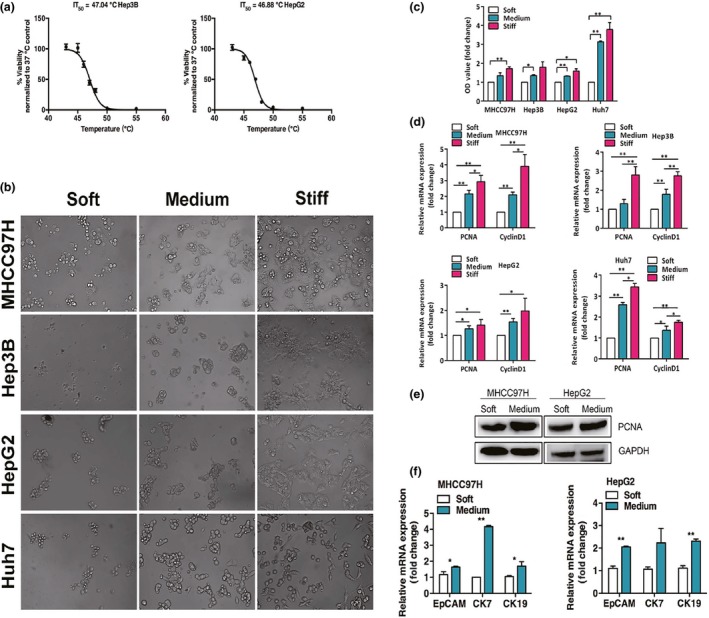
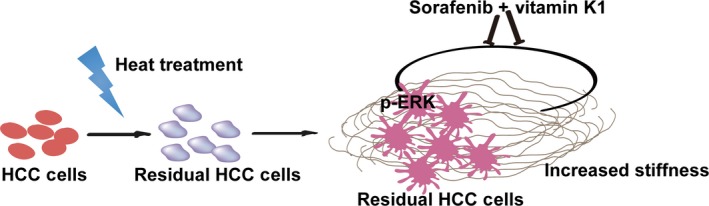
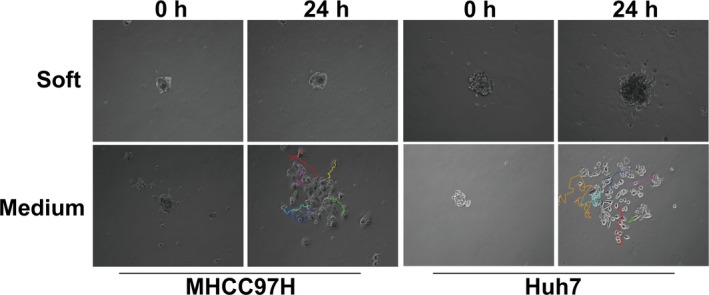
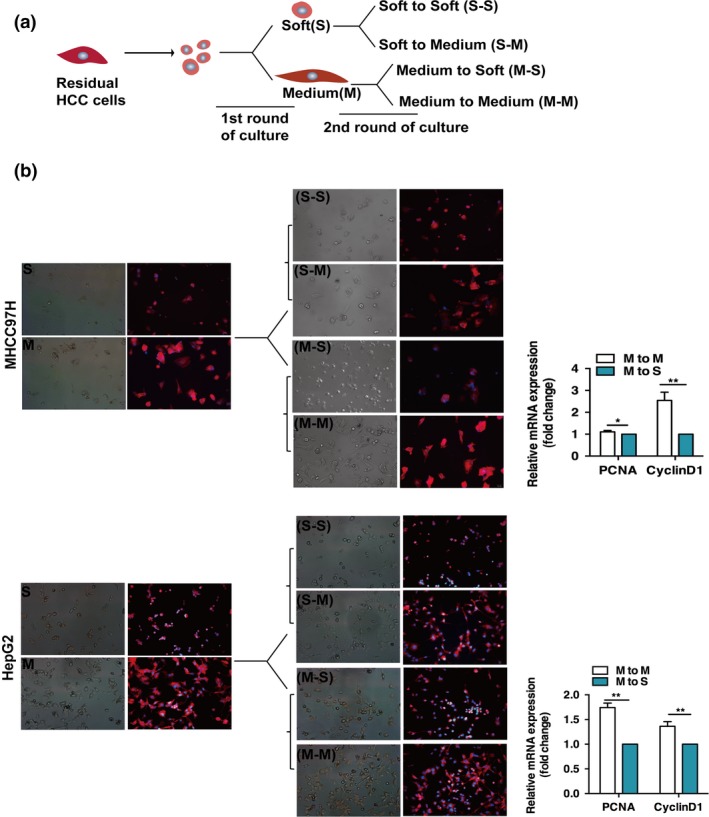
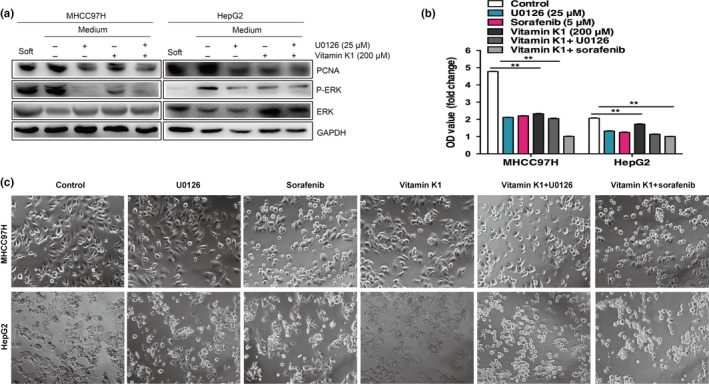
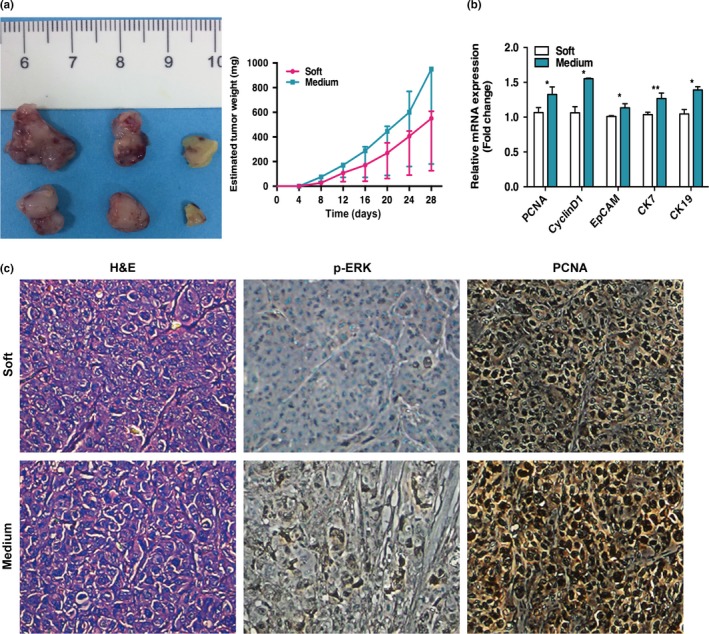
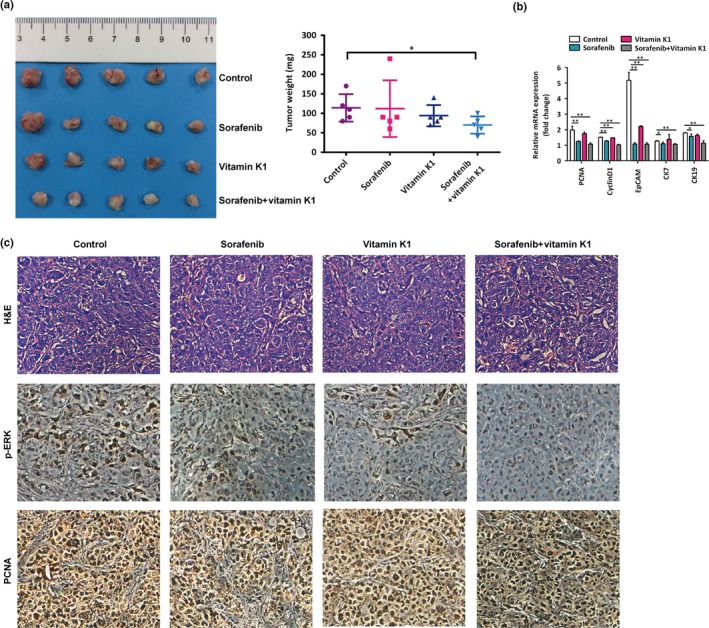
Aggravated behaviors of hepatocellular carcinoma (HCC) will occur after inadequate thermal ablation. However, its underlying mechanisms are not fully understood. Here, we assessed whether the increased matrix stiffness after thermal ablation could promote the progression of residual HCC. Heat-treated residual HCC cells were cultured on tailorable 3D gel with different matrix stiffness, simulating the changed physical environment after thermal ablation, and then the mechanical alterations of matrix stiffness on cell phenotypes were explored. Increased stiffness was found to significantly promote the proliferation of the heat-treated residual HCC cells when the cells were cultured on stiffer versus soft supports, which was associated with stiffness-dependent regulation of ERK phosphorylation. Heat-exposed HCC cells cultured on stiffer supports showed enhanced motility. More importantly, vitamin K1 reduced stiffness-dependent residual HCC cell proliferation by inhibiting ERK phosphorylation and suppressed the in vivo tumor growth, which was further enhanced by combining with sorafenib. Increased matrix stiffness promotes the progression of heat-treated residual HCC cells, proposing a new mechanism of an altered biomechanical environment after thermal ablation accelerates HCC development. Vitamin K1 plus sorafenib can reverse this protumor effect.
热消融不充分后会出现肝细胞癌(HCC)的加重行为。然而,其潜在机制尚未完全阐明。在此,我们评估了热消融后增加的基质硬度是否会促进残留HCC的进展。将热处理后的残留HCC细胞培养在具有不同基质硬度的可定制3D凝胶上,模拟热消融后改变的物理环境,然后探索基质硬度对细胞表型的力学改变。当细胞在较硬与较软的支持物上培养时,发现硬度增加会显著促进热处理后残留HCC细胞的增殖,这与ERK磷酸化的硬度依赖性调节有关。在较硬支持物上培养的热暴露HCC细胞显示出增强的运动性。更重要的是,维生素K1通过抑制ERK磷酸化降低了硬度依赖性残留HCC细胞增殖,并抑制了体内肿瘤生长,与索拉非尼联合使用时这种作用进一步增强。增加的基质硬度促进了热处理后残留HCC细胞的进展,提出了热消融后生物力学环境改变加速HCC发展的新机制。维生素K1加索拉非尼可逆转这种促肿瘤作用。