Ito Jumpei, Sugimoto Ryota, Nakaoka Hirofumi, Yamada Shiro, Kimura Tetsuaki, Hayano Takahide, Inoue Ituro
Division of Human Genetics, Department of Integrated Genetics, National Institute of Genetics, 1111 Yata, Mishima, Shizuoka, Japan.
Department of Genetics, School of Life Science, SOKENDAI (The Graduate University for Advanced Studies), 1111 Yata, Mishima, Shizuoka, Japan.
PLoS Genet. 2017 Jul 12;13(7):e1006883. doi: 10.1371/journal.pgen.1006883. eCollection 2017 Jul.
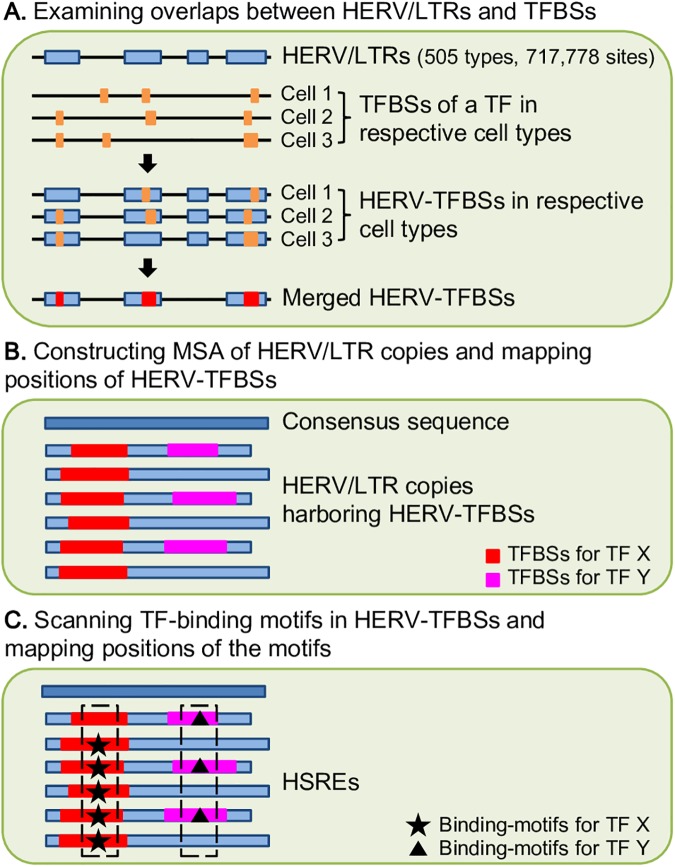
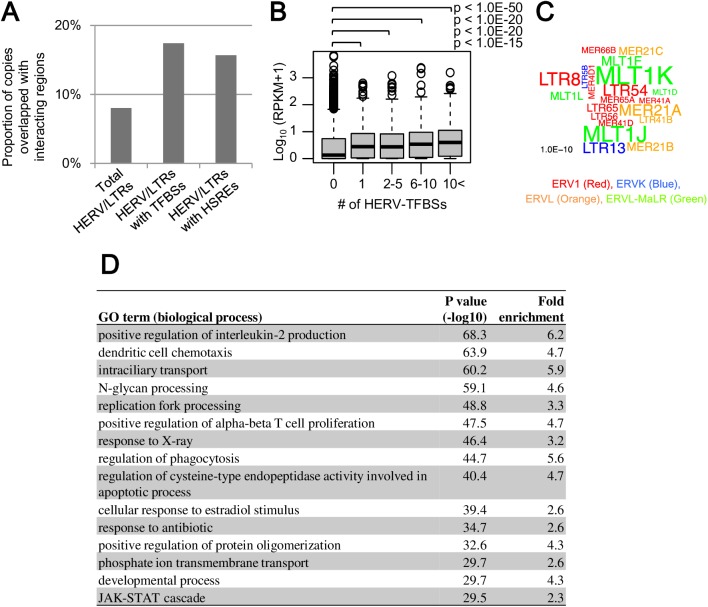
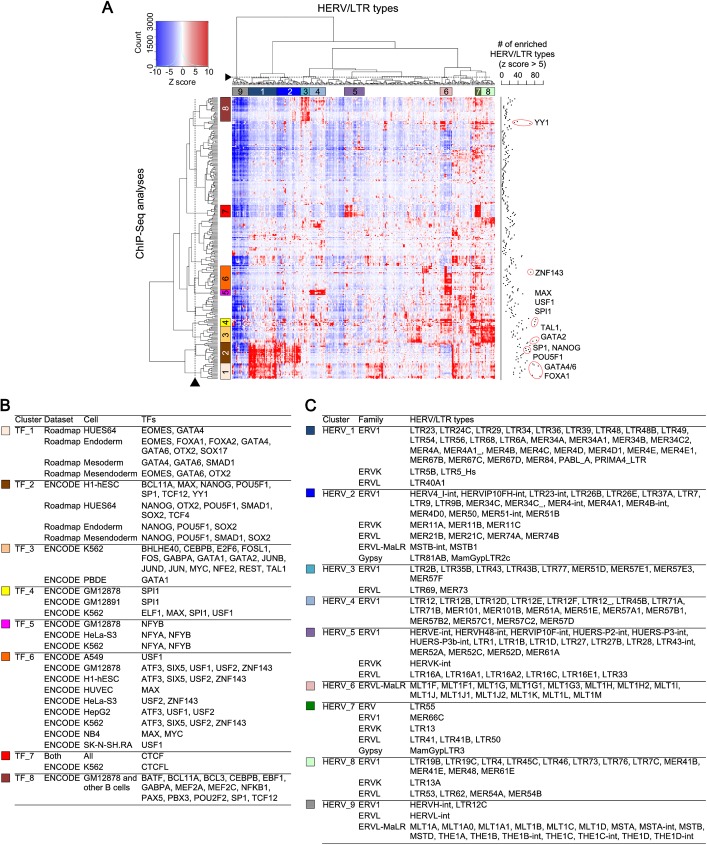
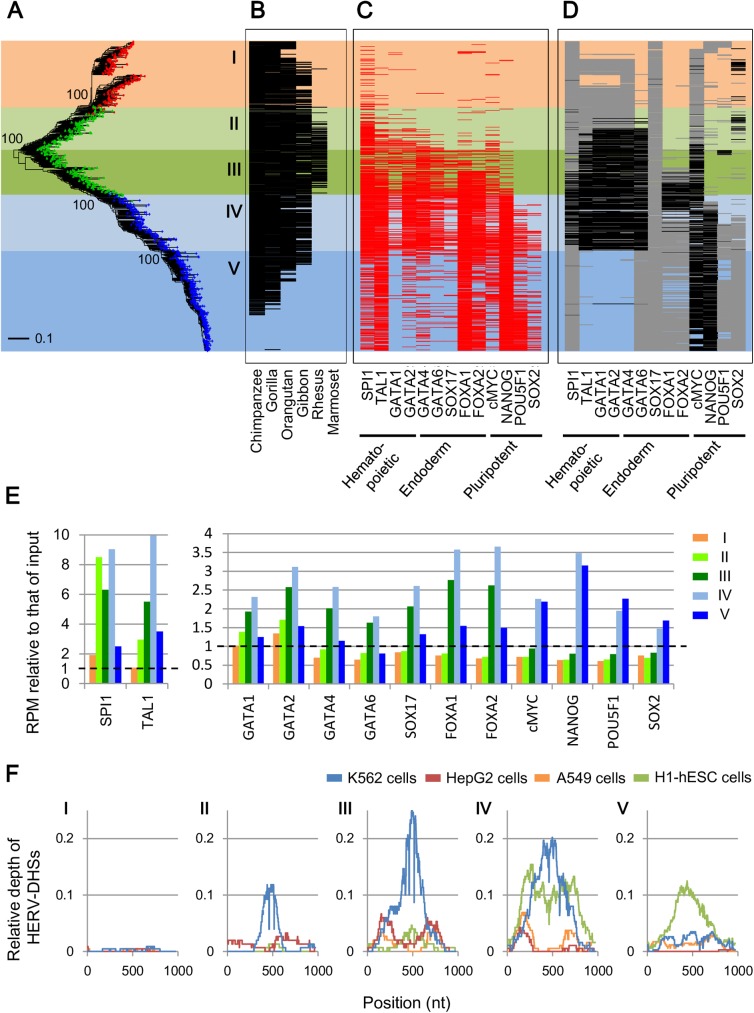
Human endogenous retroviruses (HERVs) and other long terminal repeat (LTR)-type retrotransposons (HERV/LTRs) have regulatory elements that possibly influence the transcription of host genes. We systematically identified and characterized these regulatory elements based on publicly available datasets of ChIP-Seq of 97 transcription factors (TFs) provided by ENCODE and Roadmap Epigenomics projects. We determined transcription factor-binding sites (TFBSs) using the ChIP-Seq datasets and identified TFBSs observed on HERV/LTR sequences (HERV-TFBSs). Overall, 794,972 HERV-TFBSs were identified. Subsequently, we identified "HERV/LTR-shared regulatory element (HSRE)," defined as a TF-binding motif in HERV-TFBSs, shared within a substantial fraction of a HERV/LTR type. HSREs could be an indication that the regulatory elements of HERV/LTRs are present before their insertions. We identified 2,201 HSREs, comprising specific associations of 354 HERV/LTRs and 84 TFs. Clustering analysis showed that HERV/LTRs can be grouped according to the TF binding patterns; HERV/LTR groups bounded to pluripotent TFs (e.g., SOX2, POU5F1, and NANOG), embryonic endoderm/mesendoderm TFs (e.g., GATA4/6, SOX17, and FOXA1/2), hematopoietic TFs (e.g., SPI1 (PU1), GATA1/2, and TAL1), and CTCF were identified. Regulatory elements of HERV/LTRs tended to locate nearby and/or interact three-dimensionally with the genes involved in immune responses, indicating that the regulatory elements play an important role in controlling the immune regulatory network. Further, we demonstrated subgroup-specific TF binding within LTR7, LTR5B, and LTR5_Hs, indicating that gains or losses of the regulatory elements occurred during genomic invasions of the HERV/LTRs. Finally, we constructed dbHERV-REs, an interactive database of HERV/LTR regulatory elements (http://herv-tfbs.com/). This study provides fundamental information in understanding the impact of HERV/LTRs on host transcription, and offers insights into the transcriptional modulation systems of HERV/LTRs and ancestral HERVs.
人类内源性逆转录病毒(HERVs)和其他长末端重复序列(LTR)型逆转座子(HERV/LTRs)具有可能影响宿主基因转录的调控元件。我们基于ENCODE和表观基因组路线图项目提供的97种转录因子(TFs)的ChIP-Seq公开数据集,系统地鉴定并表征了这些调控元件。我们使用ChIP-Seq数据集确定转录因子结合位点(TFBSs),并鉴定在HERV/LTR序列上观察到的TFBSs(HERV-TFBSs)。总体而言,共鉴定出794,972个HERV-TFBSs。随后,我们鉴定了“HERV/LTR共享调控元件(HSRE)”,其被定义为HERV-TFBSs中的转录因子结合基序,在很大一部分HERV/LTR类型中共享。HSREs可能表明HERV/LTRs的调控元件在其插入之前就已存在。我们鉴定出2,201个HSREs,包括354个HERV/LTRs和84个TFs的特定关联。聚类分析表明,HERV/LTRs可根据转录因子结合模式进行分组;鉴定出与多能转录因子(如SOX2、POU5F1和NANOG)、胚胎内胚层/中胚层内胚层转录因子(如GATA4/6、SOX17和FOXA1/2)、造血转录因子(如SPI1(PU1)、GATA1/2和TAL1)以及CTCF结合的HERV/LTR组。HERV/LTRs的调控元件倾向于定位在参与免疫反应的基因附近和/或与其进行三维相互作用,这表明调控元件在控制免疫调节网络中起重要作用。此外,我们证明了在LTR7、LTR5B和LTR5_Hs内存在亚组特异性转录因子结合,表明在HERV/LTRs的基因组入侵过程中发生了调控元件的获得或丢失。最后,我们构建了dbHERV-REs,一个HERV/LTR调控元件的交互式数据库(http://herv-tfbs.com/)。本研究为理解HERV/LTRs对宿主转录的影响提供了基础信息,并为HERV/LTRs和祖先HERVs的转录调控系统提供了见解。