Department of Population Medicine and Diagnostic Sciences, College of Veterinary Medicine, Cornell University, Ithaca, NY, USA.
Department of Internal Medicine, School of Veterinary Medicine and Animal Science, University of São Paulo, São Paulo, Brazil.
Microbiome. 2017 Jul 12;5(1):74. doi: 10.1186/s40168-017-0291-5.
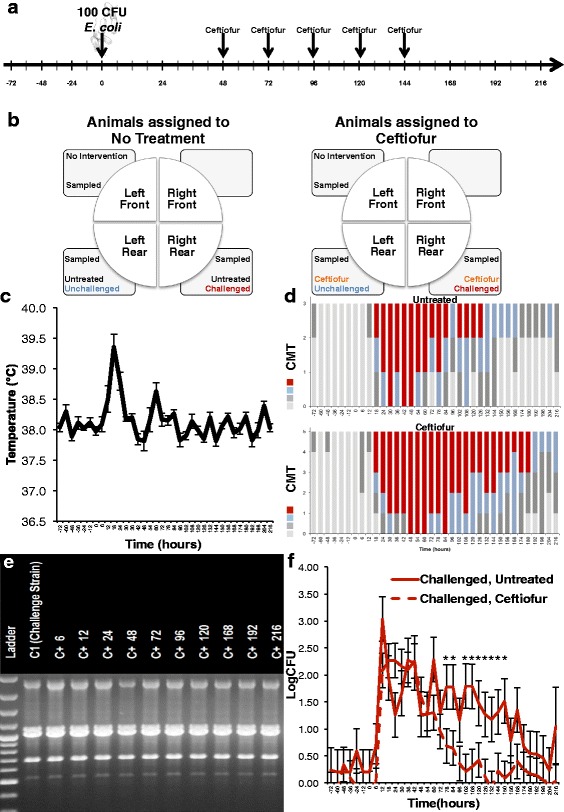
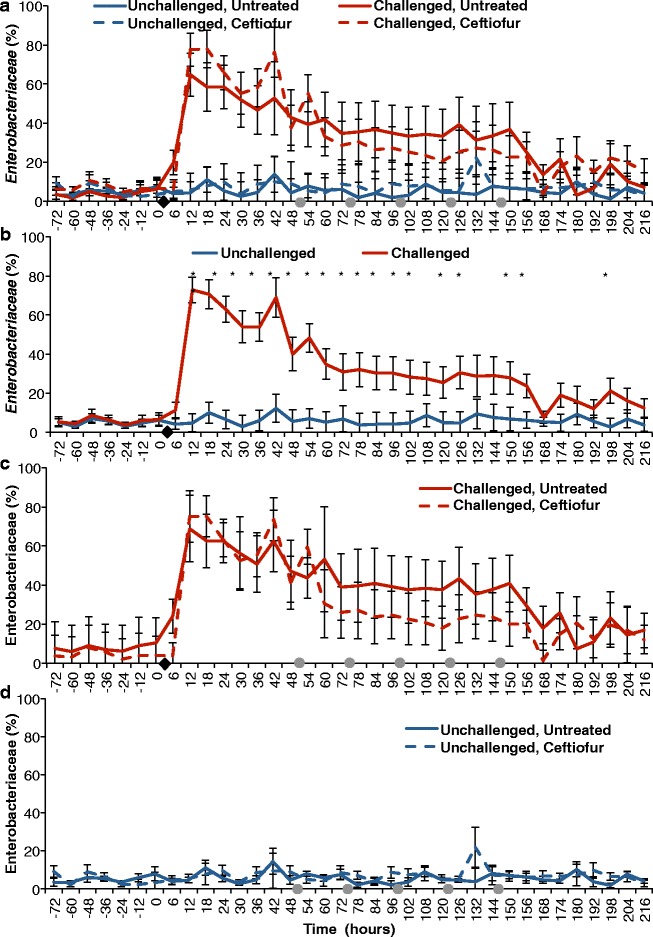
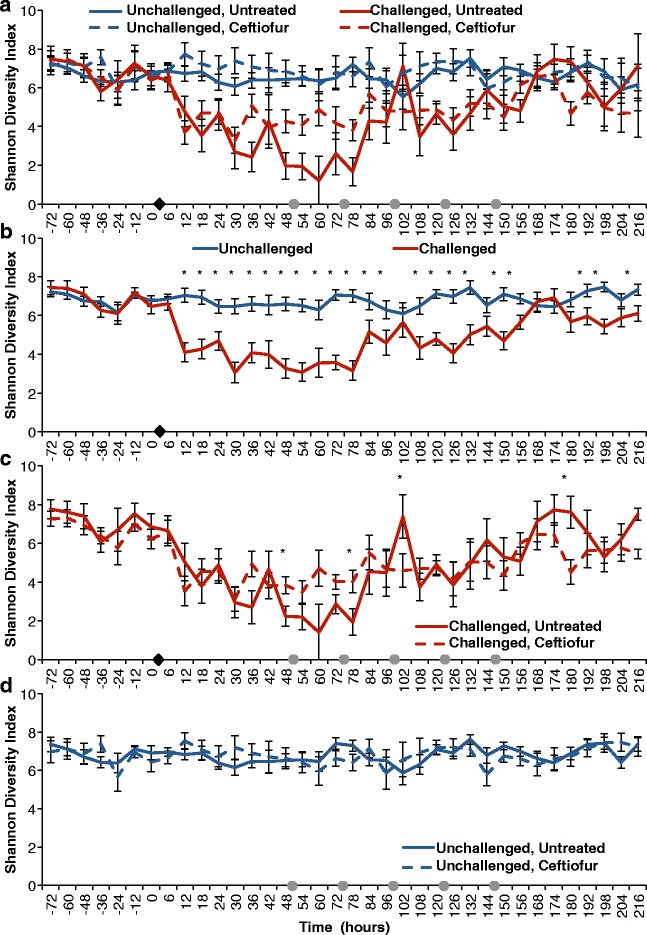
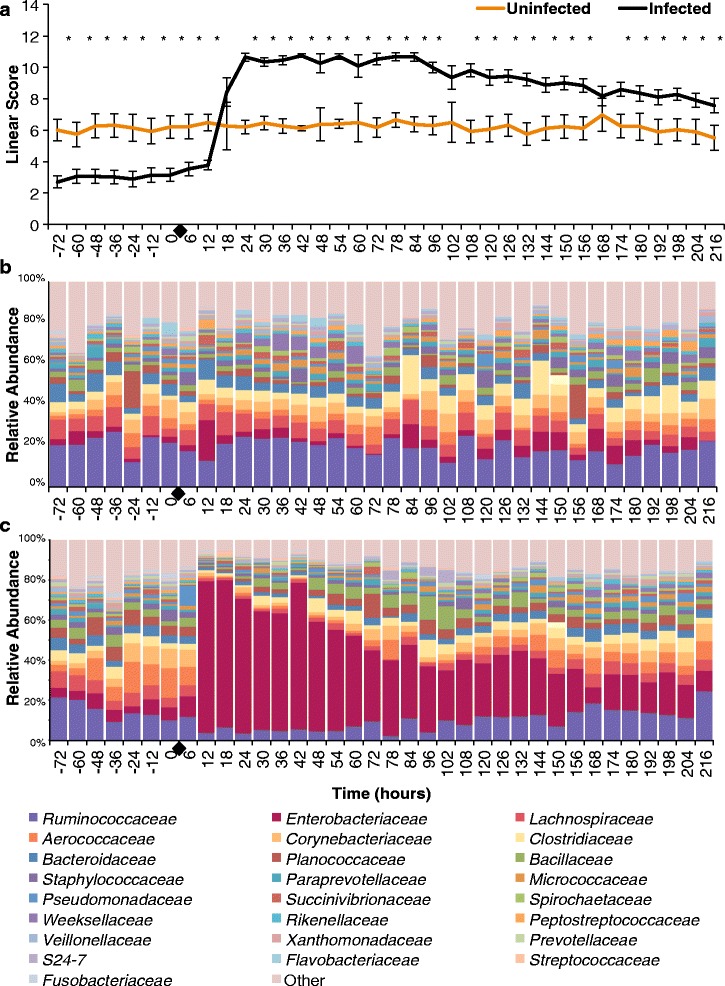
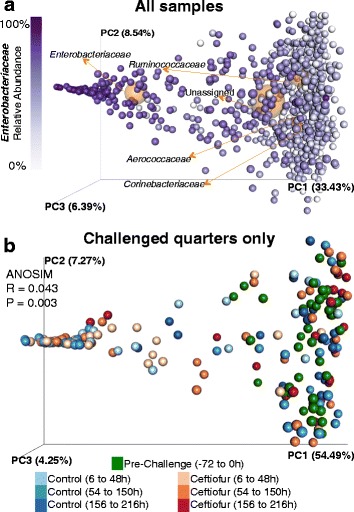
The use of antimicrobials in food animals and the emergence of antimicrobial resistance are global concerns. Ceftiofur is the only third-generation cephalosporin labeled for veterinary use in the USA, and it is the drug of choice in the majority of dairy farms for the treatment of mastitis. Here, we use next-generation sequencing to describe longitudinal changes that occur in the milk microbiome before, during, and after infection and treatment with ceftiofur. Twelve animals were intramammary challenged with Escherichia coli in one quarter and randomly allocated to receive intramammary treatment with ceftiofur (5d) or untreated controls. Serial samples were collected from -72 to 216 h relative to challenge from the challenged quarter, an ipsilateral quarter assigned to the same treatment group, and from a third quarter that did not undergo intervention.
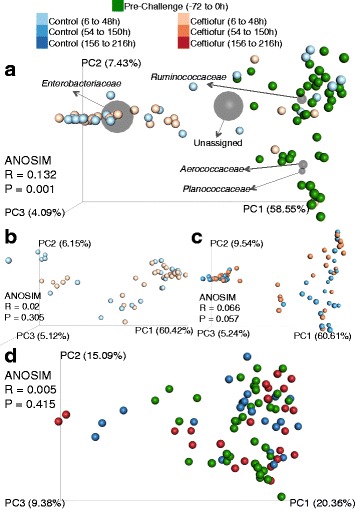
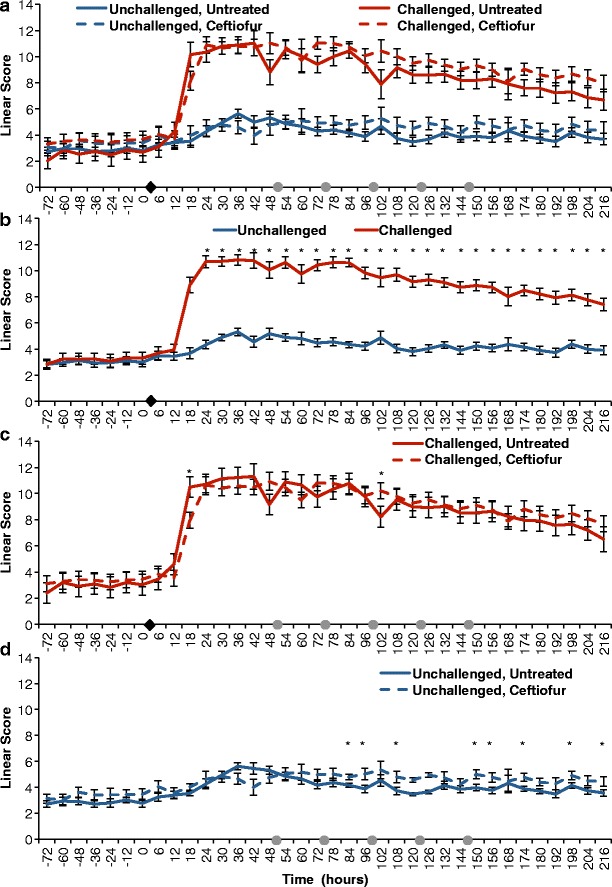
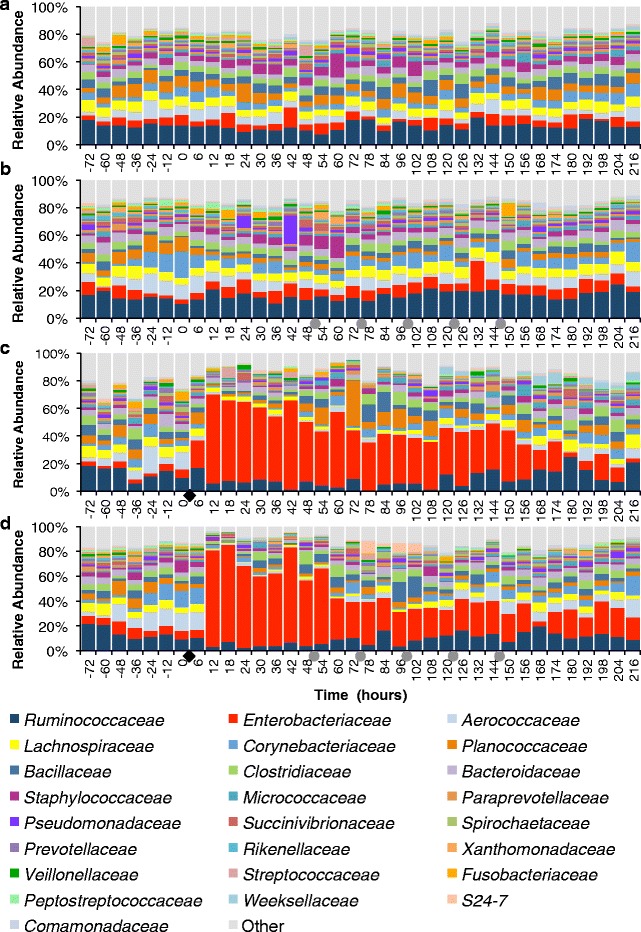
Infection with E. coli dramatically impacted microbial diversity. Ceftiofur significantly decreased LogCFUs but had no significant effect on the milk microbiome, rate of pathogen clearance, or somatic cell count. At the end of the study, the microbial profile of infected quarters was indistinguishable from pre-challenge samples in both treated and untreated animals. Intramammary infusion with ceftiofur did not alter the healthy milk (i.e., milk devoid of clots or serous appearance and collected from a mammary gland that shows no clinical signs of mastitis) microbiome.
Our results indicate that the mammary gland harbors a resilient microbiome, capable of reestablishing itself after experimental infection with E. coli independent of antimicrobial treatment.
在食用动物中使用抗生素和出现抗生素耐药性是全球关注的问题。头孢噻呋是唯一一种获得美国兽医使用许可的第三代头孢菌素,它是大多数奶牛场治疗乳腺炎的首选药物。在这里,我们使用下一代测序技术来描述在感染和使用头孢噻呋治疗之前、期间和之后牛奶微生物组发生的纵向变化。12 头动物的一个乳区被大肠杆菌感染,并随机分配接受头孢噻呋(5 天)的乳内治疗或未接受治疗的对照。从感染前的-72 小时到 216 小时,从受感染的乳区、分配给相同治疗组的同侧乳区和未接受干预的第三个乳区连续采集样本。
大肠杆菌感染显著影响了微生物多样性。头孢噻呋显著降低了 LogCFUs,但对牛奶微生物组、病原体清除率或体细胞计数没有显著影响。在研究结束时,受感染乳区的微生物谱在接受和未接受治疗的动物中与感染前的样本无法区分。头孢噻呋的乳内输注并未改变健康牛奶(即没有凝块或浆液外观的牛奶,并且从没有乳腺炎临床症状的乳腺中采集)的微生物组。
我们的结果表明,乳腺拥有一个有弹性的微生物组,能够在大肠杆菌实验感染后独立于抗生素治疗重新建立自身。