Kosten Ilona Jennifer, van de Ven Rieneke, Thon Maria, Gibbs Susan, de Gruijl Tanja D
Department of Dermatology, VU University Medical Center, Amsterdam, the Netherlands.
Department of Medical Oncology, VU University Medical Center, Amsterdam, the Netherlands.
PLoS One. 2017 Jul 13;12(7):e0180333. doi: 10.1371/journal.pone.0180333. eCollection 2017.
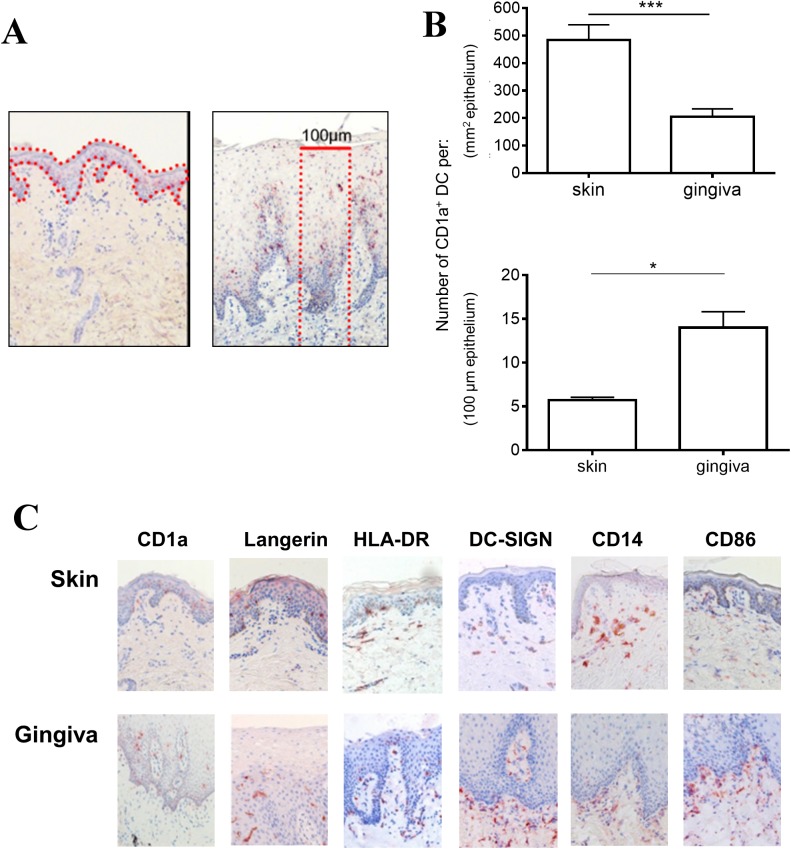
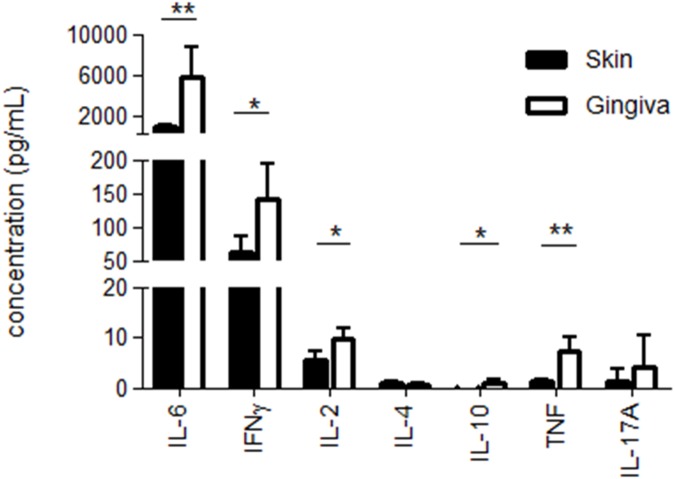
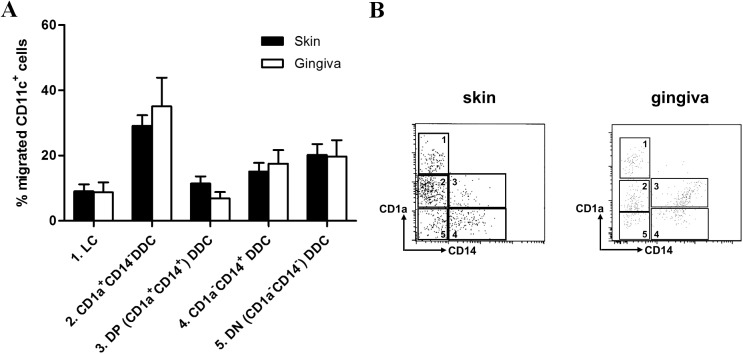
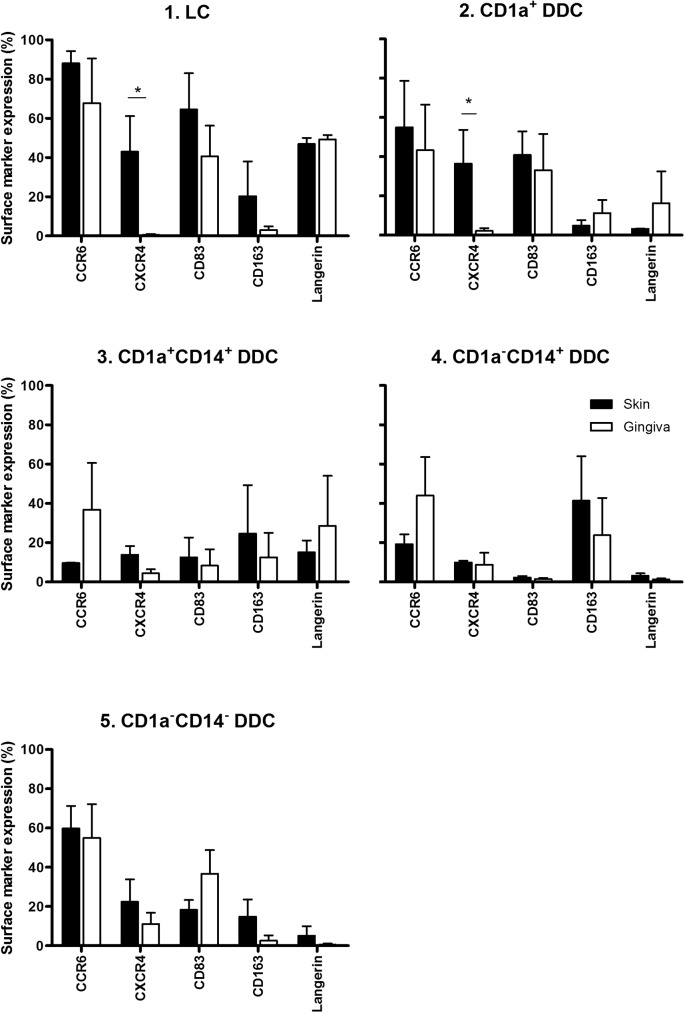
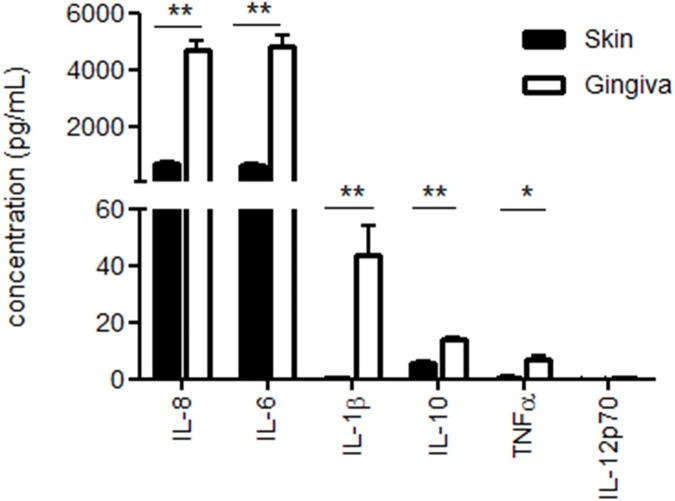
Antigen exposure to oral mucosa is generally thought to lead to immune tolerance induction. However, very little is known about the subset composition and function of dendritic cells (DC) migrating from human oral mucosa. Here we show that migratory DC from healthy human gingival explants consist of the same phenotypic subsets in the same frequency distribution as DC migrating from human skin. The gingival CD1a+ Langerhans cell and interstitial DC subsets lacked CXCR4 expression in contrast to their cutaneous counterparts, pointing to different migration mechanisms, consistent with previous observations in constructed skin and gingival equivalents. Remarkably, without any exogenous conditioning, gingival explants released higher levels of inflammatory cytokines than human skin explants, resulting in higher DC migration rates and a superior ability of migrated DC to prime allogeneic T cells and to induce type-1 effector T cell differentiation. From these observations we conclude that rather than an intrinsic ability to induce T cell tolerance, DC migrating from oral mucosa may have a propensity to induce effector T cell immunity and maintain a high state of alert against possible pathogenic intruders in the steady state. These findings may have implications for oral immunization strategies.
一般认为,抗原暴露于口腔黏膜会导致免疫耐受的诱导。然而,对于从人类口腔黏膜迁移的树突状细胞(DC)的亚群组成和功能却知之甚少。在这里,我们表明,来自健康人牙龈外植体的迁移性DC与从人类皮肤迁移的DC具有相同的表型亚群,且频率分布相同。牙龈CD1a +朗格汉斯细胞和间质DC亚群与其皮肤对应物不同,缺乏CXCR4表达,这表明其迁移机制不同,这与先前在构建的皮肤和牙龈等效物中的观察结果一致。值得注意的是,在没有任何外源性预处理的情况下,牙龈外植体释放的炎性细胞因子水平高于人类皮肤外植体,导致更高的DC迁移率以及迁移的DC激活同种异体T细胞和诱导1型效应T细胞分化的能力更强。从这些观察结果中我们得出结论,从口腔黏膜迁移的DC可能倾向于诱导效应T细胞免疫,并在稳态下对可能的致病入侵者保持高度警惕状态,而不是具有诱导T细胞耐受的内在能力。这些发现可能对口腔免疫策略有影响。