Department of Preventive Dentistry, Academic Centre for Dentistry Amsterdam (ACTA), University of Amsterdam and Vrije Universiteit Amsterdam, Amsterdam, Netherlands.
Department of Oral Cell Biology, Academic Centre for Dentistry Amsterdam (ACTA), University of Amsterdam and Vrije Universiteit Amsterdam, Amsterdam, Netherlands.
Front Cell Infect Microbiol. 2019 Aug 7;9:282. doi: 10.3389/fcimb.2019.00282. eCollection 2019.
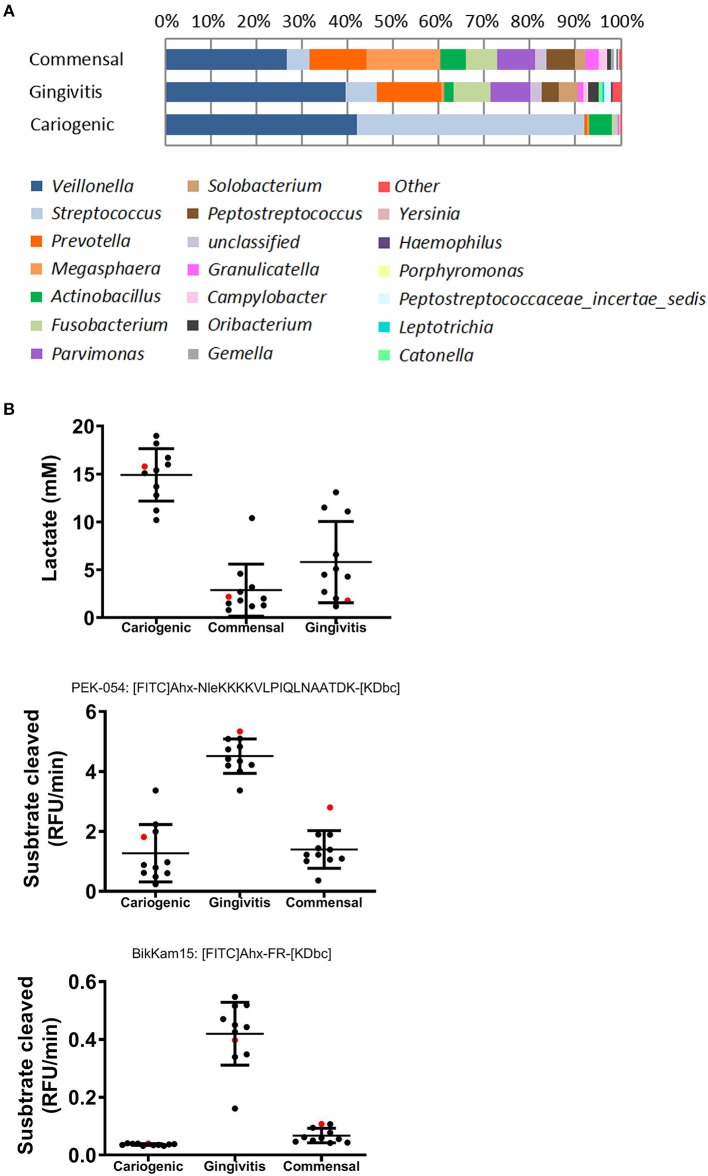
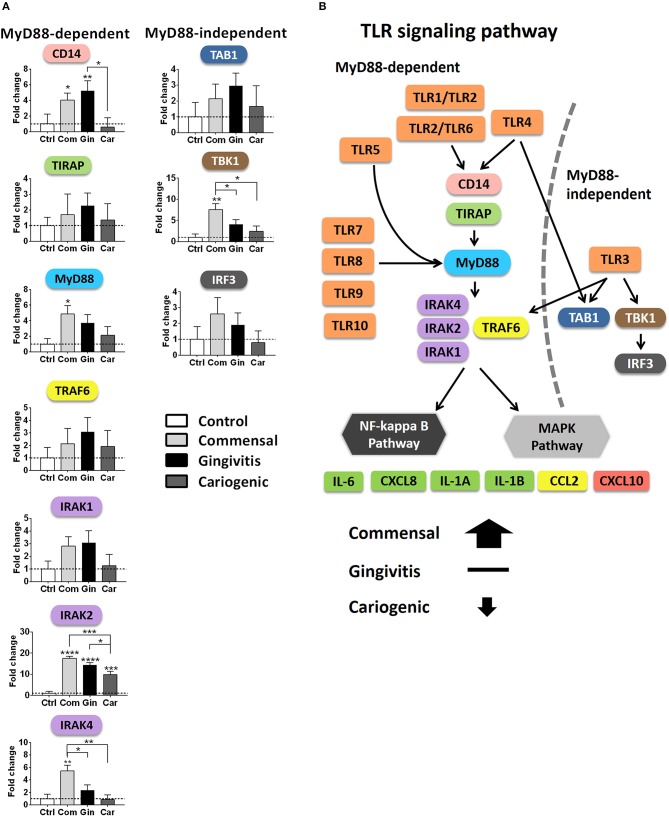
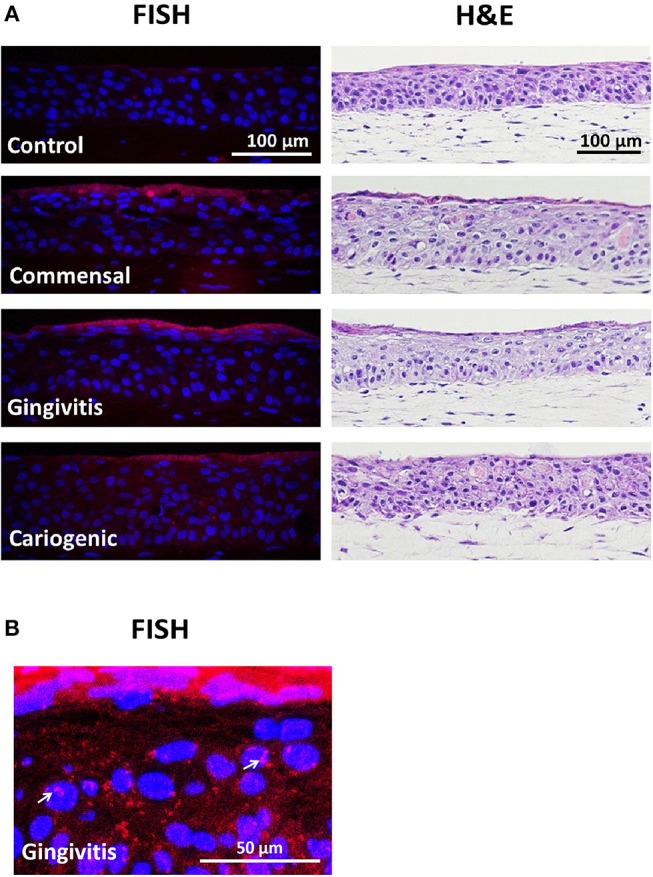
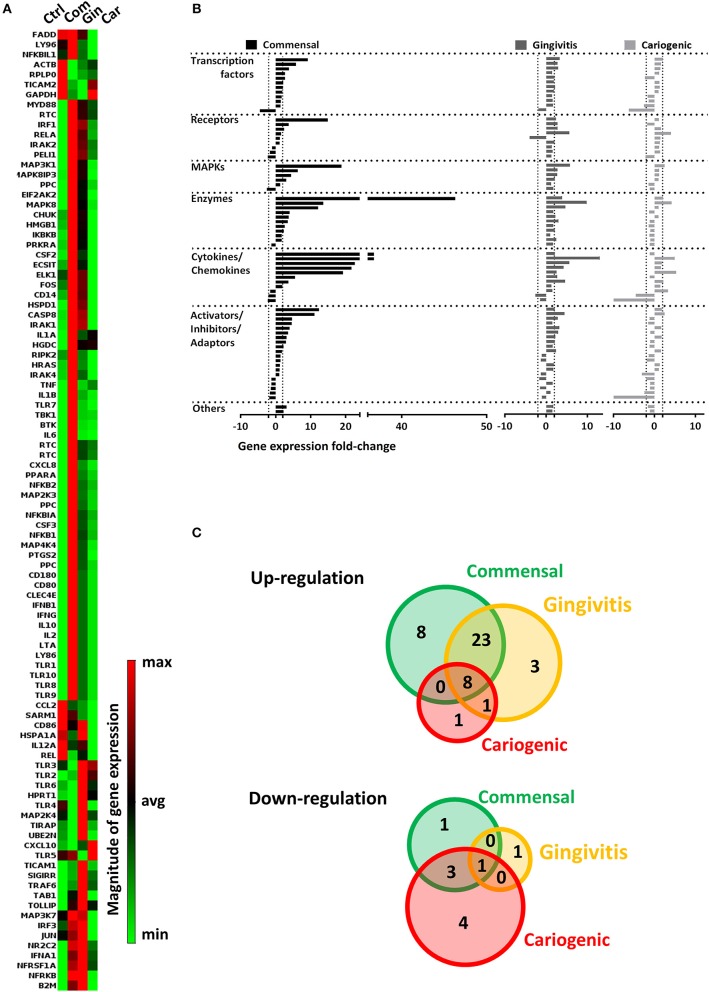
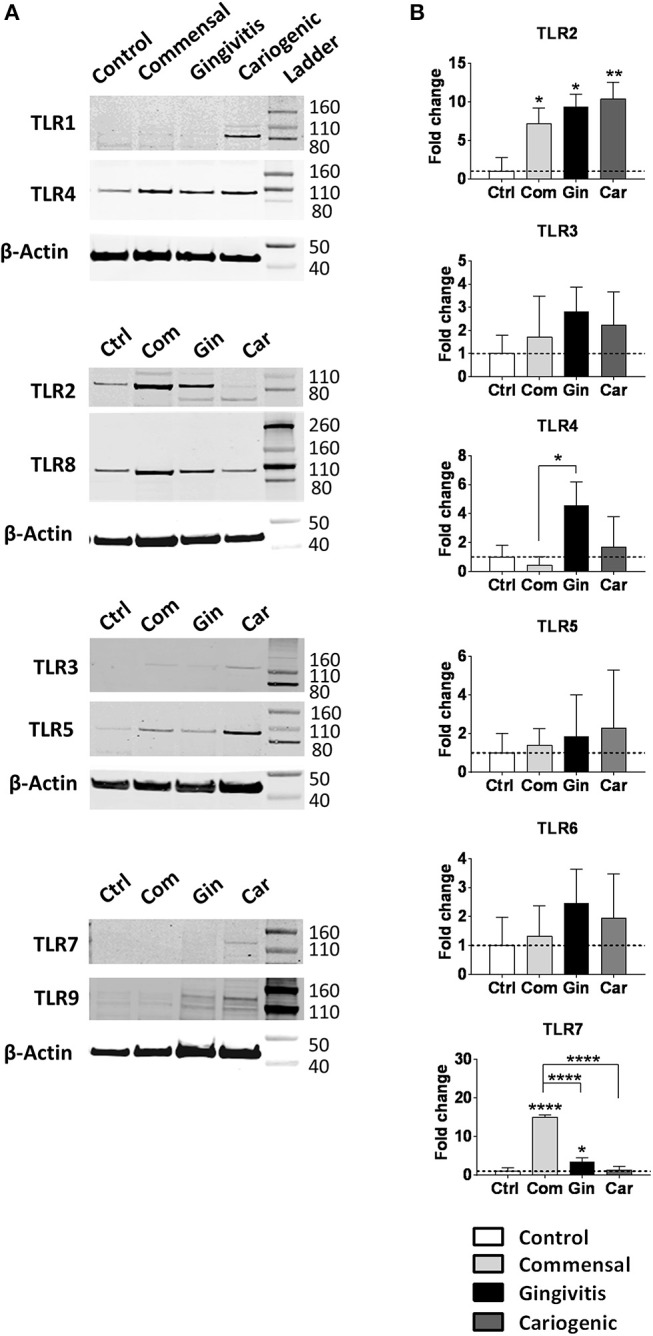
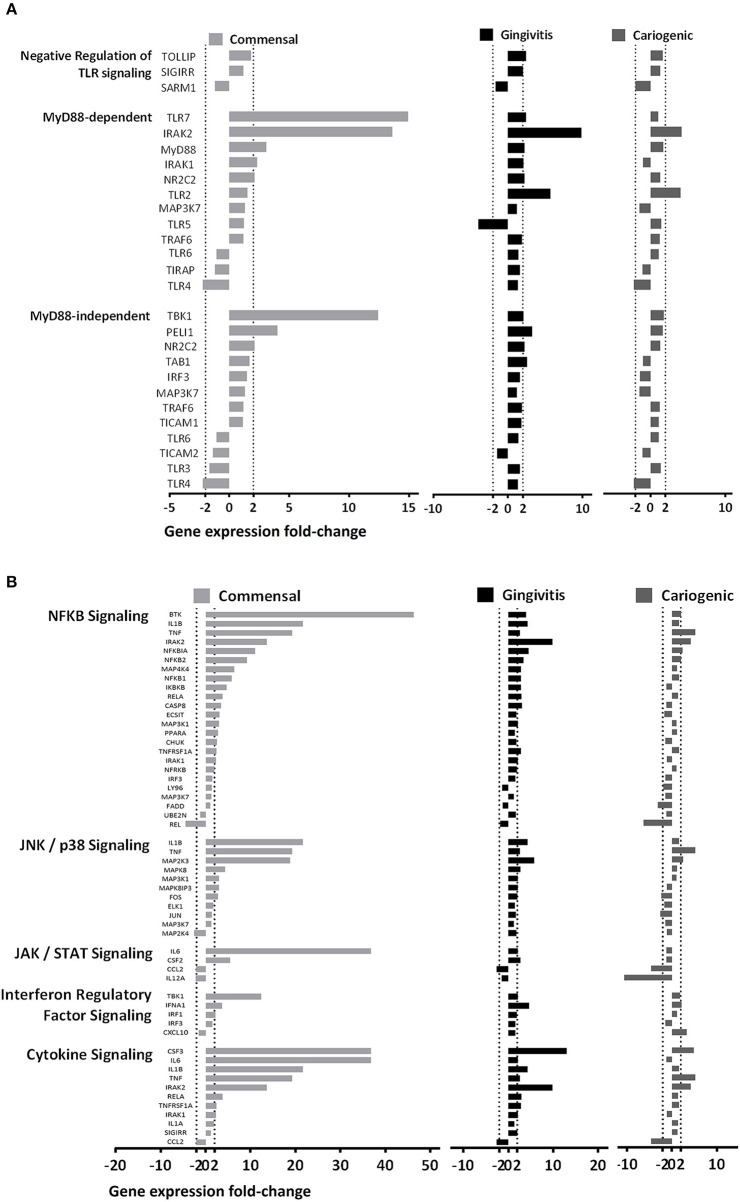
The balance between the host and microbe is pivotal for oral health. A dysbiotic oral microbiome and the subsequent host inflammatory response are causes for the most common dental problems, such as periodontitis and caries. Classically, toll-like receptors (TLRs) are known to play important roles in host-microbe interactions by recognizing pathogens and activating innate immunity. However, emerging evidence suggests that commensals may also exploit TLRs to induce tolerance to the benefit of the host, especially in oral mucosa which is heavily colonized by abundant microbes. How TLRs and downstream signaling events are affected by different oral microbial communities to regulate host responses is still unknown. To compare such human host-microbe interactions , we exposed a reconstructed human gingiva (RHG) to commensal or pathogenic (gingivitis, cariogenic) multi-species oral biofilms cultured from human saliva. These biofilms contain like phylogenic numbers and typical bacterial genera. After 24 h biofilm exposure, TLR protein and gene expression of 84 TLR pathway related genes were investigated. Commensal and pathogenic biofilms differentially regulated TLR protein expression. Commensal biofilm up-regulated the transcription of a large group of key genes, which are involved in TLR signaling, including TLR7, the MyD88-dependent pathway (CD14, MyD88, TIRAP, TRAF6, IRAKs), MyD88-independent pathway (TAB1, TBK1, IRF3), and their downstream signaling pathways (NF-κB and MAPK pathways). In comparison, gingivitis biofilm activated fewer genes (e.g., TLR4) and cariogenic biofilm suppressed CD14, IRAK4, and IRF3 transcription. Fluorescence hybridization staining showed the rRNA of the topically applied and invaded bacteria, and histology showed that the biofilms had no obvious detrimental effect on RHG morphology. These results show an important role of TLR signaling pathways in regulating host-microbe interactions: when a sterile gingival tissue is exposed to commensals, a strong immune activation occurs which may prime the host against potential challenges in order to maintain oral host-microbe homeostasis. In contrast, pathogenic biofilms stimulate a weaker immune response which might facilitate immune evasion thus enabling pathogens to penetrate undetected into the tissues.
宿主与微生物之间的平衡对于口腔健康至关重要。失调的口腔微生物组和随后的宿主炎症反应是最常见的牙科问题的原因,如牙周炎和龋齿。经典地, Toll 样受体(TLR)被认为通过识别病原体和激活先天免疫在宿主-微生物相互作用中发挥重要作用。然而,新出现的证据表明,共生体也可能利用 TLR 诱导对宿主有益的耐受,特别是在口腔黏膜中,大量微生物定植于此。TLR 及其下游信号事件如何受到不同的口腔微生物群落的影响,以调节宿主反应仍然未知。为了比较这种人类宿主-微生物相互作用,我们将重建的人类牙龈(RHG)暴露于从人唾液中培养的共生或致病(牙龈炎,致龋)多物种口腔生物膜。这些生物膜含有类似系统发育数量和典型细菌属的微生物。暴露于生物膜 24 小时后,研究了 84 个 TLR 通路相关基因的 TLR 蛋白和基因表达。共生和致病生物膜差异调节 TLR 蛋白表达。共生生物膜上调了一大组关键基因的转录,这些基因参与 TLR 信号转导,包括 TLR7、MyD88 依赖性途径(CD14、MyD88、TIRAP、TRAF6、IRAKs)、MyD88 非依赖性途径(TAB1、TBK1、IRF3)及其下游信号通路(NF-κB 和 MAPK 通路)。相比之下,牙龈炎生物膜激活的基因较少(例如 TLR4),致龋生物膜抑制 CD14、IRAK4 和 IRF3 转录。荧光杂交染色显示了局部应用和侵袭细菌的 rRNA,组织学显示生物膜对 RHG 形态没有明显的不良影响。这些结果表明 TLR 信号通路在调节宿主-微生物相互作用中起着重要作用:当无菌的牙龈组织暴露于共生体时,会发生强烈的免疫激活,这可能使宿主对潜在的挑战做好准备,以维持口腔宿主-微生物的平衡。相比之下,致病生物膜刺激较弱的免疫反应,这可能有利于免疫逃避,从而使病原体能够未被察觉地穿透组织。