Voissiere Aurélien, Jouberton Elodie, Maubert Elise, Degoul Françoise, Peyrode Caroline, Chezal Jean-Michel, Miot-Noirault Élisabeth
Université Clermont Auvergne, INSERM, U1240 Imagerie Moléculaire et Stratégies Théranostiques, Clermont-Ferrand, France.
PLoS One. 2017 Jul 13;12(7):e0181340. doi: 10.1371/journal.pone.0181340. eCollection 2017.
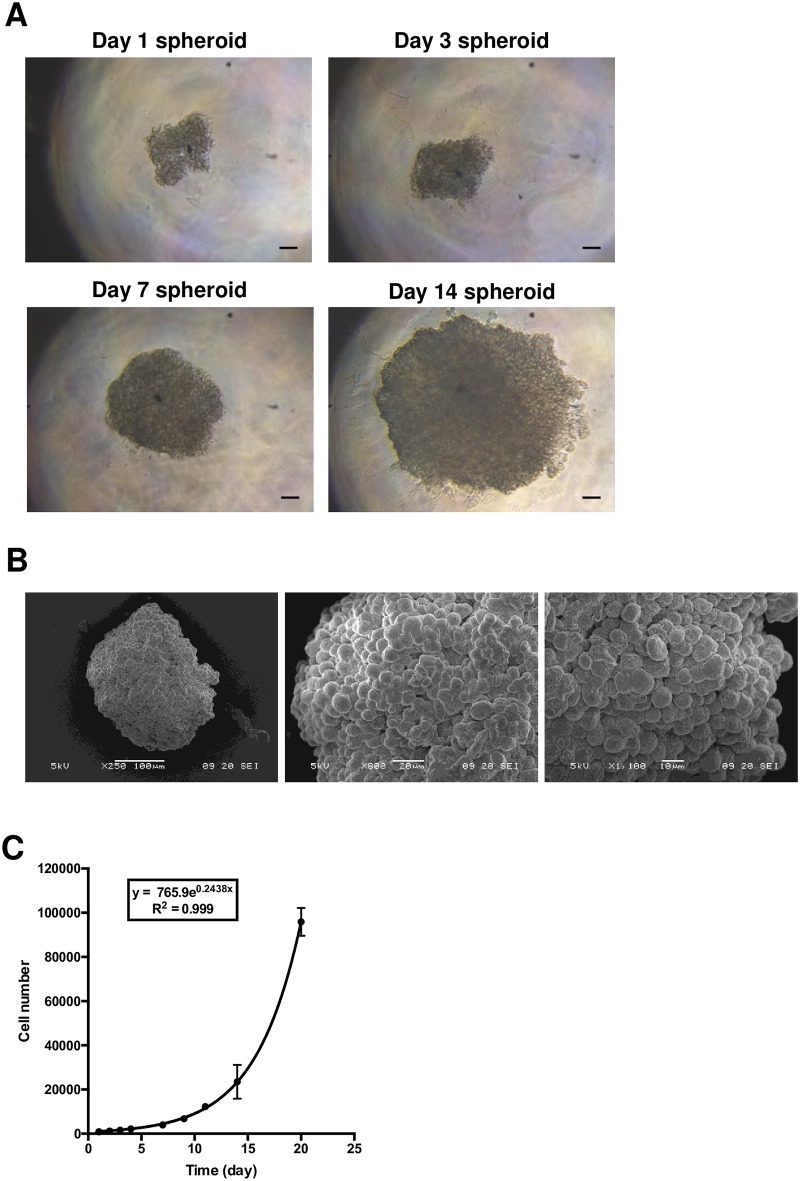
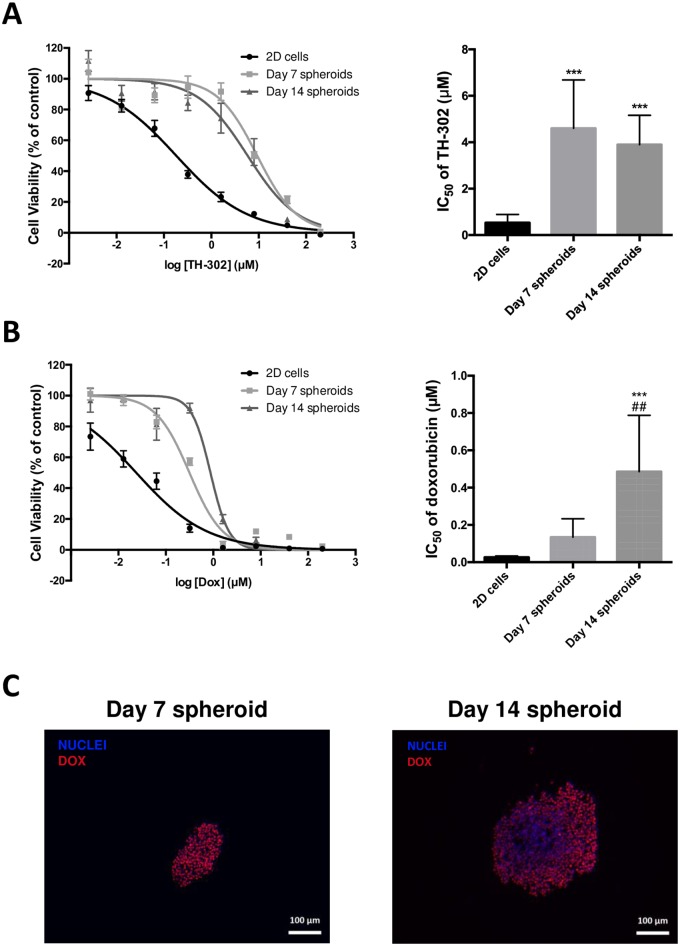
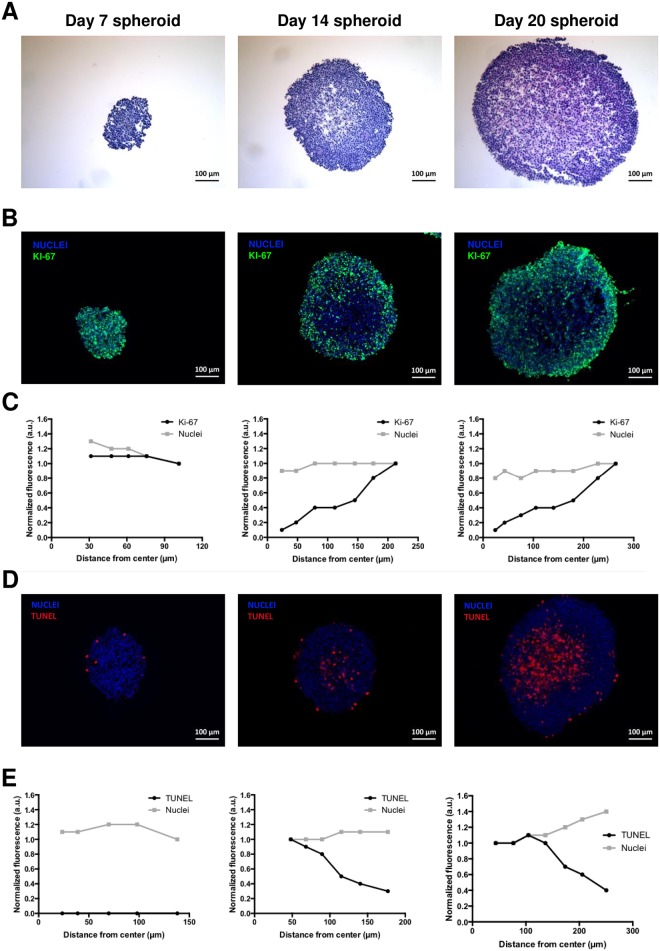
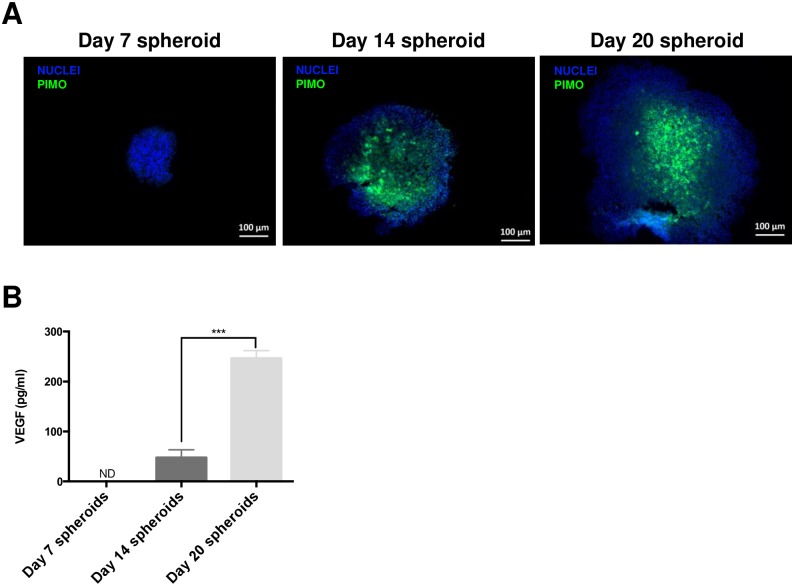
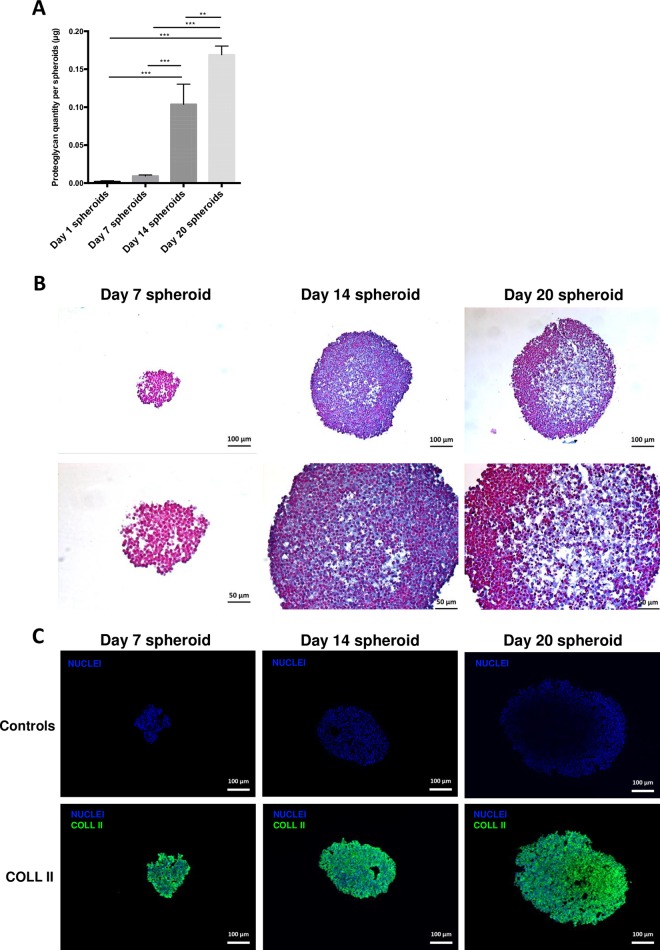
It has been suggested that chemoresistance of chondrosarcoma (CHS), the cartilage tumor, is caused by the phenotypic microenvironmental features of the tumor tissue, mainly the chondrogenic extracellular matrix (ECM), and hypoxia. We developed and characterized a multicellular tumor spheroid (MCTS) of human chondrosarcoma HEMC-SS cells to gain insight into tumor cell biology and drug response. At Day 7, HEMC-SS spheroids exhibited a homogeneous distribution of proliferative Ki-67 positive cells, whereas in larger spheroids (Day 14 and Day 20), proliferation was mainly localized in the periphery. In the core of larger spheroids, apoptotic cells were evidenced by TUNEL assay, and hypoxia by pimonidazole staining. Interestingly, VEGF excretion, evidenced by ELISA on culture media, was detectable from Day 14 spheroids, and increased as the spheroids grew in size. HEMC-SS spheroids synthesized a chondrogenic extracellular matrix rich in glycosaminoglycans and type-2 collagen. Finally, we investigated the sensitivity of Day 7 and Day 14 chondrosarcoma MCTS to hypoxia-activated prodrug TH-302 and doxorubicin compared with their 2D counterparts. As expected, TH-302 exhibited higher cytotoxic activity on larger hypoxic spheroids (Day 14) than on non-hypoxic spheroids (Day 7), with multicellular resistance index (MCRI) values of 7.7 and 9.1 respectively. For doxorubicin, the larger-sized spheroids exhibited higher drug resistance (MCRI of 5.0 for Day 7 and 18.3 for Day 14 spheroids), possibly due to impeded drug penetration into the deep layer of spheroids, evidenced by its auto-fluorescence property. We have developed a model of human chondrosarcoma MCTS that combines an ECM rich in glycosaminoglycans with a high hypoxic core associated with VEGF excretion. This model could offer a more predictive in vitro chondrosarcoma system for screening drugs targeting tumor cells and their microenvironment.
有人提出,软骨肉瘤(CHS)这种软骨肿瘤的化学抗性是由肿瘤组织的表型微环境特征引起的,主要是软骨生成细胞外基质(ECM)和缺氧。我们开发并表征了人软骨肉瘤HEMC-SS细胞的多细胞肿瘤球体(MCTS),以深入了解肿瘤细胞生物学和药物反应。在第7天,HEMC-SS球体显示增殖性Ki-67阳性细胞分布均匀,而在较大的球体(第14天和第20天)中,增殖主要局限于周边。在较大球体的核心,TUNEL检测证明有凋亡细胞,匹莫硝唑染色证明有缺氧现象。有趣的是,通过对培养基进行ELISA检测发现,从第14天的球体开始可检测到VEGF分泌,并且随着球体尺寸的增大而增加。HEMC-SS球体合成了富含糖胺聚糖和2型胶原蛋白的软骨生成细胞外基质。最后,我们研究了第7天和第14天的软骨肉瘤MCTS与二维对应物相比对缺氧激活前药TH-302和阿霉素的敏感性。正如预期的那样,TH-302对较大的缺氧球体(第14天)表现出比对非缺氧球体(第7天)更高的细胞毒性活性,多细胞抗性指数(MCRI)值分别为7.7和9.1。对于阿霉素,较大尺寸的球体表现出更高的耐药性(第7天球体的MCRI为5.0,第14天球体的MCRI为18.3),这可能是由于药物渗透到球体深层受阻,其自身荧光特性证明了这一点。我们开发了一种人软骨肉瘤MCTS模型,该模型将富含糖胺聚糖的ECM与与VEGF分泌相关的高缺氧核心相结合。该模型可为筛选针对肿瘤细胞及其微环境的药物提供更具预测性的体外软骨肉瘤系统。