Northeast Forestry University, College of Information and Computer Engineering, Harbin, 150001, China.
Sci Rep. 2017 Jul 13;7(1):5349. doi: 10.1038/s41598-017-05776-1.
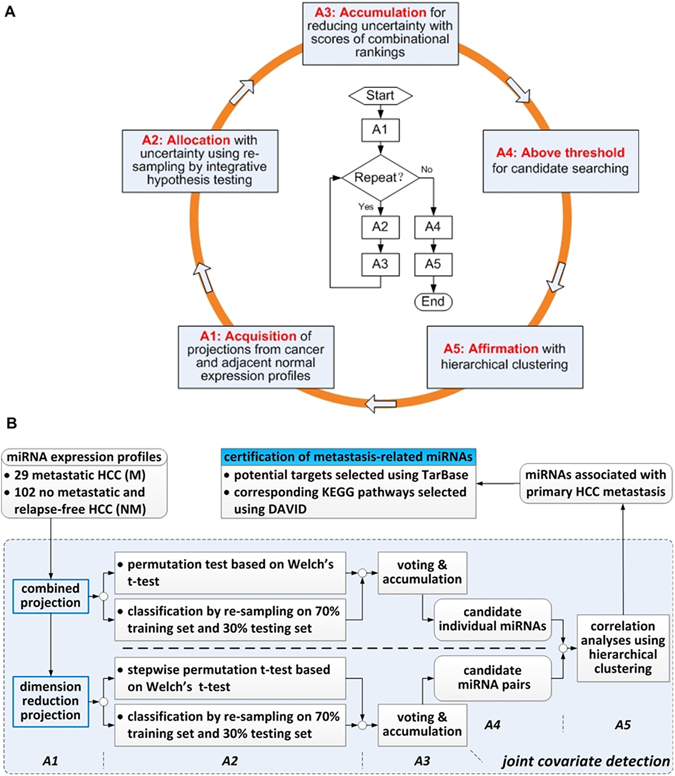
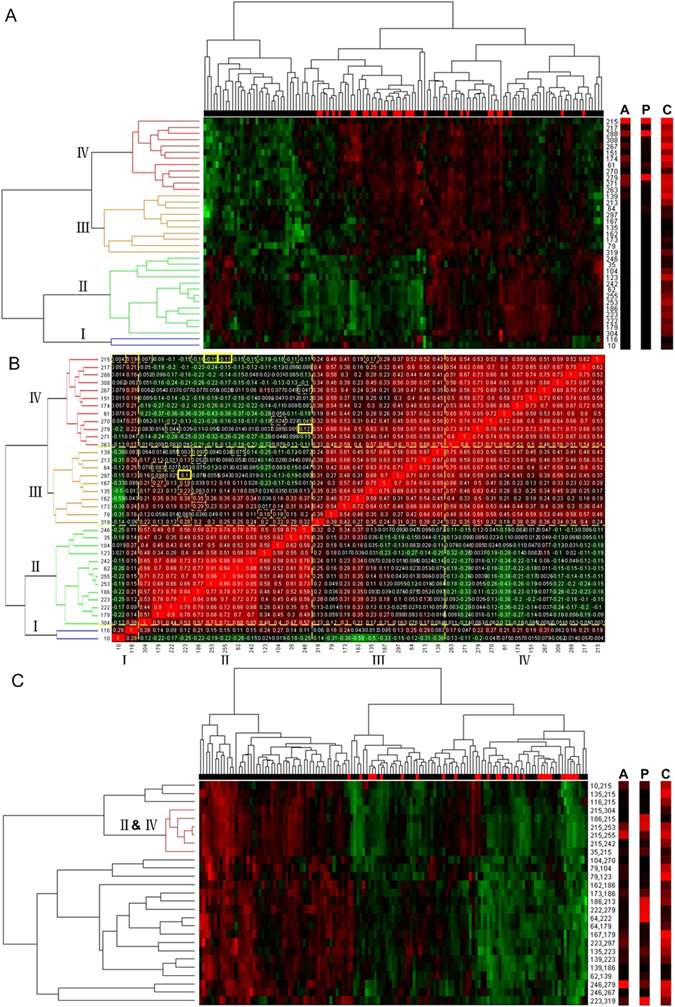
Expression profiles of cancer are generally composed of three dimensions including gene probes, patients (e.g., metastasis or non-metastasis) and tissues (i.e., cancer or normal cells of a patient). In order to combine these three dimensions, we proposed a joint covariate detection that not only considered projections on gene probes and tissues simultaneously, but also concentrated on distinguishing patients into different groups. Due to highly lethal malignancy of hepatocellular carcinoma, we chose data GSE6857 to testify the effectiveness of our method. A bootstrap and accumulation strategy was introduced in, which could select candidate microRNAs to distinguish metastasis from non-metastasis patient group. Two pairs of microRNAs were further selected. Each component of either significant microRNA pair was derived from different cliques. Targets were sought and pathway analysis were made, which might reveal the mechanism of venous metastasis in primary hepatocellular carcinoma.
癌症的表达谱通常由三个维度组成,包括基因探针、患者(如转移或非转移)和组织(即患者的癌症或正常细胞)。为了将这三个维度结合起来,我们提出了一种联合协变量检测方法,该方法不仅同时考虑了基因探针和组织的投影,还集中于将患者区分到不同的组中。由于肝细胞癌具有高度致命的恶性,我们选择了数据集 GSE6857 来验证我们方法的有效性。在 中引入了自举和积累策略,该策略可以选择候选 microRNA 来区分转移和非转移患者组。进一步选择了两对 microRNA。显著 microRNA 对的每个组成部分都来自不同的团。寻找靶标并进行通路分析,这可能揭示原发性肝细胞癌静脉转移的机制。