Lanoix J, Tseng R W, Acheson N H
J Virol. 1986 Jun;58(3):733-42. doi: 10.1128/JVI.58.3.733-742.1986.
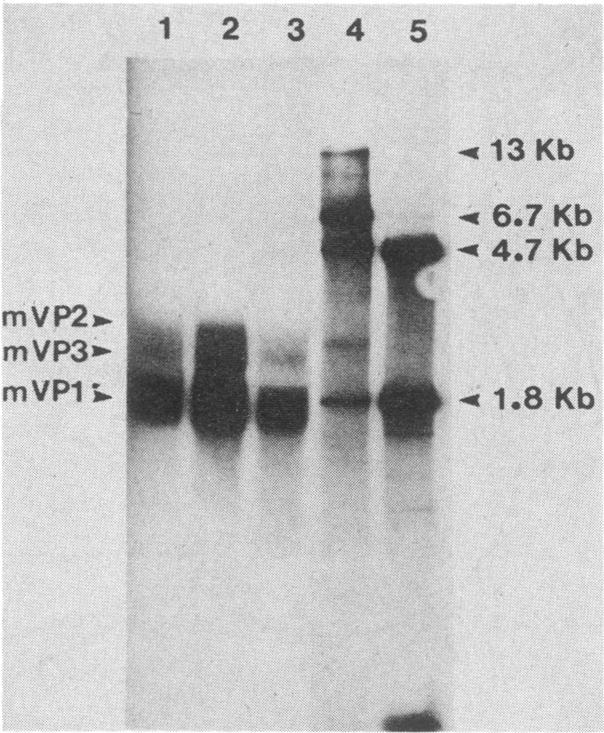
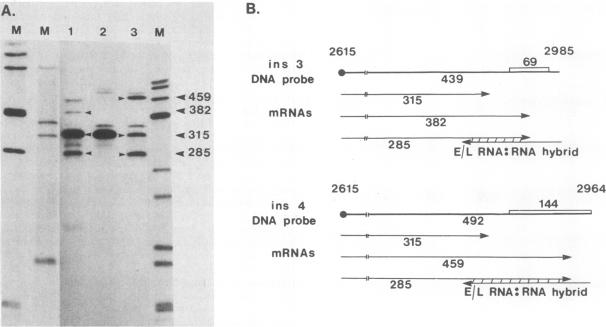
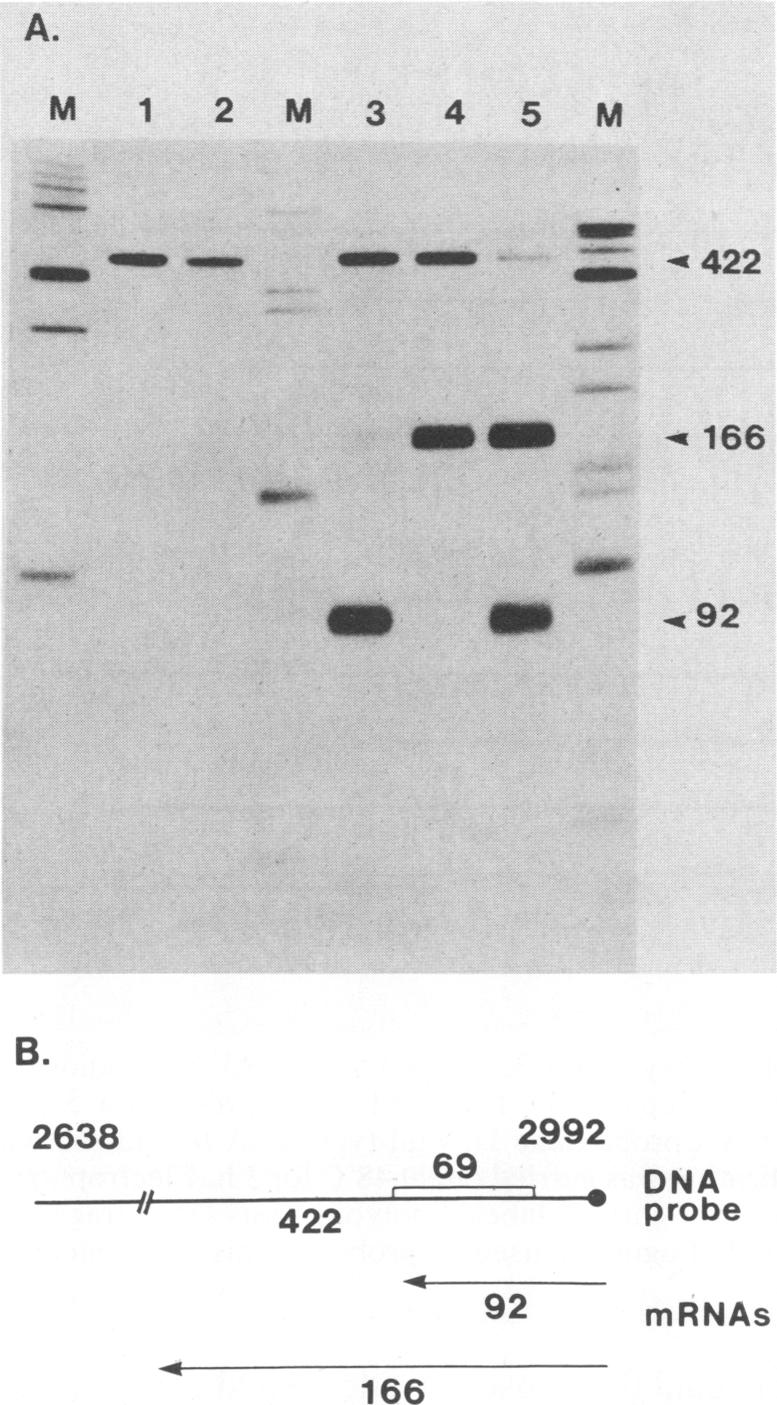
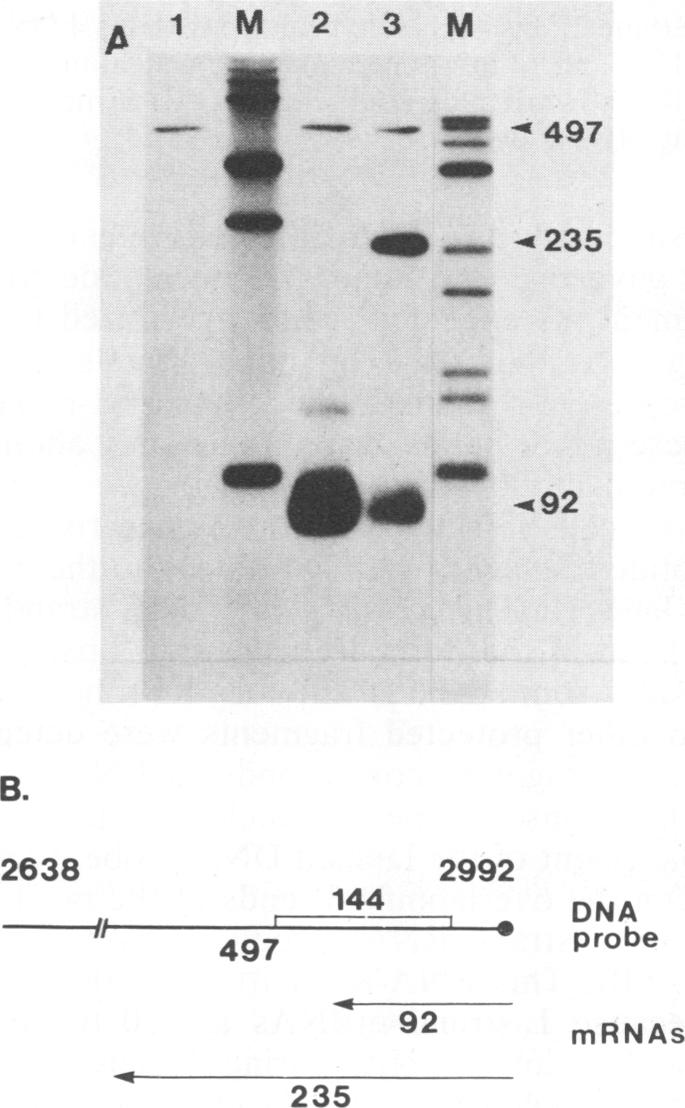
We constructed viable insertion mutants of polyomavirus that contain duplications of the nucleotide sequences surrounding the polyadenylation sites for both E- and L-strand RNAs. Our results showed that formation of poly(A)+ 3'termini of L-strand mRNAs requires sequence elements located between 12 and 87 nucleotides downstream of AAUAAA. No more than 19 nucleotides upstream and 44 nucleotides downstream of AAUAAA are required for polyadenylation of E-strand mRNAs. Our results and those of others suggest that there are three distinct sequence elements required for mRNA 3' end formation: AAUAAA and two downstream elements. An insertion mutant containing two adjacent functional polyadenylation signals produced E-strand and L-strand mRNAs with 3' ends at both sites. However, the overall level of polyadenylation of L-strand RNAs was not increased over the low (10 to 25%) levels seen with wild-type virus. Neither was the efficiency of termination of L-strand transcription increased in mutant virus-infected cells. We conclude that factors required for both polyadenylation and transcription termination are limiting in polyomavirus-infected mouse cells.
我们构建了多瘤病毒的活插入突变体,其包含E链和L链RNA多聚腺苷酸化位点周围核苷酸序列的重复。我们的结果表明,L链mRNA的聚腺苷酸化(poly(A)+)3'末端的形成需要位于AAUAAA下游12至87个核苷酸之间的序列元件。E链mRNA的多聚腺苷酸化在AAUAAA上游不超过19个核苷酸和下游44个核苷酸时即可发生。我们的结果以及其他人的结果表明,mRNA 3'末端形成需要三个不同的序列元件:AAUAAA和两个下游元件。一个包含两个相邻功能性多聚腺苷酸化信号的插入突变体产生了在两个位点都具有3'末端的E链和L链mRNA。然而,L链RNA的多聚腺苷酸化总体水平并未超过野生型病毒所见较低(10%至25%)水平。在突变病毒感染的细胞中,L链转录终止效率也未提高。我们得出结论,多聚腺苷酸化和转录终止所需的因子在多瘤病毒感染的小鼠细胞中是有限的。