The Hormel Institute, University of Minnesota, Austin, Minnesota.
Division of Hematology, Mayo Clinic, Rochester, Minnesota.
Clin Cancer Res. 2017 Oct 15;23(20):6254-6266. doi: 10.1158/1078-0432.CCR-17-0235. Epub 2017 Jul 18.
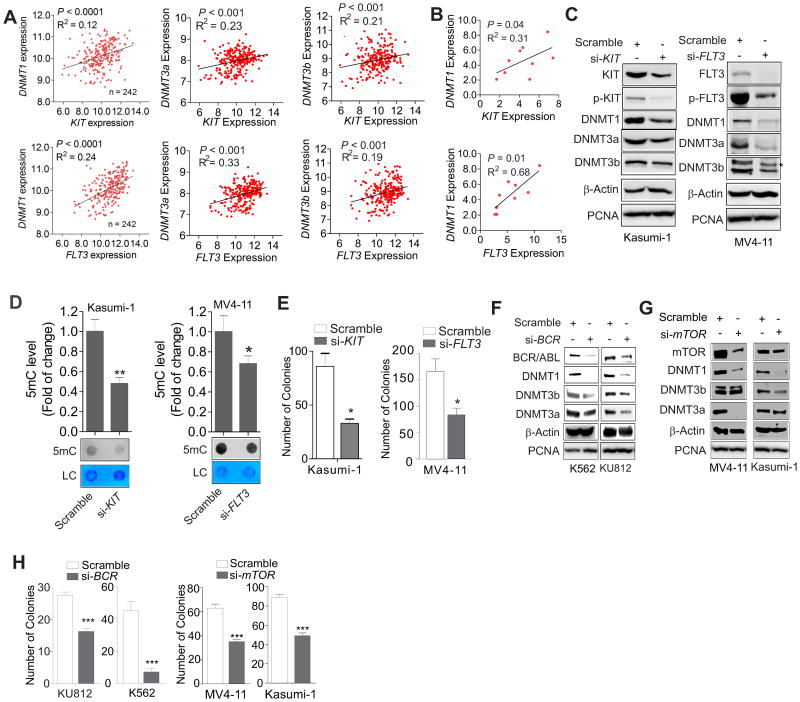
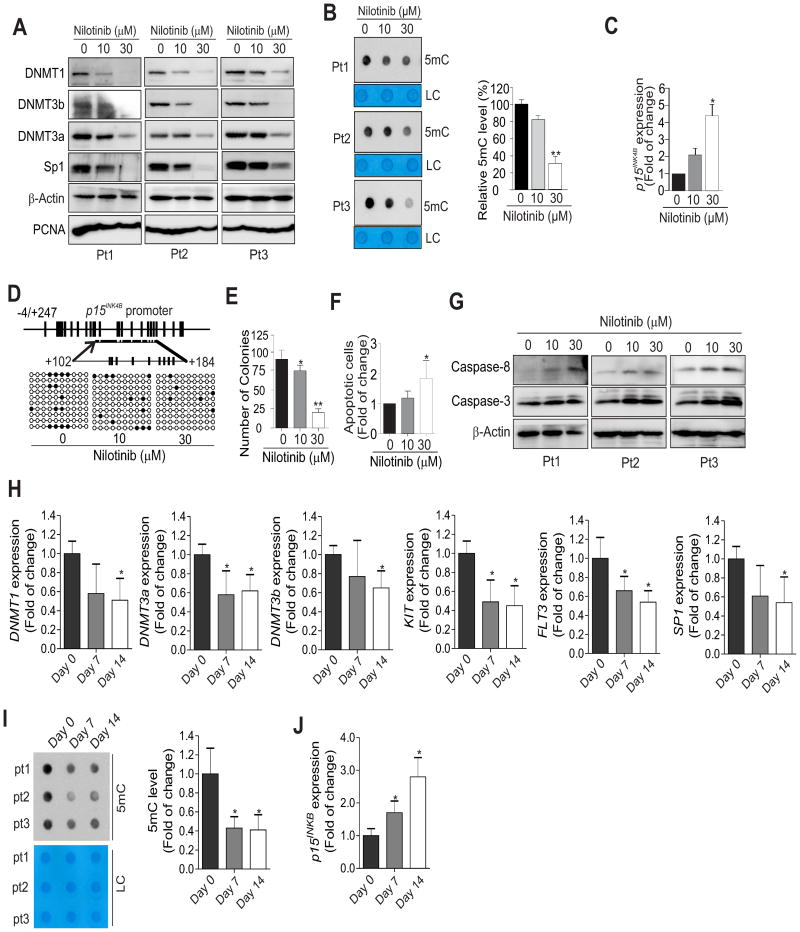
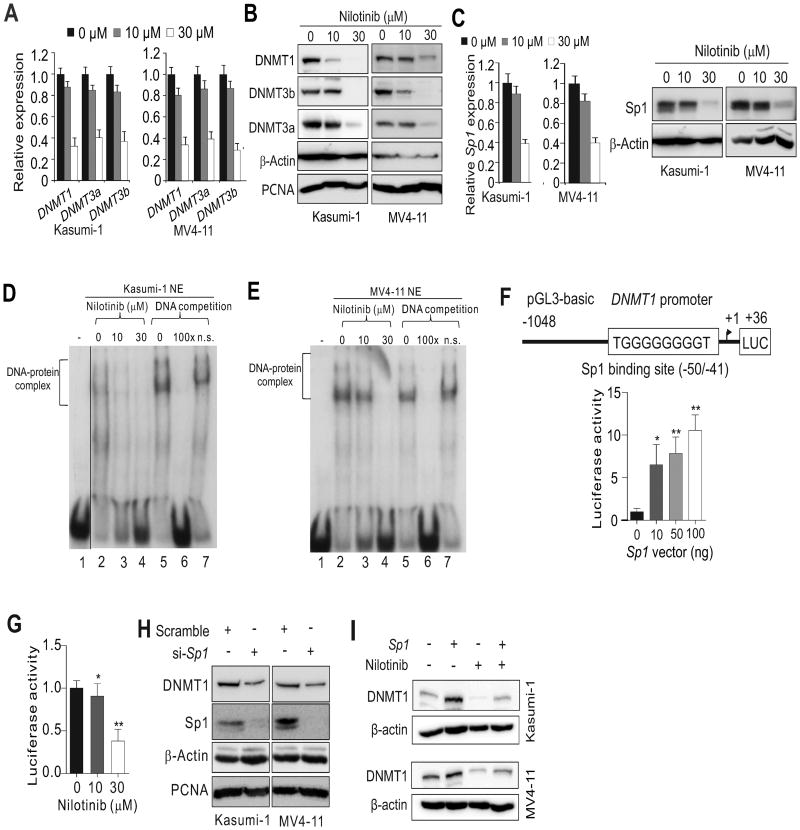
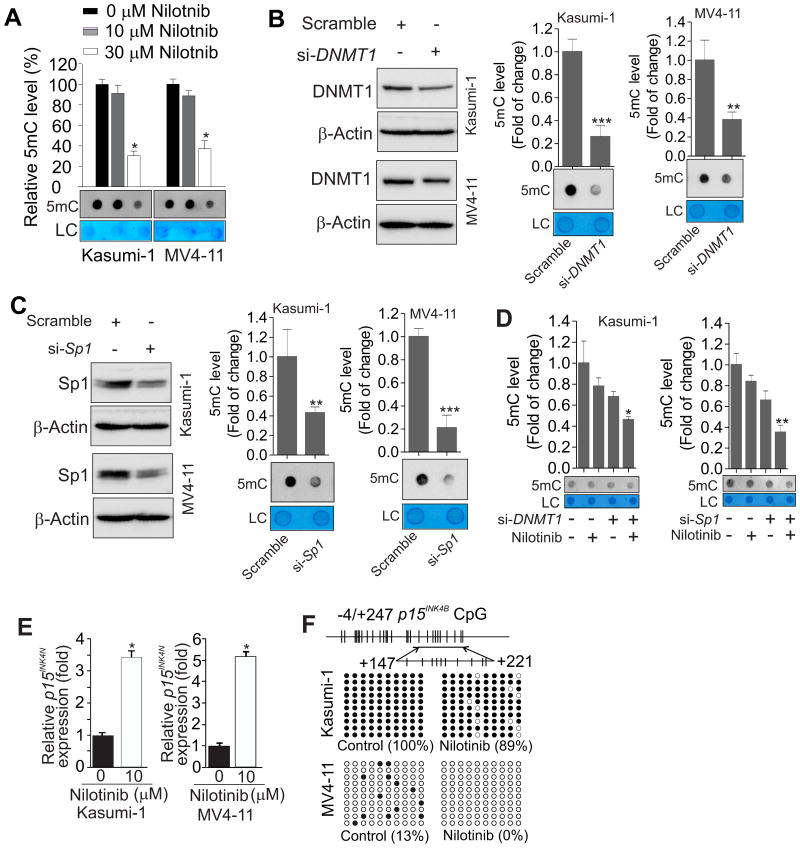
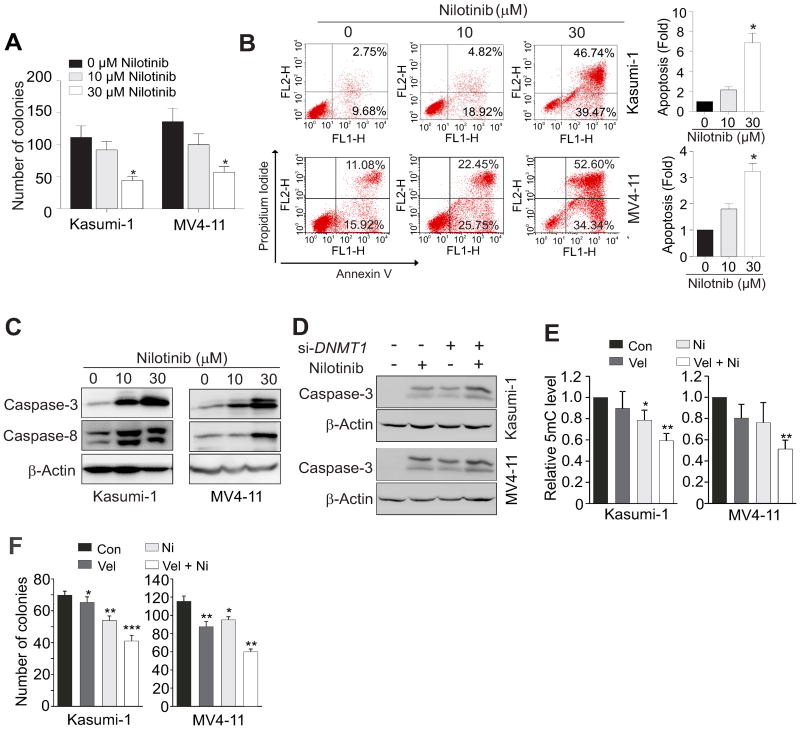
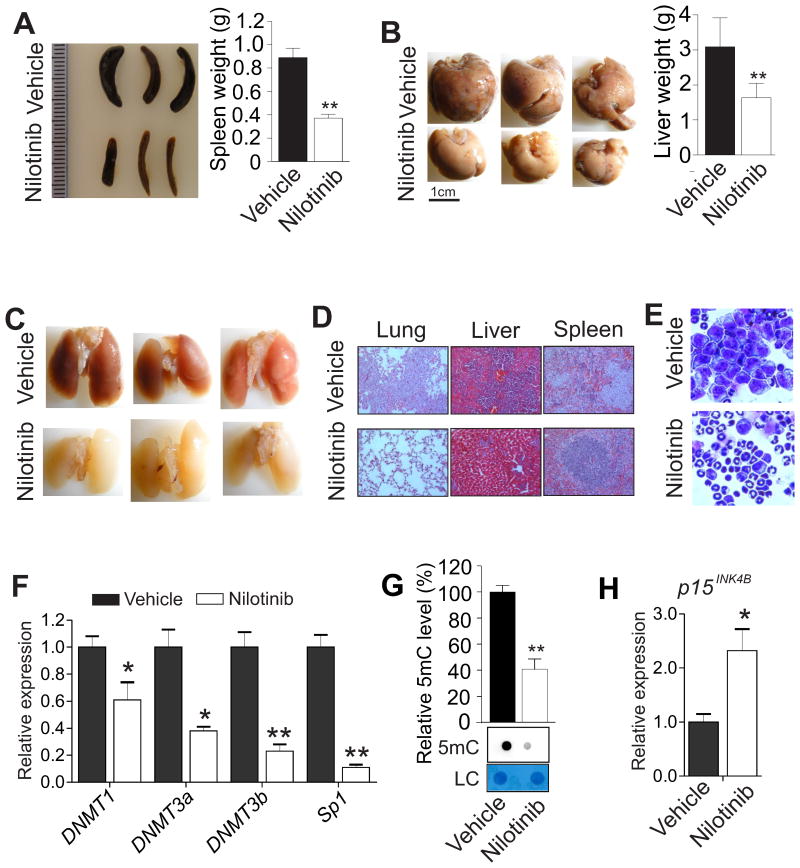
Receptor tyrosine kinases (RTKs) are frequently deregulated in leukemia, yet the biological consequences of this deregulation remain elusive. The mechanisms underlying aberrant methylation, a hallmark of leukemia, are not fully understood. Here we investigated the role of RTKs in methylation abnormalities and characterized the hypomethylating activities of RTK inhibitors. Whether and how RTKs regulate expression of DNA methyltransferases (DNMTs), tumor suppressor genes (TSGs) as well as global and gene-specific DNA methylation were examined. The pharmacologic activities and mechanisms of actions of RTK inhibitors o, , in mice, and in nilotinib-treated leukemia patients were determined. Upregulation of RTKs paralleled DNMT overexpression in leukemia cell lines and patient blasts. Knockdown of RTKs disrupted, whereas enforced expression increased DNMT expression and DNA methylation. Treatment with the RTK inhibitor, nilotinib, resulted in a reduction of Sp1-dependent DNMT1 expression, the diminution of global DNA methylation, and the upregulation of the gene through promoter hypomethylation in AML cell lines and patient blasts. This led to disruption of AML cell clonogenicity and promotion of cellular apoptosis without obvious changes in cell cycle. Importantly, nilotinib administration in mice and human patients with AML impaired expression of DNMTs followed by DNA hypomethylation, TSG re-expression, and leukemia regression. Our findings demonstrate RTKs as novel regulators of DNMT-dependent DNA methylation and define DNA methylation status in AML cells as a pharmacodynamic marker for their response to RTK-based therapy, providing new therapeutic avenues for RTK inhibitors in overcoming epigenetic abnormalities in leukemia. .
受体酪氨酸激酶(RTKs)在白血病中经常失调,但这种失调的生物学后果仍难以捉摸。导致白血病特征性异常甲基化的机制尚不完全清楚。在这里,我们研究了 RTKs 在甲基化异常中的作用,并对 RTK 抑制剂的去甲基化活性进行了特征描述。我们研究了 RTKs 是否以及如何调节 DNA 甲基转移酶(DNMTs)、肿瘤抑制基因(TSGs)以及整体和基因特异性 DNA 甲基化的表达。在小鼠和接受尼罗替尼治疗的白血病患者中,检测了 RTK 抑制剂 o、、的药理学活性和作用机制。在白血病细胞系和患者原始细胞中,RTKs 的上调与 DNMT 过表达平行。RTKs 的敲低破坏了,而强制表达则增加了 DNMT 的表达和 DNA 甲基化。RTK 抑制剂尼罗替尼的治疗导致 Sp1 依赖性 DNMT1 表达减少,导致整体 DNA 甲基化减少,以及通过 AML 细胞系和患者原始细胞中的启动子低甲基化而上调基因。这导致 AML 细胞集落形成能力受损,并促进细胞凋亡,而细胞周期无明显变化。重要的是,尼罗替尼在小鼠和 AML 人类患者中的给药导致 DNMT 表达减少,随后 DNA 去甲基化、TSG 重新表达和白血病消退。我们的研究结果表明 RTKs 是 DNMT 依赖性 DNA 甲基化的新型调节剂,并将 AML 细胞中的 DNA 甲基化状态定义为其对基于 RTK 的治疗反应的药效学标志物,为 RTK 抑制剂在克服白血病中的表观遗传异常提供了新的治疗途径。