Division of Hematology, Department of Internal Medicine, College of Medicine, The Ohio State University, Columbus, Ohio, United States of America.
PLoS One. 2013;8(2):e55934. doi: 10.1371/journal.pone.0055934. Epub 2013 Feb 13.
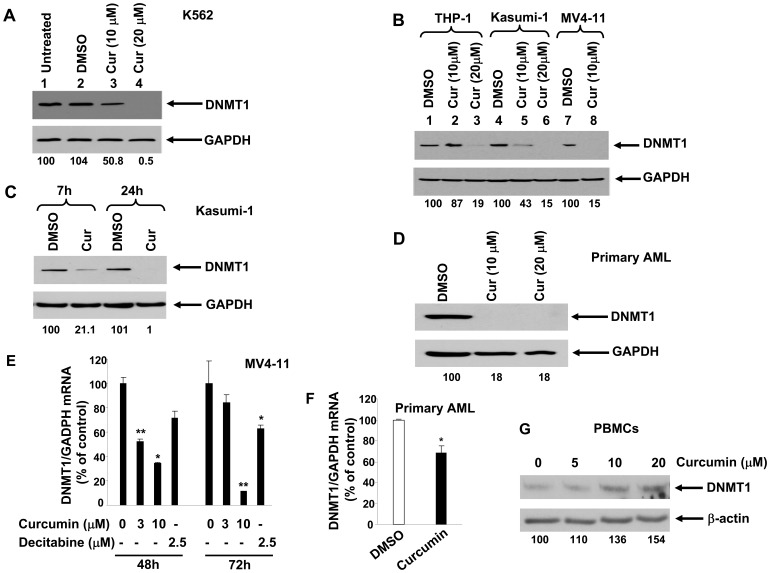
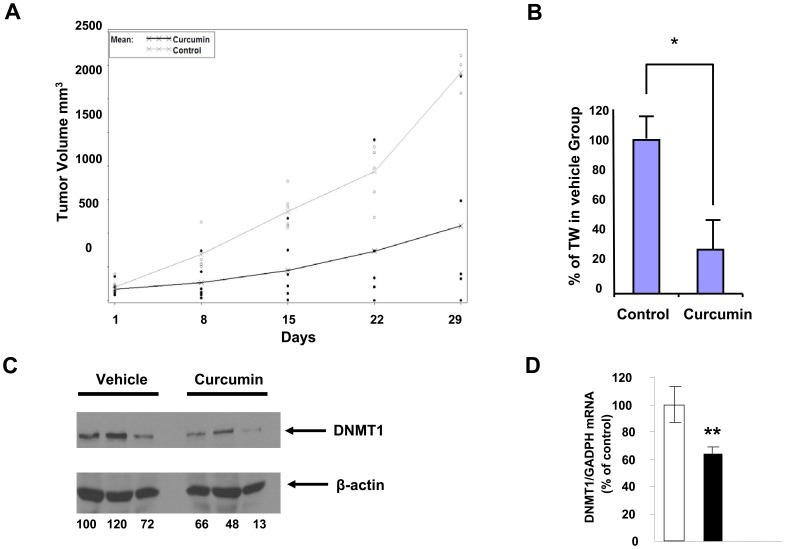
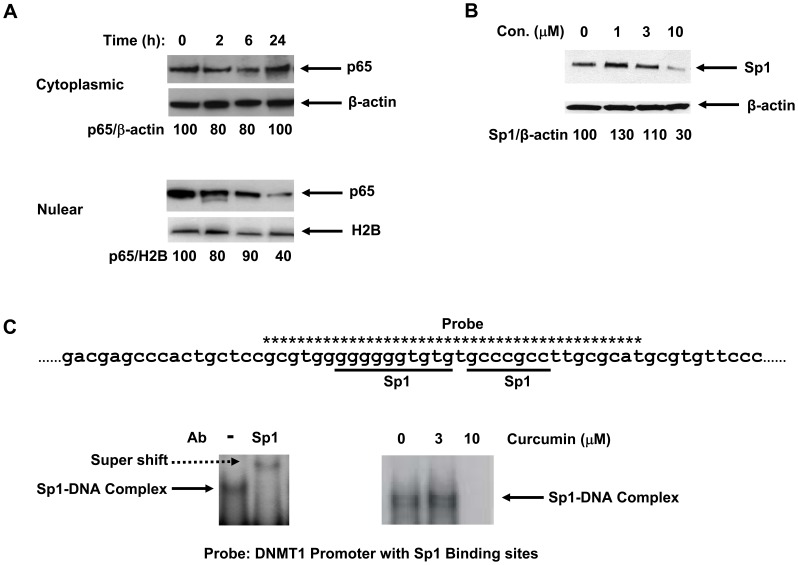
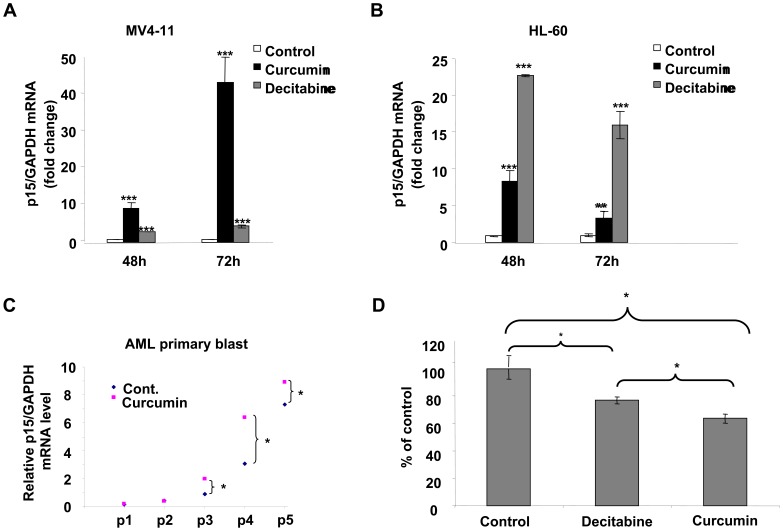
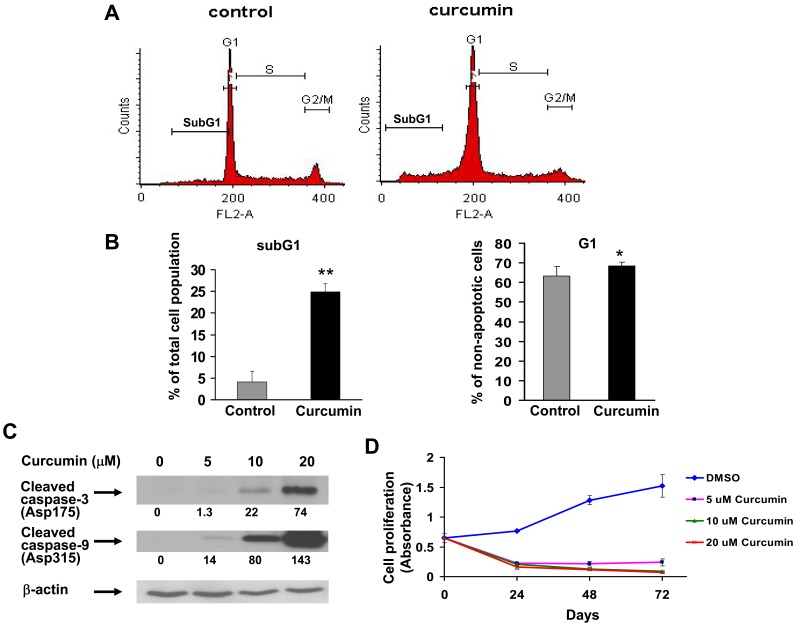
Bioactive components from dietary supplements such as curcumin may represent attractive agents for cancer prevention or treatment. DNA methylation plays a critical role in acute myeloid leukemia (AML) development, and presents an excellent target for treatment of this disease. However, it remains largely unknown how curcumin, a component of the popular Indian spice turmeric, plays a role in DNA hypomethylation to reactivate silenced tumor suppressor genes and to present a potential treatment option for AML. Here we show that curcumin down-regulates DNMT1 expression in AML cell lines, both in vitro and in vivo, and in primary AML cells ex vivo. Mechanistically, curcumin reduced the expression of positive regulators of DNMT1, p65 and Sp1, which correlated with a reduction in binding of these transcription factors to the DNMT1 promoter in AML cell lines. This curcumin-mediated down-regulation of DNMT1 expression was concomitant with p15(INK4B) tumor suppressor gene reactivation, hypomethylation of the p15(INK4B) promoter, G1 cell cycle arrest, and induction of tumor cell apoptosis in vitro. In mice implanted with the human AML MV4-11 cell line, administration of curcumin resulted in remarkable suppression of AML tumor growth. Collectively, our data indicate that curcumin shows promise as a potential treatment for AML, and our findings provide a basis for future studies to test the clinical efficacy of curcumin - whether used as a single agent or as an adjuvant - for AML treatment.
膳食补充剂中的生物活性成分,如姜黄素,可能成为预防或治疗癌症的有吸引力的药物。DNA 甲基化在急性髓系白血病(AML)的发展中起着关键作用,是治疗这种疾病的一个极好的靶点。然而,姜黄素(印度香料 turmeric 的一种成分)如何在 DNA 低甲基化中发挥作用,重新激活沉默的肿瘤抑制基因,并为 AML 提供潜在的治疗选择,在很大程度上仍然未知。在这里,我们表明姜黄素在 AML 细胞系中,无论是在体外还是体内,以及在原代 AML 细胞中,都可以下调 DNMT1 的表达。在机制上,姜黄素降低了 DNMT1 的正调控因子 p65 和 Sp1 的表达,这与 AML 细胞系中这些转录因子与 DNMT1 启动子结合的减少相关。这种姜黄素介导的 DNMT1 表达下调伴随着 p15(INK4B)肿瘤抑制基因的重新激活、p15(INK4B)启动子的低甲基化、G1 细胞周期停滞以及体外肿瘤细胞凋亡的诱导。在植入人 AML MV4-11 细胞系的小鼠中,姜黄素的给药导致 AML 肿瘤生长显著抑制。总的来说,我们的数据表明姜黄素有望成为 AML 的一种潜在治疗方法,我们的研究结果为未来研究提供了依据,以测试姜黄素的临床疗效——无论是作为单一药物还是作为辅助药物——用于 AML 治疗。