Bashir Mohsin, Damineni Surekha, Mukherjee Geetashree, Kondaiah Paturu
Department of Molecular Reproduction, Development and Genetics, Indian Institute of Science, Bangalore, India.
Department of Pathology, Kidwai Memorial Institute of Oncology, Bangalore, India.
NPJ Breast Cancer. 2015 Aug 12;1:15007. doi: 10.1038/npjbcancer.2015.7. eCollection 2015.
Activins belong to the transforming growth factor-β (TGF-β) superfamily of cytokines. Although the role of TGF-β in cancer progression has been highly advocated, the role of activin signaling in cancer is not well known. However, overexpression of activin-A has been observed in several cancers.
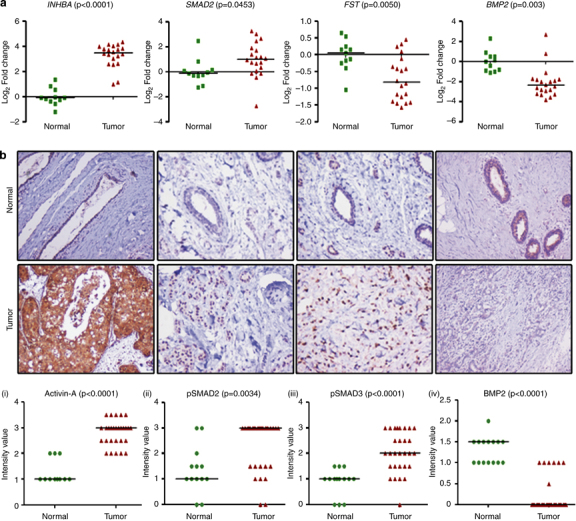
The gene expression profile indicated higher expression of Activin-A in breast tumors. Hence the aim of this study was to evaluate the status and role of Activin signaling pathway in these tumors.
Microarray analysis was performed to reveal gene expression changes in breast tumors. The results were validated by quantitative PCR and immunohistochemical analysis in two independent sets of normal and tumor samples. Further, correlation of activin expression with survival and distant metastasis was performed to evaluate its possible role in tumor progression. We used recombinant activin-A, inhibitors, overexpression, and knockdown strategies both and , to understand the mechanism underlying the protumorigenic role of this signaling pathway.
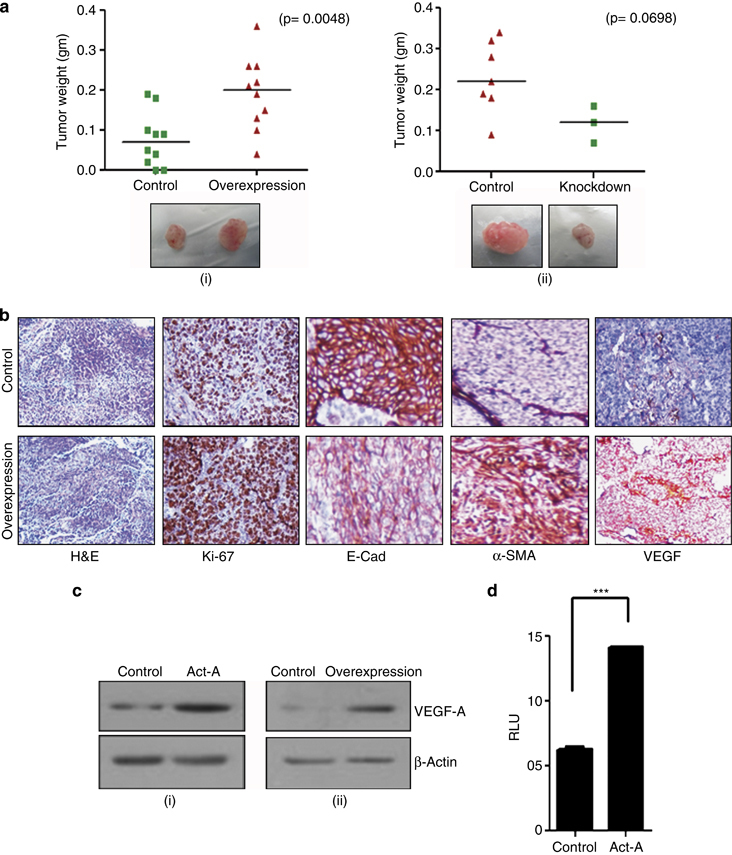
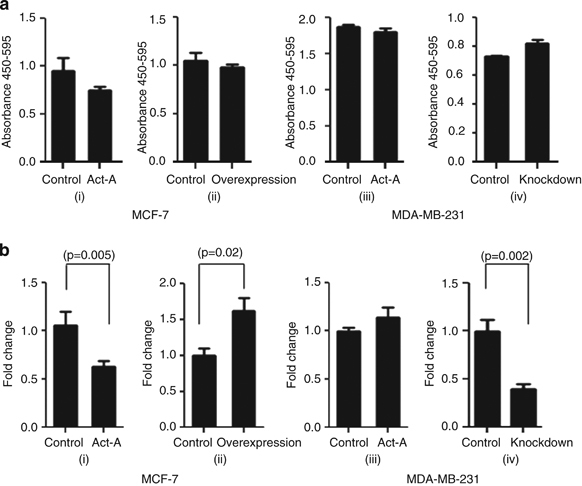
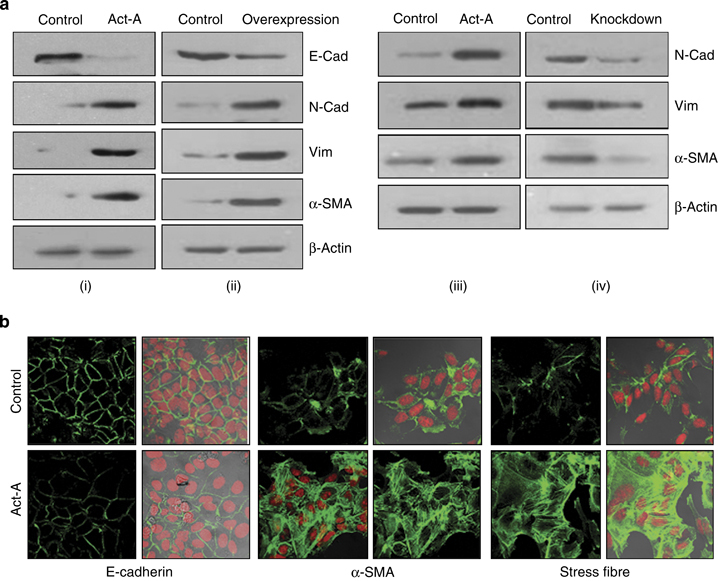
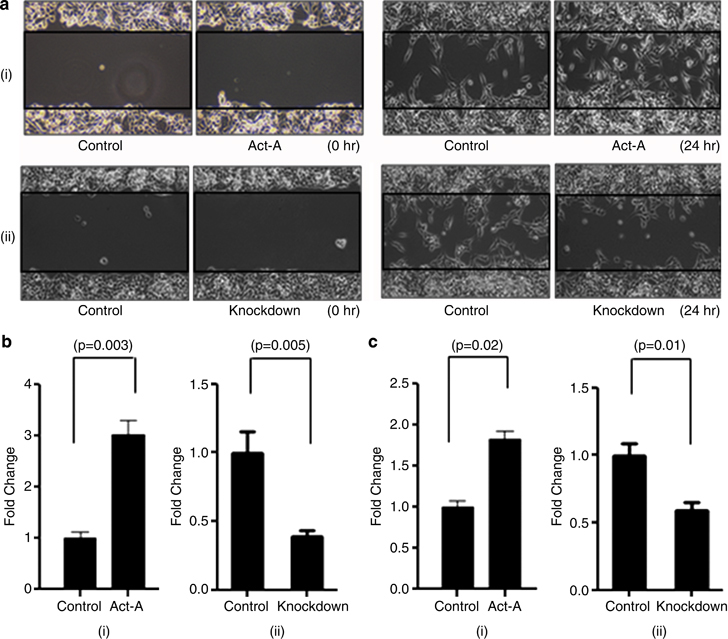
We report that activin-A signaling is hyperactivated in breast cancers as indicated by higher activin-A, phosphoSMAD2, and phosphoSMAD3 levels in advanced breast cancers. Bone morphogenetic proteins and molecules involved in this signaling pathway were downregulated, suggesting its suppression in breast cancers. Activin-A expression correlates inversely with survival and metastasis in advanced breast cancers. Further, activin-A promotes anchorage-independent growth, epithelial-mesenchymal transition, invasion, angiogenesis, and stemness of breast cancer cells. We show that activin-A-induced phenotype is mediated by SMAD signaling pathway. In addition, activin-A expression affects the tumor-forming ability and metastatic colonization of cancer cells in nude mice.
These results suggest that activin-A has a critical role in breast cancer progression and, hence, targeting this pathway can be a valuable strategy in treating breast cancer patients.
激活素属于细胞因子转化生长因子-β(TGF-β)超家族。尽管TGF-β在癌症进展中的作用已得到高度关注,但激活素信号在癌症中的作用尚不明确。然而,在几种癌症中已观察到激活素-A的过表达。
基因表达谱显示乳腺癌中激活素-A表达较高。因此,本研究的目的是评估激活素信号通路在这些肿瘤中的状态和作用。
进行微阵列分析以揭示乳腺肿瘤中的基因表达变化。结果在两组独立的正常和肿瘤样本中通过定量PCR和免疫组织化学分析进行验证。此外,进行激活素表达与生存和远处转移的相关性分析,以评估其在肿瘤进展中的可能作用。我们使用重组激活素-A、抑制剂、过表达和敲低策略,以了解该信号通路促肿瘤作用的潜在机制。
我们报告,晚期乳腺癌中激活素-A、磷酸化SMAD2和磷酸化SMAD3水平升高表明激活素-A信号在乳腺癌中过度激活。参与该信号通路的骨形态发生蛋白和分子下调,表明其在乳腺癌中受到抑制。激活素-A表达与晚期乳腺癌的生存和转移呈负相关。此外,激活素-A促进乳腺癌细胞的非锚定依赖性生长、上皮-间质转化、侵袭、血管生成和干性。我们表明激活素-A诱导的表型由SMAD信号通路介导。此外,激活素-A表达影响裸鼠中癌细胞的成瘤能力和转移定植。
这些结果表明激活素-A在乳腺癌进展中起关键作用,因此,靶向该通路可能是治疗乳腺癌患者的有价值策略。