Department of Molecular, Cell, and Developmental Biology, University of California-Santa Cruz, 1156 High Street, Santa Cruz, California 95064, USA.
UC Santa Cruz Genomics Institute, 1156 High Street, Santa Cruz, California 95064, USA.
Nat Commun. 2017 Jul 19;8:16027. doi: 10.1038/ncomms16027.
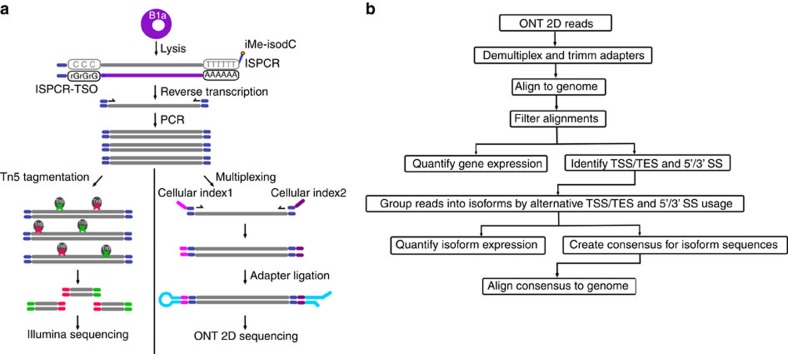
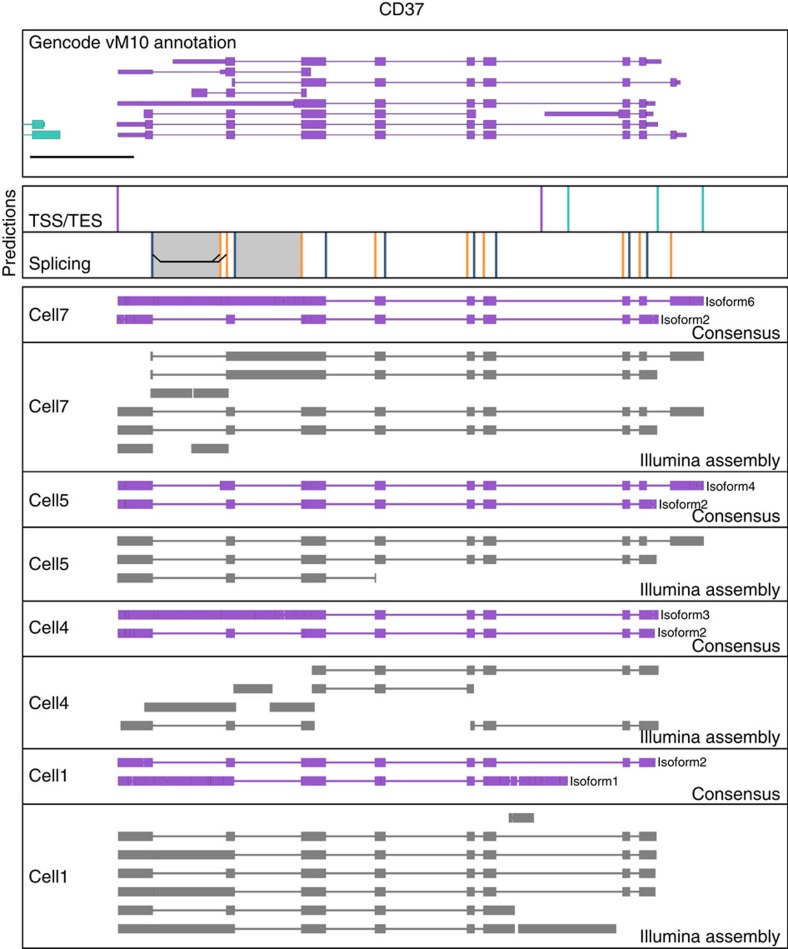
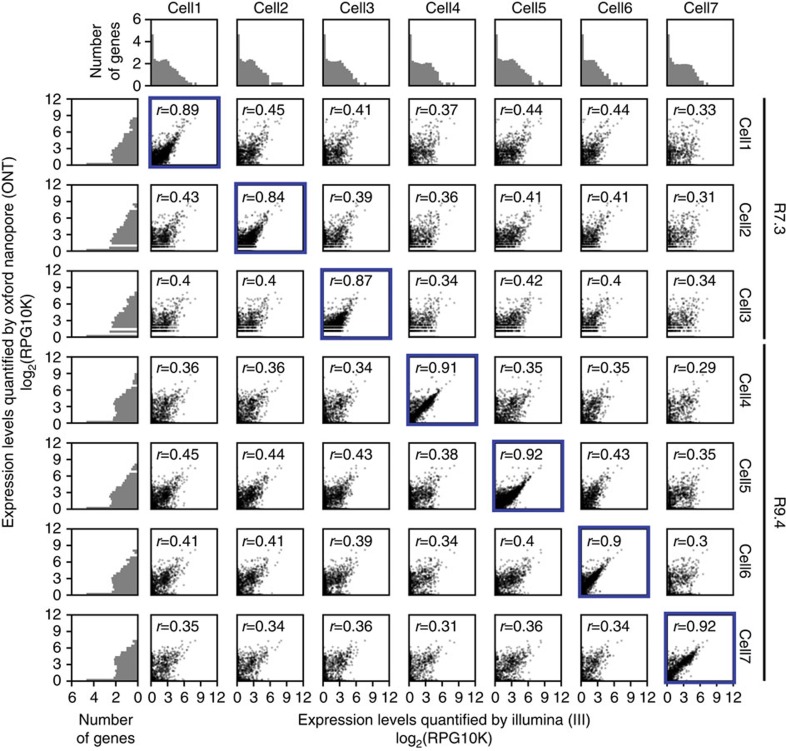
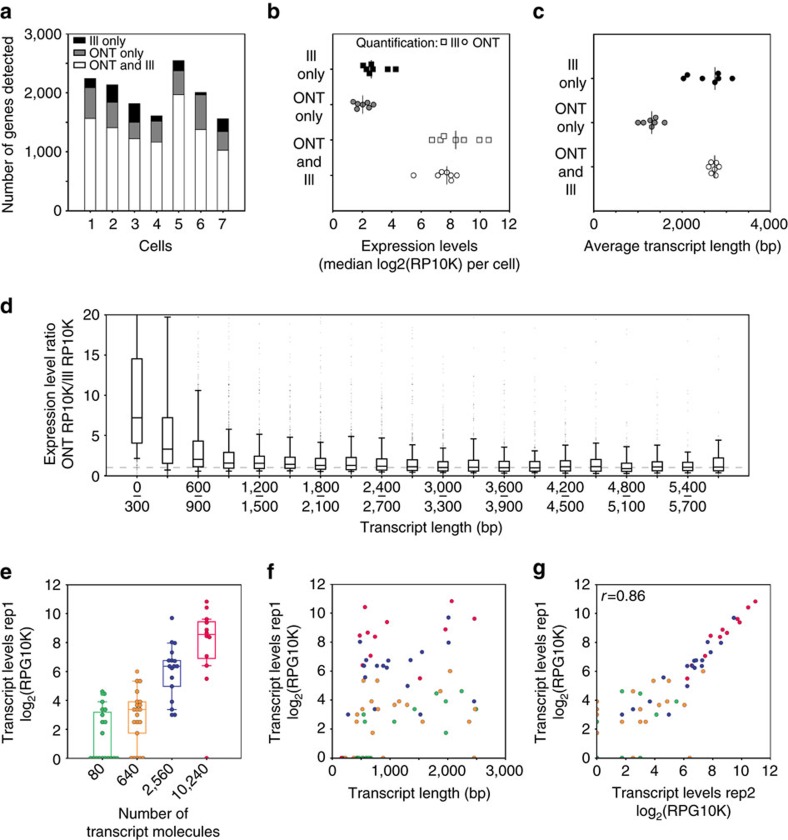
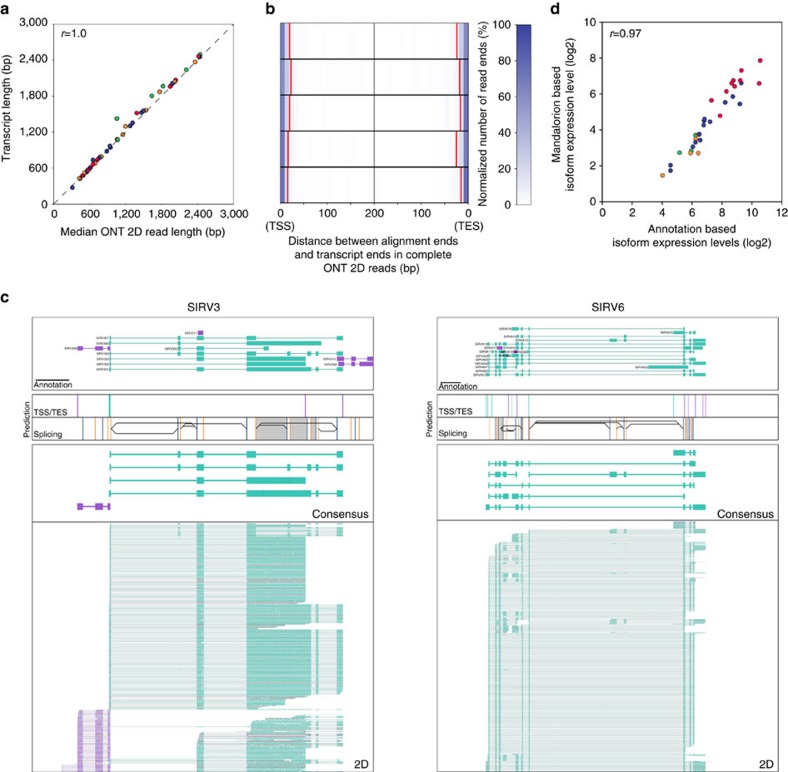
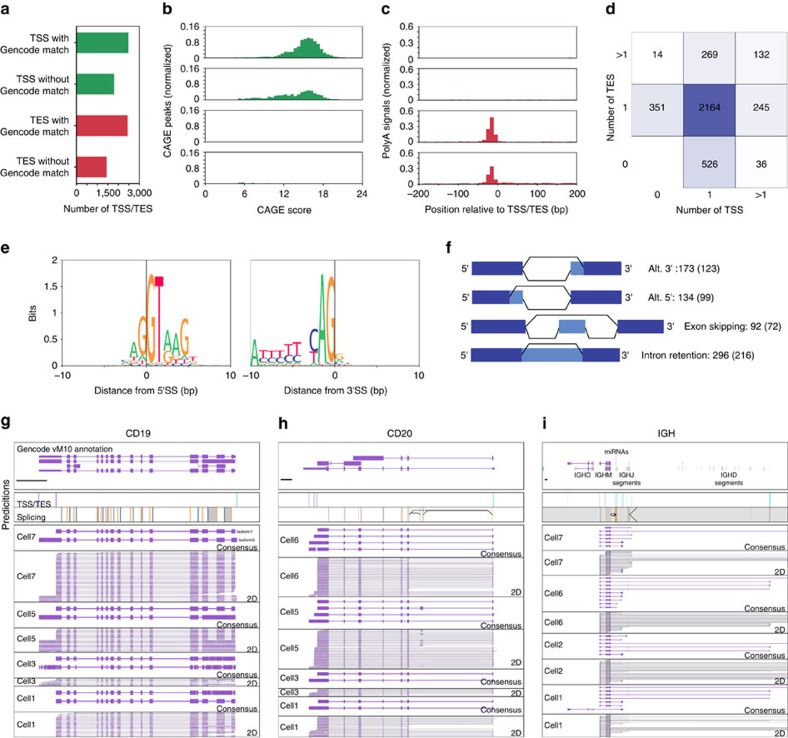
Understanding gene regulation and function requires a genome-wide method capable of capturing both gene expression levels and isoform diversity at the single-cell level. Short-read RNAseq is limited in its ability to resolve complex isoforms because it fails to sequence full-length cDNA copies of RNA molecules. Here, we investigate whether RNAseq using the long-read single-molecule Oxford Nanopore MinION sequencer is able to identify and quantify complex isoforms without sacrificing accurate gene expression quantification. After benchmarking our approach, we analyse individual murine B1a cells using a custom multiplexing strategy. We identify thousands of unannotated transcription start and end sites, as well as hundreds of alternative splicing events in these B1a cells. We also identify hundreds of genes expressed across B1a cells that display multiple complex isoforms, including several B cell-specific surface receptors. Our results show that we can identify and quantify complex isoforms at the single cell level.
理解基因调控和功能需要一种能够在单细胞水平上同时捕获基因表达水平和异构体多样性的全基因组方法。由于短读 RNAseq 无法对 RNA 分子的全长 cDNA 拷贝进行测序,因此其在解析复杂异构体方面存在局限性。在这里,我们研究了使用长读长单分子 Oxford Nanopore MinION 测序仪是否能够在不牺牲准确基因表达定量的情况下识别和定量复杂异构体。在对我们的方法进行基准测试后,我们使用自定义多重化策略分析了单个鼠 B1a 细胞。我们在这些 B1a 细胞中鉴定了数千个未注释的转录起始和终止位点,以及数百个可变剪接事件。我们还鉴定了数百个在 B1a 细胞中表达的基因,这些基因显示出多种复杂异构体,包括几个 B 细胞特异性表面受体。我们的结果表明,我们可以在单细胞水平上识别和定量复杂异构体。